
Your chest is a paradox. Comprising only one major muscle pair, it would seem to be an easy area to train. Press and flye end of story. But this story is a mystery with unpredictable twists. The pecs are deceptively complex–working them is fraught with pitfalls you’ll likely blunder into the workout after workout, year after year.
Growing a chest is hard work. It’s made especially harder if you’re doing it incorrectly.
Today we expose those pitfalls, highlighting the five most common chest-training errors and detailing strategies to avoid them. Take notes; you may be shocked at the number of pec peccadilloes you’ve been committing.
#1 Under training upper chest
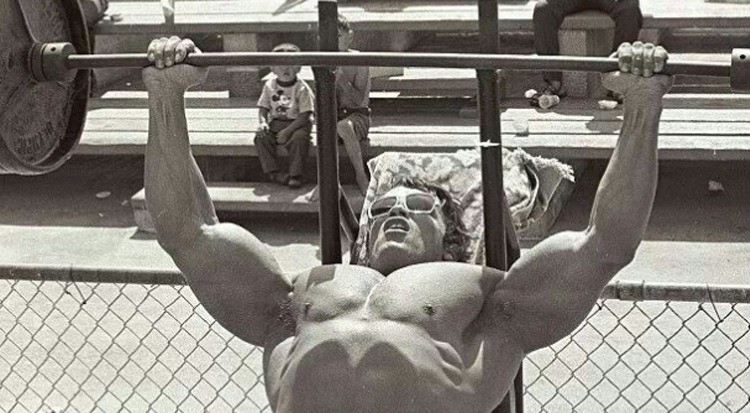 Often occurring in concert with an overreliance on bench presses is an under-reliance on exercises that target the upper-pec region. This is the area from your clavicles to approximately halfway down your chest. It gives your torso a higher appearance and visually ties your pecs in with your delts and traps (think Franco Columbu). Pecs are naturally thinner at the top than the bottom, so everyone can prioritize their upper pecs via incline work without fearing that this region will overpower their lower pecs.
Solutions
- Do incline presses with a barbell or dumbbells first in your routine.
- In each chest workout, include at least as many sets of upper chest work (incline presses and flyes) as you do lower chest work (flat and decline presses and flyes, and dips).
- To focus cable crossovers on your upper chest, perform them with the cables set near the floor so that you are pulling the handles up and together on each rep.
- Practice posing your upper pecs with hands-on-hips most-musculars or simply tensing. This will build a greater mind-muscle connection, so you can feel this area contracting on targeted chest exercises.
#2 Overreliance on machines
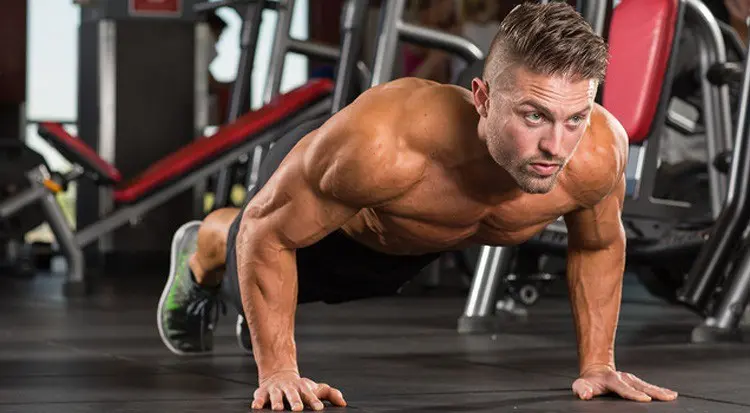 While too many bodybuilders do too many sets of benches, there is another group that goes to the other extreme–they rarely grab barbells or dumbbells on chest day. Most modern gyms have a plethora of press and flye machines but resist the urge to form the bulk of your routine around mechanical movements. Despite modern advantages, the best chests of Arnold’s era still compare favorably with the pecs in recent Olympia pose-downs. Why? Then, pecs were worked almost exclusively with free weights.
Solutions
- Do mostly free-weight and body-weight basics.
- Do no more than half of your chest exercises with machines.
- If you do mechanical presses, try to choose a unilateral Hammer Strength, FreeMotion or similar machine that approximates the freedom of free weights.
- If you’re not strong enough to get eight bodyweight reps while dipping, use a dip assist machine to lighten your load. (This doesn’t count as a machine exercise.)
#3 Overreliance on barbell bench presses
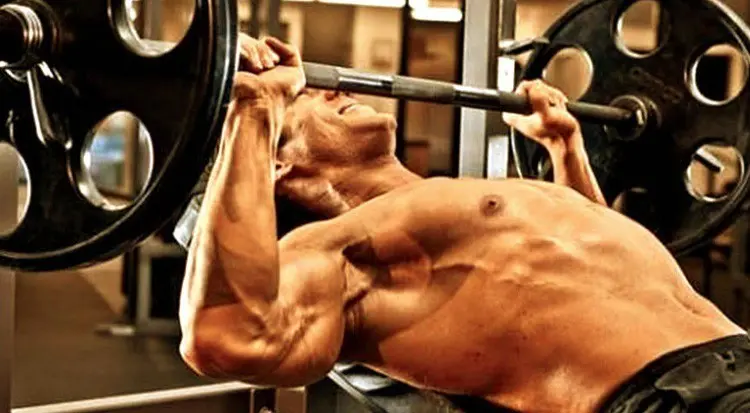 “How much can you bench?” The question is asked so often of anyone with a modicum of muscle that it’s long been the ultimate gym cliche. Still, the fact that the bench press is the go-to strength barometer has had a decimating effect on chests. Bodybuilders bench too much too often for too many sets of too few reps. Used correctly, the bench press is an excellent exercise. Overused, it can potentially overdevelop the lower-pec region in relation to the upper region, giving you “droopy boobs” (think Art Atwood). Furthermore, consistently benching for maximum sets of low reps will boost your chances of injuries, ranging from shoulder, elbow and wrist strains to pec tears.
Solutions
- Think of barbell bench presses as just another chest exercise, one that can be done at any time during your routine, including last.
- Do sets of eight to 12 reps, only occasionally pyramiding to as low as six reps.
- If you’re curious about how much you can bench for a single rep, use an online calculator and your best 10-rep set to compute your one-rep max.
- If you always do barbell benches first, start with incline presses–with barbells one workout and dumbbells the next. Alternately, cycle eight-week periods during which you do no free-weight benches with eight weeks during which you do benches with barbells one workout and dumbbells the next.
#4 Failure to contract
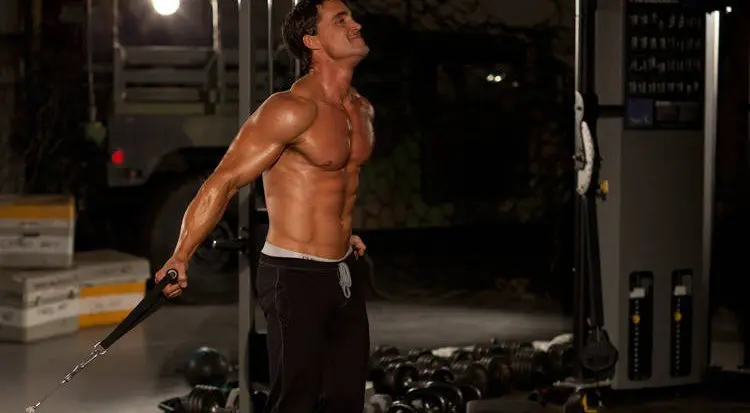 The downside of free weights is that they make it difficult to attain a maximum contraction in the pecs. When you do dumbbell flyes, there is less resistance on the chest at the top of the movement (when the dumbbells come together) than near the bottom. Likewise, during presses or dips, the triceps do much of the work near lockout.
Solutions
- Do one flye exercise each workout with either a machine or training bands. If you do cable crossovers, cross one hand over the other (hence the name) at contractions. Similarly, if you use an upright flye or pecdeck machine, or do flyes with bands, perform repetitions unilaterally in order to bring your hand past the center plane of your body to lengthen contractions.
- Lockout on presses. Although your triceps will do much of the work at the end, you can still maximally flex your chest at contractions.
#5 Working the weight, not the muscles
 Working the weight is using speed and momentum to pound out reps with little or no regard for the targeted area and it’s a precise distillation of the way many bodybuilders press, flye and dip.
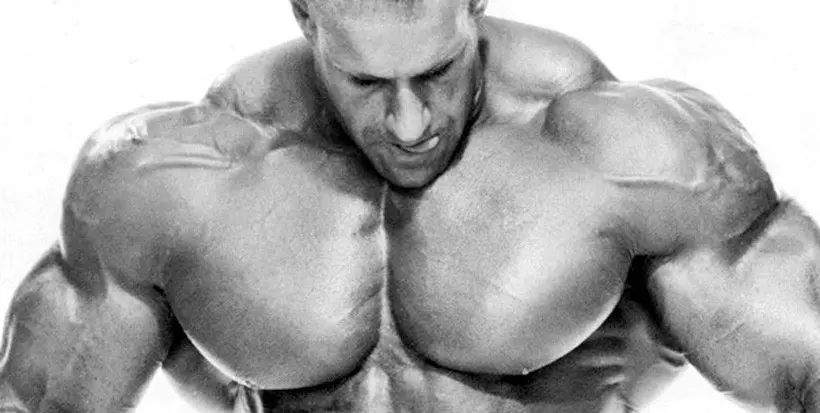 Working the weight is using speed and momentum to pound out reps with little or no regard for the targeted area and it’s a precise distillation of the way many bodybuilders press, flye and dip.
Solutions
- Feel where you want to focus each set before it begins. For example, tense your upper chest before a set of incline presses to keep your attention on that area.
- Always utilize strict form. This is not only safer, but also better for targeting your pecs, because the sloppier your execution on a chest exercise is, the more that secondary muscles take over.
- Carefully control the negative halves of reps. During presses, take approximately two seconds to lower the weight and one to two seconds to raise it.
Lessons Learned
- Treat bench presses as just another chest exercise with reps in the eight to 12 range.
- Prioritize your upper chest.
- Do primarily free-weight presses and flyes.
- Concentrate on the contraction of each rep.
- Keep the focus on your pecs, not on the weight.
Author: Greg Merritt
References:
http://www.muscleandfitness.com/
http://www.flexonline.com/