
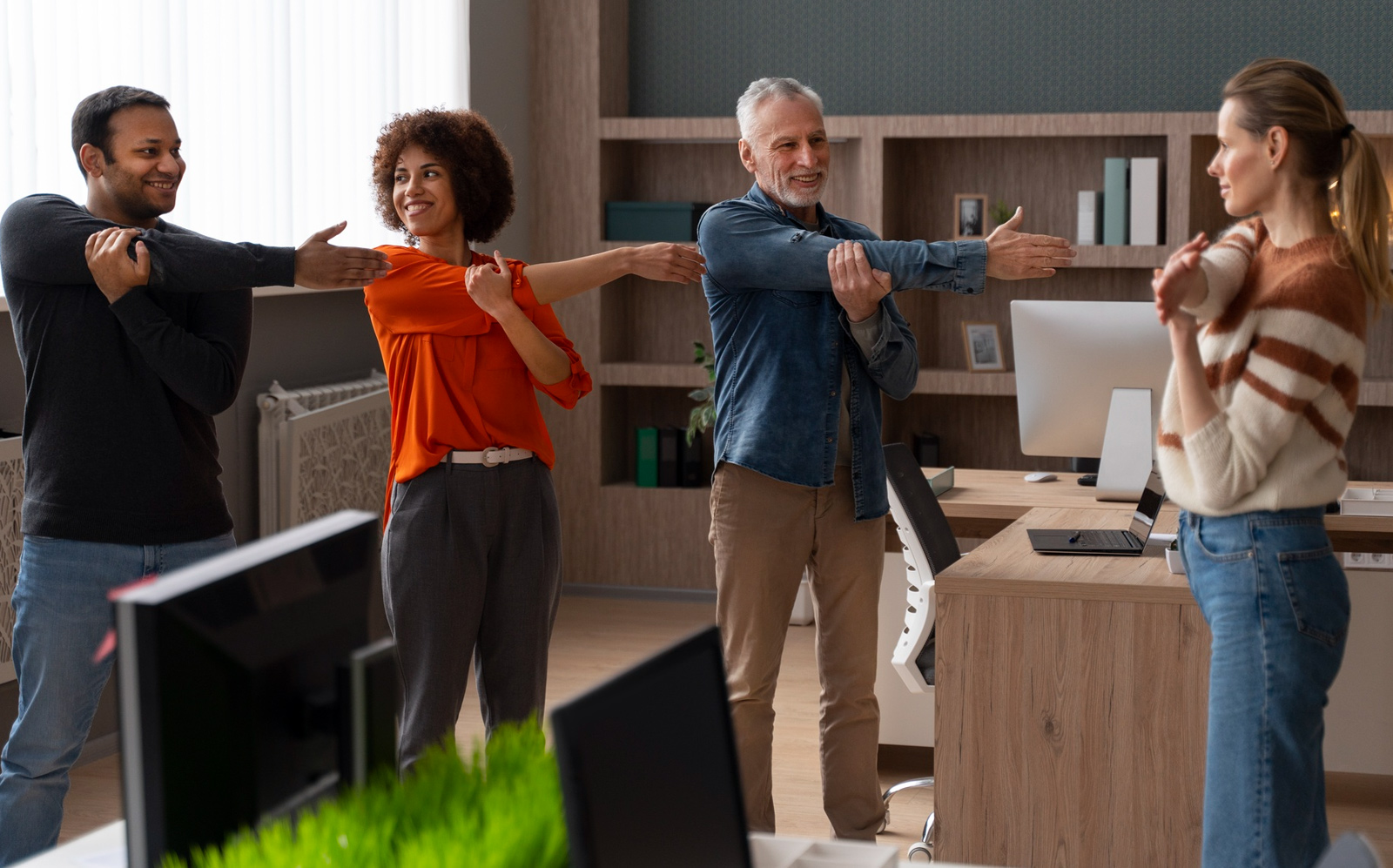
We live in a world where desk jobs are becoming synonymous with ‘success.’ Everyone wants to sit in an air-conditioned office with minimal physical work. This has become even more prominent after the pandemic.
However, a sedentary lifestyle exposes you to several health risks, like cardiovascular and metabolic issues. Plus, it can weaken and tighten specific muscle groups like the hip flexors, glutes, hamstring, and back, impacting your posture and hindering your functionality. (1)
Pain and discomfort from sitting for extended periods can lead to further inactivity.
The good thing is that you don’t have to engage in high-intensity workouts to undo the damage done from sitting for most of the day. Targeted stretching on the tight areas can do the trick by activating the dormant muscles.
In this article, I reveal a 15-minute workout that will help you break out of this vicious cycle.
The 15-Minute Anti-Desk Jockey Workout: Step-by-Step Guide
Instead of generic stretching, I recommend focusing on hip flexor stretching, glute activation, thoracic spine mobility, and posterior chain mobility to make the most of your training routine. Let’s break each one down:
Hip Flexor Stretches
These muscles run from your lower back and pelvis down to the front of your thighs. Hip flexors tend to get insanely tight when you’re sitting for long hours. This pulls your pelvis forward, leading to lower back pain and poor posture.
Below are the two best exercises you can do for them:
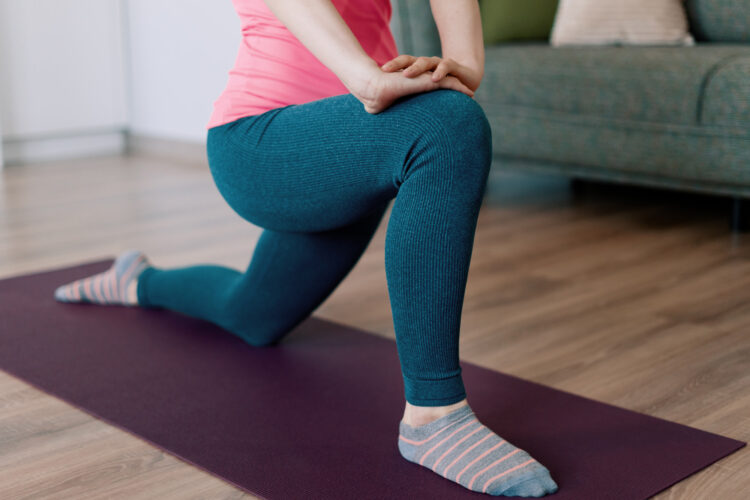
1. Kneeling Hip Flexor Stretch:
In my opinion, this is one of the most effective hip flexor exercises, and you can do this whenever you have a spare minute. I do it whenever I’m returning to my chair after a bathroom break. It is incredibly relaxing and helps improve my focus.
This stretch targets the iliopsoas, a major hip flexor muscle. It can improve your hip extension and reduce lower back strain.
How To Perform the Kneeling Hip Flexor Stretch:
- Kneel on a soft surface, like a yoga mat.
- Place your right foot flat on the floor in front of you with your knee bent at a 90-degree angle.
- Your front lower leg and the back upper leg should be parallel in the starting position.
- Then, gently lean forward and feel a deep stretch in the front of your left hip and thigh. You should feel this right where your thigh meets your pelvis.
- Hold this stretch for about 30 seconds.
Coach Tip: Breathe deeply while holding this stretch for maximal effectiveness.
2. Standing Quad Stretch (with hip flexor focus):
This is one of the most frictionless exercises and can be done virtually anywhere. You can do this exercise as long as you have enough space to stand. Chances are that you have already tried it without knowing its benefits.
How To Perform the Standing Quad Stretch:
- Stand tall with a shoulder-wide stance. Beginners can hold onto a chair or wall for balance.
- Once you are stable, flex your right knee and reach back with your right hand to grab your right foot or ankle.
- Gently pull your heel toward your butt. You should feel a deep stretch in the front of your right quad in the fully lengthened position.
- Pause in this position for 30 seconds.
- Ensure your stretching knee isn’t drifting out to the side, as it can transfer the tension to your abductors.
Coach Tip: Tuck your tailbone slightly and gently push your hips forward. This should transfer the stretch from the middle of the quad to the hip flexor.
Glute Activation
When you sit for extended periods, your glutes take the biggest hit. Sitting for eight hours every day can lead to gluteal amnesia. In this condition, your glutes forget how to function properly.
This is really bad news as glutes are the biggest muscle in your body and are responsible for several essential functions like walking, running, standing, and sitting. They also play a crucial role in your overall posture and balance.
Weak glutes can also put extra strain on your lower back and hamstrings, hampering your overall physical output.
1. Glute Bridges:
This unassuming exercise is a game-changer when it comes to curing sleepy glutes. Try it to feel its magic:
How To Perform Glute Bridges:
- Lie on your back on the floor with your knees flexed and feet placed hip-width apart on the ground.
- Position your arms on your sides with your palms facing down.
- Brace your core, squeeze your glutes, and lift your hips off the floor until your body is in a straight line from your shoulders to your knees.
- Pause in the fully shortened position for a second or two and contract the glute muscles as hard as possible.
Coach Tip: This exercise is suitable for trainers of all experience levels. However, more experienced athletes can try the single-leg variation to increase the glute activation.
2. Bird-Dogs:
Sitting on a chair for most of the day also hampers your balance. While this might not be evident at first, you will start experiencing its side effects after a few years. Bird dogs can fix this as you must use opposite limbs during this exercise.
How To Perform Bird-Dogs:
- Start in a tabletop position with your hands directly under your shoulders and your knees under your hips.
- Engage your core to maintain stability.
- Extend your right arm straight forward and your left leg straight back simultaneously. Your body should be in a straight line from your fingertips to your heel.
- Hold this position for 30 to 60 seconds and focus on achieving a peak glute contraction.
Thoracic Spine Mobility
A rounded upper back is one of the most common side effects of sitting for prolonged periods. It also leads to a stiff thoracic spine, hampering your daily functionality.
If you have a desk job, working on your thoracic mobility should be a priority for you as it can help you maintain better posture and reduce the risk of neck and shoulder issues.
1. Wall Slides:
I have tried several thoracic spine exercises, but nothing is as effective (and simple) as wall slides.
How To Perform Wall Slides:
- Stand with your back against a wall and place your feet hip-width apart a few inches away from the wall.
- Bend your knees slightly and press your lower back against the wall. Lift your arms and place your elbows on the wall at chest level. Your hands and upper back should be in contact with the wall throughout the range of motion.
- Maintaining contact with the wall, slowly slide your arms upward as far as you can comfortably.
- Think about opening your chest and engaging the muscles between your shoulder blades.
- Slowly return to the starting position.
2. Thoracic Rotation:
This is probably one of the most versatile exercises on this list. Some sedentary individuals find starting a new exercise routine intimidating. Easing into it with exercises like these can help transform your lifestyle.
How To Perform Thoracic Rotation:
- Sit on a chair with your feet flat on the floor, shoulder-width apart.
- Place your hands behind your head to expose your spine.
- Brace your core and gently rotate your upper body to the right as far as comfortable, and hold the peak contraction for 5-10 seconds.
- Slowly return to the starting position and repeat on the other side.
Coach Tip: As you gain more experience, perform this exercise kneeling to achieve a deeper thoracic spine stretch.
Posterior Chain Strengthening
For the uninitiated, the posterior chain muscles run along the back of your body. These include your glutes, hamstring, and back muscles. Sitting for extended periods weakens these muscles, and training these muscles can improve posture and overall strength.
1. Reverse Lunges:
I prefer reverse lunges over the standard variation as they help improve proprioception, balance, and hand-eye coordination.
How To Perform Reverse Lunges:
- Stand tall with a shoulder-width stance, and place your hands on your hips or behind your head.
- Step backward with your right foot so the ball of your foot is on the floor and your heel is raised.
- Flex your hips, knees, and ankles until your rear knee touches the floor.
- Push off with your back foot and step forward to return to the starting position.
- Repeat with your left leg.
2. Superman:
This is one of those exercises that look super easy but will have you begging for mercy as soon as you start. You will have major respect for Superman after you try this.
How To Perform Superman:
- Lie on the floor on your chest.
- Extend your arms overhead so your body is in a straight line.
- Brace your lower back and glute muscles and lift your arms, chest, and legs a few inches off the floor.
- Contract your lower back and glutes, and hold this position for as long as possible.
Coach Tip: Avoid looking up as it can strain your neck. Beginners can perform this exercise by lifting one limb at a time.
Sample Anti-Desk Jockey Workout
Your workout programming will dictate its effectiveness. The workout below follows a sequence of movements specifically designed to counteract the postural and muscular imbalance caused by prolonged sitting. The best part is that it won’t take you more than 15 minutes:
| Muscle Groups | Exercise | Reps/Time | Sets | Rest |
| Hip Flexors | Kneeling Hip Flexor Stretch | 30 seconds/side | 2 | Minimal |
| Standing Quad Stretch | 30 seconds/side | 2 | Minimal | |
| Glutes | Glute Bridges | 10-12 reps | 2 | 30 seconds |
| Glutes, Core | Bird-Dogs | 8-10 reps/side | 2 | 30 seconds |
| Thoracic Spine | Wall Slides | 8-10 reps | 1 | Minimal |
| Thoracic Rotation (S/Kneel) | 8-10 reps/side | 1 | Minimal | |
| Posterior Chain | Reverse Lunges | 8-10 reps/side | 1 | Minimal |
| Lower Back, Glutes | Supermans (Optional) | 8-10 reps | 1 | Minimal |
Unlike high-intensity interval training, the goal here isn’t to push your body beyond its limits. Instead, focus on targeted movements that will bring your body back into balance.
Nonetheless, you must always begin your workouts with a 5-10 minute warm-up routine. It promotes blood flow to the target muscles and improves mobility and performance. Similarly, finishing with a five-minute cool-down routine helps flush out the metabolites from the muscle tissues and promotes recovery.
Benefits Beyond the Burn: What You Can Expect

Many people are results-driven and want to know about the benefits of something before they start. So, here it is:
- Immediate Relief: Sedentary folks usually feel stiff after sitting for extended periods. Performing these exercises after a hectic day can soothe the symptoms.
- Improved Posture: Making these movements a part of your lifestyle can help identify muscle imbalances, contributing to better alignment in the long run.
- Increased Energy Levels: Sitting on a chair for eight-odd hours daily can sap your energy levels. On the other hand, staying active throughout the day can keep you feeling active, enhancing your overall productivity.
- Reduced Injury Risk: Strengthening key muscles and ironing out imbalances can prevent future aches and pains.
If you spend most of your days glued to your desk, getting active is easier said than done. Planning your days in advance is your best bet at undoing the damage caused by sitting for extended periods.
Even if you can’t train for 15 minutes, try to squeeze in just five minutes of movement. Consistency is more important than intensity, especially in the initial stages.
Conclusion
Contrary to what most people think, you don’t need to join a gym to get active and counter the effects of a sedentary lifestyle. Making small changes like doing this 15-minute workout daily will improve your overall health and well-being and get you in the best shape of your life.
Beginners can start with a five-minute workout and increase the training time as they gain more experience. Best of luck!
If you have any questions about this anti-desk jockey workout, post them in the comments below, and I’ll be happy to help!
References:
- Chuang MH, Wang HW, Huang YT, Ho CH, Jiang MY. Association of Sedentary Lifestyle with All-Cause and Cause-Specific Mortality in Adults with Reduced Kidney Function. Kidney360. 2024 Jan 1;5(1):33-43. doi: 10.34067/KID.0000000000000313. Epub 2023 Nov 16. PMID: 37968801; PMCID: PMC10833594.