



Building muscle while losing fat is the ultimate goal of most athletes. However, only a few ever achieve it.
Increasing your cardio output is one of the fastest ways to boost calorie expenditure and maximize fat loss. But it comes with its own caveats.
Doing too much cardio in the long term can lead to chronic fatigue and a loss of strength, which can hamper your gym performance and overall gains.
But all is not lost.
The advancements in exercise science have led to a rise of hybrid methods, which can help achieve the coveted objective of shedding body fat while building muscle by blending lifting with strategic conditioning.
As a personal trainer with almost two decades of hands-on experience, I have tried almost every strength and cardio training program under the sun. The 10-20-30 fat loss method is undoubtedly one of the most effective.
In this article, I’ll pull back the curtain on this secret technique that many elite athletes have been using to get shredded quickly. You’ll also learn how you can implement it into your own routine.
What is the 10-20-30 Method?

The 10-20-30 method works in 60-second cycles. You start with an easy 30-second jog on the bike, treadmill, or rower, shift to a steady 20-second run at about 70 to 80 percent effort, then finish with a hard 10-second sprint before repeating.
This is one full minute of work. Repeat it five times, and you’ve got a high-intensity interval training split that pushes your body to the limit.
This might sound a little complicated for now, but your muscle memory will take over by the second workout.
The 10-20-30 method was first introduced in endurance sports and has since found its way into strength-focused fat loss training routines.
But What Sets the 10-20-30 Method Apart?
I’m glad you asked.
Unlike most training programs you see floating around, this split has been vigorously tested. There are several peer-reviewed studies that prove the effectiveness of the 10-20-30 training routine.
Endurance athletes improved performance markers while training for less total time compared to steady-state running. It also lowered blood pressure and body fat for both untrained and trained individuals. (1)
So, why would you train for longer if you can get the same or better results in a significantly shorter time?
Why Lifters Should Adapt It
“I don’t want to lose any more body fat,” said no bodybuilder ever.
However, you want to lose excess body fat without sabotaging muscle or strength gains. The 10-20-30 method does just this.
Ten seconds of all-out effort won’t drain you like prolonged, low-intensity steady-state cardio. This regimen is versatile enough that you can add it to your existing training routine without making any significant changes.
I have most of my clients do this split after their strength training session.
The Science Behind the 10-20-30 Method

The 10-20-30 method isn’t just a clever training hack. It works because it takes advantage of how your body burns fuel, recovers, and adapts – hitting the ultimate trifecta.
Short sprints tap into fast-twitch muscle fibers while the easy segments keep fatigue in check. For distance runners, this can mean better speed with fewer miles logged.
Combining high, medium, and low-intensity training helps boost your metabolic rate and fat oxidation by making your body use stored glycogen. Your body then has to use fat as a backup energy source when it runs out of its glycogen reserves.
This also leads to a phenomenon called excess post-exercise oxygen consumption (EPOC), or the afterburn effect, which helps maximize calorie burn throughout the day, even several hours after finishing a workout.
While lower-intensity sessions burn calories during the session, they lack the same metabolic ripple effect.
The key is to do just enough to maximize calorie burn without compromising your recovery.
Remember, too much glycogen depletion can hamper your strength gains, and going too easy will make your fat loss progress suffer. You must find the perfect middle ground. Let’s also address the elephant in the room while we are talking about this.
The perfect middle ground will vary for each individual depending on their current fitness levels, genetics, age, gender, and objectives.
Set aside time at the start to define your ideal goals and outline a progress map that keeps you in the green zone.
Sprint Less, Lift More: The Hybrid Approach

Athletes who are primarily training for hypertrophy or strength gains should ideally adopt a different approach to cardio training compared to those training for endurance improvements.
Most of my clients find running intimidating and instead opt for low-impact machines like the bike, rower, or sled to get the same effects while protecting their joints.
Don’t get me wrong; You can absolutely choose running if that’s your jam. It all comes down to making choices that fit well with your lifestyle and that you can stick to for the long term.
If you’re just starting with the 10-20-30 fat loss method, you should limit them to 2-3 blocks per week, especially if you were not already big on cardio. This ensures optimal recovery and avoids any interference with your regular lifting regimen.
Coach Tip: Folks looking to take it one step further should consider pairing this split with supersets of accessory lifts for maximizing fat expenditure.
Pairing Intervals With Short Lifts Supersets
Some people can’t make the time to hit the gym and want to add a similar strength training routine on top of the 10-20-30 method for optimal gains.
I’ve got you covered, too.
Contrary to what most people think, you don’t need an elaborate multi-hour gym training routine to achieve your fitness goals. A targeted split can help you get there much faster than you probably think.
I recommend doing 5-10 minutes of the 10-20-30 fat loss method and then supersetting it with accessory lifts like dips, rows, or lunges using a workout of the same duration. The sprints will maximize calorie expenditure, while the lifts will target hypertrophy improvements.
This might sound easy, but you’ll be begging for mercy by the end of this workout.
Do You Really Need Short Sprints?
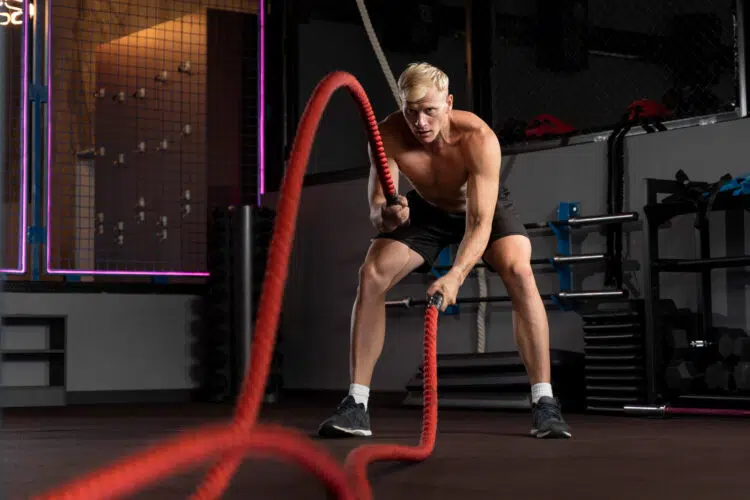
Many of my clients have the same question when I tell them about this method.
The short answer is yes, you do.
Sprints recruit more muscle fibers, raise lactate levels, and boost hormonal responses in the body that vanilla steady-state cardio cannot match. This is also the reason why you feel much more exhausted after a short sprint compared to a longer low-intensity session.
Plus, when paired with lifting, these short blasts of exercise can improve conditioning without the wear and tear of pounding the treadmill for an hour daily.
This is not just gym bro talk; scientific research shows that HIIT training workouts can lead to greater fat loss, improved VO2 max, and better insulin sensitivity compared to steady state training. (2)
Comparing the 10-20-30 Method with Regular HIIT Workouts
You are probably wondering that if HIIT workouts are so amazing, shouldn’t you be sticking with the conventional high-intensity route instead of complicating it with smaller 10-30 second splits?
First of all, I’m so glad that you’re thinking this way. However, there is a method to this madness.
Ten seconds at maximum effort is tough but manageable. Conversely, a 60-second HIIT sprint can hammer your nervous system and recovery, which can be a bummer if you are also following an intense hypertrophy-focused routine.
The 30-second easy and 20-second moderate phases allow you to catch your breath, meaning you are not redlining the whole time.
Structuring a Fat-Loss Workout with 10-20-30
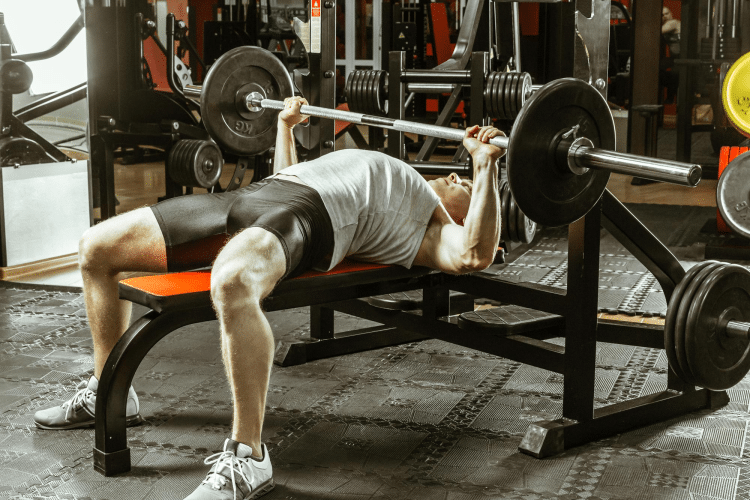
Now that you know everything there is to understand about this training split, it is time to put this knowledge to work.
Here is how you should structure the 10-20-30 fat loss method with superset training to maximize fat expenditure and hypertrophy:
Begin by sticking to 5-minute blocks (five full cycles), and repeat up to three times depending on your current conditioning level. Remember, you don’t have to stick to the same exercise for each minute. You could choose between the bike, rower, sled, or treadmill.
Once you are done with the fat loss part of the workout, move on to supersets. Start with the following templates:
- Upper push + pull: Bench press with barbell rows, or overhead press with chin-ups.
- Lower strength + accessory: Squats with Romanian deadlifts, or lunges with hamstring curls.
- Compound + isolation: Deadlifts with biceps curls, or pull-ups with lateral raises.
- Core finishers: Ab rollouts or hanging leg raises paired with sled pushes.
Perform each exercise for a minute while avoiding rushing through the reps. Prioritize feeling a deep stretch and sharp contraction in the target muscle fibers throughout the range of motion.
Start with lighter loads and increase the volume and intensity as you get comfortable with the movement mechanics and can handle heavier weights while maintaining proper technique. This limits injury risk and maximizes your growth potential.
Tip: Always begin your workouts with a short dynamic stretching routine to warm up the muscles, joints, and tendons. It will help improve your training performance and prevent the risk of injury. Similarly, end with a static stretching routine to flush out the metabolites from your muscle tissues and kick-start recovery.
10-20-30 Method Protects Strength And Muscle Gains
Traditional cardio routines can put you in a catabolic state, as your body might break down muscle tissue for energy during prolonged cardio sessions. However, the 10-20-30 fat loss method preserves fast-twitch fibers, which are crucial for gaining strength and size.
Short cardio intervals can also help raise growth-friendly hormones like testosterone and growth hormone. On the flip side, longer sessions can increase cortisol levels and inflammation markers, which can make your gains stall.
Strength training supersets paired with interval training is the ideal formula for most people.
It can keep your training volume high enough for optimal muscle growth while maximizing fat loss.
What else could you ask for?

Rest Time and Recovery
Since these are relatively short cardio workouts, you should aim to complete the circuit without completely stopping for rest. Each 60-second cycle is self-regulating, meaning it has built-in recovery to prevent burnout.
However, if you still need a short breather, feel free to pause between each interval block to ensure a high training intensity while giving your muscles the much-needed break.
Nutrition Considerations for Maximum Fat Loss
As they say, “You cannot out-train a bad diet.”
Irrespective of how hard you train, you won’t be successful in shedding the spare tire if you eat more calories than you burn in a day.
Use this total daily energy expenditure (TDEE) calculator to determine your ideal daily calorie and macronutrient goals. Then, break down these numbers into three to five equal meals to ensure your muscles have the necessary fuel to grow bigger and stronger.
Conclusion
The 10-20-30 method got so popular in such a short time because it delivers fat loss, muscle gains, and improved recovery while doing less – the ultimate fitness objective. It is ideal for intermediate and advanced lifters who want a single-digit body fat percentage without compromising on their hard-earned strength and muscle.
Consistency, dedication, and discipline are the most important factors when it comes to achieving your goals with this routine. Start small and slowly increase the challenge as you gain more experience. Best of luck!
References:
- Bangsbo J. 10-20-30 exercise training improves fitness and health. Eur J Sport Sci. 2024 Aug;24(8):1162-1175. doi: 10.1002/ejsc.12163. Epub 2024 Jul 19. PMID: 39031952; PMCID: PMC11295100.






Good article but you have the protocol backwards. It should be 30 second jog 20 second run 10 sprint in that order not the other way around as you state. This is how the main studies have implemented this protocol. I have been using this for years with great success in all forms of my cardio training.
Thank you for pointing this out. This oversight is fixed.