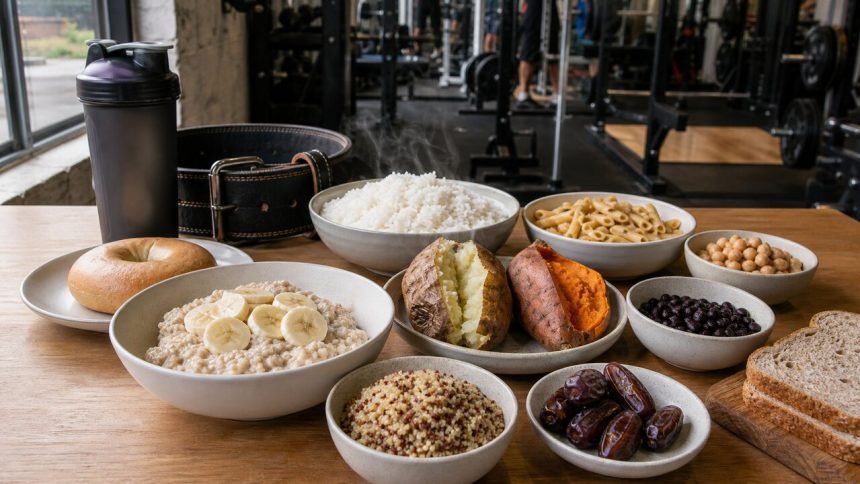
The best carbs for muscle growth are foods that help you train hard, recover between demanding sessions, and meet your calorie target without upsetting your stomach. For most lifters, that means a mix of rice, potatoes, oats, pasta, bread, fruit, and legumes rather than one supposedly anabolic food. Your portion, training schedule, appetite, and tolerance matter more than whether a carb is labeled clean, fast, or slow.
FitnessVolt compared 12 practical foods using the specific USDA FoodData Central records linked below, along with preparation, portability, fiber, and usefulness around training. This is a food-first planning guide based on published research and nutrition records. We did not test blood glucose responses or claim that one food builds more muscle than another.
Carbohydrate supports training and glycogen restoration, but it does not replace progressive lifting, adequate protein, or enough total calories. A 2022 systematic review found that extra carbohydrate often did not improve normal fed-state resistance workouts, although it became more useful in fasted conditions and higher-volume sessions. That distinction is the key to choosing well instead of simply eating more.
The 12 Best Carbs at a Glance
Values below are rounded estimates for generic foods. Brands, cooking methods, portions, and toppings change the totals. Use the table to compare foods, then check the package label or USDA record for the version you eat.
| Food and Portion | Carbs | Calories | Fiber | Best Use | Main Tradeoff |
|---|---|---|---|---|---|
| Rolled oats, 1/2 cup dry | 27 g | 150 | 4 g | Breakfast or 2+ hours pre-workout | Can feel heavy close to training |
| White rice, 1 cup cooked | 45 g | 205 | 1 g | Easy meal base and post-workout meal | Less filling during a cut |
| Russet potato, 1 medium baked | 37 g | 161 | 4 g | Filling lunch or dinner | Toppings can dominate the calories |
| Sweet potato, 1 medium baked | 24 g | 103 | 4 g | High-volume cutting meal | Less carb-dense for high needs |
| Pasta, 1 cup cooked | 43 g | 221 | 3 g | Bulking meal or 2-3 hours pre-workout | Portions and sauces add up quickly |
| Plain bagel, 1 medium | 55 g | 277 | 2 g | Portable pre-workout meal | Low in fiber and easy to overeat |
| Whole-wheat bread, 2 slices | 27 g | 161 | 4 g | Portable sandwich or measured snack | Slice size varies by brand |
| Quinoa, 1 cup cooked | 39 g | 222 | 5 g | Mixed meal and higher-fiber prep | Costs more and is less carb-dense than rice |
| Banana, 1 medium | 27 g | 105 | 3 g | 30-90 minutes before training | May be too little for a long session |
| Chickpeas, 1 cup cooked | 45 g | 269 | 13 g | Filling meal 3+ hours before training | Can cause bloating near a workout |
| Black beans, 1 cup cooked | 41 g | 227 | 15 g | Cut-friendly bowls and rest-day meals | Highest-fiber option; legumes may feel uncomfortable near training |
| Medjool dates, 2 large | 36 g | 133 | 3 g | Compact pre-workout add-on | Small portions are easy to overshoot |
USDA record key: values are rounded from generic records for dry oats (FDC 173904), cooked white rice (168878), baked russet potato (170030), baked sweet potato (168483), cooked enriched pasta (169737), plain bagel (174899), whole-wheat bread (2758994), cooked quinoa (168917), raw banana (173944), cooked chickpeas (173757), cooked black beans (173735), and Medjool dates (168191). Brands, cooking methods, and actual portions can differ.
How We Chose These Foods
This is not a ranking of which carbohydrate is most anabolic. Carbs do not create hypertrophy without a training stimulus and sufficient protein. We scored each food for five practical jobs:
- Carbohydrate per normal portion: enough to make a meaningful contribution without requiring an unusual serving.
- Fiber and fullness: useful farther from training and during a cut, but sometimes uncomfortable immediately before lifting.
- Preparation and portability: a food only helps if it fits work, school, travel, and meal prep.
- Training proximity: lower-fiber choices are often easier near a hard session, while mixed meals fit better several hours out.
- Calorie phase: filling staples can help a cut; compact foods can make a high-calorie bulk easier.
The point is to match the food to the job. A bean bowl can be excellent at lunch and miserable 20 minutes before heavy squats. A plain bagel can be useful before training but weak as the foundation of an entire diet.
The 12 Best Carb Foods for Lifters
1. Rolled Oats
A half-cup of dry rolled oats supplies about 27 grams of carbohydrate, 150 calories, and 4 grams of fiber. Oats work best at breakfast or at least two hours before training, especially when paired with Greek yogurt, milk, whey, eggs, or another protein source.
Best for: lifters who want an inexpensive breakfast with useful fiber and easy portion control. Move it away from training if: a large bowl sits heavily in your stomach. Rice, toast, or a banana will usually feel lighter when the session starts soon.
Many sweetened cereals provide less fiber per serving, but brands vary, so compare the package label. Cereal can still be useful when appetite is low and you need a compact meal.
2. White Rice
One cup of cooked white rice provides about 45 grams of carbohydrate and 205 calories with little fiber. That makes it easy to combine with lean meat, fish, eggs, tofu, or beans without turning the meal into an enormous volume of food.
Best for: pre-workout meals, post-workout meals, and bulking phases where appetite is the limiting factor. Use another option if: you are dieting and white rice leaves you hungry. Potatoes, beans, or oats usually offer more fullness per calorie.
Brown rice is not inherently better for muscle growth. It provides more fiber and a different texture, while white rice is often easier to tolerate near training. Choose by appetite, digestion, and the rest of the day’s food.
3. Russet Potatoes
A medium baked russet potato contains roughly 37 grams of carbohydrate, 161 calories, and 4 grams of fiber before toppings. Potatoes are filling, inexpensive, and flexible enough for breakfast hashes, meal-prep bowls, or dinner.
Best for: lifters who want a substantial plate without relying on huge calories. Watch the preparation if: you are cutting. Butter, oil, cheese, and cream can add more calories than the potato itself.
Potatoes can make a larger plate than rice at a similar calorie target, while rice is often easier to eat in large amounts. Use the option that keeps you satisfied and digests well.
4. Sweet Potatoes
A medium baked sweet potato has about 24 grams of carbohydrate, 103 calories, and 4 grams of fiber. It is not metabolically superior to a white potato, but the lower energy density can help build a large, satisfying plate.
Best for: cuts, maintenance diets, and mixed meals with protein and vegetables. Increase the portion if: you are using it to fuel a long, high-volume training day. One medium sweet potato may not contribute enough carbohydrate by itself.
Choose sweet or white potatoes by taste and portion needs. The muscle-building difference comes from the complete diet, not the color of the potato.
5. Pasta
A cup of cooked pasta provides roughly 43 grams of carbohydrate and 221 calories. It is easy to scale upward, stores well, and pairs naturally with lean meat, tomato sauce, vegetables, or a dairy-based protein.
Best for: bulking meals and pre-workout meals eaten two to three hours before lifting. Measure the bowl if: you are cutting. A restaurant portion plus oil, cheese, or cream sauce can turn a sensible carb source into the day’s largest calorie hit.
Whole-grain pasta adds fiber; regular pasta is often easier closer to training. Pick the version that digests well rather than treating one as virtuous and the other as junk.
6. Plain Bagels
A medium plain bagel supplies about 55 grams of carbohydrate and 277 calories. It is portable, predictable, and much easier to eat than another bowl of rice when calorie needs climb.
Best for: lifters training after work, hardgainers, and anyone needing a portable meal one to three hours before training. Do not make it your only staple if: the rest of your diet is already low in fiber, fruit, and vegetables.
Pair a bagel with eggs, lean meat, cottage cheese, or Greek yogurt. Jam can add more carbohydrate when needed; thick layers of butter or cream cheese add substantial fat and may feel heavier close to training.
7. Whole-Wheat Bread
Two slices of whole-wheat bread provide about 27 grams of carbohydrate, 161 calories, and 4 grams of fiber, although brands vary. Bread makes portions easy to repeat and turns lean protein into a meal you can carry.
Best for: sandwiches, measured snacks, and lifters who need convenience without a huge calorie load. Check the label if: the loaf uses unusually large slices, dense seeds, or added sweeteners. Two slices can mean very different totals.
Highly fibrous bread can feel heavy immediately before training. A lighter loaf, white bread, or rice may be the better tactical choice when comfort matters more than fullness.
8. Quinoa
One cup of cooked quinoa contains roughly 39 grams of carbohydrate, 222 calories, and 5 grams of fiber. It adds magnesium, texture, and a modest amount of protein to a mixed meal.
Best for: meal prep, mixed bowls, and lifters who want more variety than rice or pasta. Skip the premium price if: you only need an inexpensive carb base. Quinoa contributes protein, but it should not replace a deliberate high-quality protein source.
Rice is cheaper and easier to eat in large portions. Quinoa offers more fiber and a different texture. The useful choice is the one you can prepare consistently.
9. Bananas
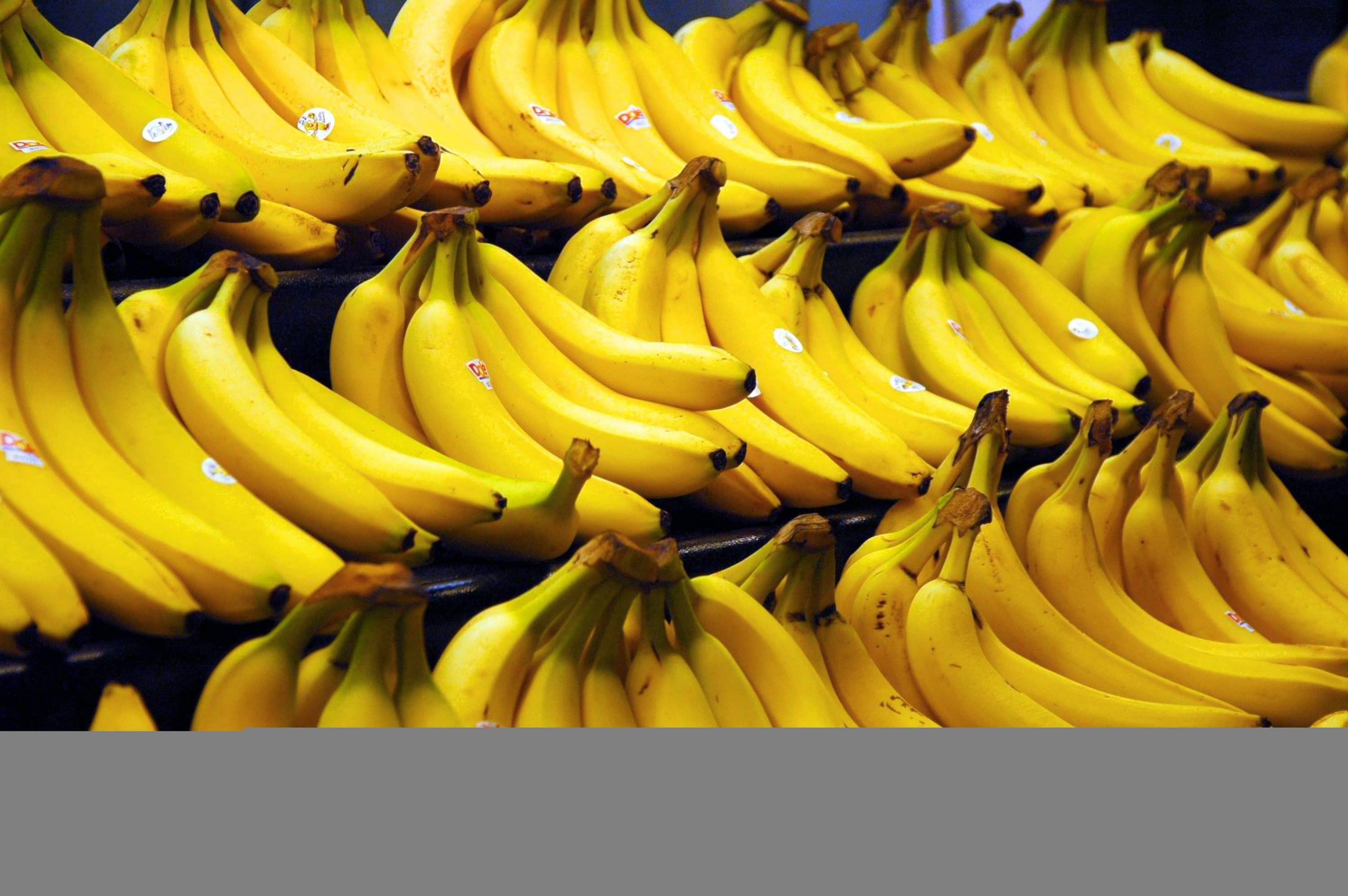
A medium banana provides about 27 grams of carbohydrate, 105 calories, and 3 grams of fiber. It needs no preparation and fits easily beside yogurt, a shake, toast, oats, or cereal.
Best for: a familiar snack 30 to 90 minutes before training. Add another carb if: the session is long or your daily target is high. One banana is useful, but it is not a full fueling strategy for every athlete.
Bananas often beat heavier foods for convenience. Dates are more compact; oats or potatoes are more filling. Use the tradeoff that matches the day.
10. Chickpeas
A cup of cooked chickpeas supplies roughly 45 grams of carbohydrate, 269 calories, and 13 grams of fiber. They work in bowls, salads, curries, wraps, and blended spreads.
Best for: filling lunches, rest days, and meals eaten at least three hours before training. Move them earlier if: beans cause bloating, gas, or urgency. A high-fiber meal immediately before heavy lifting is a poor bargain even when the food is nutritious.
Chickpeas are more filling than rice and contribute some protein. Rice is easier to digest near training. Both can belong in the same week.
11. Black Beans
A cup of cooked black beans contains about 41 grams of carbohydrate, 227 calories, and 15 grams of fiber. Few foods on this list match that combination of carbohydrate and fullness.
Best for: cuts, high-fiber diets, burrito bowls, and meals well away from training. Choose rice or bread instead if: you need fast digestion or struggle with legumes.
Beans are not a complete post-workout solution by themselves. Pair them with a protein source and enough total food to support your goal.
12. Medjool Dates
Two large Medjool dates provide roughly 36 grams of carbohydrate and 133 calories. They fit in a gym bag, require no cooking, and deliver a meaningful portion in a few bites.
Best for: a compact pre-workout add-on, endurance-plus-lifting days, or a bridge until a full meal. Pre-portion them if: you are cutting. Their small size makes planned calories easy to exceed.
Dates are more carb-dense than a banana; a banana gives more volume and may feel more satisfying. Neither replaces a balanced meal with protein.
Where Cereal Fits
Cereal can be useful when appetite is low or a quick meal is the difference between hitting and missing a calorie target. It did not make the main 12 because brands vary too much for one honest nutrition entry. Compare the package label for portion size, carbohydrate, fiber, and added sugar.
Pair cereal with milk or Greek yogurt to add protein. A high-fiber cereal may work well at breakfast, while a lower-fiber option can be easier near training.
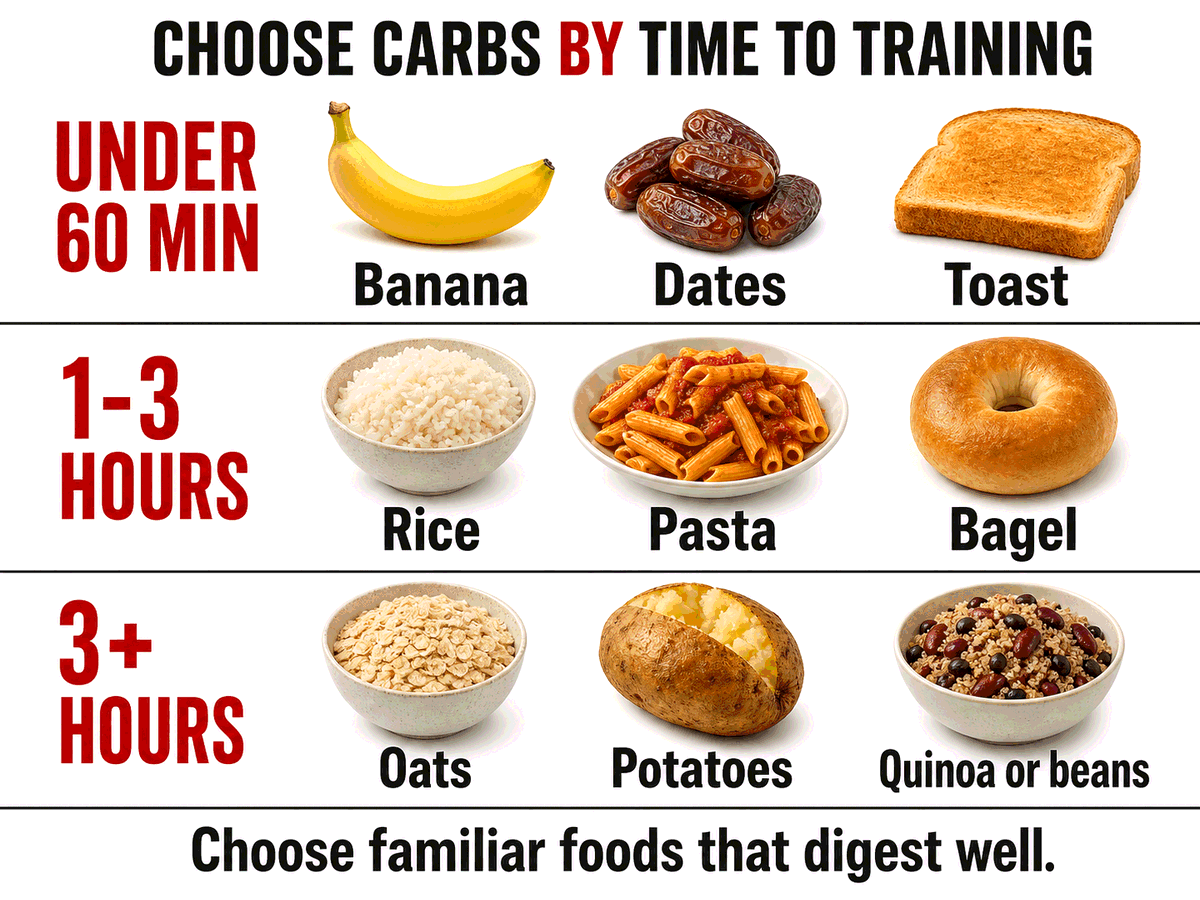
Choose Carbs by Time Until Training
| Time Until Training | Good Starting Choices | What to Limit | Why |
|---|---|---|---|
| 3+ hours | Oats, potatoes, quinoa, beans, rice, pasta | Nothing specific if it digests well | A normal mixed meal has time to settle |
| 1-3 hours | Rice, pasta, bread, bagel, banana | Very large portions of fat or fiber | Carb-forward meals can provide energy without excessive fullness |
| Under 60 minutes | Banana, dates, toast, small cereal or rice portion | Beans, huge oat bowls, unfamiliar foods | Smaller, familiar choices are less likely to leave you uncomfortably full |
| After training | Any tolerated staple paired with protein | Rigid 30-minute-window thinking | Daily intake matters most unless recovery time is short |
Our evidence-based nutrient timing guide goes deeper into pre-workout meals, post-workout nutrition, fasting, and repeated-session recovery.
Post-Workout Carbs Without the Anabolic-Window Myth
After training, choose a carb food that helps you reach the day’s calorie and carbohydrate targets, then pair it with a high-quality protein source. Rice and chicken, potatoes and fish, pasta and lean meat, cereal and milk, or fruit and Greek yogurt can all work.
Rapid carbohydrate replacement matters most when another demanding session follows soon. The International Society of Sports Nutrition discusses aggressive refueling strategies for athletes with a recovery window of only a few hours. That is not the normal requirement after an evening lifting session followed by a full night’s recovery.
The old rule that everyone must spike insulin within 30 minutes oversells the evidence. A meal within the next few hours is usually practical. Your total diet and the meal eaten before training also shape what happens after the session.
Carbs During a Cut Versus a Bulk
| Goal | Prioritize | Use Strategically | Track |
|---|---|---|---|
| Cut | Potatoes, oats, beans, fruit, measured rice | Compact carbs near training when they protect performance | Weekly body weight, hunger, training quality |
| Maintenance | A varied mix that supports training and food quality | Adjust portions between hard and easy days | Performance, appetite, digestion |
| Bulk | Rice, pasta, bagels, oats, cereal, bananas, potatoes | Lower-fiber add-ons when food volume limits intake | Weekly weight trend, waist, recovery, gym progress |
Use the Adaptive TDEE Calculator to estimate a starting calorie target, then adjust from your real weight trend. A food does not create a clean bulk. The size of the surplus, protein intake, training progression, and rate of gain matter more.
How Many Carbs Do Lifters Need?
There is no universal bodybuilding number. Sports-nutrition guidance scales carbohydrate intake with training duration and workload. For many lifting-focused readers, roughly 3 to 5 grams per kilogram of body weight per day is a reasonable discussion range, with higher intakes becoming more relevant as volume, session length, endurance work, or twice-daily training increases. This is a practical starting discussion derived from training-load-based sports-nutrition guidance, not a universal hypertrophy target.
Treat that range as a starting framework, not a prescription. The systematic review by Henselmans and colleagues found that carbohydrate has a smaller acute performance effect in ordinary fed resistance sessions than gym folklore suggests. Hard, high-volume, fasted, or repeated sessions are different.
Adjust using four signals:
- Your body-weight trend matches the goal.
- Training performance and volume are moving in the right direction.
- Hunger and digestion are manageable.
- Total protein and calories are already covered.
Carbohydrate cannot rescue a program that lacks progressive overload. Review these workout programming mistakes before adding another bowl of rice to solve a training problem.
Sample High-Carb Training Day
This example fits an 82-kilogram (180-pound) lifter in a calorie surplus who trains hard in the afternoon. The displayed estimates total 436 grams of carbohydrate, or about 5.3 grams per kilogram; actual brands and portions can vary. It is an illustration for a high-volume day, not a target every lifter needs.
| Meal | Example | Approx. Carbs | Practical Swap |
|---|---|---|---|
| Breakfast | 80 g dry oats, 1 medium banana, 1 cup 2% milk | 93 g | Use a bagel and banana when appetite is low and training is later |
| Lunch | 2 cups cooked white rice, 1 cup broccoli, 1 medium orange, chicken | 115 g | Use an equivalent potato portion when rice gets repetitive |
| Pre-workout | 1 medium plain bagel, 1 tablespoon jam, lean protein | 68 g | Use banana and toast if a bagel feels heavy |
| Post-workout bridge | 1 cup corn flakes, 1 cup 2% milk, 1 medium banana | 63 g | Skip when a balanced dinner is available promptly |
| Dinner | 2 cups cooked spaghetti, 1 cup tomato sauce, lean meat, vegetables | 97 g | Use quinoa and beans for more fiber |
These totals use generic USDA foods and rounded household portions; milk, cereal, jam, sauce, and fruit size can change the result. Scale portions to your calorie target and workload. Someone training three days per week with modest volume may need far less. The complete RPE programming guide can help you judge how hard sessions and accumulated volume actually are.
Five Carb Mistakes That Hurt More Than the Food Choice
- Treating glycemic index as a morality score. Cooking, food form, portion size, meal composition, and individual response all matter. High GI does not mean automatic fat gain, and low GI does not guarantee a good pre-workout meal.
- Loading fiber immediately before heavy training. Beans and oats are valuable foods, but the wrong timing can ruin a session through fullness or urgency.
- Chasing a 30-minute post-workout deadline. Normal lifters usually have more flexibility, especially after a pre-workout meal.
- Adding carbs without checking total calories. Rice, pasta, and bagels still count toward the surplus. More is useful only when it serves the plan.
- Using only convenience carbs. Low-fiber options can help around training, but fruit, vegetables, legumes, and whole grains still support the broader diet.
Sources
- Thomas DT, Erdman KA, Burke LM. 2016. Nutrition and Athletic Performance. Medicine & Science in Sports & Exercise. PMID: 26891166.
- Kerksick CM, et al. 2017. International Society of Sports Nutrition position stand: nutrient timing. Journal of the International Society of Sports Nutrition. DOI: 10.1186/s12970-017-0189-4.
- Henselmans M, et al. 2022. The Effect of Carbohydrate Intake on Strength and Resistance Training Performance: A Systematic Review. PMID: 35215506.
- Wikholm J, et al. 2025. Acute effects of resistance exercise on skeletal muscle glycogen depletion: a systematic review and meta-analysis. Physiological Reports. PMID: 41420384.
- U.S. Department of Agriculture, Agricultural Research Service. 2026. FoodData Central. Accessed July 29, 2026.
Final Take
Start with a carb that fits the next session and your current calorie phase. Rice, bananas, bagels, and dates are convenient near training; potatoes, oats, quinoa, and beans add more fullness farther away. Pair the food with protein, judge the result by performance and digestion, and adjust the portion before searching for a more exotic answer.