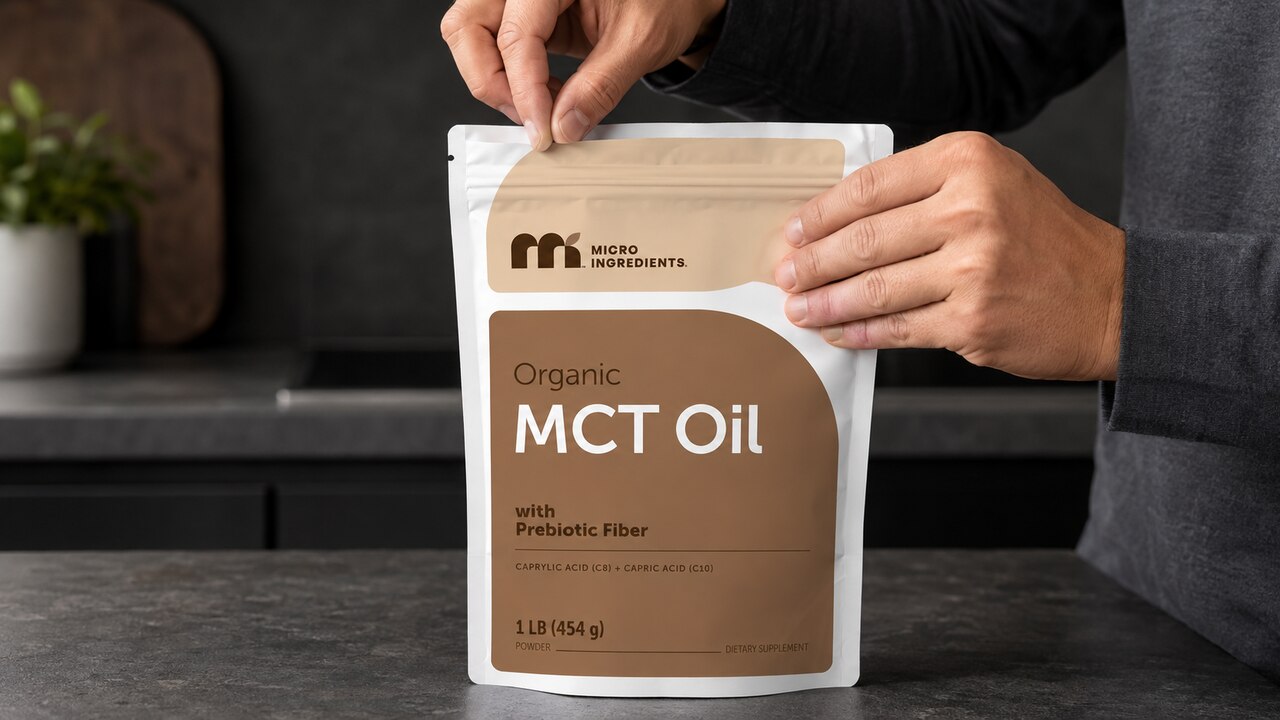
Micro Ingredients Organic MCT Oil Powder combines 7 g of MCT oil with 3 g of acacia fiber in its current published 10 g serving. That gives you a powdered fat source for coffee or food, with 70 calories per scoop. The fiber carrier matters: a scoop of powder is not the same quantity of oil as a scoop of liquid MCT.
I would consider the 1 lb bag for someone who wants to add measured fat and fiber to a meal and prefers a powder container. I would not buy it for a promised boost in workout performance or effortless fat loss. The published label also carries a California lead-exposure warning, which warrants attention before deciding to use it every day.
FitnessVolt may earn a commission from purchases through our links. This research-based review covers ASIN B07T5X85N9. We inspected the brand’s current label image, compared product records, and reviewed human research. We did not taste this powder, test its mixing behavior, measure ketones, or perform contaminant testing.
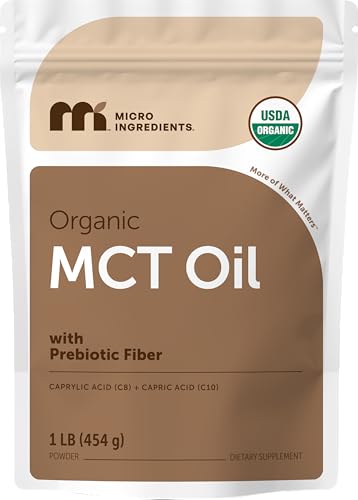
Micro Ingredients Organic MCT Oil Powder, 1 lb
MCT Oil With an Acacia Fiber CarrierThe current brand label lists 7 g MCT oil and 3 g acacia fiber in a 10 g scoop, with 45 servings per bag. Includes a California lead-exposure warning; no lot-specific contaminant report was reviewed.
Pros
- Current brand panel states MCT and acacia amounts
- Powder format suits measured additions to drinks or food
- 45 listed servings in the 1 lb bag
Cons
- Each scoop adds 70 calories and 7 g saturated fat
- Retailer nutrition records do not all match the current brand panel
- Label carries a lead-exposure warning without a measured level
Use the Current Label, Not an Old Nutrition Entry
The brand’s 1 lb product page describes coconut-derived MCTs with a 70% C8 and 30% C10 blend. In the current Supplement Facts image, a scoop weighs approximately 10 g and supplies 7 g MCT oil plus 3 g organic acacia fiber powder. The panel lists 45 servings.
| Published amount | Per approximately 10 g scoop | Buyer implication |
|---|---|---|
| MCT oil | 7 g | Compare this amount with liquid oils |
| Acacia fiber powder | 3 g | The carrier is part of the formula |
| Calories | 70 | Include the scoop when tracking food intake |
| Total and saturated fat | 7 g each | Account for other saturated-fat sources |
| Carbohydrate and dietary fiber | 3 g each | The label’s carbohydrate amount consists of fiber |
During our September 7 check, a retailer’s nutrition transcription for the 1 lb product showed 1 g fiber and 2 g protein instead. That did not match the brand’s refreshed panel. We used the current brand image for this review and did not carry the retailer’s protein entry into the calculations. Compare your bag with the panel before entering it in a food-tracking app; an old database entry could give you the wrong macros.
There are also two different percentages to keep separate. The formula contains 7 g oil in 10 g powder, or 70% oil by the listed serving weights. The brand’s 70:30 C8:C10 statement describes the fatty-acid blend. It does not mean a scoop contains 7 g C8 plus 3 g C10. We did not inspect a batch assay establishing the precise fatty-acid quantities.
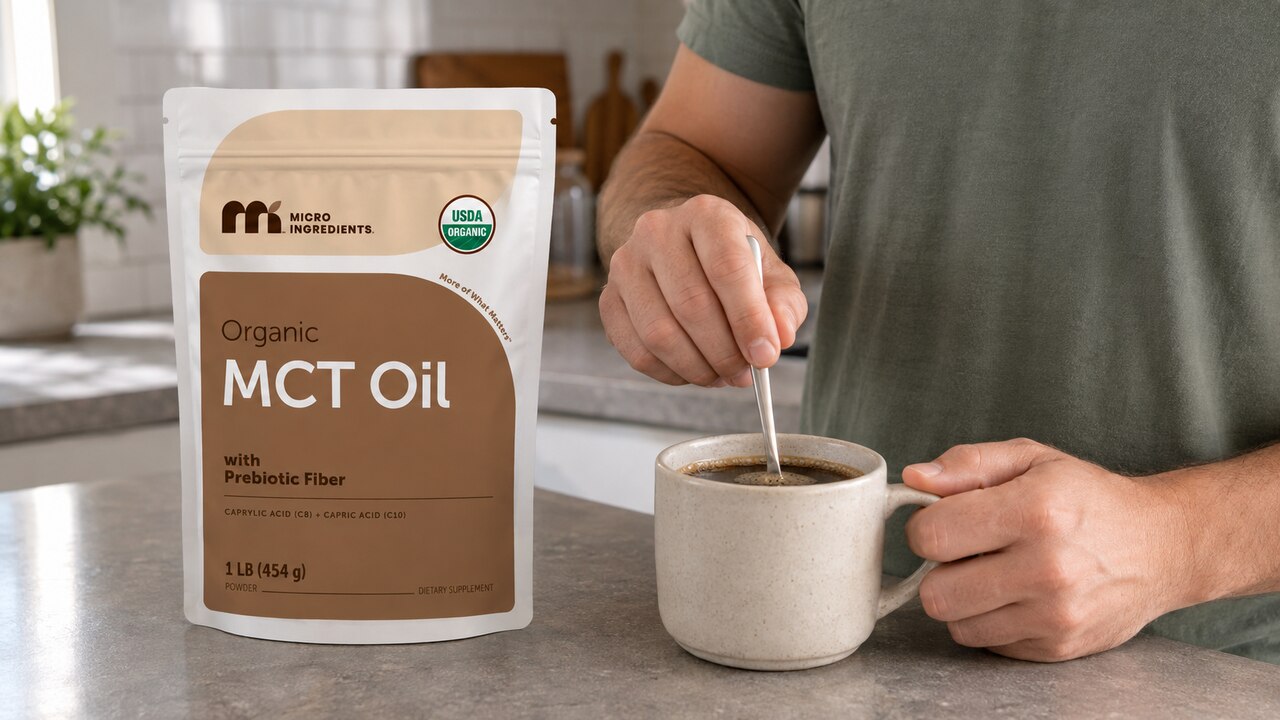
The Cost per Scoop and per Gram of Oil
Amazon product data showed $29.95 for the exact 1 lb ASIN on September 7, 2026. Using the brand’s 45 listed servings, that is about $0.67 per scoop. Prices can change, and this snapshot excludes tax, shipping, and subscription offers.
| Question | Calculation | Answer |
|---|---|---|
| Cost per serving | $29.95 / 45 | About $0.67 |
| MCT oil across listed servings | 45 x 7 g | 315 g |
| Cost per gram of MCT oil | $29.95 / 315 g | About $0.095 |
| 30 days at one scoop per day | 30 x $29.95 / 45 | About $19.97 of the bag |
| Added calories over those 30 days | 30 x 70 | 2,100 calories |
The 315 g figure comes from the rounded serving declaration, not a laboratory measurement of the pouch. The package weighs 454 g, while 45 nominal 10 g servings total 450 g. Small rounding differences do not justify claiming extra usable servings.
For an oil-only price comparison, another product containing 315 g of MCT oil would need to cost less than $29.95 to beat this snapshot per gram. Check the oil’s declared grams rather than comparing a liquid bottle’s milliliters with this bag’s grams. A powder also provides a carrier; paying less for liquid does not give you the same formulation.
See our MCT oil powder comparison for other powdered options. Our broader MCT oil guide includes liquids and C8-focused choices. Keep the quantity of actual oil, flavoring, carrier ingredients, and delivered cost in the comparison.
Adding Calories and Replacing Calories Are Different Choices
A scoop can fit a meal plan, but decide what it changes. Added to the same breakfast you already eat, it contributes another 70 calories. Used instead of a measured ingredient containing 100 calories, it reduces that meal by 30 calories. The product cannot tell you which of those situations applies.
The 2,100-calorie monthly figure above is arithmetic, not a prediction of weight gain. Appetite, activity, and other food choices can change. Track the scoop alongside the rest of your intake, using our calorie deficit calculator as a starting estimate when weight loss is your goal.
The distinction also matters when reading research. In a 16-week randomized weight-loss trial, researchers assigned 49 adults with overweight to MCT oil or olive oil. Participants received calorie targets and weekly counseling; the oil formed part of the planned diet. Thirty-one completed the study. The MCT group had a lower endpoint body weight, but the study used 18-24 g of oil daily, not a single 7 g MCT serving of this powder.
That trial does not show that adding this product to an unchanged diet causes weight loss. The sample was small, 18 participants did not complete the program, and several body-composition comparisons were less conclusive than the headline weight finding. It also did not test Micro Ingredients or its acacia-containing formula. Do not increase scoops to copy a research dose.
What to Expect for Training
MCTs can raise circulating ketones, but that does not establish better exercise performance. A systematic review of endurance studies found little to no performance benefit overall. Most included studies did not show improvements in the outcomes examined, despite higher ketones in some conditions.
I would not choose this powder as the main fuel for a demanding session on that basis. If you want it in breakfast, regard it as an ingredient you can tolerate and account for. We have no product-specific evidence showing that its powdered form improves endurance or avoids an energy dip.
The brand describes powder as gentler on the stomach than liquid oil. We did not find a head-to-head human trial of this exact powder against a matching liquid dose that establishes that advantage. The acacia carrier and amount you consume could affect your experience, but a product claim cannot predict how your stomach will respond. Avoid making a race or important workout your first trial of an unfamiliar food supplement.
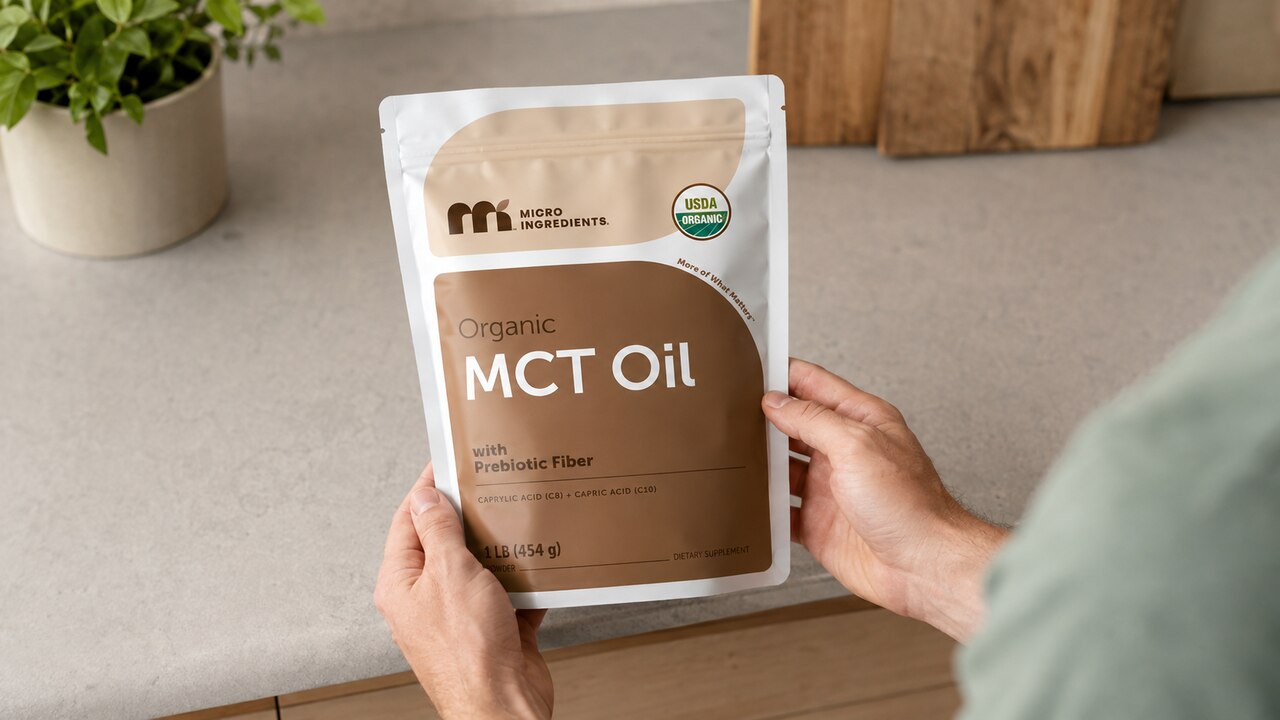
Fiber, Saturated Fat, and the Lead Warning
The current label declares 3 g of dietary fiber per scoop, or 11% of its stated Daily Value. That contributes some fiber, but it is not a reason to regard MCT powder as a substitute for a varied diet. If you only want more fiber, consider whether buying a fat-and-fiber mixture serves that purpose. You would also be adding 70 calories and 7 g saturated fat with the fiber.
Do not assume that coconut sourcing makes this a cholesterol-lowering choice. A meta-analysis of seven randomized-trial articles found a small increase in triglycerides with MCT oil. Overall total, LDL, and HDL cholesterol differences were not significant, but comparisons with predominantly unsaturated oils were less favorable for total and LDL cholesterol. Your existing diet and the fat you replace matter. Discuss use with your clinician if you manage high triglycerides or follow advice to limit saturated fat.
The brand’s published label includes a California warning about lead exposure and cancer and reproductive harm. A warning does not give the amount of lead in a particular serving or batch. We did not review a lot-specific certificate of analysis, so this review cannot establish a measured exposure or declare the product contaminant-free.
California’s food-warning guidance explains that warnings concern exposure to listed chemicals and do not mean that every warned food must never be consumed. That general guidance is not a safety assessment of this bag. Before making it a daily purchase, ask the manufacturer for a lot-matched report with the laboratory, test date, lead result, and units. A general statement that products undergo testing does not supply those details.
Who Should Skip This Powder?
Skip it if you want a calorie-free addition to fasting drinks, a proven endurance supplement, or a fiber supplement without added fat. It is also a poor fit if coconut conflicts with your allergy advice or a previous MCT product caused digestive problems. We did not test whether the powder format resolves those problems.
Pregnant or breastfeeding buyers, parents choosing products for children, and anyone who needs to minimize potential lead exposure should get qualified advice before use. If a manufacturer cannot provide the contaminant documentation you require, choose a product that can. You do not need this powder to make a training plan or a balanced diet work.
Bottom Line
Micro Ingredients MCT Oil Powder offers a defined 7 g MCT and 3 g acacia mixture at about $0.67 per scoop in our September 7 snapshot. It may suit a measured coffee or meal addition, provided you account for the calories and tolerate the ingredients. The current label differs from some retailer nutrition entries and includes a lead-exposure warning. Check the delivered panel and request batch documentation before committing to routine use. I would not buy it for a promised fat-loss or workout advantage.
Sources
- St-Onge MP, Bosarge A. (2008). Weight-loss diet that includes consumption of medium-chain triacylglycerol oil leads to a greater rate of weight and fat mass loss than does olive oil. American Journal of Clinical Nutrition.
- Chapman-Lopez TJ, Koh Y. (2022). The Effects of Medium-Chain Triglyceride Oil Supplementation on Endurance Performance and Substrate Utilization in Healthy Populations: A Systematic Review. Journal of Obesity and Metabolic Syndrome.
- McKenzie KM, et al. (2021). Medium-Chain Triglyceride Oil and Blood Lipids: A Systematic Review and Meta-Analysis of Randomized Trials. Journal of Nutrition.
- California Office of Environmental Health Hazard Assessment. (2025 update). Foods and Beverages: Proposition 65 Warnings.