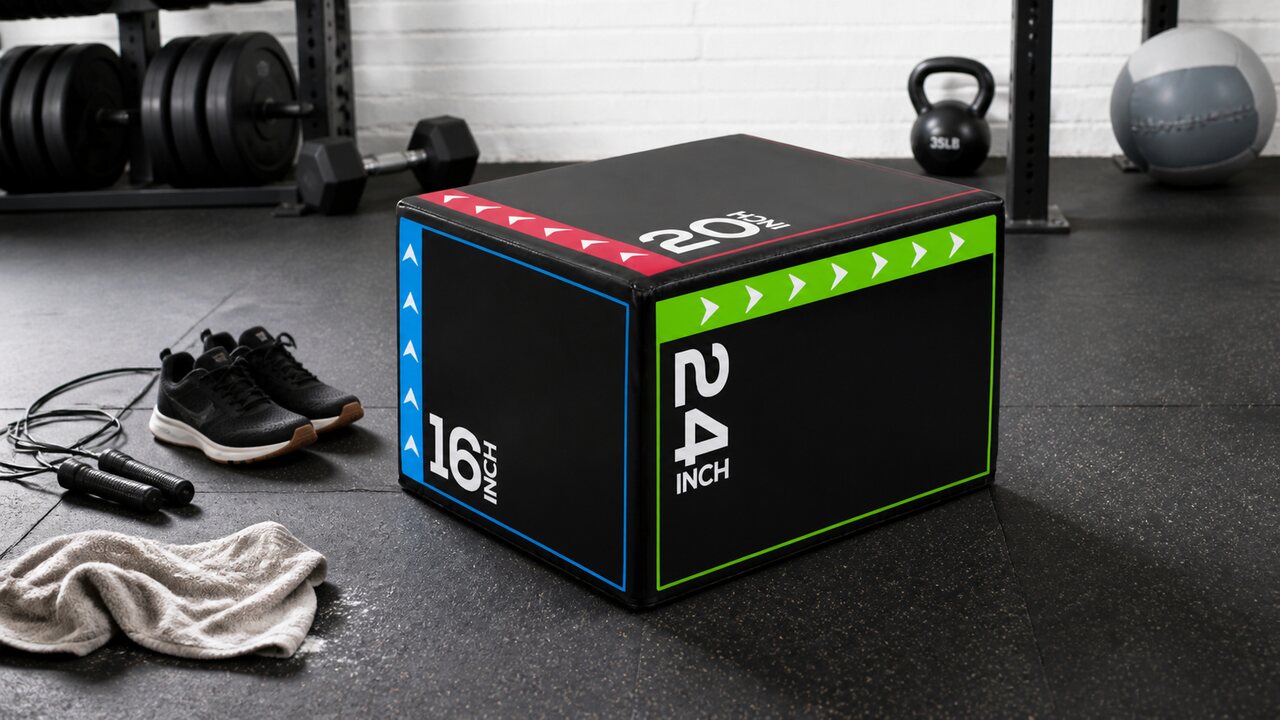
A foam plyo box solves one very specific fear: missing a jump and meeting a sharp wooden edge with your shin. The BalanceFrom 3-in-1 box wraps a firm core in foam, so a small mistake should be less punishing. It also rotates to three heights. The important detail is that this exact ASIN, B07PXKYX5M, is the compact 16, 20, and 24-inch model rated for 220 pounds. It is not the larger 20, 24, and 30-inch version that appears in many product roundups.
For this research-based review, we checked the exact Amazon listing, current images, marked heights, capacity, dimensions shown for this variant, price, and competing soft and wooden boxes. We did not possess or jump on this box. Our verdict is limited to the documented 16/20/24-inch model.
FitnessVolt may earn a commission if you buy through our links. This does not change the price you pay or our editorial verdict.
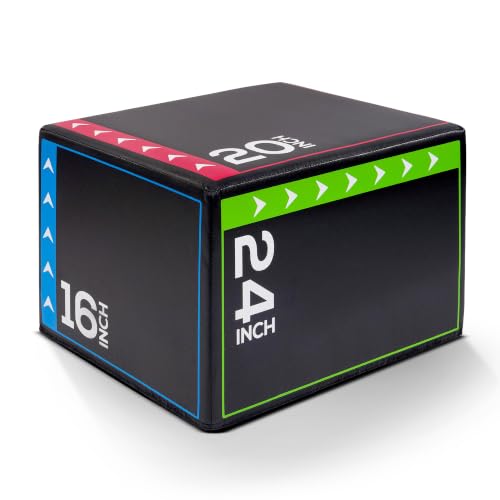
BalanceFrom 3-in-1 Foam Plyometric Jump Box 16/20/24
Best for Lower Soft-Surface Box JumpsPros
- Three clearly marked heights at 16, 20, and 24 inches
- Foam exterior is friendlier to shins than an exposed wood edge
- Rotating the box changes height without mechanical adjustment
- Lower 16-inch side suits step-ups and newer jumpers
Cons
- 220-pound support rating excludes many larger users and loaded step-ups
- Soft exterior can feel less crisp than a rigid wooden box
- Large block consumes storage space even at the lowest height
- This compact variant does not provide a 30-inch jump
Quick verdict: The compact BalanceFrom 3-in-1 box makes sense for newer jumpers, step-ups, and athletes who want 16-to-24-inch options with softer edges. The 220-pound rating is the hard limit. Heavier athletes, anyone doing loaded step-ups near that number, and buyers who need a 30-inch side should choose a different box.
Do Not Order the Wrong Size
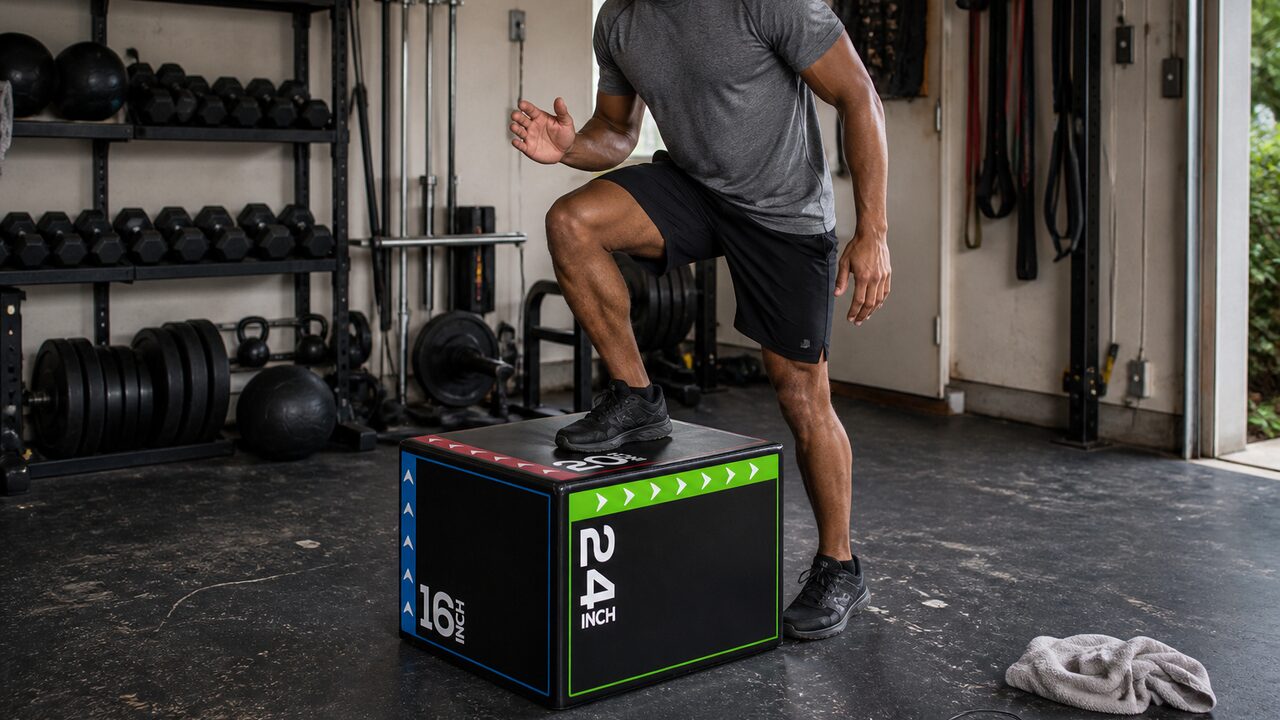
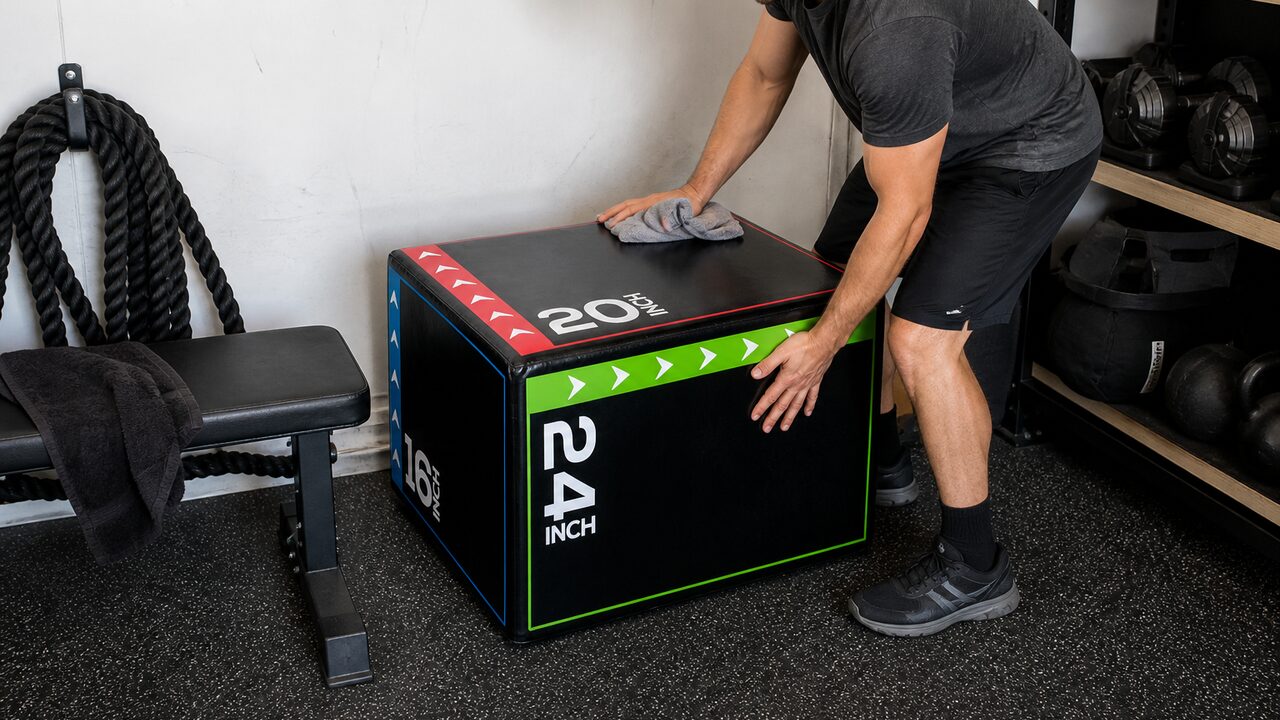
This model gives you 16, 20, and 24 inches. Those heights are printed on the sides, which makes the orientation easy to check before a set. The lower range is useful for learning to land quietly and for step-ups. Experienced athletes looking for a 30-inch challenge will not find it here.
The listed support rating is 220 pounds. Count that as total load, not body weight alone. A 190-pound athlete holding two 20-pound dumbbells is already beyond it. Jump landings also create more force than standing still, so conservative use matters.
Who Should Buy It?
- Newer jumpers: A 16-inch starting option is less intimidating than a standard 20-inch box.
- Athletes worried about shin contact: The padded exterior is more forgiving than bare plywood.
- Home exercisers doing step-ups: Three heights let you change the challenge without owning several boxes.
- Parents buying shared equipment: The lower sides may suit more users, provided everyone stays within the rating.
Who Should Skip It?
- You weigh close to 220 pounds. The rating leaves too little room for dynamic force or external load.
- You need 30-inch jumps. This exact model stops at 24 inches.
- You want a box that packs flat. Foam boxes are large and awkward to store.
- You prefer a very rigid takeoff. A wooden box feels more direct underfoot.
Soft Edges Help, but Technique Still Matters
The foam cover reduces the sharp-edge problem. It does not make every missed jump safe. A foot can still catch, the box can shift, and a tired athlete can land badly. Put the selected height upright on a dry, level, non-slip floor. Confirm the printed number before every set, especially after someone else used the box.
Start with step-ups and step-downs. When jumping, choose a height you can clear without pulling the knees dramatically toward the chest. Land with both feet fully on the top, control the hips and knees, then step down. Repeatedly jumping down adds impact without improving the upward jump, so many home users are better served by stepping down.
The foam surface may give slightly under the shoe. Some people appreciate that feel; others want the sharper feedback of wood. Any new soft spot, torn seam, or change in shape is a reason to stop and inspect the box.
Step-Ups May Be the Better Everyday Use
Box jumps get the attention, but step-ups are easier to scale and usually easier to recover from. The 16-inch side works for controlled repetitions, while 20 and 24 inches demand more hip and knee range. Use the lowest height that lets the working leg do the work without a hard push from the trailing foot.
Loaded step-ups require math. Add your body weight and the dumbbells before using the box. The 220-pound limit makes this model a poor fit for many stronger athletes even when unloaded jumps would look easy.
Is It Worth $82.99?
The current price is reasonable for a three-height soft box, especially if a scraped shin would make you avoid jump training. A wooden 3-in-1 box can cost less and may feel more stable, but it is less forgiving when you miss. Stackable foam blocks offer finer height changes and safer progression, though a complete set costs more and takes even more space.
Value depends on the rating. If 220 pounds gives you a comfortable margin, the box offers useful lower heights at a fair price. If it does not, this is not a bargain at any price.
What We Like
- The 16-inch side is approachable. It supports progressions that many taller boxes skip.
- The edges are padded. That is the main reason to choose foam over exposed wood.
- Height changes are simple. Rotate the box and verify the printed number.
- It suits more than jumping. Step-ups, elevated push-ups, and split-squat setups can all use the lower sides.
What We Do Not Like
- The 220-pound rating is restrictive. It rules out heavier users and many loaded exercises.
- Variant listings are confusing. Buyers expecting 20/24/30 inches can easily order the compact model.
- Storage is awkward. A foam block stays bulky in every orientation.
- Softness is subjective. Athletes used to rigid platforms may dislike the feel.
Alternatives
Choose a wooden 3-in-1 box for a firmer surface and often a higher capacity. Choose stackable foam blocks when gradual height progression matters most. Choose a heavy soft plyo box with a higher rating if multiple adults or loaded exercises are part of the plan.
See our best plyo boxes guide for those formats. Compare the exact height markings and total-load rating, not only the product family name.
Frequently Asked Questions
What heights does this BalanceFrom box provide?
ASIN B07PXKYX5M provides 16, 20, and 24-inch sides. It is not the larger 20/24/30-inch model.
What is the weight limit?
The exact model is listed for 220 pounds. Count body weight and any external load together.
Is a foam box completely safe for beginners?
No. Foam reduces the severity of contact with an edge, but falls and poor landings remain possible. Start low, keep the area clear, and stop before fatigue ruins technique.
Can I use it for weighted step-ups?
Only when your total load stays comfortably within the rating and you can control the movement. Many larger athletes need a higher-capacity box.
Bottom Line
The BalanceFrom 16/20/24-inch Foam Plyo Box is a useful compact-height option for newer jumpers and home exercisers who value padded edges. Its biggest strength is also its limit: this is a lower, lighter-duty box, not the common 30-inch sibling. The 220-pound rating decides the purchase. If you have a safe margin and want step-ups or modest jump heights, the $82.99 price is fair. If not, buy a higher-capacity box.
Sources
- BalanceFrom. Strength and conditioning equipment catalog. Accessed August 29, 2026.
- Amazon Creators API. BalanceFrom 3-in-1 Foam Plyometric Jump Box, ASIN B07PXKYX5M. Price and availability captured August 29, 2026.
- FitnessVolt. Best Plyo Boxes. Accessed August 29, 2026.