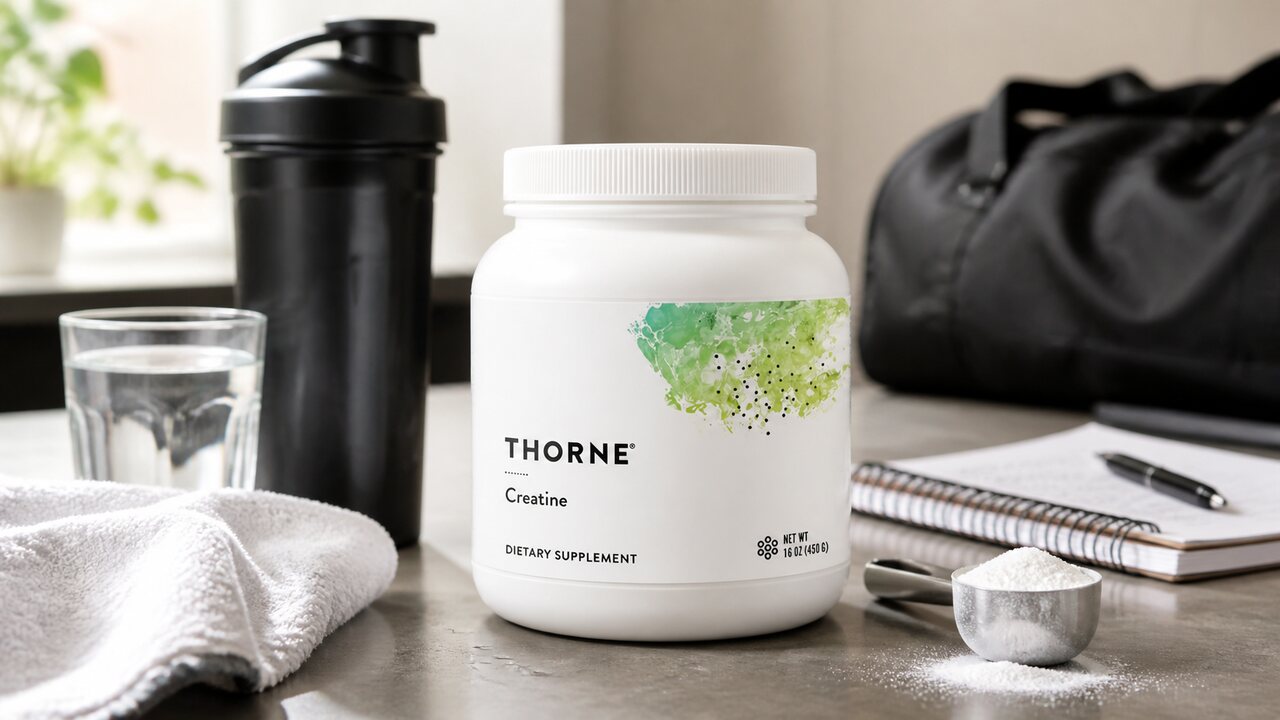
Thorne Creatine creates an unusual buying question because the formula is almost boring: one scoop, five grams of creatine monohydrate, nothing flashy. That is exactly what a creatine supplement should be. The problem is price. At $44 for 90 servings, Thorne asks you to pay more than many plain monohydrate powders. The premium buys brand confidence and NSF Certified for Sport testing, not a more powerful form of creatine.
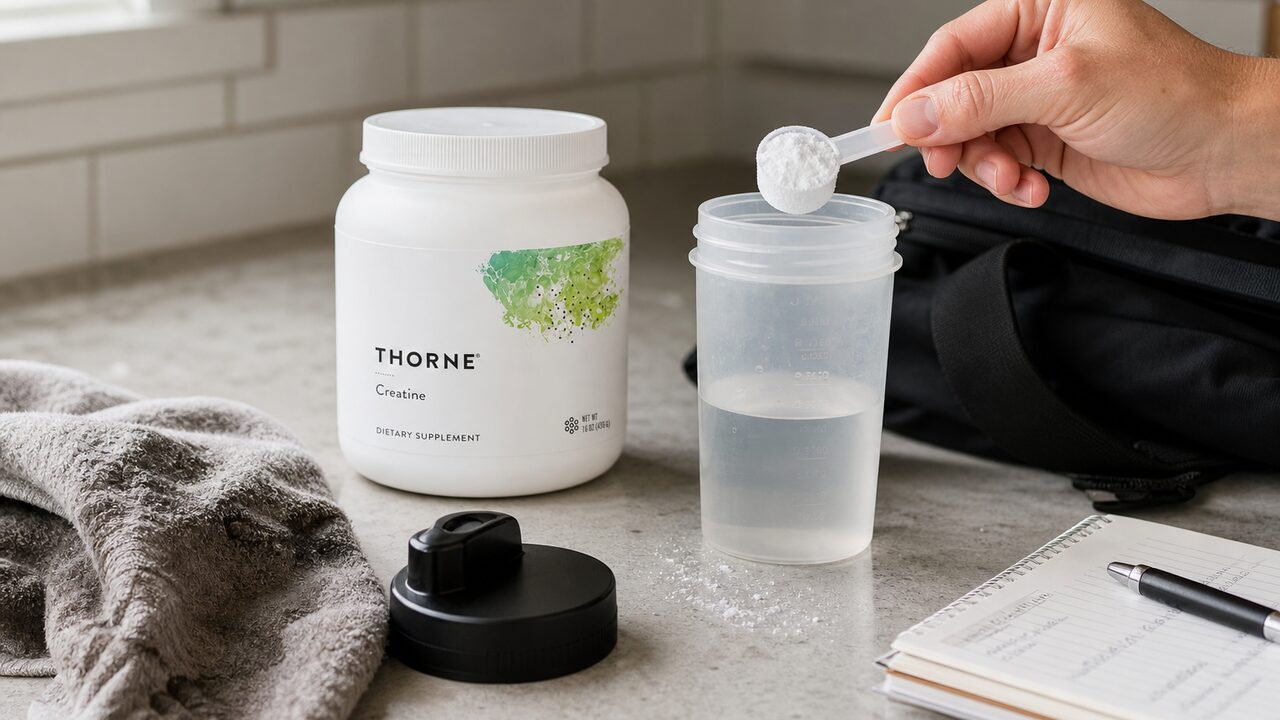
Tom Miller mixed and used the exact 450-gram Thorne Creatine during training, checking scoop accuracy, taste, settling, and daily convenience. He also confirmed the current label, NSF listing, price, and broader creatine evidence. Supplements can affect people differently, and anyone with a medical condition or medication question should discuss use with a qualified clinician.
FitnessVolt may earn a commission if you buy through our links. This does not change the price you pay or our editorial verdict.
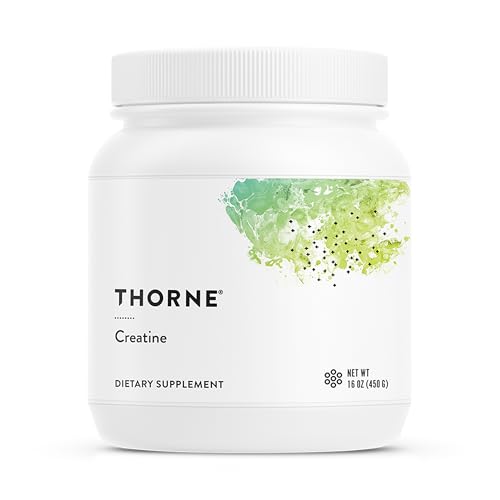
THORNE Creatine 90 Servings
Best for Certified Plain CreatinePros
- Full 5-gram serving of creatine monohydrate with no proprietary blend
- 90 servings in the exact 450-gram tub
- NSF Certified for Sport adds banned-substance and label verification value
- Unflavored powder is easy to add to water or a shake
Cons
- About 49 cents per serving costs more than many plain monohydrate products
- Certification matters most to tested athletes, not every recreational lifter
- Unflavored creatine can settle if it is not mixed well
- No scoop-free convenience for travel
Quick verdict: Thorne Creatine is a clean, well-documented choice for athletes who value NSF Certified for Sport verification and want a normal five-gram dose. It is not the best value for everyone. A reputable, cheaper creatine monohydrate can provide the same active ingredient and daily amount.
What Is in the Tub?
The exact product contains 450 grams of micronized creatine monohydrate. One scoop provides five grams, giving the tub 90 servings. There is no flavor system, stimulant, sweetener, or performance blend to decode.
Micronized describes smaller particles, which may help the powder disperse. It does not turn monohydrate into a different performance ingredient. Creatine monohydrate remains the form with the deepest research base and is the standard against which more exotic versions should be judged.
Who Should Buy It?
- Drug-tested athletes: NSF Certified for Sport is a meaningful extra screen when supplement mistakes carry career consequences.
- Buyers who want a plain formula: The label gives you the studied ingredient without a blend.
- People who prefer established brands: The premium may feel reasonable if documentation matters more than the lowest cost.
- Regular users: Ninety servings reduce how often you replace the tub.
Who Should Skip It?
- You want the lowest cost per serving. Plain monohydrate is widely available for less.
- You only take creatine while traveling. Capsules or sticks may be easier than a 450-gram tub.
- You expect an immediate workout sensation. Creatine works through consistent muscle saturation, not a stimulant feeling.
- A clinician has told you to avoid it. Personal medical guidance outranks a general product review.
Does Creatine Work?
The useful answer is yes, for the right goals. The International Society of Sports Nutrition describes creatine monohydrate as an effective ergogenic supplement for increasing high-intensity exercise capacity and lean body mass during training. That does not mean every user gains the same amount or that the powder replaces training, protein, calories, and sleep.
Creatine helps replenish phosphocreatine, which supports rapid energy production during repeated hard efforts. The practical result may be an extra rep, slightly better repeated sprint work, or more training volume over time. Those small advantages can add up when the program is consistent.
How to Take It
A simple routine is three to five grams daily. The Thorne scoop gives five grams. Timing matters less than consistency, so take it with a meal or shake when you are most likely to remember. Drink normally according to thirst and training conditions.
A loading phase can saturate muscle faster, commonly using several smaller servings totaling about 20 grams daily for five to seven days. It is optional. Taking a normal daily dose reaches the same destination more gradually and may be easier on the stomach.
Some people notice a small increase in body weight as water is stored with creatine in muscle. That is not the same as gaining body fat. Athletes in weight-class sports should learn their response well before competition.
What NSF Certified for Sport Adds
NSF lists this exact Thorne Creatine product in its Certified for Sport database. The program checks the label and screens products for substances prohibited in sport. No certification eliminates every possible risk, but this is a stronger purchasing signal than a brand simply saying its powder is clean.
Recreational lifters may not need to pay for that layer. Competitive athletes subject to testing have more at stake, which makes the premium easier to defend.
Is It Worth $44?
Ninety servings at $44 works out to about 49 cents per five-gram serving. That is not outrageous, but budget monohydrate can cost much less. The active ingredient does not become more effective because the label looks clinical.
Pay for Thorne if the exact certification, simple label, and brand documentation reduce uncertainty for you. Buy a less expensive reputable monohydrate if you are a recreational trainee focused on ingredient and dose. Both decisions can be rational.
What We Like
- The dose is straightforward. One scoop provides the normal five grams.
- The formula is honest. No blend distracts from the ingredient that matters.
- The certification is verifiable. The exact product appears in NSF’s Certified for Sport database.
- Ninety servings is practical. Daily users get roughly three months from one tub.
What We Do Not Like
- The price is premium. You can buy the same form and dose for less.
- The value story is narrow. Certification and confidence must matter to justify the difference.
- Powder is less portable. A tub and scoop are awkward away from home.
- The plain taste can be noticeable. Mix it into enough liquid or a flavored shake.
Alternatives
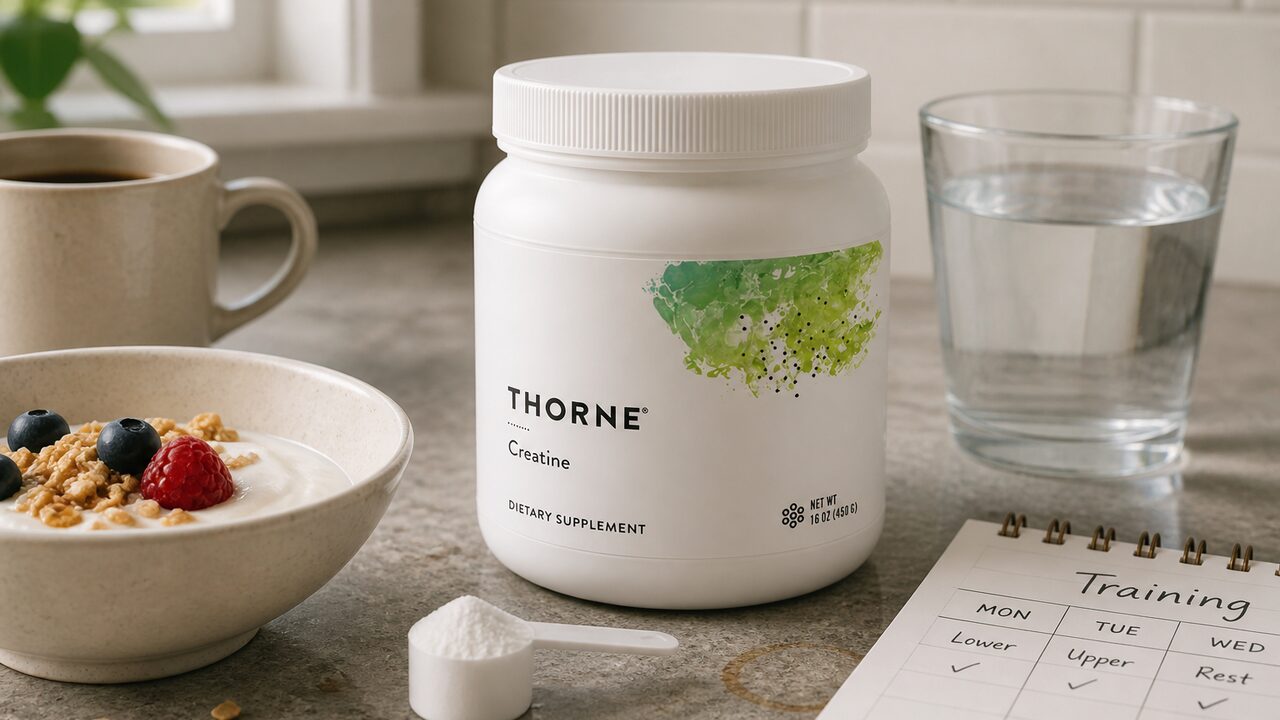
A cheaper third-party-tested creatine monohydrate is the direct alternative. Creatine capsules trade value for convenience and may require several pills to reach five grams. Blended pre-workouts sometimes include creatine, but labels can underdose it and rest-day use becomes awkward.
Compare dose, certification, and cost in our guide to the best creatine supplements. Ignore exotic names unless the product can show a real advantage over monohydrate.
Frequently Asked Questions
How much creatine is in one serving?
One scoop provides five grams of creatine monohydrate. The 450-gram tub contains 90 servings.
Is Thorne Creatine NSF Certified for Sport?
Yes. The exact product is listed in the NSF Certified for Sport database.
Do I need a loading phase?
No. Loading reaches saturation faster, but a consistent three-to-five-gram daily dose works more gradually.
Is expensive creatine more effective?
Not automatically. The key factors are creatine monohydrate, an appropriate dose, quality controls, and consistent use. Thorne’s premium is mainly about certification and confidence.
Bottom Line
Thorne Creatine is easy to recommend on formula and quality: five grams of creatine monohydrate, 90 servings, and NSF Certified for Sport verification. The harder question is value. At about 49 cents per serving, it costs more than many products with the same active ingredient. Tested athletes and buyers who value the certification have a clear reason to pay. Recreational lifters can save money with another reputable plain monohydrate without giving up the core benefit.
Sources
- Thorne. Creatine product information. Accessed August 29, 2026.
- NSF Certified for Sport. Thorne Creatine certification listing. Accessed August 29, 2026.
- Kreider RB, et al. International Society of Sports Nutrition position stand: safety and efficacy of creatine supplementation. Journal of the International Society of Sports Nutrition. 2017;14:18.
- Antonio J, et al. Common questions and misconceptions about creatine supplementation. Journal of the International Society of Sports Nutrition. 2021;18:13.
- Amazon. THORNE Creatine 90 Servings, ASIN B07978VPPH. Price and availability checked August 29, 2026.