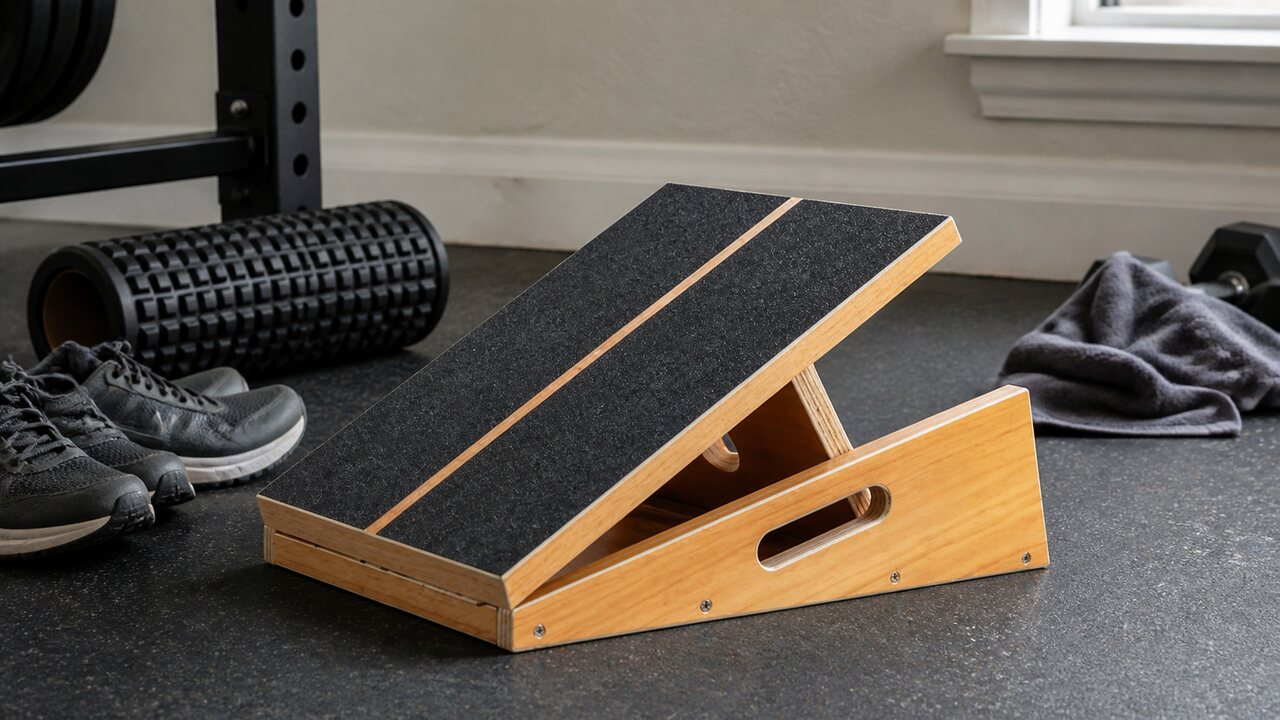
A slant board is one of those simple tools that can become useful or become closet clutter. Put your heels on it for squats and ankle work, and the fixed angle changes how the movement feels immediately. The StrongTek Wooden Slant Board costs about $59 and offers five angles instead of one. That flexibility is the reason to consider it. The small platform is the reason to measure your feet first.
For this research-based review, we checked StrongTek’s current product specifications, the exact Amazon listing for ASIN B07K9N28TK, platform dimensions, angle positions, materials, capacity, and competing board designs. We did not possess or physically test this board. We also avoid treating a piece of plywood as a medical device. It can support exercise and stretching, but it cannot diagnose ankle, knee, or calf problems.
FitnessVolt may earn a commission if you buy through our links. This does not change the price you pay or our editorial verdict.
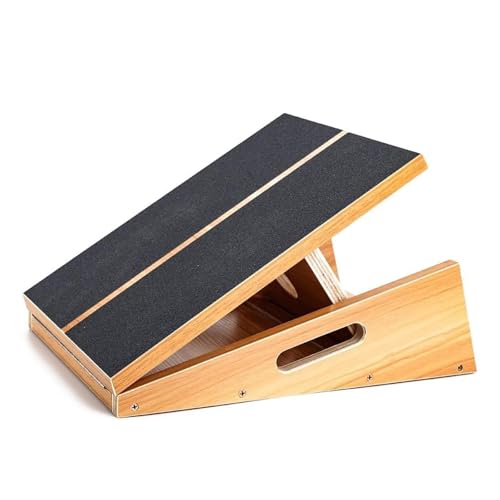
StrongTek Wooden Slant Board
Best for Adjustable Calf and Squat WorkPros
- Five incline positions from 15 to 35 degrees cover gentle and demanding setups
- 12.5-by-16-inch platform fits two-foot calf raises and heel-elevated squats
- Lauan hardwood plywood frame is rated to 450 pounds
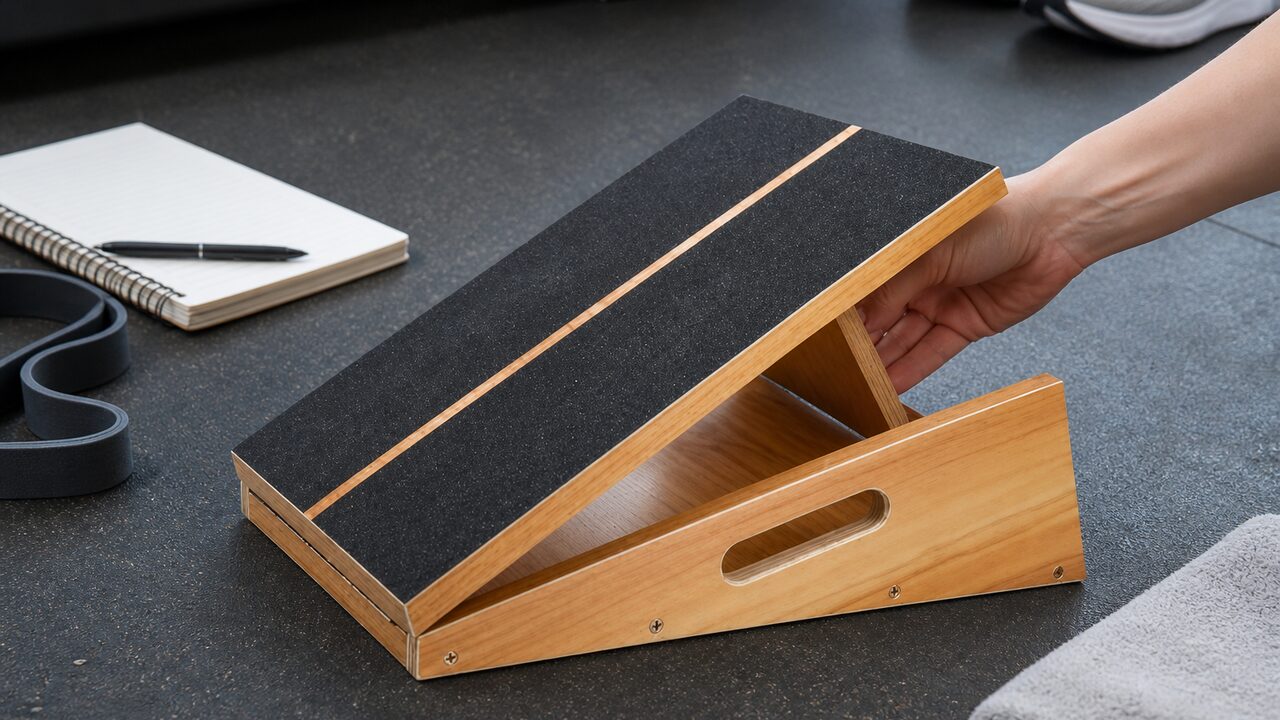
- Non-slip surface, side handles, and compact shape make the board easy to move
Cons
- Platform may feel cramped under large shoes or a wide squat stance
- Angle changes require stepping off and repositioning the support
- Wood edges and grip surface need routine inspection
- Costs more than a basic foam wedge
Quick verdict: The StrongTek Wooden Slant Board is a well-designed adjustable board for calf stretching, heel-elevated squats, and controlled ankle work. Five useful angles and a 450-pound rating justify the price better than a fixed wedge. Skip it if you wear very large shoes, want a wide squat stance, or need a clinician to guide painful rehabilitation.
The Useful Numbers
The platform measures 12.5 by 16 inches. StrongTek lists five incline settings: 15, 20, 25, 30, and 35 degrees. The Lauan hardwood plywood structure is rated for 450 pounds and has a black non-slip surface. A handle cutout and side grips make it easy to carry between a training area and storage.
Those dimensions are compact enough for most two-foot calf raises. They are less generous for a wide heel-elevated squat. Place the shoes you train in side by side and measure the space before ordering. A board can support your weight and still feel too narrow for your preferred stance.
Who Should Buy It?
- Lifters who use heel elevation: The board gives both heels the same stable angle during squat variations.
- Runners and field athletes: Multiple angles let you progress calf stretching and controlled ankle exercises gradually.
- Home-gym owners short on storage: The board moves easily and fits against a wall.
- People sharing equipment: Five positions make it easier to find a tolerable angle for different users.
Who Should Skip It?
- You have unexplained pain or a recent injury. Get a diagnosis and exercise plan before loading a painful joint.
- You need a wide platform. The 12.5-inch depth and 16-inch width are not generous.
- You only want a mild calf stretch. A cheaper fixed foam wedge may do the same job.
- You need instant angle changes during a circuit. You must step off and reset the support.
How the Five Angles Change the Exercise
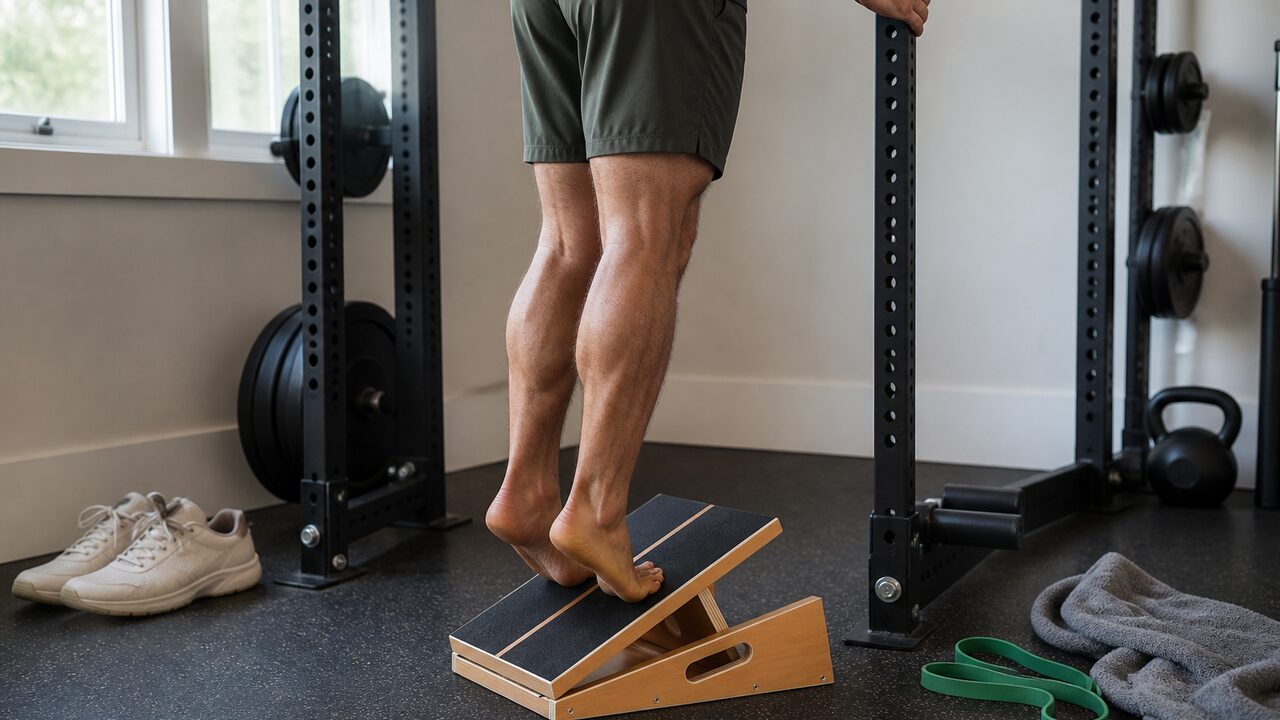
The 15-degree setting is the friendly place to begin. It creates a noticeable heel lift without forcing an aggressive ankle position. Higher settings increase the slope, which can deepen a calf stretch or keep the torso more upright during a heel-elevated squat. More angle is not automatically better. The correct position is the one that lets you control the movement without pain or the feet sliding.
For squats, the board can make knee travel feel easier and shift some work toward the quadriceps. It does not fix every squat. Stance, hip anatomy, load, and technique still matter. Start with body weight, then a light goblet squat. A 450-pound board rating does not mean a new user should immediately stand on it with a heavy barbell.
For calf work, you can face uphill for a stretch or use the edge and angle for controlled raises. Hold a rack or wall until the setup feels familiar. The grip surface helps, but sweat, dust, and worn shoes can reduce traction.
Build and Safety
Wood gives the StrongTek a firmer feel than compressible foam. It also means the joints, surface, and edges deserve an occasional look. Stop using the board if the plywood separates, a support no longer seats cleanly, or the grip layer peels where your shoe lands.
Place it on a dry, level floor. A board can slide even when the top surface grips well if the underside sits on dust or a slick mat. Change the angle only while the board is unloaded, and confirm the support is fully seated before stepping on.
Is It Worth $58.89?
The price is fair if you will use several angles and prefer a firm platform. A basic foam wedge costs less and has no moving support, but foam can compress and usually gives you one slope. Larger steel boards offer more stance room and sometimes faster adjustments, though they cost and weigh more.
The StrongTek sits in the useful middle. It is portable, more adaptable than a fixed wedge, and strong enough on paper for loaded work. Its value falls sharply if the 16-inch width is too small for your shoes or squat stance.
What We Like
- Five angles are enough. The 15-to-35-degree range covers gradual stretching and more pronounced heel elevation.
- The structure is simple. There are no springs, knobs, or complicated hinges to manage.
- The carry handle is useful. Small training tools get used more when moving them is easy.
- The 450-pound rating leaves room. It accommodates many users and sensible external loading when the board is in good condition.
What We Do Not Like
- The platform is compact. Large feet and wide stances need careful measurement.
- The marketing category invites overclaiming. A slant board can help position the feet, but it is not a rehabilitation plan.
- Adjustment is manual. You need to step off and move the support between angles.
- Wood needs inspection. Moisture, edge damage, and delamination matter on a load-bearing board.
Alternatives to Consider
Choose a fixed foam wedge when price, quiet use, and simplicity matter more than angle selection. Choose a wide steel slant board when you need more stance room or plan frequent loaded squats. A pair of small individual wedges can support a custom stance, but each foot must be positioned evenly.
Our guide to the best slant boards compares those formats. Match the board to the exercise you actually plan to repeat, not the longest feature list.
Frequently Asked Questions
What angles does the StrongTek Slant Board offer?
It adjusts to 15, 20, 25, 30, and 35 degrees. Begin with the lowest useful setting and increase only when you can maintain control.
How large is the platform?
The standing surface is listed at 12.5 by 16 inches. Measure your shoes together in the stance you plan to use.
Can I squat with weights on it?
The board is rated to 450 pounds, but safe loading depends on the board’s condition, floor, balance, and your experience. Learn the position with body weight or a light goblet squat first.
Will it fix ankle mobility?
No single tool guarantees that result. The board can change ankle position and support exercises, but pain or a meaningful restriction deserves assessment by a qualified clinician.
Bottom Line
The StrongTek Wooden Slant Board earns its $58.89 price through five practical angles, a firm plywood platform, and easy storage. It is a good choice for lifters who regularly use heel-elevated squats, calf work, or controlled ankle exercises. Measure the 12.5-by-16-inch platform before buying, and do not mistake exercise equipment for medical care. If the dimensions fit and you will use more than one angle, this is a sensible home-gym tool.
Sources
- StrongTek. Wooden Slant Board product specifications. Accessed August 29, 2026.
- Amazon Creators API. StrongTek Wooden Slant Board listing, ASIN B07K9N28TK. Price and availability captured August 29, 2026.
- FitnessVolt. Best Slant Boards. Accessed August 29, 2026.