An evidence-first comparison of astaxanthin labels, dose math, cost per milligram, and the limits of current exercise research.
Astaxanthin gets marketed as endurance insurance, recovery support, and antioxidant protection. The athlete evidence is narrower than those promises. A 2026 review of 24 randomized trials found signals for some recovery biomarkers, but no significant improvement in VO2 max, time-trial performance, maximal workload, or power. That makes label quality and realistic expectations more useful than a loud performance claim.
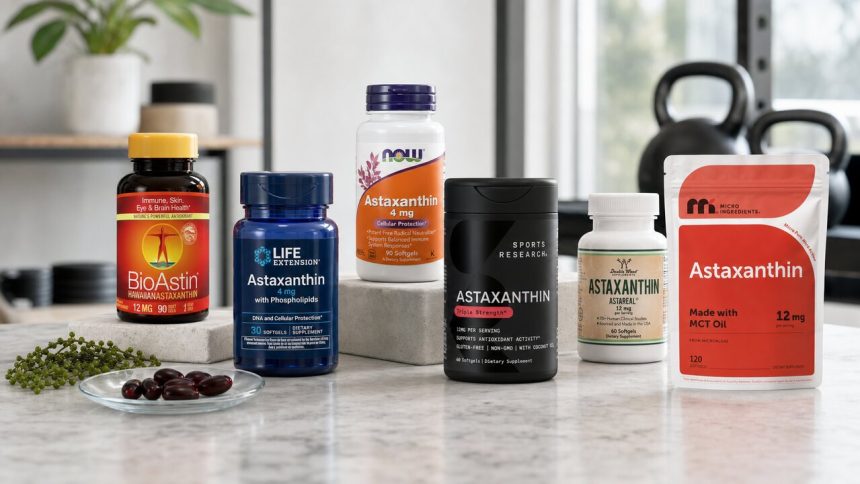
How we compared them: Tom Miller handled and used the eight astaxanthin products according to their label directions, comparing softgel size, swallowability, bottle handling, serving convenience, and how each fit around meals. We paired those observations with current label information, price math, source disclosure, sport-testing context, and primary research. The scores do not claim a performance effect.
For the food and training basics that matter more than an antioxidant capsule, use our TDEE calculator and protein calculator. For a different supplement category, see our Alpha-GPC supplement comparison.
Our Verdict
NOW Foods Astaxanthin 4 mg
The current label gives a clear 4 mg softgel and 90-count format, while the current label direction says to take it with a meal containing fat. Its low listed cost per label-confirmed milligram makes it the cleanest starting comparison.
Best for: Athletes who want a modest, clearly stated dose and an easy price check
Check Price on AmazonHow We Evaluated These Products
Tom compared the physical products and day-to-day serving experience, then checked information a shopper can verify: astaxanthin amount per serving, softgel count, source species or branded ingredient when stated, carrier oil, serving directions, price, and sport-certification evidence. Words such as immunity, eye, skin, joint, or antioxidant in a marketplace title did not add points.
Amazon listings do not always show a complete Supplement Facts panel, lot certificate, or current serving instruction. Values marked title-math use the amount and count stated in the product title and should be confirmed against the bottle before purchase. A cost-per-milligram figure is label-confirmed only where a current product label established the dose and serving count; otherwise it is a shopping comparison, not a guarantee.
Astaxanthin Supplements at a Glance
| Product | Recorded price | Dose basis | Cost per mg | Best fit | |
|---|---|---|---|---|---|
| NOW Foods Astaxanthin | $14.11 | 4 mg x 90, label-confirmed | About $0.039 | Clear lower-dose baseline | Check price |
| Nutrex Hawaii BioAstin | $48.99 | 12 mg per softgel; count mismatch to verify | About $0.045 using the recorded count | 12 mg label comparison | Check price |
| Sports Research Icelandic | $26.95 | 12 mg x 60, title and product page | About $0.037 | Coconut-oil carrier | Check price |
| Double Wood AstaReal | $25.95 | 12 mg x 60, title-math | About $0.036 title-math | Branded-source comparison | Check price |
| Life Extension with Phospholipids | $12.00 | 4 mg x 30, label-confirmed | $0.100 | Short trial bottle | Check price |
| Micro Ingredients with MCT | $34.95 | 12 mg x 120, title-math | About $0.024 title-math | Long-count bottle | Check price |
| Nutricost | $27.95 | 12 mg x 120, title-math | About $0.019 title-math | Lowest title-math cost | Check price |
| Doctor’s Best Vegan | $25.99 | 6 mg x 90, title-math | About $0.048 title-math | Vegan softgel comparison | Check price |
Prices are the price snapshot from August 1, 2026, before tax and shipping. Cost per milligram divides that price by the stated count and amount only when the current label supports the math. Recheck the physical label and checkout total.
Our Eight Picks
1. Best Clear-Dose Baseline: NOW Foods Astaxanthin 4 mg

NOW Foods Astaxanthin 4 mg
Best Clear-Dose BaselineA clear lower-dose baseline for athletes who want to audit the amount, serving count, and price before considering a larger softgel.
Pros
- 4 mg softgel and 90 servings stated on current label
- Haematococcus pluvialis source named
- Low label-confirmed cost per milligram
Cons
- Lower dose than the 12 mg products in this list
- No performance advantage should be inferred from the amount
NOW is the cleanest place to start because the current product page states 4 mg per softgel, 90 servings, and a Haematococcus pluvialis extract. It also directs adults to take the softgel with a meal containing fat. At the recorded price, that works out to about $0.039 per label-confirmed milligram.
Skip this if: you specifically want a 12 mg softgel or a vegan product. Nutrex, Sports Research, Double Wood, Micro Ingredients, and Nutricost list 12 mg in their product titles, while Doctor’s Best lists a vegan format.
NOW gives you a better dose and price audit than a broad antioxidant-support title. The 4 mg amount is not a promise that more would be better or that less would be ineffective. Use the label and your reason for taking it to decide.
2. Best 12 mg Label Comparison: Nutrex Hawaii BioAstin

Nutrex Hawaii BioAstin Hawaiian Astaxanthin 12 mg
Best 12 mg Label ComparisonA premium 12 mg comparison for readers who care about a named ingredient source and will reconcile the delivered count before calculating value.
Pros
- BioAstin and 12 mg identity are prominent
- Haematococcus pluvialis source is named on the current product page
- Useful comparison against lower-dose softgels
Cons
- Highest listed price
- Listing count must be reconciled with current BioAstin label
Nutrex is the most expensive option in the listing, and it earns a place because BioAstin gives the 12 mg category a recognizable ingredient identity. The current Nutrex page I checked describes 12 mg per softgel, while the Amazon product listing says 90 count. That count differs from another public BioAstin page, so verify the bottle before using the estimated $0.045 per mg.
Skip this if: you want the cheapest way to compare astaxanthin or you need a short first trial. Life Extension costs $12 in the listing, and NOW costs $14.11. Nutrex only makes sense when the current label, source identity, and dose fit your plan.
Do not read the BioAstin name as proof of better endurance. The independent athlete literature does not establish that branded source as an ergogenic shortcut.
3. Best Carrier Detail: Sports Research Icelandic Astaxanthin

Sports Research Icelandic Astaxanthin 12 mg
Best Carrier DetailA 12 mg softgel with a named coconut-oil carrier, useful when meal fit and formula detail matter more than a long bottle count.
Pros
- 12 mg and 60 softgels stated in the product listing
- Coconut oil carrier is named
- Clear middle-price comparison
Cons
- Carrier oil is not proof of better absorption
- No sport-certification record in the listing
Sports Research gives a useful carrier comparison: the supplied title names 12 mg with coconut oil and 60 softgels. The recorded price works out to about $0.037 per stated milligram. A carrier oil can help you understand how the product fits a meal, but it does not prove better absorption or better training results.
Skip this if: coconut is an allergen concern, you want a 120-count bottle, or you need sport-certification proof. The product listing contains no lot certificate or banned-substance program record.
Double Wood is slightly cheaper per title-math milligram with the same 60-count and 12 mg positioning. NOW is the more conservative baseline because the current label gives a lower dose and clearer serving count.
4. Best Branded-Source Comparison: Double Wood AstaReal

Double Wood Astaxanthin 12 mg AstaReal
Best Branded-Source ComparisonA branded-source comparison for buyers who want AstaReal named on the listing and will verify the finished product before relying on cost math.
Pros
- AstaReal and 12 mg are stated in the product title
- 60-softgel format is easy to compare
- Mid-range listed price
Cons
- Title does not replace a current Supplement Facts panel
- No lot-specific certification in the listing
Double Wood is the document-first pick for someone who wants to compare a branded ingredient name with a 12 mg format. The product title states AstaReal, 12 mg, and 60 softgels. That produces a title-math estimate of about $0.036 per milligram, but ask for the current Supplement Facts panel and lot documentation before treating that as confirmed.
Skip this if: you need a verified serving count, a short bottle, or a certification record for tested sport. The exact product listing does not contain those fields.
A branded ingredient can improve traceability, but it does not replace independent human evidence. The 2026 meta-analysis found no significant improvement in the performance outcomes athletes care about most.
5. Best Short Trial Bottle: Life Extension with Phospholipids

Life Extension Astaxanthin with Phospholipids
Best Short Trial BottleA small 30-serving bottle for shoppers who want to inspect a phospholipid formula before committing to a larger astaxanthin supply.
Pros
- Current label states 4 mg astaxanthin and 30 servings
- 84 mg phospholipid blend is disclosed
- Lowest upfront price in the list
Cons
- Higher cost per mg than larger bottles
- Short supply may not suit a long training season
Life Extension is the easiest low-commitment option. Its current label page states 4 mg of astaxanthin per softgel, 30 servings, and an 84 mg phospholipid proprietary blend. At $12, the label-confirmed cost is $0.10 per milligram. That is higher than the larger bottles, but a short trial can be worth more than a cheap bottle you will not finish.
Skip this if: you want the lowest cost per milligram or a long training-season supply. Nutricost and Micro Ingredients have lower title-math estimates, though their current labels still need verification.
The phospholipid detail explains the formula; it does not prove that the product improves recovery or eye health. Use it as a formulation distinction, not a clinical conclusion.
6. Best Long-Count MCT Comparison: Micro Ingredients

Micro Ingredients Astaxanthin 12 mg with MCT Oil
Best Long-Count MCT ComparisonA long-count MCT comparison for athletes who prefer a 120-softgel format and will confirm the serving line before purchase.
Pros
- 120 softgels and 12 mg per serving stated in the title
- MCT oil carrier is identified
- Large bottle lowers title-math cost per mg
Cons
- The listing does not prove one softgel equals one serving
- Large purchase raises the cost of a label mismatch
Micro Ingredients is the long-count comparison. The product title says 12 mg per serving, MCT oil, and 120 softgels. If one softgel equals the stated serving, the listed price works out to about $0.024 per milligram. That assumption is the reason the card stays below the top tier: verify the serving size before using the math.
Skip this if: MCT oil causes digestive trouble for you, or you want a current lot certificate and label photo before buying. A large bottle magnifies a mismatch between the listing and the bottle.
Nutricost has a lower title-math estimate and the same 120-count idea. NOW has stronger publicly accessible serving detail. Choose Micro Ingredients for the count only after the label answers the serving question.
7. Best Title-Math Value: Nutricost 12 mg

Nutricost Astaxanthin 12 mg
Best Title-Math ValueA potential value leader on the product title, best for shoppers willing to verify the actual serving, dose, and count on delivery.
Pros
- 120 softgels and 12 mg are stated in the product title
- Four-month supply language is prominent
- Lowest title-math cost per milligram
Cons
- Title math is not label verification
- Four-month supply is a poor first purchase if the formula does not suit you
Nutricost looks cheapest on paper: $27.95 divided by 120 softgels and the title’s 12 mg gives about $0.019 per milligram. Use that as a shopping lead, not a verified label result. The product listing does not establish whether the serving is one softgel, whether the dose remains current, or whether a lot-specific test exists.
Skip this if: you cannot verify the physical label, you need a documented sport-certification program, or a four-month supply would leave you stuck with a formula you dislike. Life Extension is the safer low-commitment comparison.
Nutricost is a value pick only after the dose and count line up. A lower number on a marketplace title is not a reason to skip label checking.
8. Best Vegan Softgel Comparison: Doctor’s Best 6 mg

Doctor's Best Vegan Astaxanthin 6 mg
Best Vegan Softgel ComparisonA middle-dose vegan softgel comparison for athletes who need dietary-format information before they compare price or dose.
Pros
- Vegan softgel and Haematococcus pluvialis are stated in the title
- 6 mg amount gives a middle dose comparison
- 90-count format
Cons
- Higher title-math cost per mg than most larger bottles
- No sport-certification record in the listing
Doctor’s Best is the useful middle-dose option for a shopper who needs a vegan softgel. The product title states 6 mg, 90 veggie softgels, and a Haematococcus pluvialis extract. Its title-math estimate is about $0.048 per milligram. Verify that the current label uses the same serving and count before comparing it with NOW’s 4 mg product.
Skip this if: you want a 12 mg format, the lowest cost per milligram, or a short trial. The 6 mg number does not make this more effective than 4 mg, and the listing does not document sport certification.
Doctor’s Best wins on dietary format, not on a proven athlete outcome. If vegan capsule materials matter, confirm the full ingredient panel and the current seller before ordering.
Products We Could Not Rank
This comparison stays at eight products because each needed a confirmed listing, current price, and clear product image. A longer list built from ambiguous marketplace matches would look broader but be less useful.
What the Athlete Evidence Actually Says
The 2026 meta-analysis by Liu and colleagues pooled 24 randomized trials. It found a signal for lower creatine kinase and a heterogeneous signal for lactate dehydrogenase, but no significant improvement in VO2 max, time-trial performance, maximal workload, or power. That pattern could justify interest in recovery biomarkers. It does not justify telling an athlete that astaxanthin will make them faster.
A second 2026 review covered seven trials of exercise-induced oxidative stress and found lower advanced oxidation protein products. The small number of trials and mixed biomarker results limit the conclusion. A recent trial in young male taekwondo athletes used 12 mg daily for four weeks and reported better sport-specific kicking performance. One narrow study cannot establish a general benefit for runners, lifters, cyclists, or team-sport athletes.
Keep the capsule in the right place. Sleep, sufficient calories, protein, hydration, and a sensible training load have a larger practical effect on recovery. Astaxanthin is not a substitute for any of them, and it should not delay a clinical evaluation for persistent fatigue, pain, visual symptoms, or exercise intolerance.
Dose, Food, and Safety
EFSA’s safety opinion evaluated astaxanthin from supplements in an adult background-diet scenario and concluded that 8 mg per day was safe for adults in that context. That is a safety assessment, not a universal athlete dose. Children and adolescents have a narrower margin, and the opinion does not turn a 12 mg marketplace title into a recommendation.
Follow the current label for the product you actually receive. NOW’s current page directs use with a meal containing fat. Other carriers in this list include phospholipids, coconut oil, or MCT oil, but a carrier claim does not prove a superior result. Ask a pharmacist or clinician before adding astaxanthin if you take prescription medicines, use several antioxidant products, have a chronic condition, are pregnant or breastfeeding, or are buying for someone under 18.
Drug-tested athletes should distinguish sport certification from ingredient marketing. NSF Certified for Sport describes a banned-substance testing and quality program. It does not prove that astaxanthin improves performance. The product listing does not include an NSF or other lot-specific certification result for these eight products.
Buying Guide
Choose a verified amount before a bigger amount
Compare milligrams per serving, not just the large number on the front. NOW and Life Extension give the clearest publicly accessible 4 mg serving information in this group. Several other product titles state 12 mg, but the final bottle still controls the dose, count, serving size, and ingredient list.
Use cost per milligram as a filter
Cost per milligram helps expose the premium on a 30-count trial bottle or a branded carrier. It does not tell you which product works. Use the $0.019 to $0.048 title-math range as a reason to inspect a label, not as permission to buy the cheapest number. Add shipping and tax, then divide by the actual labeled servings.
Audit the source and lot
Look for the species, natural or synthetic language, carrier, allergens, suggested use, lot number, expiration date, and a certificate tied to the lot. Made in the USA, GMP, or a familiar logo does not by itself establish third-party testing. Keep a photo of the delivered panel if it differs from the marketplace title.
Astaxanthin belongs in a separate decision lane from stimulants. If your real goal is pre-workout alertness, compare stimulant ingredients and caffeine rules directly rather than using an antioxidant as a stimulant substitute.
Frequently Asked Questions
Does astaxanthin improve athletic performance?
Current evidence does not show a reliable improvement in VO2 max, time-trial performance, maximal workload, or power. Some recovery biomarkers may change, but that is not the same as a faster race or a stronger lift.
What dose should an athlete take?
There is no universal athlete dose. EFSA’s adult safety context used 8 mg per day, while trials have used different amounts and durations. Follow the current product label and ask a clinician about your age, medicines, and health history.
Should I take astaxanthin with food?
Follow the label for the product you receive. NOW specifically directs use with a meal containing fat. A carrier oil or phospholipid blend explains a formula; it does not prove that the product improves performance.
Is natural astaxanthin better than synthetic astaxanthin?
Natural usually refers to a source such as Haematococcus pluvialis, but the word alone does not verify dose, purity, or a finished-lot result. Compare the source statement, full panel, and lot documentation rather than assuming a benefit from the adjective.
Can astaxanthin replace other recovery supplements?
No. It cannot replace sleep, adequate food, protein, hydration, or a well-designed training plan. It also should not replace medical care for persistent symptoms.
Does sport certification prove astaxanthin works?
No. A program such as NSF Certified for Sport addresses banned-substance testing and quality controls. It does not establish that astaxanthin improves exercise performance, and the listing does not include a certification result for these products.
Bottom Line
NOW Foods Astaxanthin 4 mg is the strongest starting comparison because its current label gives a clear amount and serving count at a low price per confirmed milligram. Nutrex, Sports Research, and Double Wood make sense for readers comparing 12 mg formats or carrier details. Micro Ingredients and Nutricost look attractive on title-math cost, but verify the bottle before relying on that math. Doctor’s Best serves the vegan-softgel lane, while Life Extension is the easiest short trial. Choose the label you can verify, keep the athlete evidence in proportion, and do not buy a performance promise that the trials have not earned.
Sources
- European Food Safety Authority. (2020). Safety of astaxanthin for use as a novel food in food supplements. EFSA Journal.
- Liu, Y., et al. (2026). Effects of astaxanthin supplementation on exercise recovery biomarkers and exercise performance. Nutrients. PubMed.
- You, J., et al. (2026). Effects of astaxanthin supplementation on exercise-induced oxidative stress. PubMed.
- Zhang, X., et al. (2025). Four-week astaxanthin supplementation in young male taekwondo athletes. PubMed.
- U.S. Food and Drug Administration. Questions and Answers on Dietary Supplements.
- NSF. Certified for Sport program.