
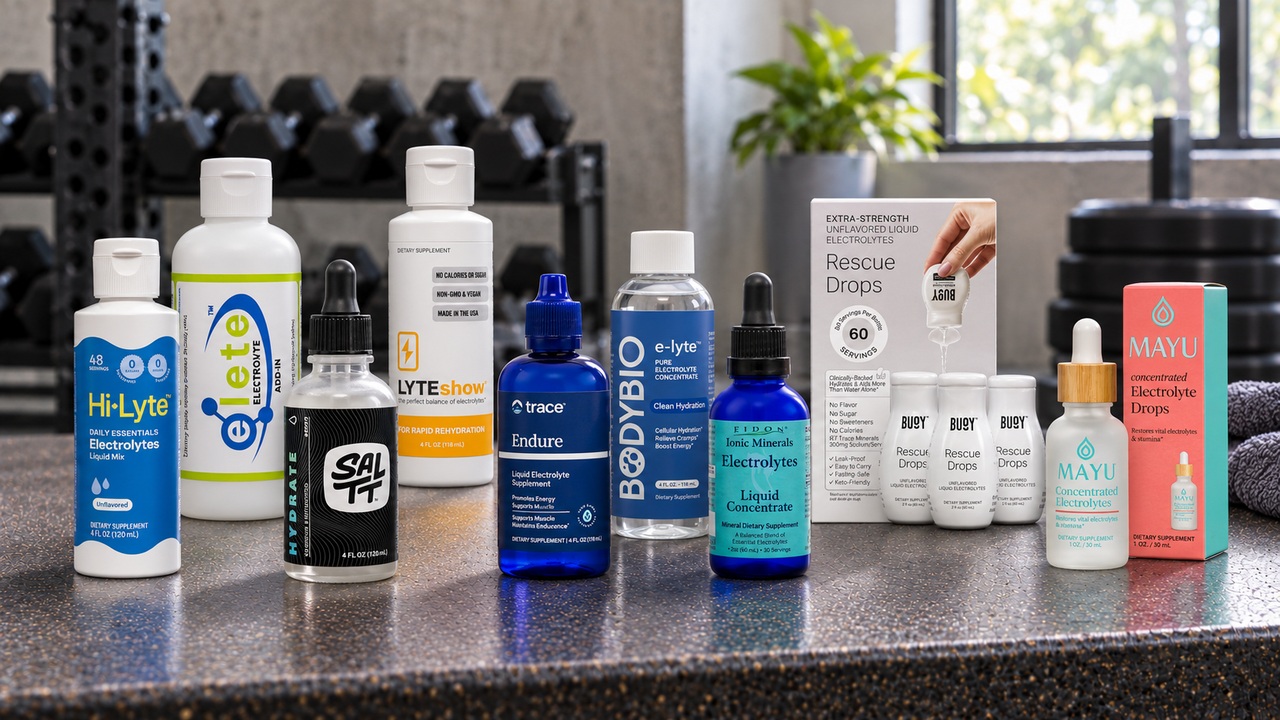
One serving can mean 27.75mg sodium or 300mg sodium, depending on the bottle and the measured amount. That difference matters more than a claim about dozens of trace minerals. These nine liquid concentrates let you add electrolytes to water without a powder packet, but their doses, dilution directions and ingredients differ.
Written by Tom Miller, CSCS. Updated: November 2026.
Short on time? Our starting pick is Hi-Lyte Daily Essentials: a measured 2.5mL serving contains 125mg sodium, 150mg potassium and 45mg magnesium, with 48 servings per bottle. SALTT Hydrate has larger amounts of all three per serving. Buoy Rescue has the most sodium here at 300mg, but only 3mg magnesium and 20mg potassium.
How We Chose
We compared nine liquid concentrates intended for dilution in a drink. We prioritized individual sodium, potassium and magnesium amounts, a measurable serving, clear dilution directions, ingredient transparency and package value. Our ratings reflect those buying considerations, not a prediction of cramp relief or a medical result. We chose one formula from each maker and excluded powders, capsules, tablets, prepared drinks and single-mineral magnesium drops. A larger total-mineral number did not earn a higher rank: chloride, sodium and magnesium have different roles and cannot substitute for one another gram for gram. We also considered small bottles, refill sizes and cap-measured concentrates for different routines.
These are optional mineral supplements, not complete hydration plans or medical oral rehydration solutions. Water, meals, exercise duration, heat and your own sweat losses all matter. Do not use a product’s saltiness to diagnose an electrolyte deficiency.
Our Verdict
Hi-Lyte Daily Essentials Electrolytes Liquid Mix
A clear 2.5mL serving, three quantified major minerals and 48 portions make Hi-Lyte our starting pick among liquid electrolyte concentrates.
Best for: Adults who want an unsweetened concentrate with measured sodium, potassium and magnesium amounts
Check Price on AmazonOur Top Picks
Best Overall: Hi-Lyte Daily Essentials

Hi-Lyte Daily Essentials Unflavored Electrolyte Drops 120mL
Best OverallAn unsweetened 120mL concentrate with 125mg sodium, 150mg potassium and 45mg magnesium per half teaspoon, intended for dilution in a full water bottle.
Pros
- 125mg sodium and 150mg potassium
- 45mg magnesium per 2.5mL
- 48 servings; no sweetener
Cons
- Contains citric acid and zinc
- Modest sodium for prolonged heavy sweating
Hi-Lyte makes the comparison straightforward: half a teaspoon, or 2.5mL, contains 125mg sodium, 150mg potassium, 45mg magnesium and 3mg zinc. Its 120mL bottle has about 48 servings. Choose this Daily Essentials formula rather than assuming the separate Low Sodium version has the same sodium content.
Shake the bottle, then add 2.5mL to 32 fluid ounces of water. The maker also gives a smaller-bottle instruction of 12 drops per 8 ounces. Use that conversion for this product alone; another bottle’s nozzle and liquid can produce different-sized drops. The recipe contains citric acid and zinc sulfate, with no sugar or sweetener.
Skip this if your plan requires a much larger sodium portion or you avoid citric acid. SALTT Hydrate has 255mg sodium and 90mg magnesium per 5mL, roughly double Hi-Lyte’s amounts in double the concentrate volume. That is a serving-size difference, not evidence that SALTT hydrates twice as well.
Best Larger Mineral Portion: SALTT Hydrate

SALTT Hydrate Electrolyte Drops 120mL with Dropper
Best Larger Mineral PortionA 5mL serving contains 255mg sodium, 265mg potassium and 90mg magnesium, with no sweetener or listed citric acid in the mineral recipe.
Pros
- 255mg sodium per teaspoon
- 265mg potassium and 90mg magnesium
- No listed citric acid or sweetener
Cons
- 24 servings in 120mL
- Full serving takes 5mL
SALTT Hydrate has the largest combined sodium, potassium and magnesium portion in this group: 255mg, 265mg and 90mg per teaspoon. This 120mL bottle contains 24 servings and includes a dropper. Its ingredients are sea water, purified water, low-sodium sea mineral concentrate and potassium chloride.
The bottle’s directions use one teaspoon, or 5mL, daily in 8 fluid ounces of water or another beverage. You can use more water. A single small dropperful is not the full 5mL portion; measure the total rather than assuming one squeeze equals one serving. Buy the Hydrate liquid, not the brand’s capsules, Relax drops or other mineral formulas.
Skip this if you want the most portions from a four-ounce bottle or need to restrict potassium. Hi-Lyte has 48 smaller servings against SALTT’s 24. Buoy Rescue has 45mg more sodium per serving but 245mg less potassium and 87mg less magnesium, so the two formulas suit different mineral priorities.
Best Included Travel Flask: LyteShow

LyteShow Electrolyte Concentrate Four Ounces with Travel Flask
Best Included Travel FlaskA 118mL bottle with an empty travel flask, containing 126mg sodium, 130mg potassium and 45mg magnesium per measured 3mL serving without sugar.
Pros
- 126mg sodium per 3mL
- 45mg magnesium and 130mg potassium
- Empty travel flask included
Cons
- 40 servings versus Hi-Lyte's 48
- Contains citric acid and zinc
LyteShow includes an empty travel flask with its four-ounce bottle. The bottle holds 40 servings at 3mL each. One portion contains 126mg sodium, 130mg potassium, 45mg magnesium, 420mg chloride and 2mg zinc. That puts its three main mineral amounts close to Hi-Lyte, though the serving volume differs.
Add 3mL to 32 fluid ounces of water. The maker equates that to about 40 drops or one travel-flask capful. Do not use an unrelated bottle cap for that measurement. LyteShow contains citric acid and no added sweetener; unflavored does not mean the ingredient list contains only water and salt.
Skip this if you avoid citric acid or want a larger refill bottle. Elete’s refill bottle holds 246mL versus LyteShow’s 118mL and has similar sodium, potassium and magnesium amounts per labeled portion. LyteShow makes more sense when you want the included small flask rather than buying a refill format.
Best Larger Refill: elete Electrolyte Add-In

elete Electrolyte Add-In Unflavored 8.3 Ounces
Best Larger RefillA 246mL refill concentrate with 125mg sodium, 130mg potassium and 45mg magnesium per labeled half teaspoon, without sugar or added flavoring.
Pros
- 246mL refill bottle
- 125mg sodium and 130mg potassium
- 45mg magnesium; no sweetener
Cons
- Refill format lacks a glass dropper
- Label and mixing chart round volume differently
Elete’s unflavored refill has a short recipe: SolarSea Sport inland sea concentrate and potassium chloride. Its panel lists 125mg sodium, 130mg potassium and 45mg magnesium per half teaspoon, stated as 2.46mL. This 8.3-ounce bottle holds 246mL; it is a refill, not the smaller pocket bottle.
Use the maker’s mixing chart to match the water volume. It rounds the dose to 2.5mL per liter, or 1.25mL per 500mL. The panel’s 2.46mL and the chart’s 2.5mL describe rounded household measures. Use a marked measure and one set of directions rather than combining approximate drops from different brands.
Skip this if you want a supplied glass dropper or a higher sodium portion per liter. Eidon has a glass dropper but much less sodium per serving. LyteShow includes a travel flask and has near-matching major mineral amounts. Compare elete’s price with its larger liquid volume, not the price of a two-ounce bottle.
Best Explicit Drop-Count Directions: Trace Minerals Endure

Trace Minerals Endure Electrolyte Drops Four Ounces
Best Explicit Drop-Count DirectionsA four-ounce concentrate with 100mg sodium, 150mg potassium and 45mg magnesium per 2.5mL, with directions for full bottles and smaller glasses.
Pros
- 48 drops equals labeled 2.5mL
- 150mg potassium and 45mg magnesium
- 48 servings; no sugar or stevia
Cons
- 100mg sodium per serving
- Contains citric acid
Endure contains 100mg sodium, 150mg potassium and 45mg magnesium in half a teaspoon, or 2.5mL. Its panel also lists 375mg chloride and 20mg sulfate. The four-ounce bottle has 48 servings. The sea-mineral recipe includes ConcenTrace and citric acid, with no sugar or stevia.
The maker directs 48 drops into 32 fluid ounces of water, or 12 drops into 8 ounces. Those instructions make smaller portions explicit, but 12 drops contain only one-quarter of the full-serving minerals. They do not contain the 100mg sodium printed for the 48-drop portion.
Skip this if sodium replacement is your main buying criterion. Hi-Lyte has the same 150mg potassium and 45mg magnesium per 2.5mL, alongside 25mg more sodium. Endure’s larger total-mineral claims do not establish a high-sodium drink. Check the individual sodium line before choosing it for long, sweaty sessions.
Best Cap-Measured Concentrate: BodyBio e-lyte

BodyBio e-lyte Electrolyte Concentrate Four Ounces
Best Cap-Measured ConcentrateA cap-measured concentrate with 187mg potassium, 65mg magnesium and 89mg sodium per 7.5mL, without sugar, sweeteners or added flavoring.
Pros
- 187mg potassium per capful
- 65mg magnesium per serving
- No sugar, sweetener or flavoring
Cons
- Only 16 labeled servings in four ounces
- 7.5mL serving; 89mg sodium
BodyBio uses a larger liquid portion than most picks: one 7.5mL capful, equivalent to one and a half teaspoons. That contains 89mg sodium, 187mg potassium and 65mg magnesium. This four-ounce bottle has 16 labeled servings. Do not confuse it with the brand’s larger 16-ounce size.
Mix the capful into at least 8 fluid ounces of water, with more water if desired. The formula contains several potassium salts, magnesium chloride and sulfate, sodium chloride and purified water. It omits sugar and flavorings. A capful refers to BodyBio’s measure, not any screw cap in your kitchen.
Skip this if you want a compact bottle with many servings or prioritize sodium. Hi-Lyte’s similar-sized bottle has 48 servings, though each has less potassium and magnesium. SALTT has 255mg sodium in a smaller 5mL portion. Choose BodyBio for its stated mineral amounts and cap measure, not a promise of cramp relief.
Best Lower-Sodium Glass Dropper: Eidon Ionic Minerals Electrolytes

Eidon Ionic Minerals Electrolytes Liquid Concentrate Two Ounces
Best Lower-Sodium Glass DropperA two-ounce glass-dropper concentrate with 27.75mg sodium, 50mg potassium and 27.75mg magnesium per 30 drops, without listed sugar or citric acid.
Pros
- 27.75mg sodium per serving
- No listed citric acid or sweetener
- Glass dropper; 30 servings
Cons
- Too little sodium for a high-sodium plan
- Contains 38mcg chromium
Eidon has the lowest sodium portion here: 27.75mg in 30 drops. That same serving contains 50mg potassium, 27.75mg magnesium, 2.62mg calcium and 38mcg chromium. The two-ounce concentrate contains 30 servings and comes in a cobalt-blue glass bottle with a glass dropper.
Add 30 drops, about two droppers, to at least 8 fluid ounces of water or another drink. Keep the concentrate separate from Eidon’s regular-strength 18-ounce bottle, which uses tablespoon directions. Its mineral recipe and de-ionized water contain no listed sugar, citric acid or preservative.
Skip this if you need a meaningful sodium replacement portion for prolonged sweating. Buoy Rescue has more than ten times Eidon’s sodium per serving. Lower sodium also does not make Eidon appropriate for kidney disease without medical guidance: it still contains potassium, magnesium and chromium. Ask your clinician if you take glucose-lowering medication.
Best Higher-Sodium Portion: Buoy Rescue Drops

Buoy Rescue Drops Three Two-Ounce Bottles
Best Higher-Sodium PortionA three-bottle pack of concentrated Rescue Drops with 300mg sodium, 20mg potassium and 3mg magnesium per 3mL, without sugar or B vitamins.
Pros
- 300mg sodium per 3mL
- No sugar, sweeteners or B vitamins
- 60 servings across three bottles
Cons
- Only 3mg magnesium and 20mg potassium
- Includes citrus, rosemary and acacia
Buoy Rescue has the most sodium in this comparison at 300mg per 3mL. It is sodium-led: that serving contains 20mg potassium and 3mg magnesium. This pack has three two-ounce bottles, each containing 20 servings, for 60 servings total. Rescue differs from Buoy’s regular Hydration Drops.
The label equates 3mL to two squeezes. Measure that amount rather than treating an arbitrary squeeze as a dose. Add it to a beverage; the label does not set a fixed water volume. Ingredients include organic citric acid, organic acacia, rosemary and citrus from limes, alongside the mineral blend.
Skip this if you want substantial potassium or magnesium, or avoid those botanical ingredients. SALTT has slightly less sodium per serving but far more potassium and magnesium. Buoy’s label also includes a five-serving column: its 1,500mg sodium total is not one serving. Do not multiply servings to chase a marketing claim or self-treat a condition.
Best Small Glass Bottle: MAYU Concentrated Electrolyte Drops

MAYU Concentrated Electrolyte Drops One Ounce
Best Small Glass BottleA 30mL glass bottle with 70mg sodium, 54mg magnesium and 370mg chloride per 2mL, plus zinc, with no quantified potassium on its panel.
Pros
- 30mL glass bottle
- 70mg sodium and 54mg magnesium
- No sugar or sweetener
Cons
- Potassium not quantified on panel
- 15 full servings; contains citric acid
MAYU’s one-ounce electrolyte concentrate contains 70mg sodium, 54mg magnesium, 370mg chloride and 3mg zinc in a 2mL portion. The panel does not quantify potassium. Its 494mg electrolyte headline is not 494mg sodium; chloride accounts for most of that total.
The label uses two droppers, about 40 drops or 2mL, within 24 hours, taken through the day or in at least 8 fluid ounces at once. The maker’s wholesale directions use that 2mL in one liter. The 30mL bottle therefore contains 15 full portions. Check this Electrolyte formula rather than transferring directions from MAYU’s separate Trace Mineral Drops.
Skip this if you need a quantified potassium portion or avoid citric acid, which appears in the ingredient list. Eidon has a larger 60mL glass bottle and declares 50mg potassium per serving. MAYU suits a smaller-bottle preference, but its mineral-count headline cannot tell you whether it meets a sodium plan.
Electrolyte Drops Comparison
Amounts below refer to one measured concentrate serving before dilution. More water changes the concentration, not the total minerals you added. MAYU’s unlisted potassium amount does not mean zero.
| Product | Key Spec | Best For | Price |
|---|---|---|---|
| Hi-Lyte Daily Essentials Unflavored Electrolyte Drops 120mL | 2.5mL in 32 fl oz water; 125mg sodium; 150mg potassium; 45mg magnesium; 48 servings | Best Overall | Check Price |
| SALTT Hydrate Electrolyte Drops 120mL with Dropper | 5mL in at least 8 fl oz water; 255mg sodium; 265mg potassium; 90mg magnesium; 24 servings | Best Larger Mineral Portion | Check Price |
| LyteShow Electrolyte Concentrate Four Ounces with Travel Flask | 3mL in 32 fl oz water; 126mg sodium; 130mg potassium; 45mg magnesium; 40 servings | Best Included Travel Flask | Check Price |
| elete Electrolyte Add-In Unflavored 8.3 Ounces | 2.46mL labeled serving, rounded to 2.5mL per liter; 125mg sodium; 130mg potassium; 45mg magnesium; 246mL bottle | Best Larger Refill | Check Price |
| Trace Minerals Endure Electrolyte Drops Four Ounces | 2.5mL in 32 fl oz water; 100mg sodium; 150mg potassium; 45mg magnesium; 48 servings | Best Explicit Drop-Count Directions | Check Price |
| BodyBio e-lyte Electrolyte Concentrate Four Ounces | 7.5mL in at least 8 fl oz water; 89mg sodium; 187mg potassium; 65mg magnesium; 16 servings | Best Cap-Measured Concentrate | Check Price |
| Eidon Ionic Minerals Electrolytes Liquid Concentrate Two Ounces | 30 drops in at least 8 fl oz water; 27.75mg sodium; 50mg potassium; 27.75mg magnesium; 30 servings | Best Lower-Sodium Glass Dropper | Check Price |
| Buoy Rescue Drops Three Two-Ounce Bottles | 3mL in a beverage; no fixed water volume on label; 300mg sodium; 20mg potassium; 3mg magnesium; 60 servings across three bottles | Best Higher-Sodium Portion | Check Price |
| MAYU Concentrated Electrolyte Drops One Ounce | 2mL within 24 hours in at least 8 fl oz liquid; 70mg sodium; potassium not declared; 54mg magnesium; 15 servings | Best Small Glass Bottle | Check Price |
Choosing Electrolyte Drops
Compare Milligrams and the Finished Drink
Start with the mineral you need to compare. Hi-Lyte’s 125mg sodium in 32 ounces of water makes a much less sodium-concentrated drink than Buoy Rescue’s 300mg added to a smaller glass. Eidon has only 27.75mg per full serving. None of those figures tells you how much sodium you lose in sweat. Match a sports hydration plan to your activity and conditions; do not assume a small bottle replaces a full endurance-fueling strategy.
For context, NIOSH heat guidance recommends water for moderate work in heat lasting less than two hours and balanced electrolyte drinks when sweating lasts several hours. That workplace guidance does not endorse these particular products or prescribe your exercise dose. Food and ordinary drinking water can cover many shorter sessions.
Measure the Concentrate Before Counting Drops
Use the bottle’s marked dropper, supplied measure or a suitable measuring spoon. Half a teaspoon of Hi-Lyte is 2.5mL; BodyBio uses a 7.5mL capful. LyteShow equates about 40 drops to 3mL, while MAYU equates about 40 drops to 2mL. Drop counts are product-specific approximations. Do not carry one brand’s conversion into another bottle or assume a full dropper equals a full serving.
Record the amount you added and the water volume. Dividing one labeled serving between two drinks divides the minerals too. Adding twice the water leaves the total dose unchanged. Adding twice the concentrate doubles sodium, potassium, magnesium and any zinc or botanical ingredients together. Follow the label rather than adjusting several minerals by guesswork.
Check Ingredients and Medication Limits
Citric acid appears in Hi-Lyte, LyteShow, Endure, Buoy Rescue and MAYU Concentrated Electrolytes. SALTT Hydrate, elete and Eidon do not list it. Buoy also includes rosemary, citrus and acacia. A gluten-free or vegan claim does not establish safety for your particular allergy. Read the full bottle label, including cross-contact warnings, before ordering.
The NIH potassium fact sheet warns that kidney disease, ACE inhibitors and potassium-sparing diuretics can raise the risk of high blood potassium. Ask your clinician before using these concentrates if you have kidney or heart disease, a mineral or fluid restriction, or take medication. Pregnancy, breastfeeding and children’s use also warrant individual advice. A low-sodium product still contains other minerals.
Pay for the Portion You Will Use
Divide the current package price by its labeled servings, then compare mineral amounts. SALTT’s 120mL has 24 portions; Hi-Lyte’s 120mL has 48 smaller ones. BodyBio’s four-ounce bottle has 16, and MAYU’s one-ounce bottle has 15. Buoy’s three-bottle pack has 60 servings. A lower bottle price can conceal a smaller quantity or dose.
Keep total supplemental magnesium in view. The NIH magnesium fact sheet sets an adult upper limit of 350mg daily from supplements and medicines unless a clinician advises otherwise. That excludes magnesium naturally present in food. Supplemental magnesium can cause diarrhea and interfere with some antibiotics and osteoporosis medicines. More mineral intake does not guarantee better hydration.
Alternatives Worth Considering
Choose a different format if measuring liquid does not fit your routine. Our electrolyte tablet guide compares dissolving portions, while our electrolyte capsule guide covers swallowable options. Neither format removes the need to drink enough fluid or check the sodium amount.
For a powder without liquid measuring, compare our electrolyte powders for fasting. Fasting claims do not make a supplement a substitute for medical advice or meals. Our creatine and electrolyte powders cover a separate combination; none of the drops in this guide supplies a stated creatine dose.
Frequently Asked Questions
How Many Electrolyte Drops Should I Add to Water?
Follow the exact product’s serving and dilution directions. LyteShow uses 3mL in 32 ounces; Hi-Lyte uses 2.5mL in the same volume. MAYU’s electrolyte label uses 2mL, about 40 drops, within a day. The same number of drops can represent different volumes. Use a marked measure when you need a consistent dose.
Are Electrolyte Drops Better Than Powders?
Liquid form alone does not establish better hydration. Drops can suit you when you want to add a measured mineral portion without a scoop of powder, but compare the individual mineral amounts and water directions. A powder with more sodium or carbohydrate may fit a different exercise plan. Choose the formula and portion before choosing the format.
Can I Take Electrolyte Drops Every Day?
You may not need them every day. Consider your food, water, sweating, other supplements and any clinical restrictions. Follow the label and ask a clinician if you have a medical condition or take medication. Counting several daily servings can add potassium, magnesium, zinc and sodium together. Do not replace a diagnosis or treatment plan with a daily supplement routine.
Does Unflavored Mean Tasteless or Acid-Free?
No. Unflavored describes added flavoring, not an absence of mineral taste or citric acid. Several picks list citric acid, including MAYU Concentrated Electrolytes. Check the full ingredients if you avoid acids, citrus or rosemary. Use the specified dilution and do not assume that a product contains no sweetener, preservative or botanical ingredient because its front says unflavored.
Can These Drops Treat Dehydration From Illness?
Do not substitute these supplements for a medical oral rehydration solution or treatment for vomiting, diarrhea or heat illness. Medical rehydration formulas have specific electrolyte and glucose proportions; these concentrates differ. Seek medical advice for illness-related dehydration, especially in children or when you cannot keep fluids down. Severe symptoms require prompt care, not a larger serving of drops.
Bottom Line
Hi-Lyte Daily Essentials is our starting pick for its clear 2.5mL portion and 48 servings with quantified sodium, potassium and magnesium. Choose SALTT Hydrate for a larger mineral portion, elete for a larger refill, or Eidon when you want a much lower sodium amount. Buoy Rescue suits a sodium-led comparison but contributes little potassium or magnesium. Measure the liquid and follow its dilution directions. For premeasured dissolving portions, compare our electrolyte tablet picks.
Sources
- NIOSH: Heat, fluid intake and electrolyte guidance
- NIH Office of Dietary Supplements: Potassium and medication cautions
- NIH Office of Dietary Supplements: Magnesium amounts and interactions
- Hi-Lyte: Daily Essentials liquid formula and directions
- SALTT: Hydrate electrolyte drops
- LyteLine: LyteShow concentrate and travel flask
- elete: Electrolyte Add-In products
- elete: Concentrate measuring and mixing guide
- Trace Minerals: Endure formula and use
- BodyBio: e-lyte amounts and dilution
- Eidon: Electrolyte concentrate and regular-strength directions
- Buoy: Rescue Drops ingredients and label
- MAYU: Concentrated Electrolyte Drops
- MAYU: Two-milliliter electrolyte dilution directions