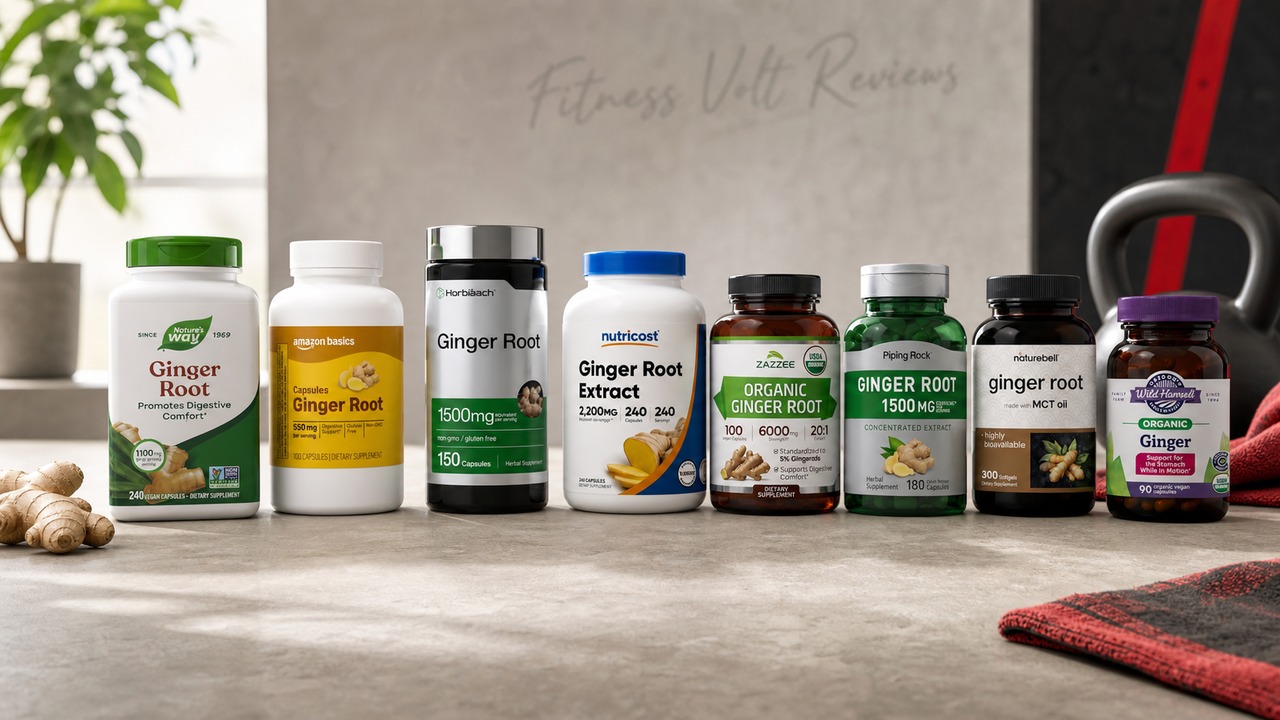
Compare eight ginger supplements by ginger-root versus extract format, gingerol disclosure, capsule or softgel count, current price, label clarity, and the safety questions worth asking before you buy.
Ginger is one of the easiest supplement categories to shop badly. A big milligram number can mean plain ground root, an extract with no stated standardization, or an extract that names a percentage of gingerols. A 20:1 extract does not automatically tell you the amount of gingerols in a serving, and a large root-powder number does not automatically make a capsule inferior. The useful question is whether the label lets you see what you are comparing.
The second trap is shopping for a promised outcome. Ginger has human evidence in some specific settings, especially nausea and vomiting in pregnancy, while evidence for other uses varies in strength and study quality. It is not a replacement for an anti-nausea prescription, a diagnosis for persistent digestive symptoms, or a care plan for joint pain.
Our overall pick is Zazzee USDA Organic Ginger Root 20:1 Extract because its current Amazon listing makes the most useful formulation detail visible: 5% gingerols. Nature’s Way is the better straightforward root-capsule option for readers who prefer a 1,100 mg per-serving listing and a larger 240-count bottle. Nutricost is the practical long-bottle extract alternative, while Oregon’s Wild Harvest is the organic root option for shoppers who prefer a smaller 90-capsule bottle.
For related but distinct categories, compare Fitness Volt’s best joint supplements, best turmeric and curcumin supplements, and best digestive enzyme supplements. A ginger capsule should not be used to blur the difference between an herb, a multi-ingredient joint formula, curcumin, or targeted digestive enzymes.
Our Verdict
Zazzee USDA Organic Ginger Root 20:1 Extract
The clearest extract listing in this group because it states both a 20:1 extract and 5% gingerols, giving shoppers a real formulation detail to compare instead of only a large root-equivalent number.
Best for: Buyers who want an extract with stated gingerol standardization and are willing to pay more than for a basic root-powder capsule
Check Price on AmazonWhat Makes One Ginger Label More Useful Than Another?
Ginger root, ginger root powder, and ginger extract all start with Zingiber officinale, but they give a shopper different information. A root-powder product may state a milligram amount per serving, as Nature’s Way and Oregon’s Wild Harvest do. An extract may state its extract ratio, a milligram amount, a gingerol percentage, all three, or none of them in the product title. Zazzee is the only locked product in this roundup whose supplied listing states 5% gingerols, which makes it the easiest extract to compare on the current shopping page.
Do not turn extract ratios into a false dose conversion. A 20:1 label describes a manufacturing relationship; it does not guarantee that every 20:1 extract has the same gingerol profile, serving size, or clinical relevance. Likewise, 1,100 mg of root per serving is a label amount, not proof that it matches an extract used in a particular trial. Confirm the current Supplement Facts panel and suggested use on the bottle before assuming two front-label numbers are equivalent.
We also separated capsule burden from product promise. A 240-capsule or 300-softgel bottle can be convenient only if the current serving size suits your routine. The ratings below reflect formulation clarity, format, current product availability, price snapshot, and who each bottle actually fits. This is a buying guide, not laboratory testing or a clinical trial of these products.
Ginger Supplements at a Glance
| Product | Recorded price | Current listing detail | Best fit | |
|---|---|---|---|---|
| Zazzee USDA Organic Ginger Root | $24.97 | 20:1 extract, 5% gingerols, 100 capsules | Standardization-minded buyers | Check price |
| Nature’s Way Ginger Root | $16.65 | 1,100 mg per serving, vegan, 240 capsules | Large root-capsule bottle | Check price |
| Nutricost Ginger Root Extract | $17.95 | 240 capsules, 240 servings | One-serving-per-day listing | Check price |
| Oregon’s Wild Harvest Organic Ginger | $19.96 | Organic, 1,000 mg, 90 capsules | Organic root-capsule format | Check price |
| NatureBell Ginger Root Extract | $16.95 | Extract with MCT oil, 300 softgels | Softgel format and long count | Check price |
| Horbaach Ginger Root Extract | $9.99 | 150 capsules | Low-cost extract bottle | Check price |
| Piping Rock Ginger Root Extract | $9.99 | 180 powder capsules | Higher-count low-cost capsule | Check price |
| Amazon Basics Ginger Root | $5.98 | 550 mg, 100 capsules | Lowest upfront price | Check price |
Prices are the August 15, 2026 snapshot before tax and shipping. Listing data, seller, price, availability, and formulation details can change. Confirm the delivered label, serving size, other ingredients, seal, and expiration date before use.
Our Eight Picks
1. Best Overall: Zazzee USDA Organic Ginger Root 20:1 Extract

Zazzee USDA Organic Ginger Root 20:1 Extract, 5% Gingerols, 100 Capsules
Best OverallThe most transparent extract listing here for shoppers who want gingerol standardization spelled out before purchase.
Pros
- Current listing states a 20:1 extract and 5% gingerols
- 100-capsule bottle is easy to compare
- USDA Organic claim is stated
Cons
- Highest recorded price in this list
- Extract ratio does not replace a full Supplement Facts check
Zazzee takes the top spot because it does more than call itself ginger extract. The current listing states a 20:1 extract, 5% gingerols, and 100 capsules. That gives a buyer a named active-compound standardization to compare, which is more useful than guessing what an unspecified extract contains.
Skip this if: your priority is a large basic ginger-root bottle at a lower checkout price. Nature’s Way lists 240 vegan capsules at $16.65 and a stated 1,100 mg per serving. Zazzee has 140 fewer capsules and costs $8.32 more, so it is not a volume-value choice.
Its closest rival is a plain root product, not a generic claim-heavy extract. Nature’s Way may be perfectly sensible for a root-capsule routine, but its supplied listing does not state a gingerol percentage. Choose Zazzee when standardization is the deciding variable, then verify the label’s serving size and other ingredients when the bottle arrives.
2. Best Large Root-Capsule Bottle: Nature’s Way Ginger Root

Nature's Way Ginger Root Capsules, 1,100 mg per Serving, Vegan, 240 Count
Best Large Root BottleA large, straightforward ginger-root capsule bottle for readers who prefer stated root amount and count over extract standardization.
Pros
- 1,100 mg per serving is stated
- 240 vegan capsules give the largest capsule count here
- Lower recorded price than Zazzee
Cons
- No gingerol percentage is stated in the supplied listing
- Per-serving amount should not be treated as an extract equivalent
Nature’s Way is the best uncomplicated root-capsule buy in this comparison. The listing states 1,100 mg per serving, vegan capsules, and a 240-count bottle. That combination makes it easy to understand the basic product format and makes the $16.65 snapshot look reasonable beside the other root options.
Skip this if: you want a stated gingerol standardization or an extract ratio on the shopping page. Zazzee carries the clearer extract disclosure, although it costs more and has a smaller bottle. Do not assume the 1,100 mg root amount converts cleanly to Zazzee’s 20:1 extract.
Nature’s Way beats Nutricost on listed price by $1.30 while matching its 240-capsule count. Nutricost calls itself an extract and says 240 servings, which may suit a buyer who prefers an explicitly one-serving-per-day listing.
3. Best Long-Bottle Extract: Nutricost Ginger Root Extract

Nutricost Ginger Root Extract, 240 Capsules for 240 Servings Per Bottle
Best Long-Bottle ExtractA straightforward extract option for shoppers who value the current 240-capsule, 240-serving listing over a root-powder format.
Pros
- Listing states 240 capsules and 240 servings
- Extract format is explicit
- One-serving-per-day listing is clear
Cons
- Supplied title does not state a gingerol percentage
- Costs more than the larger-count Nature's Way root option
Nutricost earns this spot because the current listing puts the bottle arithmetic in plain sight: 240 capsules for 240 servings. That is a genuinely useful distinction for a daily routine, and the $17.95 price is still well below Zazzee’s. The listing labels it ginger root extract, but does not state a gingerol percentage, so it cannot outrank Zazzee for standardization transparency.
Skip this if: you want the lowest price per bottle or want a gingerol percentage before buying. Nature’s Way costs $1.30 less and has the same stated capsule count, while Zazzee shows 5% gingerols. Nutricost makes the most sense when you want an extract plus a clearly stated 240-serving format.
NatureBell has 300 softgels and costs $1.00 less in this snapshot, but its listing calls out MCT oil and does not give Nutricost’s simple 240-serving language. Choose Nutricost for a conventional capsule routine, not because an extract label guarantees a stronger effect.
4. Best Organic Root Option: Oregon’s Wild Harvest Organic Ginger

Oregon's Wild Harvest Organic Ginger, 1,000 mg, 90 Capsules
Best Organic Root OptionAn organic 1,000 mg ginger-root capsule option for buyers who prefer a shorter bottle over a 240-count commitment.
Pros
- Organic ginger and 1,000 mg are stated
- 90-capsule format limits first-purchase size
- Plain root-capsule category is easy to understand
Cons
- Ninety capsules are far fewer than Nature's Way's 240
- Costs more than several larger bottles
Oregon’s Wild Harvest is the root-capsule alternative for readers who want an organic listing but do not want to start with a 240-count bottle. Its title states organic ginger, 1,000 mg, and 90 capsules. That is a clean format, though the $19.96 price is $3.31 higher than Nature’s Way while supplying 150 fewer capsules.
Skip this if: your decision is mainly about bottle count or the lowest ongoing cost. Nature’s Way has the simpler value story: 1,100 mg per serving and 240 vegan capsules at a lower recorded price. Oregon’s Wild Harvest is a fit for a smaller initial bottle, not for long-bottle value.
Oregon’s Wild Harvest also does not state a gingerol percentage in the supplied listing, so it is not a substitute for Zazzee when extract standardization is your reason for buying. Root products and standardized extracts can both be reasonable choices.
5. Best Softgel Format: NatureBell Ginger Root Extract with MCT Oil

NatureBell Ginger Root Extract with MCT Oil, 300 Softgels
Best Softgel FormatA long-count ginger-extract softgel for buyers who specifically prefer a softgel format and can confirm current availability before ordering.
Pros
- 300-softgel count is stated
- Listing identifies ginger root extract with MCT oil
- Lower recorded price than Nutricost and Zazzee
Cons
- Only one unit was listed in stock at the snapshot
- MCT oil is a format difference, not proof of better ginger absorption
NatureBell is the only locked product built around ginger extract with MCT oil in a 300-softgel format. The $16.95 price and large count make it tempting next to Nutricost’s $17.95, 240-capsule listing. Its main differentiator is delivery format, not an established superiority claim. A softgel with MCT oil may fit your preference, but the supplied record does not establish a gingerol amount or a better outcome.
Skip this if: you need dependable immediate availability or want the clearest capsule-serving comparison. The Amazon record showed only one unit left in stock at this snapshot. Nutricost is listed as in stock and explicitly states 240 servings, which is the more transparent routine for a buyer who prefers capsules.
Compared with Piping Rock and Horbaach, NatureBell has a much larger stated count but also a more involved formulation. Read the full other-ingredients panel and current suggested use, especially if you are selecting a supplement for a sensitive stomach rather than simple format preference.
6. Best Low-Cost Extract Bottle: Horbaach Ginger Root Extract

Horbaach Ginger Root Extract Supplement, 150 Capsules
Best Low-Cost Extract BottleA lower-price ginger-extract listing for buyers who will inspect the delivered Supplement Facts panel before comparing it with standardized options.
Pros
- Ginger root extract is named
- 150-capsule bottle is stated
- Low recorded checkout price
Cons
- Supplied listing title does not state milligrams or gingerol percentage
- Extract wording alone does not reveal serving strength
Horbaach is the low-cost extract bottle, not a label-transparency winner. At $9.99 for 150 capsules, it undercuts the larger branded picks and is an accessible way to avoid a high first purchase. But the supplied title does not state milligrams per serving, an extract ratio, or a gingerol percentage. Those omissions matter when the rest of the category uses very different label styles.
Skip this if: you want to compare active-compound standardization from the product page. Zazzee costs more but names 5% gingerols. If your goal is a simple root product with a stated amount, Nature’s Way and Oregon’s Wild Harvest give clearer front-label figures.
Piping Rock costs the same $9.99 and lists 180 powder capsules, 30 more than Horbaach. That makes Piping Rock the better count on a strict checkout-price comparison.
7. Best Higher-Count Budget Capsule: Piping Rock Ginger Root Extract

Piping Rock Ginger Root Extract Supplement, 180 Powder Capsules
Best Higher-Count Budget CapsuleA 180-count, low-price extract listing for shoppers who prioritize capsule count and will not mistake a generic extract title for standardization.
Pros
- 180 powder capsules are stated
- Same recorded price as Horbaach with 30 more capsules
- Extract format is named
Cons
- No milligram amount or gingerol percentage appears in the supplied title
- Powder capsules may be less appealing than softgels for some users
Piping Rock is the higher-count budget alternative. It costs the same as Horbaach at $9.99 but lists 180 powder capsules instead of 150. For a buyer whose only immediate constraint is checkout cost and bottle count, that is a meaningful difference. It is not enough information to rank the product above the more transparent Zazzee, Nature’s Way, Nutricost, or Oregon’s Wild Harvest listings.
Skip this if: you want the title itself to state a serving amount, extract ratio, or gingerol percentage. A product called ginger root extract can still be a legitimate product, but that phrase alone does not let you compare its active compounds with Zazzee or its root amount with Nature’s Way.
Against Amazon Basics, Piping Rock costs $4.01 more and has 80 additional capsules, but Amazon Basics states 550 mg while Piping Rock’s supplied title does not state a milligram amount.
8. Best Lowest-Upfront-Price Pick: Amazon Basics Ginger Root
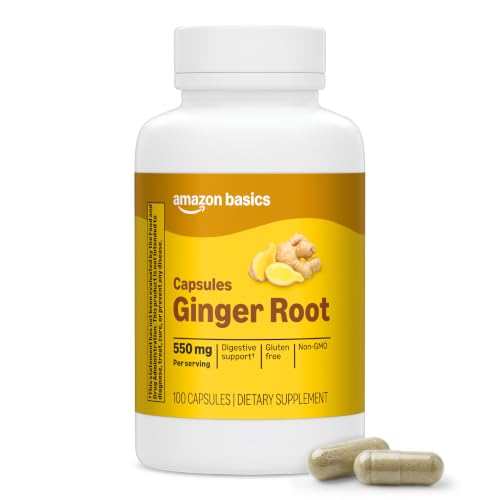
Amazon Basics Ginger Root Capsules, 550 mg, 100 Count
Best Lowest-Upfront PriceA cheap 550 mg ginger-root capsule option for a cautious first purchase, not the strongest choice for buyers who need detailed formulation disclosure.
Pros
- 550 mg and 100-count bottle are stated
- Lowest recorded checkout price
- Simple root-capsule identity
Cons
- Smaller bottle than every pick above except Oregon's Wild Harvest
- No gingerol standardization appears in the supplied title
Amazon Basics earns the final place because the $5.98 upfront price is hard to ignore and the title clearly states 550 mg and 100 capsules. That can make it a reasonable low-commitment purchase for someone who wants a simple ginger-root capsule rather than an extract. It is not the best choice when formulation detail is the goal.
Skip this if: you want a long bottle, a stated extract profile, or a gingerol percentage. Nature’s Way more than doubles the count with 240 capsules and supplies a stated 1,100 mg per serving. Zazzee gives the best stated active-compound detail, though its price reflects the more specialized listing.
Amazon Basics is a better first-purchase option than a value conclusion. Check the current Supplement Facts panel before assuming 550 mg is comparable to any extract or to a root amount used in a particular study.
Products We Would Not Choose First
Piping Rock and Horbaach are not poor products by default. They are simply the two locked listings that ask the buyer to do the most work after purchase. Each title identifies ginger root extract and gives a capsule count, but neither supplied title states milligrams per serving, an extract ratio, or a gingerol percentage.
Amazon Basics is also not a default for a reader who specifically wants a standardized extract. Its 550 mg and 100-count listing is clearer than an unnamed extract, and the price is excellent for a short trial, yet it still does not state gingerols. Buy it only when low entry cost and a simple root-capsule format matter more than detailed formulation comparison.
How to Choose a Ginger Supplement
Decide whether you are shopping root powder or a standardized extract
Start with the ingredient form instead of the headline claim. Nature’s Way, Oregon’s Wild Harvest, and Amazon Basics are root-capsule purchases with a stated root amount in the current title. Zazzee, Nutricost, NatureBell, Horbaach, and Piping Rock are sold as extracts. A standardized extract gives you a composition marker only when the label actually names it. Zazzee’s 5% gingerol disclosure is therefore more useful than a generic extract label. It does not make plain root useless; it makes the buyer’s comparison more honest.
Read gingerol language carefully
Gingerols are among the pungent compounds commonly discussed in ginger research and supplement marketing. A percentage such as Zazzee’s 5% tells you something specific about the extract. A 20:1 ratio is separate information and should not be multiplied into a self-made dose. Most products in this list do not display a gingerol percentage in the supplied title. For those bottles, inspect the Supplement Facts panel and do not reward vague potency wording with a higher ranking than the label deserves.
Calculate the real bottle burden from serving size, not capsule count alone
Count matters only alongside the current serving directions. Nutricost’s listing says 240 capsules for 240 servings, making its routine easy to understand from the product page. Nature’s Way lists 240 capsules and 1,100 mg per serving, but its capsule count alone does not tell you whether your particular label calls for one or more capsules. NatureBell’s 300 softgels look long-lasting, but the form, other ingredients, and suggested use still need a label check. Never assume a large bottle is a better value until you know how many servings it contains.
Fresh ginger and a ginger supplement are related, not identical
Fresh ginger can be a useful food ingredient for people who enjoy it in meals, tea, or cooking. A capsule is a different convenience and labeling decision. It has a shelf-stable format and may show a stated amount or standardization, while fresh ginger gives you food context without pretending to match a supplement label. Do not stack fresh ginger and several ginger products just to chase a front-label promise. Persistent nausea, reflux, abdominal pain, vomiting, or unexplained symptoms need an appropriate medical evaluation instead of more supplement experimentation.
Take medication, pregnancy, and bleeding questions seriously
NCCIH notes that people who take medication should discuss ginger and other herbs with a health care provider, and that pregnancy and breastfeeding deserve individualized guidance. A recent review of herb interactions with oral anticoagulants identifies ginger as a potential concern with warfarin. For a practical rule, speak with a clinician or pharmacist before using a ginger supplement if you are pregnant or breastfeeding, use an anticoagulant or antiplatelet medicine, have a bleeding disorder, are preparing for surgery, or take glucose-lowering medication. This is a precaution based on possible interaction and individual risk, not a claim that every ginger food or capsule causes a problem.
Frequently Asked Questions
What is the best type of ginger supplement?
The best type depends on the information you need from the label. Zazzee is our top extract pick because the supplied listing states 5% gingerols and a 20:1 extract. Nature’s Way is the better choice for a large root-capsule bottle with a stated 1,100 mg per serving. Neither format is automatically better for every purpose.
Is ginger root powder the same as ginger extract?
No. Both come from ginger, but a root-powder capsule and an extract can differ in how the product is concentrated and how its active compounds are disclosed. Read their milligram numbers as product-specific label facts, not automatic equivalents. Check the Supplement Facts panel, serving size, and any stated gingerol standardization before comparing price.
Does a 20:1 ginger extract mean it is 20 times stronger?
Not in a way that supports simple serving math. The ratio describes an extract relationship, but it does not replace the actual serving amount, gingerol percentage, or clinical context. Zazzee’s 20:1 listing is helpful because it also states 5% gingerols. A ratio alone should not be used to create a dose or claim that one product will work 20 times better.
What should I look for on a ginger supplement label?
Confirm whether it is root powder or extract, the serving size, milligrams per serving, capsule or softgel count, any gingerol standardization, other ingredients, allergen notes, suggested use, seller, seal, and expiration date. Zazzee, Nature’s Way, and Nutricost are easier starting points because their supplied listings state more of those buyer-relevant details than the budget extract titles.
Can I take ginger supplements with blood thinners?
Do not make that call from a shopping article. Ginger may interact with anticoagulant or antiplatelet medicines, and the interaction risk depends on the medication, dose, health history, and the ginger product. Ask the clinician or pharmacist who manages your medication before adding a ginger supplement, and do the same before any scheduled procedure.
Is a ginger supplement safe during pregnancy?
Research has examined ginger for nausea and vomiting in pregnancy, but a supplement choice should still be individualized. NCCIH advises talking with a health care provider when considering ginger during pregnancy and notes that less is known during breastfeeding. Do not use this ranking to manage severe nausea, dehydration, or pregnancy symptoms on your own when clinical care is needed.
Bottom Line
Zazzee USDA Organic Ginger Root 20:1 Extract is the best ginger supplement in this comparison because its current listing does the best job of telling a buyer what they are looking at: a 20:1 extract with 5% gingerols. Nature’s Way is the better large-bottle root option, Nutricost is the clearest long-bottle extract listing, and Oregon’s Wild Harvest is the shorter organic root-capsule alternative.
The strongest buying habit is simple: do not let a giant milligram number, extract ratio, or low checkout price decide for you. Match root versus extract format to your goal, verify the current label, count the real servings, and give medication or pregnancy questions to a clinician or pharmacist. For broader ingredient stacks, return to Fitness Volt’s joint supplement guide rather than turning ginger into a substitute for every category.
Sources
- National Center for Complementary and Integrative Health. Ginger: Usefulness and Safety.
- Marx, W., et al. (2022). Orally consumed ginger and human health: an umbrella review. Nutrients.
- Bartels, E. M., et al. (2015). Efficacy and safety of ginger in osteoarthritis patients: a meta-analysis of randomized placebo-controlled trials. Osteoarthritis and Cartilage.
- Viljoen, E., et al. (2014). A systematic review and meta-analysis of the effect and safety of ginger in pregnancy-associated nausea and vomiting. Nutrition Journal.
- Talasaz, A. H., et al. (2025). Food and herbal product interactions with oral anticoagulants: evidence review and practical recommendations. Seminars in Thrombosis and Hemostasis.