
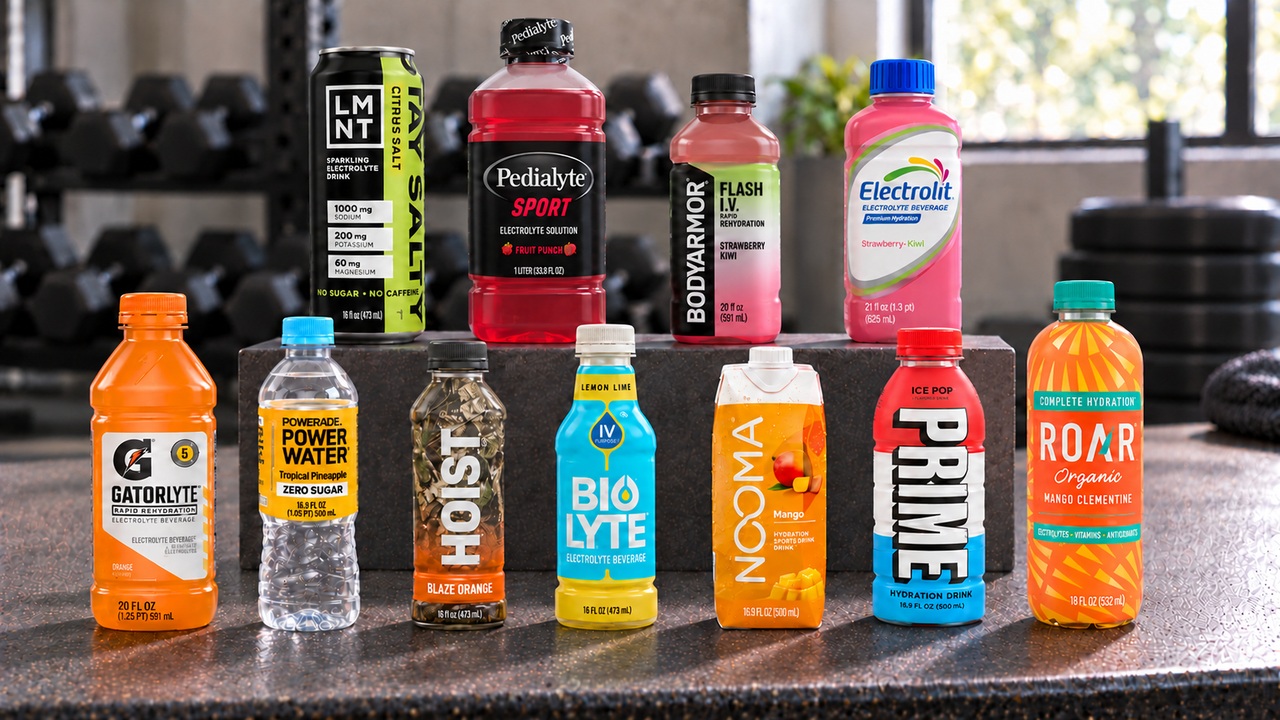
A 16.9 fl oz bottle of PRIME Ice Pop has 30 mg of sodium. A slightly smaller can of LMNT Citrus Salt has 1,000 mg. Both sit in the hydration aisle, but they solve different problems. These 11 ready-to-drink picks range from light flavored drinks to bottles with enough carbohydrate to count toward a fueling plan.
Written by Tom Miller, CSCS. Updated: November 2026.
Short on time? Gatorlyte Orange is our first pick for a 20 fl oz bottle with roughly 500 mg of sodium and 12 g of sugar. Pick POWERADE Power Water if you want zero sugar, Electrolit if you want more carbohydrate or LMNT if your plan calls for much more sodium.
How We Chose
We compared noncaffeinated drinks you can open and drink, excluding powders, drops and energy drinks. We used the exact U.S. flavor and bottle size and compared sodium, sugar, total carbohydrates and sweeteners. The table shows the whole container, even where the label lists smaller servings. With the one-liter Pedialyte, we also give the 12 fl oz portion because most of the sodium number comes from bottle size.
Our ratings reflect how well each label and format fit its named use. We weighed the amount of liquid you have to carry, whether you can recap the container and how much carbohydrate you get with the sodium. More sodium earns no extra credit if you’re buying a drink for a short workout or a lunch break.
Our Verdict
Gatorlyte Orange
Roughly 500 mg sodium and 12 g sugar in a 20 fl oz bottle put Gatorlyte between zero-sugar electrolyte water and higher-carbohydrate sports drinks.
Best for: Adults who want both sodium and some carbohydrate in a still, resealable sports drink
Check Price on AmazonOur Top Picks
Best Overall: Gatorlyte Orange

Gatorlyte Orange, 20 fl oz
Best OverallThe 20 fl oz Orange Gatorlyte delivers 490 to 500 mg sodium, depending on the label, with 12 g sugar and 50 calories.
Pros
- 490 to 500 mg sodium per bottle
- 12 g sugar, less than Electrolit
- 20 fl oz screw-cap bottle
Cons
- Contains added sugar and stevia
- Label versions differ slightly in sodium
Gatorlyte brings more fluid than HOIST in one bottle without adding more sugar. The Orange labels for this 20 fl oz bottle list 490 or 500 mg of sodium and agree on 12 g sugar, 350 mg potassium and 50 calories. Check the bottle for the exact sodium if you’re keeping a tally.
It’s the first one I’d point you to if you want a still, resealable drink with some carbohydrate between sets or at a long practice. Twelve grams of sugar is worth counting, but it isn’t a complete fueling plan for a long race. The orange formula also uses stevia, so skip it if you avoid that sweetener.
HOIST gives you 13 g sugar and 430 mg sodium in 4 fewer fluid ounces, which makes more sense if your bottle pocket is small. Electrolit is close in size to Gatorlyte but has more than twice the sugar.
Best Zero-Sugar Still Drink: POWERADE Power Water Tropical Pineapple

POWERADE Power Water Tropical Pineapple, 16.9 fl oz
Best Zero-Sugar Still DrinkThis 16.9 fl oz Tropical Pineapple Power Water has 440 mg sodium and 130 mg potassium in a still drink with zero sugar.
Pros
- 440 mg sodium per 16.9 fl oz bottle
- Zero sugar and zero carbohydrate
- Resealable bottle
Cons
- Sucralose and acesulfame potassium
- Does not supply carbohydrate for training
Power Water gets you 440 mg sodium in a 16.9 fl oz bottle with zero sugar and zero carbohydrate. Be careful when shopping by name. The 20 fl oz bottle of Tropical Pineapple has a different sodium total because it holds more liquid.
Pick it if you want to carry carbohydrates separately and would rather drink still water than a sparkling electrolyte drink. It has sucralose and acesulfame potassium. If you’re buying a drink to take care of both fluids and carbs, Power Water only covers the fluid part.
LMNT also has no sugar, but it comes in a can and has over twice the sodium. POWERADE is the easier choice when you want a screw cap or your plan calls for less sodium than a full can of LMNT.
Best Higher-Potassium Sports Drink: BODYARMOR Flash I.V. Strawberry Kiwi

BODYARMOR Flash I.V. Strawberry Kiwi, 20 fl oz
Best Higher-Potassium Sports DrinkA 20 fl oz Strawberry Kiwi sports drink with 530 mg sodium, 720 mg potassium, 65 mg magnesium, and 15 g added sugar.
Pros
- 720 mg potassium per bottle
- 530 mg sodium and 65 mg magnesium
- 20 fl oz resealable bottle
Cons
- 15 g added sugar
- Stevia may not suit everyone
Flash I.V. pairs 720 mg potassium with 530 mg sodium per 20 fl oz bottle. Unlike the potassium-heavy PRIME Ice Pop, it still supplies several hundred milligrams of sodium. This flavor contains 16 g total carbohydrate, including 15 g sugar, plus stevia.
Choose it if you want a traditional sweetened sports drink and are comparing potassium alongside sodium. If a clinician has told you to limit potassium, don’t choose it for that 720 mg figure; check the label against your own instructions. Despite the name, this is a beverage.
Both Flash I.V. and Gatorlyte come in 20 fl oz bottles. The choice comes down to wanting more potassium with a little more sugar, or fewer calories. Flash I.V. has 80 calories to Gatorlyte’s 50.
Best With More Carbohydrate: Electrolit Strawberry-Kiwi

Electrolit Strawberry-Kiwi, 21 fl oz
Best With More CarbohydrateThe full 21 fl oz bottle has 31 g carbohydrate and 430 mg sodium, with dextrose supplying all 31 g of added sugar.
Pros
- 31 g carbohydrate per bottle
- 430 mg sodium per bottle
- Full-bottle values printed on the package
Cons
- All 31 g of sugar are added sugar
- Contains sucralose and stevia
Electrolit has the most carbohydrate per container in this lineup. The 21 fl oz Strawberry-Kiwi bottle contains 31 g, all from added sugar, with 430 mg sodium and 130 calories. The smaller serving column shows 18 g of sugar. That’s 12 fl oz, not the whole bottle.
This is where I’d look if you want some of your training fuel in the drink instead of carrying another snack. Skip it for a casual bottle if 31 g added sugar is more than you want. It also uses stevia and sucralose.
With Gatorlyte, you get about the same volume and roughly 60 to 70 mg more sodium, but 19 g less sugar. Choose Electrolit when you want the extra carbohydrate rather than extra salt.
Best High-Sodium Sparkling Drink: LMNT Sparkling Citrus Salt

LMNT Sparkling Citrus Salt, 16 fl oz
Best High-Sodium Sparkling DrinkCitrus Salt packs 1,000 mg sodium, 200 mg potassium and 60 mg magnesium into a 16 fl oz sparkling can with no sugar.
Pros
- 1,000 mg sodium in 16 fl oz
- Zero sugar
- Lists sodium, potassium and magnesium
Cons
- High sodium for routine sipping
- Carbonated can does not reseal
A 16 fl oz can of Citrus Salt has 1,000 mg sodium, or about 63 mg per fluid ounce. That’s the highest concentration here even though the much bigger Pedialyte bottle has more sodium in total. LMNT sweetens Citrus Salt with stevia and lists zero grams of sugar.
Choose the can if you like carbonation and have a specific reason to buy a high-sodium drink. A desk day or short gym session is no reason by itself. If bubbles bother you while you’re moving or you want to toss a half-finished drink back in your bag, use a still, capped bottle.
BIOLYTE gives you 700 mg sodium in the same 16 fl oz volume. It’s still and resealable, but comes with 10 g sugar and several other ingredients. Power Water gets you closer to half LMNT’s sodium without sugar or bubbles.
Best Multi-Serving Bottle: Pedialyte Sport Fruit Punch

Pedialyte Sport Fruit Punch, 1 L
Best Multi-Serving BottleThe one-liter Fruit Punch bottle has 1,380 mg sodium in total; a measured 12 fl oz serving contains 490 mg sodium and 5 g sugar.
Pros
- 490 mg sodium per 12 fl oz
- Per-serving and per-liter values
- One-liter bottle can be portioned
Cons
- Bulkier than single-serve drinks
- 1,380 mg sodium in the full bottle
Pedialyte Sport makes more sense as a bottle to measure from than as a single serving. A 12 fl oz pour contains 490 mg sodium and 5 g sugar. Abbott lists 1,380 mg sodium, 1,320 mg potassium and 14 g sugar for the whole liter.
I’d buy this for a cooler or fridge where you can pour what you want and follow the bottle’s storage directions. If you need something to carry while you run or cycle, that liter is a lot to haul. The pictured Fruit Punch label lists milk ingredients, and Abbott says Pedialyte Sport is unsuitable for people with galactosemia. Read the label on the bottle you receive, since old and new packaging can ship.
Gatorlyte gives you about the same sodium as a 12 fl oz portion of Pedialyte in a 20 fl oz bottle. If you want less sugar for that amount of sodium and can measure the pour, Pedialyte has 5 g versus 12 g.
Best Compact Bottle With Carbs: HOIST Blaze Orange

HOIST Blaze Orange, 16 fl oz
Best Compact Bottle With CarbsHOIST packs 430 mg sodium and 14 g carbohydrate into a resealable 16 fl oz Orange bottle with 13 g added sugar.
Pros
- 430 mg sodium in a compact bottle
- 14 g carbohydrate
- Resealable 16 fl oz format
Cons
- 13 g added sugar
- Uses cane sugar, dextrose and stevia
HOIST delivers 430 mg sodium with 14 g carbohydrate in a 16 fl oz bottle. The drink uses cane sugar, dextrose and stevia. HOIST may ship the updated Orange wrap rather than the camo Blaze Orange label.
Choose it over Gatorlyte when you want less volume without losing that much sodium. If you’re looking to sip a larger bottle while you train, Gatorlyte gives you 4 fl oz more and slightly less sugar. HOIST isn’t the pick if added sugar is what you’re trying to avoid.
Power Water fits the same small-bottle job with nearly the same sodium, at 440 mg. It drops the carbohydrate to zero. That is the more useful switch if you fuel separately or just don’t want sugar in the bottle.
Best High-Sodium Still Bottle: BIOLYTE Lemon Lime

BIOLYTE Lemon Lime, 16 fl oz
Best High-Sodium Still BottleBIOLYTE Lemon Lime is a still 16 fl oz drink with 700 mg sodium, 400 mg potassium and 10 g added sugar.
Pros
- 700 mg sodium per 16 fl oz bottle
- 400 mg potassium
- Still, resealable bottle
Cons
- Complex blend if you only want electrolytes
- 10 g added sugar
BIOLYTE is the higher-sodium still option that you can reseal and carry in a small pocket. The 16 fl oz Lemon Lime bottle has 700 mg sodium, 400 mg potassium and 10 g added sugar. Older packaging calls it Citrus.
It’s less straightforward than HOIST or LMNT. The ingredient list includes NAC, ginger and milk thistle alongside the electrolytes and sweeteners. Those additions aren’t why it makes this list. Skip it if you want a short ingredient list or would rather buy an unsweetened electrolyte drink.
In the same volume, HOIST has 270 mg less sodium and 3 g more sugar. LMNT adds another 300 mg sodium and cuts sugar to zero but only comes as a sparkling can in this comparison.
Best Coconut Water Carton: NOOMA Mango

NOOMA Mango Hydrating Sports Drink, 16.9 fl oz
Best Coconut Water CartonNOOMA Mango uses coconut water concentrate in a 16.9 fl oz carton with 110 mg sodium, 340 mg potassium and no added sugar.
Pros
- No added sugar
- 340 mg potassium per carton
- Resealable coconut water-based carton
Cons
- 110 mg sodium is modest for this volume
- Contains stevia
NOOMA Mango comes in a capped carton and has 110 mg sodium plus 340 mg potassium. The carton lists 5 g sugar but no added sugar. The recipe uses coconut water concentrate and stevia.
I’d choose it for a low-sodium flavored drink when you want something other than a bottle or can. The format does not make 110 mg sodium behave like 400 or 500 mg. If you’re planning for a sweaty outing and want sodium in the drink, look up the table rather than buying on the coconut water ingredient alone.
ROAR Mango Clementine has the same sodium with 3 g total sugar and 2 g added sugar, plus erythritol. NOOMA has 210 mg more potassium and a recipe without erythritol on this label.
Best Very Low-Sodium Option: PRIME Hydration Ice Pop

PRIME Hydration Ice Pop, 16.9 fl oz
Best Very Low-Sodium OptionThe classic caffeine-free Ice Pop Hydration bottle contains 30 mg sodium, 700 mg potassium and 2 g total sugar in 16.9 fl oz.
Pros
- 30 mg sodium per bottle
- 20 calories and no added sugar
- Caffeine-free Hydration formula
Cons
- Low sodium for long, sweaty training
- Sucralose and acesulfame potassium
PRIME Hydration Ice Pop has 30 mg sodium and 700 mg potassium per bottle, with 2 g total sugar and none added. This is the classic caffeine-free Hydration bottle. Check for that word on the front so you don’t pick up the caffeinated PRIME Energy line instead.
Choose it when you’re shopping for a lower-sodium flavored drink and like the ingredients listed. It uses sucralose and acesulfame potassium. If you need salt in your sports drink, the big potassium number doesn’t make up for the low sodium.
NOOMA triples the sodium and then some, but even its 110 mg is modest. To make a meaningful jump while keeping sugar low, go to POWERADE Power Water at 440 mg sodium and zero sugar. As with Flash I.V., check the potassium if you have an advised limit.
Best Light Fruit Blend: ROAR Organic Mango Clementine
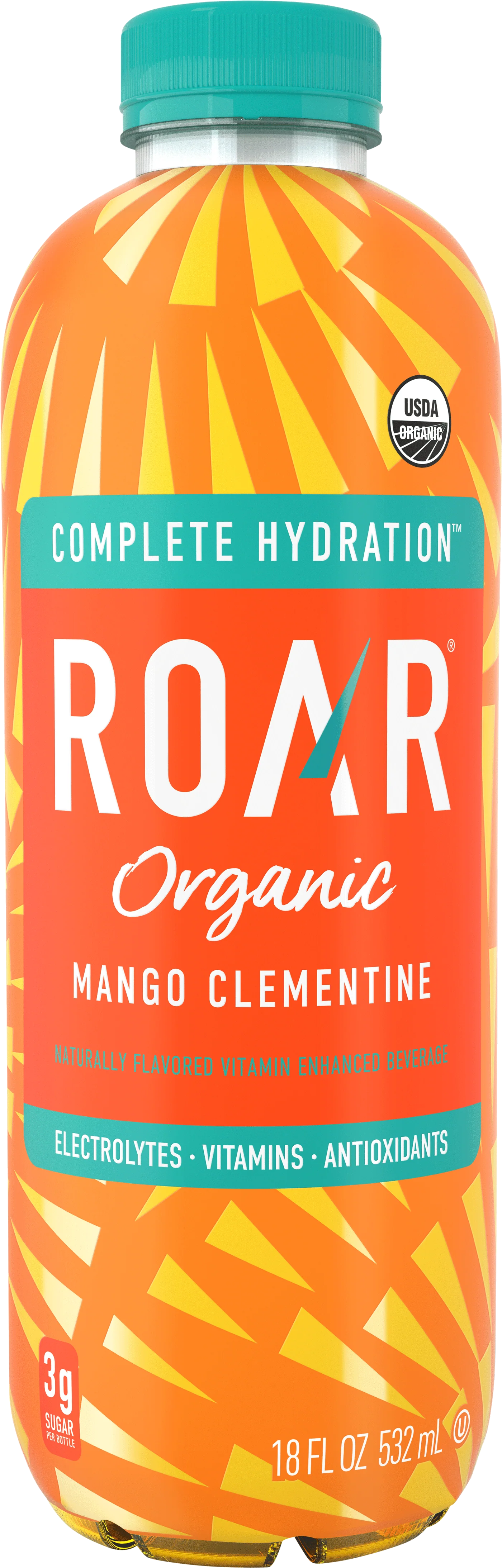
ROAR Organic Mango Clementine, 18 fl oz
Best Light Fruit BlendAn 18 fl oz mango-clementine drink with 110 mg sodium, 130 mg potassium, 3 g sugar and 7 g sugar alcohol per bottle.
Pros
- 20 calories per 18 fl oz bottle
- 3 g total sugar
- 110 mg sodium and 130 mg potassium
Cons
- Contains 7 g erythritol per bottle
- Little sodium for a high-sweat session
ROAR is closer to a light flavored drink than a carbohydrate-rich sports drink. The 18 fl oz Mango Clementine bottle has 110 mg sodium and 20 calories. Its 3 g total sugar includes 2 g added sugar. The other column on this label is for 8 fl oz.
If you like a light fruit drink and don’t want a heavy dose of sodium, ROAR fits. It has 7 g sugar alcohol from erythritol per full bottle. If you already know sugar alcohols bother you, use that ingredient difference to make the decision rather than assuming the low sugar tells the whole story.
NOOMA gives you the same amount of sodium and more potassium, without erythritol on its Mango label. Each is a better fit for a light drink than for replacing the sodium and carbohydrates you may want during a long session.
Alternatives Worth Considering
For a typical gym session under an hour, start with plain water. If you want to dial in the amount of sodium in the bottle you already own, our electrolyte supplements guide includes packets and tablets, and our electrolyte drops guide covers concentrates. If you’re riding or running long and want to mix fluid and carbohydrate to a plan, compare our sports drink mixes.
Electrolyte Drinks Compared
Amounts are for the full bottle, can or carton listed, not the whole case. The 1 L Pedialyte contains about three labeled servings. Sodium for Gatorlyte reflects two labels for the same Orange 20 fl oz bottle.
| Product | Key Spec | Best For | Price |
|---|---|---|---|
| Gatorlyte Orange, 20 fl oz | 20 fl oz; 490 to 500 mg sodium; 12 g sugar; 50 calories | Best Overall | Check Price |
| POWERADE Power Water Tropical Pineapple, 16.9 fl oz | 16.9 fl oz; 440 mg sodium; 0 g sugar; 10 calories | Best Zero-Sugar Still Drink | Check Price |
| BODYARMOR Flash I.V. Strawberry Kiwi, 20 fl oz | 20 fl oz; 530 mg sodium; 720 mg potassium; 15 g sugar | Best Higher-Potassium Sports Drink | Check Price |
| Electrolit Strawberry-Kiwi, 21 fl oz | 21 fl oz; 430 mg sodium; 31 g sugar; 31 g carbohydrate | Best With More Carbohydrate | Check Price |
| LMNT Sparkling Citrus Salt, 16 fl oz | 16 fl oz; 1,000 mg sodium; 0 g sugar; sparkling | Best High-Sodium Sparkling Drink | Check Price |
| Pedialyte Sport Fruit Punch, 1 L | 1 L; 1,380 mg sodium and 14 g sugar per bottle; 490 mg sodium and 5 g sugar per 12 fl oz | Best Multi-Serving Bottle | Check Price |
| HOIST Blaze Orange, 16 fl oz | 16 fl oz; 430 mg sodium; 13 g sugar; 14 g carbohydrate | Best Compact Bottle With Carbs | Check Price |
| BIOLYTE Lemon Lime, 16 fl oz | 16 fl oz; 700 mg sodium; 10 g sugar; still | Best High-Sodium Still Bottle | Check Price |
| NOOMA Mango Hydrating Sports Drink, 16.9 fl oz | 16.9 fl oz; 110 mg sodium; 5 g sugar; 0 g added sugar | Best Coconut Water Carton | Check Price |
| PRIME Hydration Ice Pop, 16.9 fl oz | 16.9 fl oz; 30 mg sodium; 700 mg potassium; 2 g sugar | Best Very Low-Sodium Option | Check Price |
| ROAR Organic Mango Clementine, 18 fl oz | 18 fl oz; 110 mg sodium; 3 g sugar; 7 g sugar alcohol | Best Light Fruit Blend | Check Price |
How to Choose a Ready-to-Drink Electrolyte Drink
Start with the session
At a 40-minute weights session in an air-conditioned gym, water is a good starting point. You can get sodium and carbohydrate from meals. The decision changes when workouts run longer, the room is hot or you lose a lot of fluid through sweat. Two people doing the same workout can have different sweat losses. There’s no reason to switch to 1,000 mg of sodium per drink just because a can advertises it on the front. Match what you carry to the session, then adjust when the conditions or intensity change.
Read the full-bottle column, then compare volume
The larger container often has the larger number. Pedialyte Sport lists 1,380 mg sodium per liter, but 490 mg in a 12 fl oz serving. In equal volumes, LMNT is more concentrated: about 63 mg of sodium per fluid ounce versus about 41 mg for Pedialyte Sport. If you don’t want carbonation or a liter, BIOLYTE sits between the two at about 44 mg per ounce. That’s a better comparison than treating a 1 L bottle and a 16 fl oz can as equal servings.
Make a separate decision about carbohydrates
If you fuel from food, gels or chews, the 440 mg sodium and zero sugar in Power Water may suit you better than a second source of carbs. If you want carbs in the drink, Electrolit has 31 g and can make up part of that plan. Gatorlyte and HOIST have more modest amounts. Use total carbohydrate when you’re counting training fuel. Our hydration powders for athletes include formats you can mix to suit your bottle size.
Check the sweetener and container
Zero sugar doesn’t mean unsweetened. In this roundup, Power Water uses sucralose and acesulfame potassium; LMNT uses stevia. NOOMA lists 5 g of sugar with none added, while ROAR has less total sugar but includes erythritol. Read the ingredients if you avoid a specific sweetener. A screw cap also makes a difference if you don’t finish the drink in one go. A 16 fl oz can may fit in your cooler but can’t go back into a packed gym bag upright or sideways once open.
Work out what one usable portion costs
Divide the checkout price by the number of bottles for a single-serve case. Power Water comes in six, while most of these picks come in 12. A higher case price is not necessarily a higher cost per bottle. For the four one-liter bottles of Pedialyte, compare the cost per amount you will pour and use, not per bottle. If you plan to use only one 12 fl oz serving at a time and may not finish the rest before the storage instructions say to discard it, small bottles can be the cheaper purchase in practice.
Frequently Asked Questions
Is an electrolyte drink better than water for a workout?
For most sessions under an hour, water is enough. During longer or more intense sessions, especially in heat, sodium or carbohydrate in a drink can make sense depending on sweat loss and how you fuel. A light drink such as NOOMA is a different purchase from LMNT or Gatorlyte. Plan for the session you have, not just the length listed on your training app.
How much sodium should an electrolyte drink have?
There isn’t a single number to buy for everyone. The usefulness of 440 mg or 1,000 mg depends on your sweat loss, the size of the bottle and the rest of what you eat and drink. If you want to compare products, check both milligrams per container and milligrams per fluid ounce. Follow any sodium limits a healthcare professional has given you.
Is a zero-sugar electrolyte drink good for a long workout?
It can fit when you get carbohydrates elsewhere during the session. POWERADE Power Water provides sodium without carbs, whereas Electrolit supplies 31 g carbohydrate in its 21 fl oz bottle. If you rely on the drink for fuel, a zero-sugar label is a clue to check the total carbohydrate before you leave, not a reason to assume it meets both needs.
Are PRIME Hydration and PRIME Energy the same thing?
No. The classic Ice Pop bottle listed here is caffeine-free PRIME Hydration. PRIME Energy is a separate caffeinated product. Look for the full product line on the package rather than buying by flavor or brand. Even within Hydration, compare the exact formula: the 30 mg sodium and 700 mg potassium in our table refer to the selected classic Ice Pop bottle.
Can you drink electrolyte drinks every day?
Plain water is an option for everyday fluids. Whether you choose an electrolyte drink depends on activity, heat, diet and the bottle’s sodium and sugar. A full can of LMNT adds 1,000 mg sodium, while a full Electrolit Strawberry-Kiwi adds 31 g sugar. If you have kidney disease or take medicines that affect potassium, use your clinician’s guidance before adding a potassium-heavy drink to your routine.
Can sports drinks prevent problems from drinking too much water?
Sports drinks don’t make overdrinking safe. During prolonged exercise, taking in more fluid than you lose can contribute to low blood sodium even when the drink contains electrolytes. For long events, plan around your own sweat loss and conditions. Don’t make it a rule to finish every bottle or use a full liter as a single serving just because you bought it that way.
Bottom Line
Gatorlyte Orange gives you roughly 500 mg sodium and 12 g sugar in a capped 20 fl oz bottle. It sits between higher-carbohydrate Electrolit and zero-sugar Power Water, without moving into LMNT’s 1,000 mg range. That’s why it’s our first choice when you want sodium and some carbohydrate from one still drink.
For a short workout, water may be all you need. When you do buy an electrolyte drink, read the values for the amount you’ll actually drink. A serving on a label can be less than the full bottle. If you’d rather adjust the mix yourself, start with our sports drink mixes guide.
Sources
- Gatorade: Orange Gatorlyte ingredients and bottle size
- PepsiCo Product Facts: Orange Gatorlyte 20 fl oz nutrition
- POWERADE: Power Water nutrition by bottle size
- BODYARMOR: Flash I.V. Strawberry Kiwi ingredients
- Electrolit: Strawberry-Kiwi 21 fl oz nutrition and ingredients
- LMNT: Sparkling Citrus Salt nutrition and flavors
- Abbott Nutrition: Pedialyte Sport per-liter and per-serving nutrition
- HOIST: Orange label and ingredients
- BIOLYTE: Lemon Lime size and nutrition
- NOOMA: Mango carton nutrition and ingredients
- PRIME: Ice Pop Hydration recipe and package details
- ROAR Organic: Mango Clementine ingredients
- National Athletic Trainers’ Association: Fluid Replacement for the Physically Active
- NIH Office of Dietary Supplements: Potassium and medication interactions