A whey-casein blend can make sense if you want one powder for a post-workout shake, a bowl of oats, and an evening snack. The catch is that two tubs with the same protein claim can differ by 80 calories per scoop. Our picks put those differences ahead of promises about hours of muscle growth.
Written by Tom Miller, CSCS. Reviewed by the FitnessVolt Editorial Team. Last updated: October 2026.
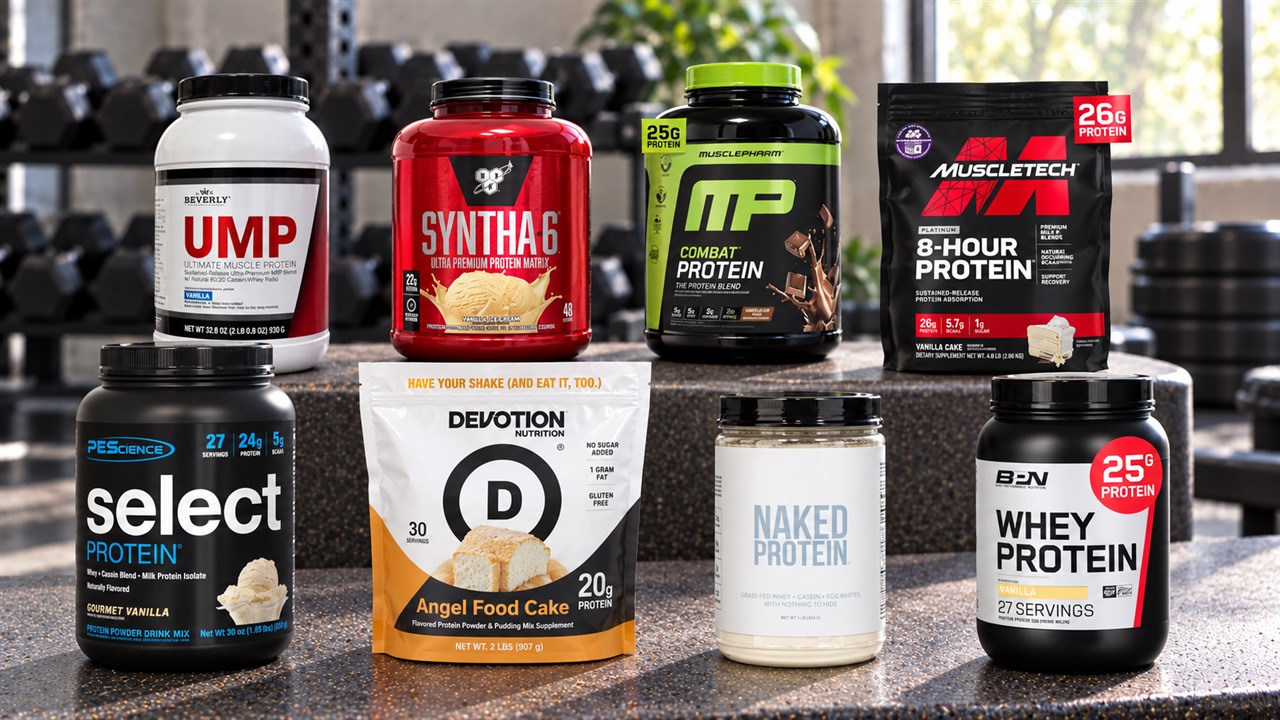
Our pick: PEScience Select Gourmet Vanilla combines milk protein isolate and whey concentrate with 24 g protein in 120 calories. Choose Naked Protein for an unsweetened formula or BPN Whey Protein when sport certification matters.
How We Chose
Each pick contains both whey and casein, either as named ingredients or within milk protein. Pure whey blends and pure casein powders belong in our separate guides. We weighed protein per serving, calories accompanying that protein, ingredient clarity, container yield, and practical fit for shakes or food. Added enzymes and a longer ingredient list do not earn an automatic advantage.
Our editorial scores favor clear formulas that make daily protein intake easier. The vanilla options suit a sweet shake or recipe; Naked Protein leaves flavoring under your control. Milk allergies rule out this entire list. Several formulas also contain soy or egg, so check the individual label rather than treating a dairy blend as a single-allergen product.
Our Verdict
PEScience Select Gourmet Vanilla
A useful whey-casein blend with 24 g protein, 120 calories, and enough versatility for shakes and recipes.
Best for: Lifters who want one flavored powder for shakes and food
Check Price on AmazonOur Top Picks
Best Overall: PEScience Select Gourmet Vanilla

PEScience Select Gourmet Vanilla
Best OverallSelect suits a daily shake-and-recipe routine, with a 24 g serving that leaves fewer extra calories than the richer blends below.
Pros
- 24 g protein in 120 calories
- Milk protein isolate plus whey concentrate
- 27 servings in the selected tub
Cons
- Contains milk and soy ingredients
- Uses sucralose and acesulfame potassium
Select starts with milk protein isolate, which supplies casein and whey, then adds whey concentrate. Its 31 g scoop contains 24 g protein: about 77% of the powder’s weight. That is a useful balance for a flavored blend rather than a reason to dismiss plain whey isolate.
The selected tub holds 27 servings, enough for just under four weeks at one scoop daily. Gourmet Vanilla also keeps the flavor direction straightforward when you add fruit or oats. Skip it if you want an unsweetened powder or avoid soy ingredients.
Quest Vanilla Milkshake gives you the same 24 g protein with 110 calories. Select earns our overall pick for its broad shake-and-recipe use, while Quest has the tighter calorie allowance. Neither difference establishes superior muscle growth.
Best for Clear Protein-Source Amounts: Pro JYM Tahitian Vanilla

Pro JYM Tahitian Vanilla
Clear Source AmountsPro JYM identifies the amounts of its whey isolate, micellar casein, and milk protein isolate instead of leaving the blend proportions unexplained.
Pros
- 24 g protein per scoop
- Identifies three protein-source amounts
- 22 servings in the selected container
Cons
- 140 calories per serving
- Smaller serving count than Select or BPN
Pro JYM identifies 8.5 g whey isolate, 7.75 g micellar casein, and 7.75 g milk protein isolate in its blend. You can see the formulation’s direction without guessing from the order of ingredients. The serving supplies 24 g protein and 140 calories.
Buy this for formulation transparency, not because three sources must beat two. The 22-serving container runs out five days sooner than Select’s 27-serving tub at the same daily scoop. Skip it if a leaner calorie profile or a longer container yield matters more than disclosed source amounts.
BPN gives you 25 g protein in 130 calories and a sport-certified formula. Pro JYM’s advantage is the source breakdown; BPN’s is certification and a slightly larger protein serving.
Best Sport-Certified Blend: BPN Whey Protein Vanilla

BPN Whey Protein Vanilla
Sport-Certified BlendBPN pairs whey concentrate and micellar casein with an NSF Certified for Sport listing, making it a stronger fit for supplement-conscious competitors.
Pros
- 25 g protein in 130 calories
- Whey concentrate and micellar casein
- NSF Certified for Sport product listing
Cons
- Contains milk and soy
- Stevia-sweetened rather than unsweetened
BPN uses whey concentrate and micellar casein rather than dressing up a whey-only formula as a mixed dairy protein. The vanilla serving contains 25 g protein and 130 calories, with 27 servings in the selected tub.
NSF lists this vanilla formula under Certified for Sport. Athletes should still check the product and applicable lot before use; certification reduces risk rather than eliminating it. Skip it if you need a lactose-free guarantee or have a milk allergy. Concentrate remains a dairy ingredient even when casein shares the scoop.
Compared with Pro JYM, BPN trades the precise three-source breakdown for a simpler two-source formula and sport certification. For an ordinary gym routine, Select remains our first pick; for a drug-tested competition, the certification deserves more weight.
Best Lean Dairy Blend: Quest Vanilla Milkshake

Quest Vanilla Milkshake Protein Powder
Lean Dairy BlendQuest's isolate-and-casein formula supplies 24 g protein at 110 calories, a useful choice when you want a flavored blend with leaner macros.
Pros
- 24 g protein in 110 calories
- 60% whey isolate and 40% micellar casein blend
- 1 g sugar per serving
Cons
- Contains milk
- Sweetened formula limits savory uses
Quest identifies a 60:40 whey isolate-to-micellar-casein blend. Its 31 g scoop contains 24 g protein, 3 g carbohydrate, and 1 g sugar. Those are straightforward numbers for a shake that fits a tighter calorie target.
The selected 1.6 lb tub contains about 23 servings. Compare that yield before assuming it costs less than a larger-looking competitor. Skip it if you want a neutral powder for savory recipes; Vanilla Milkshake already brings sweetening and flavor.
Syntha-6 supplies 22 g protein at 190 calories. Quest gives you 2 g more protein with 80 fewer calories per serving. That difference matters more for calorie planning than the number of proteins advertised on the front.
Best Unsweetened Blend: Naked Protein

Naked Protein Unflavored Blend
Unsweetened BlendNaked Protein keeps added flavor and sweeteners out of the formula, giving you control over the rest of your shake or recipe.
Pros
- 25 g protein in 110 calories
- Four ingredients with no added flavor
- Whey, micellar casein, and egg white
Cons
- Contains milk and egg
- Selected container holds 16 servings
Naked Protein combines whey concentrate, micellar casein, egg white protein, and sunflower lecithin. The 29 g serving contains 25 g protein and 110 calories. That is about 86% protein by weight, without a vanilla flavor system taking up part of the scoop.
The selected container holds 16 servings, so its smaller yield deserves attention when you compare prices. You are buying a neutral ingredient, not a ready-flavored dessert shake. Skip it if you avoid eggs or want a powder already sweetened for water-only shakes.
Lean flavored picks such as Quest spare you the extra flavoring step. Naked Protein gives you more control over sweetness and lets you use the same powder with different ingredients, which can be worth more than a longer flavor menu.
Best Recipe-Focused Blend: Devotion Angel Food Cake

Devotion Angel Food Cake Protein
Recipe-Focused BlendDevotion suits buyers who want a sweet whey-casein powder for recipes, while its smaller protein serving needs attention in daily macro planning.
Pros
- 20 g protein in 100 calories
- Whey isolate and micellar casein
- Designed for shakes and baking recipes
Cons
- Contains milk and soy
- Gums, fiber and sweeteners add formulation complexity
Devotion’s nutrition label lists 20 g protein and 100 calories per 27.5 g serving. The blend includes whey isolate and micellar casein alongside fiber, gums, sweeteners, MCTs, and enzymes. Buy it for sweet recipes; Naked Protein is the simpler unsweetened option.
That sweet Angel Food Cake direction fits dessert recipes better than savory food. The enzymes do not establish that it will suit your stomach. Skip it if you want a short ingredient list or prefer to control sweeteners yourself.
PEScience supplies 4 g more protein per serving, so do not compare the two by scoop count alone. Devotion makes more sense when the recipe application is your priority; Select is our broader daily-use pick.
Best Large-Container Blend: MusclePharm Combat Chocolate Milk

MusclePharm Combat Chocolate Milk
Large-Container BlendCombat's selected 52-serving tub suits regular shake drinkers, with a mixed dairy-and-egg formula and a larger upfront flavor commitment.
Pros
- 25 g protein in 140 calories
- About 52 servings in the selected tub
- Includes milk protein, whey, and egg
Cons
- Contains milk, egg and soy
- Large tub commits you to one flavor
Combat’s 37 g scoop contains 25 g protein and 140 calories. Its ingredient panel includes milk protein concentrate, which contributes casein and whey, alongside whey and egg sources. The practical attraction here is the selected tub’s roughly 52-serving yield.
At one serving daily, that is nearly twice the run time of Select’s 27-serving container. A bigger tub is useful only if you want that flavor for weeks. Skip it if you avoid egg or soy, or prefer to rotate small bags.
Pro JYM has a comparable calorie allowance but a much smaller container. Compare cost per serving and total protein yield rather than tub height; Combat’s size alone does not make it better value.
Best Casein-Led Blend: Beverly UMP Vanilla

Beverly International UMP Vanilla
Casein-Led BlendUMP suits buyers seeking a casein-led milk-protein formula, but its 20 g serving carries more calories per gram of protein than the leaner picks.
Pros
- 20 g protein in 130 calories
- Milk protein isolate leads the blend
- 28 servings per container
Cons
- Lower protein per serving than Select
- Contains dairy and soy ingredients
UMP leads with milk protein isolate, with the manufacturer describing a casein-led formula based on milk’s approximately 80:20 casein-to-whey ratio. Do not read that as a disclosed ratio for every gram in the finished powder.
The vanilla nutrition label lists 20 g protein and 130 calories per 33 g serving. Its 28-serving yield resembles Select’s, but total protein per container is lower. Skip it if your priority is getting the most protein into a small calorie allowance.
Quest supplies 4 g more protein with 20 fewer calories per serving. UMP has a place for someone who wants a casein-led formula; it does not need a claim that all-day amino delivery creates extra gains.
Best High-Calcium Blend: MuscleTech Platinum 8-Hour Protein

MuscleTech Platinum 8-Hour Protein Vanilla Cake
High-Calcium BlendThis seven-source blend has a substantial protein and calcium serving, with a longer ingredient list than the simpler dairy blends above.
Pros
- 26 g protein in 150 calories
- 620 mg calcium per serving
- About 50 servings per bag
Cons
- Includes maltodextrin and multiple sweeteners
- Eight-hour name is not proof of greater gains
The selected product is the current Platinum 8-Hour Protein Vanilla Cake formula. Its panel lists 26 g protein, 150 calories, and 620 mg calcium per 42 g scoop. Named protein sources include whey, milk protein, casein, and caseinates.
The bag holds about 50 servings. Calcium can contribute meaningfully to your daily intake, so account for it if you also use calcium supplements. Skip it if you want a short ingredient list or expect the eight-hour name to prove a muscle-building advantage.
Compared with Combat, you gain 1 g protein and more listed calcium but use a larger scoop. Select remains the simpler option for a lighter daily serving.
Best Higher-Calorie Shake Base: BSN Syntha-6 Vanilla Ice Cream

BSN Syntha-6 Vanilla Ice Cream
Higher-Calorie Shake BaseSyntha-6 fits a higher-calorie shake plan, with 22 g protein and 6 g fiber rather than the leaner macros of an isolate-heavy blend.
Pros
- 22 g protein per serving
- 6 g fiber per serving
- 48 servings in the selected tub
Cons
- 190 calories per serving
- Includes added sugar and a longer ingredient list
Syntha-6’s 47 g serving contains 22 g protein, 190 calories, 15 g carbohydrate, and 6 g fiber. The vanilla nutrition label lists 4 g total sugar, including 2 g added sugar. It combines several dairy proteins with other shake ingredients.
Those extra calories can fit a gaining diet, but this is not a complete meal replacement or a shortcut to a calorie surplus. Skip it if you need a lean protein supplement or find added fiber unsuitable around training.
Quest delivers more protein with far fewer calories. Choose Syntha-6 because its fuller calorie profile suits your food plan, not because six protein sources must outperform two.
Compare the Protein Blends
| Product | Key Spec | Best For | Price |
|---|---|---|---|
| PEScience Select Gourmet Vanilla | 24 g protein; 120 calories | Best Overall | Check Price |
| Pro JYM Tahitian Vanilla | 24 g protein; 140 calories | Clear Source Amounts | Check Price |
| BPN Whey Protein Vanilla | 25 g protein; 130 calories | Sport-Certified Blend | Check Price |
| Quest Vanilla Milkshake Protein Powder | 24 g protein; 110 calories | Lean Dairy Blend | Check Price |
| Naked Protein Unflavored Blend | 25 g protein; 110 calories | Unsweetened Blend | Check Price |
| Devotion Angel Food Cake Protein | 20 g protein; 100 calories | Recipe-Focused Blend | Check Price |
| MusclePharm Combat Chocolate Milk | 25 g protein; 140 calories | Large-Container Blend | Check Price |
| Beverly International UMP Vanilla | 20 g protein; 130 calories | Casein-Led Blend | Check Price |
| MuscleTech Platinum 8-Hour Protein Vanilla Cake | 26 g protein; 150 calories | High-Calcium Blend | Check Price |
| BSN Syntha-6 Vanilla Ice Cream | 22 g protein; 190 calories | Higher-Calorie Shake Base | Check Price |
Buying Guide
Decide whether you need a blend
A blend makes the most sense when you prefer its formulation and want to use one tub across several meals. Whey tends to digest faster than casein, but digestion speed alone does not settle a buying decision. A small acute trial found that a soy-dairy blend prolonged some post-exercise protein-synthesis responses compared with whey. That short-term finding cannot establish larger long-term gains from a commercial whey-casein blend.
Your total protein intake and resistance training deserve more attention. A large meta-analysis found diminishing additional benefit around 1.6 g/kg/day in the studied populations, not a universal hard ceiling. An 80 kg lifter reaches that reference point at roughly 128 g daily. Choose a powder to fill a food-plan gap. Our whey isolate guide is a better starting point if you chiefly want a lean shake.
Compare protein yield instead of scoop counts
Multiply protein per serving by servings per container. Select’s 27 servings at 24 g give you 648 g total protein. Pro JYM’s 22 at 24 g give you 528 g. A matching shelf price would therefore buy different amounts of protein. Divide the current price by total protein grams, then multiply by 25 to compare the cost of a 25 g protein portion.
The same calculation prevents a 20 g scoop from looking like a better deal than a 25 g scoop just because its bag lists more servings. Keep the actual gram serving on your kitchen scale; the included scoop is a volume measure and powder settles.
Use calories to separate lean shakes from fuller snacks
Quest, Naked Protein, and Select sit near the lean end of this list. Syntha-6 brings substantially more carbohydrate and fat alongside its protein. Neither profile is inherently better. If you add milk, oats, or nut butter, include those calories rather than logging only the powder.
Casein-led does not mean calorie-free, and unflavored does not mean lactose-free. For an evening powder dominated by casein, compare the choices in our casein protein guide instead of assuming a mixed blend is necessary.
Let allergies and competition rules narrow the list
All ten contain milk proteins. Naked Protein and Combat also include egg; several picks list soy. A milk allergy requires a dairy-free alternative, not a switch from whey concentrate to whey isolate. Anyone with a prescribed protein restriction should discuss powders with their clinician.
Drug-tested athletes should prioritize a specific sport-certified product and verify its listing and applicable lot. BPN’s blend is our choice here for that purpose. A generic third-party-testing statement is not equivalent to a sport certification, and no certification eliminates all contamination risk.
Alternatives Worth Considering
You can combine foods containing different proteins without buying a multi-source supplement. Yogurt, eggs, dairy milk, soy foods, and other protein-rich meals can cover your daily needs. Choose our unflavored protein picks when you want control over sweetness. A recipe-first buyer should also consider the ingredients and preparation required, rather than treating every vanilla powder as interchangeable.
Frequently Asked Questions
Is whey-casein better than whey for muscle growth?
A blend is a useful option, but these products have not established a universal advantage over whey. They combine proteins with different digestion characteristics, which may suit your eating routine. Buy the formula you can use consistently while meeting your daily protein target. Training, enough food, and total protein matter more than paying extra for a promise about extended release.
Can I take a whey-casein blend before bed?
Yes, if it fits your overall diet and you tolerate its ingredients. An evening serving can help fill a protein gap. It is not an extra requirement after you have already met your needs. For a powder chiefly based on casein, compare a pure casein product with the blends here rather than assuming a bedtime label creates a different nutrient.
Does a protein blend replace a meal?
Most of these powders supply protein rather than a balanced meal. Even Syntha-6’s higher-calorie serving does not automatically cover the fiber, fats, micronutrients, and total energy you need from a meal. You can include a powder in a meal with other foods. A tub’s suggestion to use it between meals is not proof that one scoop is nutritionally complete.
Can I use these powders in oats or baking?
Several suit recipes, but follow one designed for that protein type. Casein, whey, flavorings, gums, and sweeteners change how much liquid a recipe needs and how it sets. Select and Devotion have clear recipe applications, while Naked Protein keeps sweetness under your control. Protein powder cannot replace all the flour in a conventional recipe without other changes.
Are whey-casein blends lactose-free?
Do not assume so. Some isolates contain little lactose, but several blends include whey concentrate or other dairy ingredients. A low-lactose claim is different from a lactose-free guarantee, and neither makes a product suitable for a milk allergy. Check the exact formula and seek clinical advice if you have a diagnosed allergy or medically prescribed dietary restriction.
Bottom Line
PEScience Select is our overall pick for a flavored whey-casein blend you can use in shakes and food: 24 g protein, 120 calories, and 27 servings in the selected tub. Quest suits a tighter calorie target; Naked Protein gives you an unsweetened formula; BPN adds a specific sport-certified option. Choose the one that fits your meals, allergens, and current price per protein portion. The main whey protein guide covers the simpler whey-only alternative.
Sources
- Morton et al. Protein supplementation and resistance-training adaptations.
- Reidy et al. Protein blend ingestion after resistance exercise.
- NSF Certified for Sport program.