
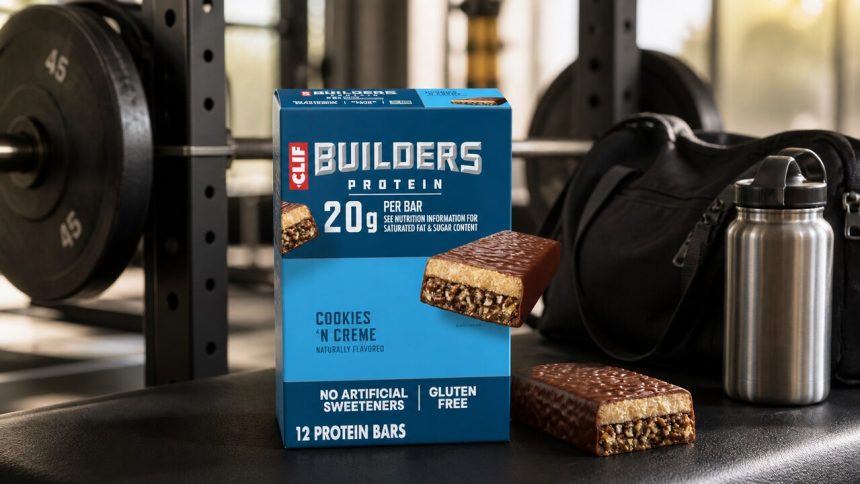
CLIF BUILDERS gives you a full 20 grams of protein, but it eats more like a compact meal than a light protein snack. That difference decides whether this bar makes sense for you.
Disclosure: FitnessVolt is an Amazon Associate and earns from qualifying purchases. CLIF BUILDERS is also part of an Amazon Creator Connections campaign, which may pay us an additional commission. That does not change our conclusions. Tom Miller checked the current Cookies ‘N Creme bar, nutrition panel, ingredients, and price for this review.
Protein-bar marketing trains us to look at one number: grams of protein. The Cookies ‘N Creme BUILDERS bar does well there. The catch is that 20 grams comes with roughly 280 to 290 calories, 16 to 17 grams of added sugar, and six grams of saturated fat in current retail label records.
That is not automatically bad. It simply means this is the bar I would pack when I need a substantial snack, not the bar I would casually add after a full meal.
Our verdict: CLIF BUILDERS is filling, easy to carry, and reasonably priced for a 20-gram protein bar. It works best as a meal-gap or post-training convenience food. Buyers chasing the most protein for the fewest calories should go elsewhere.

CLIF BUILDERS Protein Bars, Cookies 'N Creme, 20g Protein, 12 Count
Best Substantial Protein BarA dense, convenient protein bar for people who want a real snack rather than the leanest protein-to-calorie ratio.
Pros
- 20 grams of protein per bar
- Filling 68-gram bar works as a serious snack
- No artificial sweeteners
- Gluten-free and non-GMO claims are clearly stated
Cons
- Roughly 280 to 290 calories per bar
- Current labels show 16 to 17 grams of added sugar
- Contains soy and may not suit several other allergen needs
The Quick Answer
Buy it if you need a shelf-stable bar that can bridge lunch and dinner, want 20 grams of plant-based protein, dislike sugar alcohol-heavy bars, or prefer a dense chocolate-coated snack after training.
Skip it if you are cutting calories aggressively, want very little added sugar or saturated fat, avoid soy, or need a small snack that will not blunt your appetite.
At the captured price of $22.90 for 12 bars, each one costs about $1.91. That is competitive for a 20-gram bar, especially when single bars at gyms and convenience stores often cost much more.
The Nutrition Math That Matters
| Label item | Current retail range | Our take |
|---|---|---|
| Serving size | 1 bar, 68 g | A large bar that feels closer to a small meal component than a bite-size snack |
| Protein | 20 g | A useful dose for a snack, with soy providing the protein base |
| Calories | About 280-290 | High compared with lean protein bars, but reasonable if the bar replaces a larger snack |
| Added sugar | About 16-17 g | The main nutrition tradeoff; this is not a low-sugar product |
| Saturated fat | About 6 g | Worth counting if chocolate-coated bars are a daily habit |
| Protein density | About 6.9-7.1 g per 100 calories | Solid, but well behind bars designed specifically for low-calorie cutting diets |
The small range exists because current retailer records do not all display the same panel. Packaging and formulas can change, so use the wrapper in your box as the final record. The stable buying takeaway is the same: 20 grams of protein in a calorie-dense, sweet bar.
If your only goal is maximizing protein per calorie, compare our best-tasting protein bars before committing to a case. BUILDERS competes more on satisfaction and familiar ingredients than on dieting efficiency.
What Kind of Protein Does It Use?
BUILDERS bars use soy protein ingredients rather than whey. Soy is a complete plant protein, so the bar is not relying on collagen or an incomplete protein source to inflate the front-label number.
Twenty grams is a useful snack-sized amount for many adults. That does not mean every person needs exactly 20 grams at once, and a protein bar does not become mandatory because you lifted weights. Total daily protein and the quality of the rest of your diet still matter more.
This can be a convenient option for vegetarians who eat soy. It is not a fit for anyone with a soy allergy, and the package may carry additional cross-contact warnings for peanuts, tree nuts, milk, and sesame. Read the exact wrapper if allergies are part of the decision.
The Ingredient Tradeoff
The appeal is straightforward: no artificial sweeteners, a soft layered center, and a chocolate coating. The formula gets there with sweeteners and fats rather than the sugar alcohols and added fibers common in leaner bars.
That choice can be a win if sugar alcohols upset your stomach. It can be a loss if added sugar is the number you are trying to reduce. Neither approach is automatically cleaner. They solve different buyer problems.
CLIF states that the bar is gluten-free and non-GMO. Those claims help buyers with specific preferences, but they do not erase the calorie, sugar, or saturated-fat math.
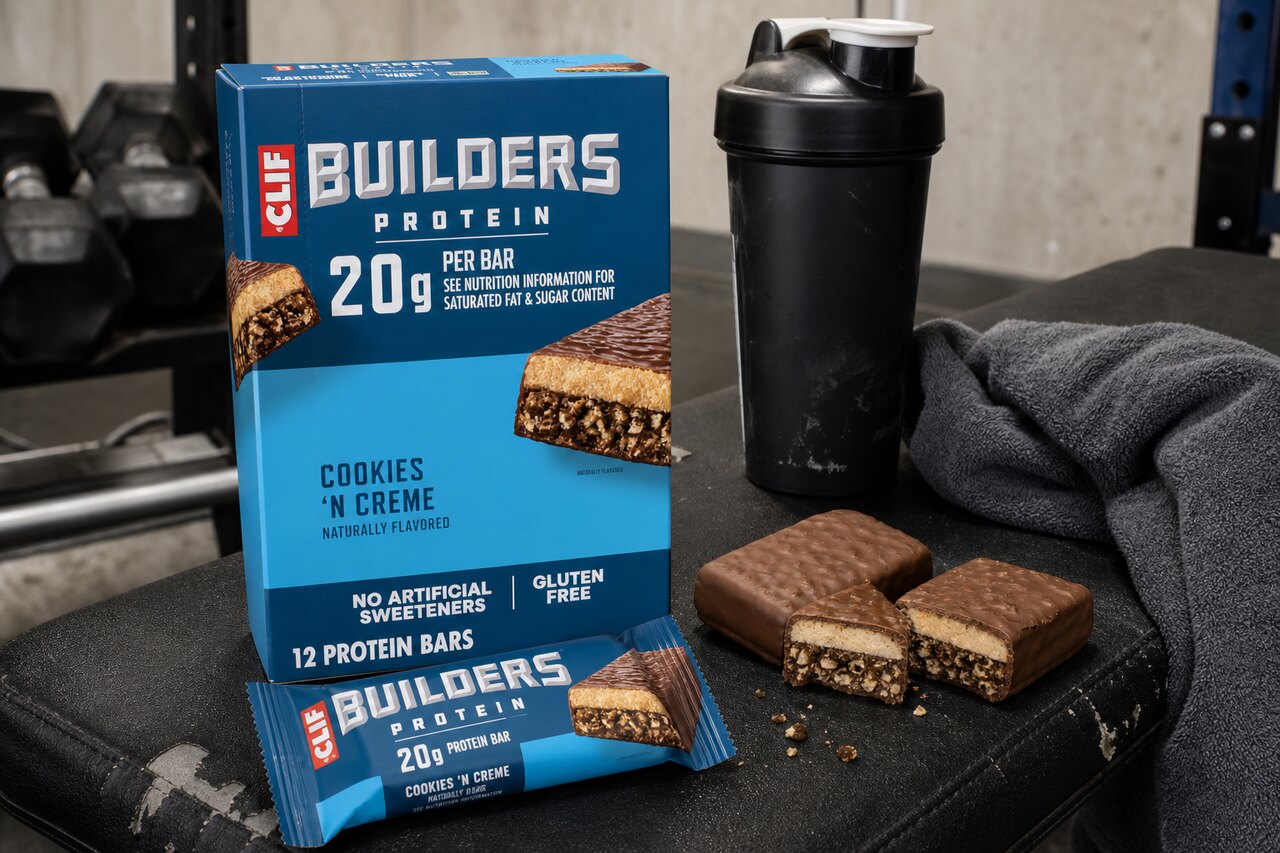
When This Bar Makes the Most Sense
Between meals: This is probably the best use. The bar has enough energy to feel meaningful when your next real meal is several hours away.
After training: It can cover protein and some carbohydrate when you cannot eat immediately. Pair it with water and fruit if that helps you build a more complete snack. You do not need to eat it within a tiny post-workout window.
Travel: A wrapped bar is easier than finding a decent airport or roadside meal. Heat can soften the coating, so do not leave the box in a hot car.
During a cut: It can fit, but only if you budget for it. A 290-calorie bar is easy to underestimate because it looks smaller than a meal.
Taste and Texture
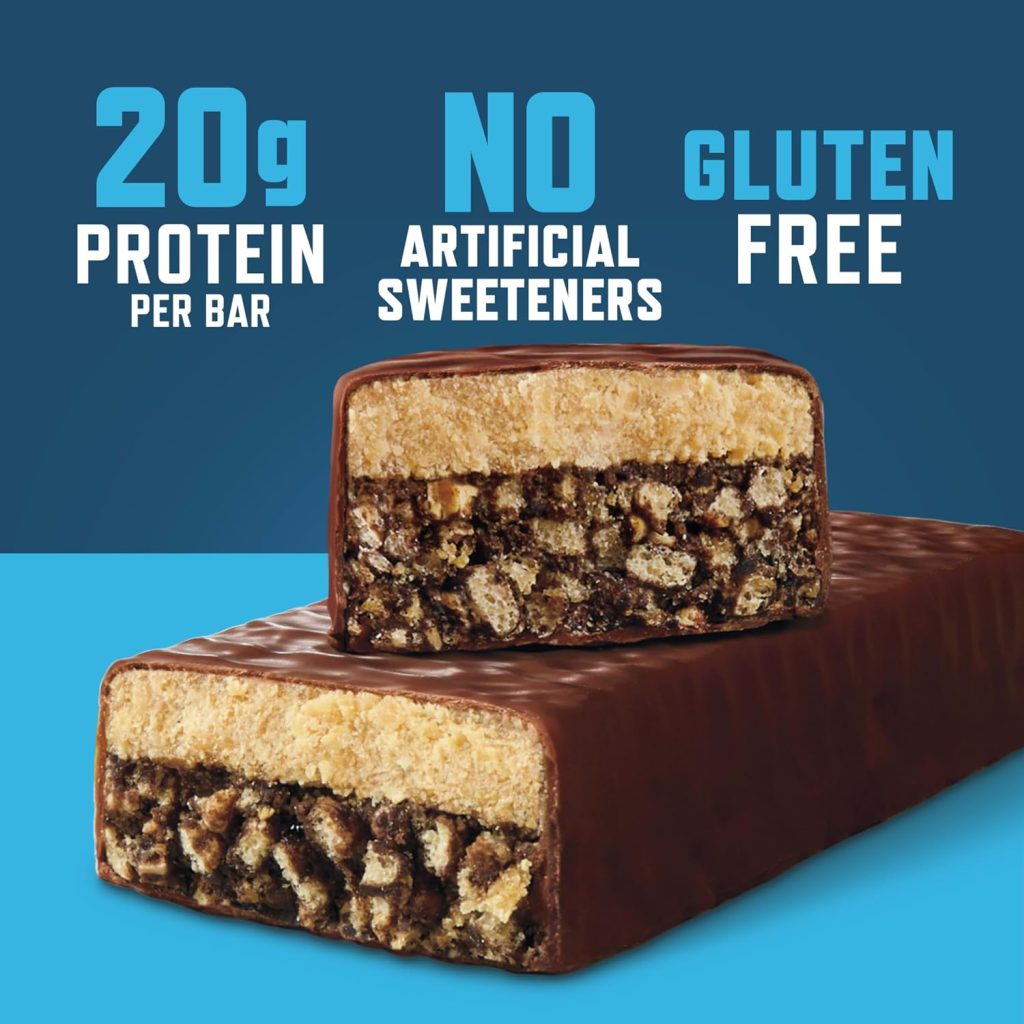
Cookies ‘N Creme is sweet and dense, with a chocolate coating, a crisp-style layer, and the substantial chew you expect from a meal-sized protein bar. The dessert-like flavor works best when you want a serious snack; it can feel heavy if you prefer lighter, less sweet bars.
Online ratings suggest the flavor has a large audience, but ratings also reflect shipping condition, price, freshness, and packaging. Our experience applies to the bar we tried; freshness and shipping temperature can still change the texture.
If you have not tried the flavor, buying one bar locally before ordering 12 is the low-risk move. If you already know you like it, the case price is where the value improves.
Value: Good Per Bar, Average Per Gram of Protein
At about $1.91 per bar, you are paying roughly 9.5 cents per gram of protein. That is not cheap compared with a tub of protein powder, but bars are priced for convenience, portability, and texture.
The fairest comparison is another ready-to-eat 20-gram bar, not a scoop of whey. Against convenience-store pricing, a case can be a good buy. Against eggs, Greek yogurt, cottage cheese, tofu, or a home-prepared meal, it is still a premium food.
If you mainly want easy liquid protein, our ready-to-drink protein shake guide compares another portable option. Shakes often deliver similar protein with fewer calories, while bars are more filling and easier to carry without refrigeration.
Who Should Choose an Alternative?
| Your priority | Look for | Why |
|---|---|---|
| Most protein for the fewest calories | A 180- to 220-calorie bar with about 20 g protein | Better protein density for a calorie deficit |
| Very low added sugar | A low-sugar bar you already tolerate | Many use sugar alcohols or added fibers, which have their own tradeoffs |
| No soy | A whey, milk, egg, or other plant-protein bar | BUILDERS uses soy as its main protein base |
| Whole-food ingredients | A nut-and-date style bar or a normal meal | You may accept less protein for a shorter ingredient list |
| Lower cost | Protein powder or prepared food | Convenience is the expensive part of a bar |
For more plant-based options, see our vegan protein bar guide. Check every current wrapper because formulas and allergen statements can change.
What I Would Change
I would bring the added sugar down without turning the bar into a stomach-challenging fiber experiment. That is easier to request than to formulate, but 16 to 17 grams is a lot for a product many people will eat every day.
I would also make the current nutrition panel easier to reconcile across retailer pages. A shopper should not have to wonder whether a case contains the 280- or 290-calorie version.
The protein dose, price, and size are all competitive. The nutrition tradeoff is simply less hidden than it looks when the front of the box leads with “20g protein.”
FAQ
Are CLIF BUILDERS bars good for muscle gain?
They can help you reach daily protein and calorie targets, which may be useful during a gaining phase. The bar does not build muscle by itself; training, total protein, total calories, and recovery still drive the result.
Are CLIF BUILDERS bars good for weight loss?
They can fit a calorie deficit, but the bar is calorie-dense. It makes more sense when it replaces a larger snack than when it is added on top of your normal meals.
Are CLIF BUILDERS bars vegan?
The product uses soy protein and is marketed as plant-based, but current allergen and cross-contact statements should be checked on the wrapper if your diet or allergy requires strict handling.
Do CLIF BUILDERS bars contain artificial sweeteners?
The reviewed Cookies ‘N Creme product states that it has no artificial sweeteners. It still contains substantial added sugar.
Bottom Line
CLIF BUILDERS Cookies ‘N Creme is a good convenience bar for someone who wants 20 grams of protein and enough calories to make the snack count. It is not the leanest bar and it is not low in added sugar. At about $1.91 each, the case is fairly priced if you enjoy the flavor and use the bars instead of a less useful snack.
Sources
- Jager, R., et al. (2017). International Society of Sports Nutrition Position Stand: protein and exercise. Journal of the International Society of Sports Nutrition, 14, 20.
- Morton, R. W., et al. (2018). Protein supplementation and resistance-training adaptations. British Journal of Sports Medicine, 52(6), 376-384.
- U.S. Food and Drug Administration. (2024). Added Sugars on the Nutrition Facts Label. Accessed August 26, 2026.