

All Fours Squad Stretch vs Backward Jump: Complete Comparison Guide
All Fours Squad Stretch vs Backward Jump — you’re comparing two quad-focused bodyweight moves with very different purposes. I’ll walk you through how each targets the quads, which secondary muscles light up, and the biomechanics that make them distinct. You’ll get clear technique cues, suggested rep ranges, and a decisive recommendation based on goals like muscle growth, strength, or safe beginner practice. By the end you’ll know which to program for a home session, how to progress each movement, and when to swap one for the other.
Exercise Comparison
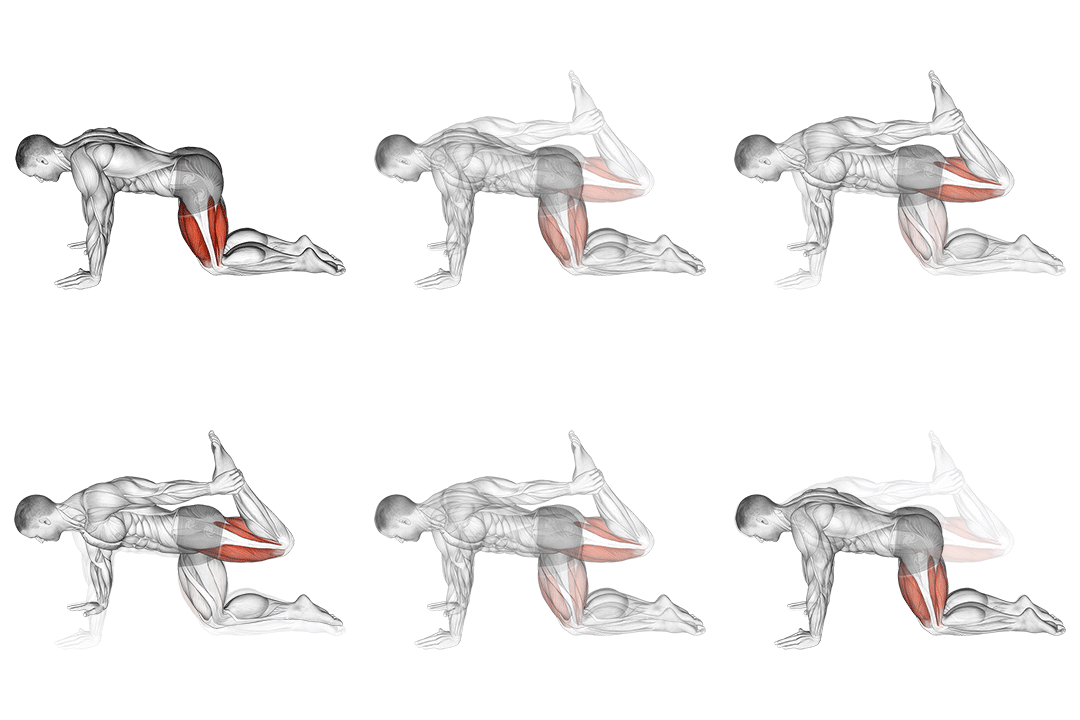
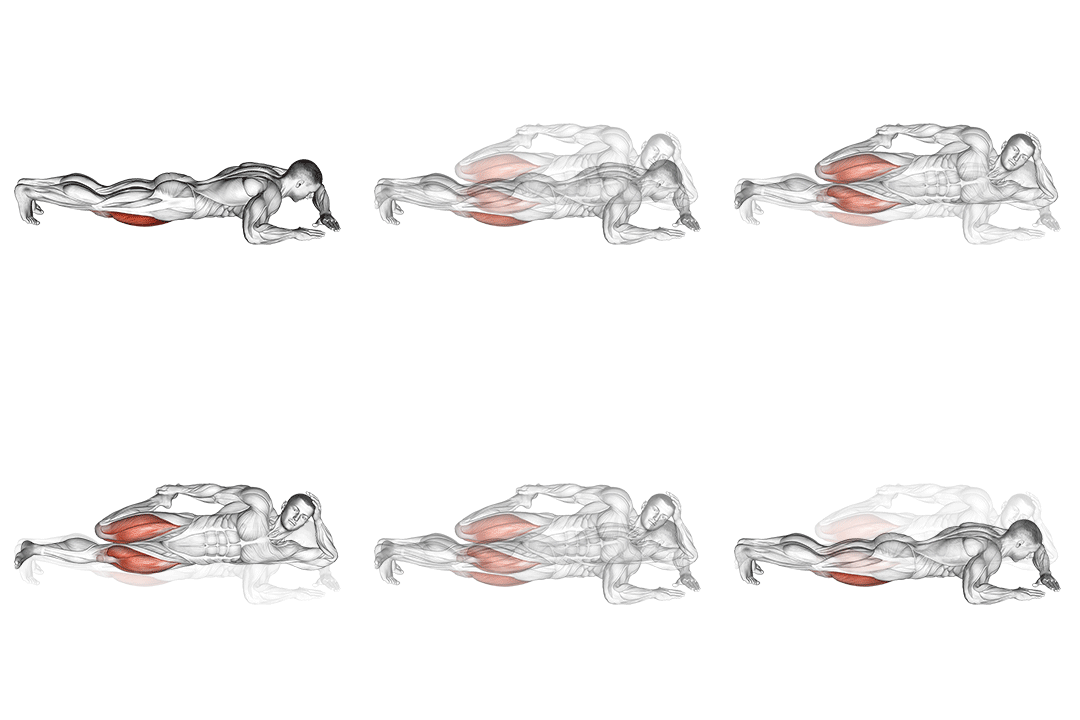
All Fours Squad Stretch
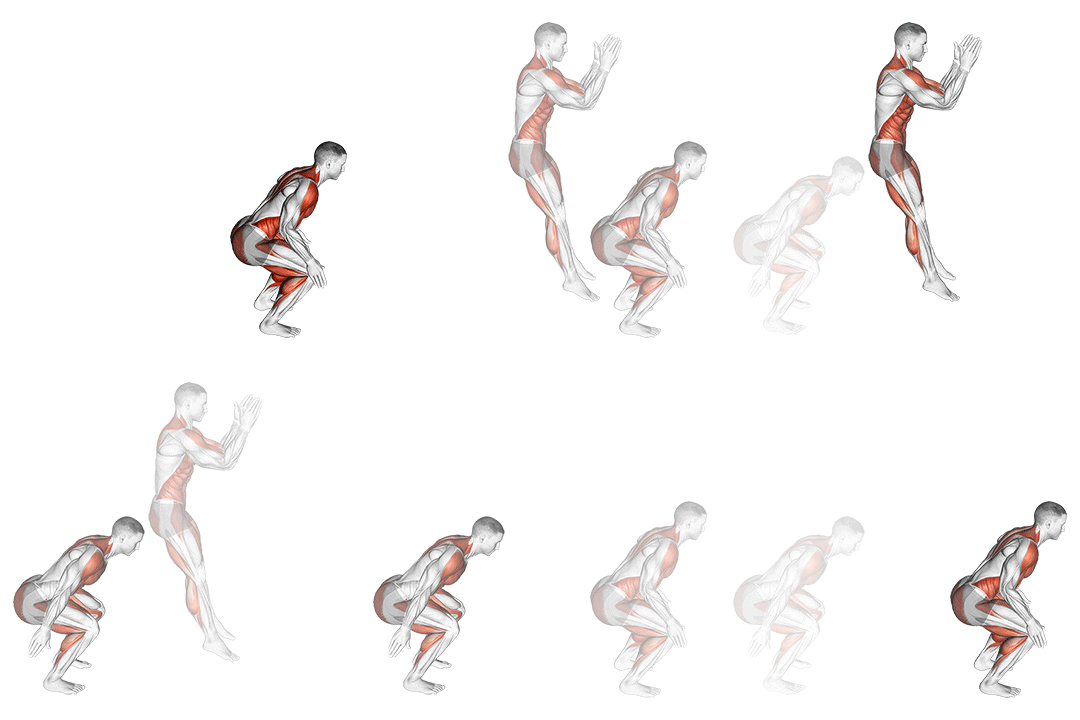
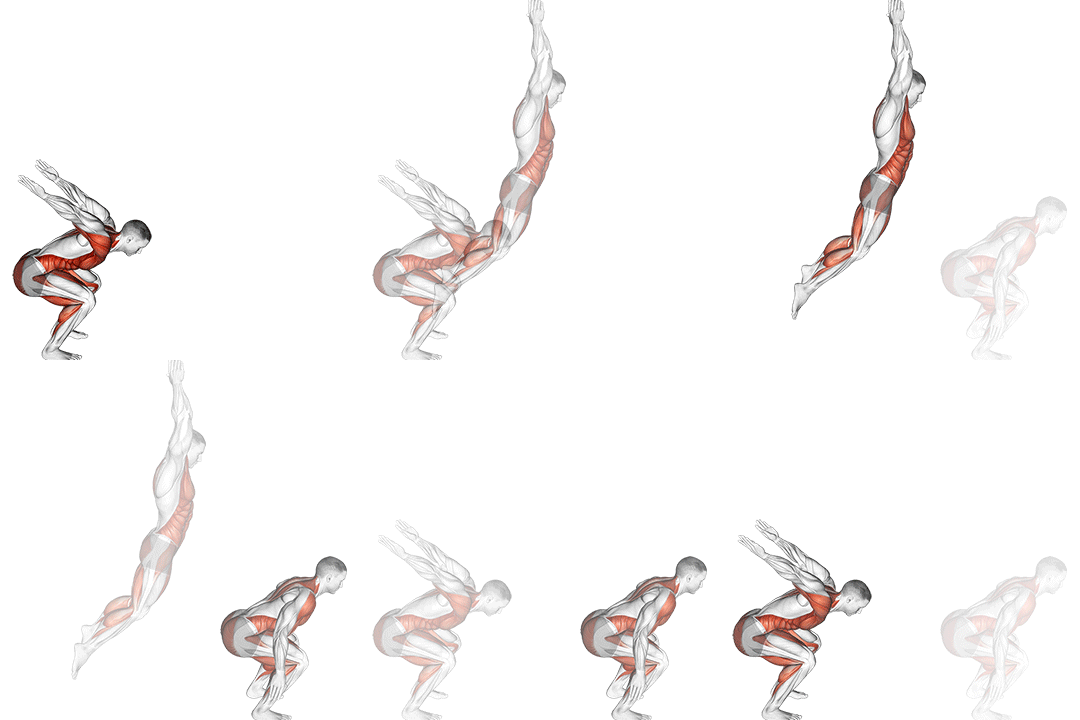
Backward Jump
Head-to-Head Comparison
| Attribute | All Fours Squad Stretch | Backward Jump |
|---|---|---|
| Target Muscle |
Quads
|
Quads
|
| Body Part |
Upper-legs
|
Upper-legs
|
| Equipment |
Body-weight
|
Body-weight
|
| Difficulty |
Beginner
|
Intermediate
|
| Movement Type |
Isolation
|
Compound
|
| Secondary Muscles |
2
|
3
|
Secondary Muscles Activated
All Fours Squad Stretch
Backward Jump
Visual Comparison
Overview
All Fours Squad Stretch vs Backward Jump — you’re comparing two quad-focused bodyweight moves with very different purposes. I’ll walk you through how each targets the quads, which secondary muscles light up, and the biomechanics that make them distinct. You’ll get clear technique cues, suggested rep ranges, and a decisive recommendation based on goals like muscle growth, strength, or safe beginner practice. By the end you’ll know which to program for a home session, how to progress each movement, and when to swap one for the other.
Key Differences
- All Fours Squad Stretch is an isolation exercise, while Backward Jump is a compound movement.
- Difficulty levels differ: All Fours Squad Stretch is beginner, while Backward Jump is intermediate.
- Both exercises target the Quads using Body-weight. The main differences are in their movement patterns and muscle activation angles.
Pros & Cons
All Fours Squad Stretch
+ Pros
- Very low impact and easy to learn
- Requires no equipment and minimal space
- Targets quad end-range and improves knee mobility
- Good for rehabbing movement control and flexibility
− Cons
- Limited progressive overload for long-term muscle growth
- Low power and force production compared to compound moves
- Less effective at building full lower-body coordination or calf strength
Backward Jump
+ Pros
- Generates high quad force and power via stretch-shortening cycle
- Recruits glutes, hamstrings, and calves for full lower-body drive
- Easy to scale for strength/power by changing volume or adding load
- Improves explosive athletic qualities and rate of force development
− Cons
- Higher impact and greater technique demand
- Requires safe landing space and decent ankle/knee health
- Not ideal for absolute beginners or those with recent lower-limb injuries
When Each Exercise Wins
Backward Jump wins because it produces higher peak quad forces and greater mechanical loading through rapid eccentric-concentric cycles, and it can be progressively overloaded (weighted jumps, increased height). For hypertrophy aim for 6–12 explosive reps per set with 3–5 sets or pair with 8–12 slow accessory quad work to increase time under tension.
Backward Jump better develops rate-of-force development and transfer to compound strength when programmed with progressive overload (weighted or single-leg jumps). Use low reps (3–6) for maximal power work and combine with heavy squats or loaded step-ups for absolute strength.
All Fours Squad Stretch is beginner-friendly due to low coordination demands, minimal impact, and clear positioning cues to isolate the quads. Use holds of 20–60 seconds or 8–12 slow repetitions to build awareness before attempting explosive work.
All Fours requires less space and no safe landing area, making it ideal for small home environments and people without plyo-friendly flooring. It fits into warm-ups, mobility circuits, or low-impact leg sessions.
Frequently Asked Questions
Can I do both All Fours Squad Stretch and Backward Jump in the same workout?
Yes. Start with All Fours as a mobility or activation drill to prime the quads for neural drive, then do Backward Jumps for power. Keep total volume sensible—3–5 sets of jumps with adequate rest and use the stretch for warm-up sets or post-power mobility.
Which exercise is better for beginners?
All Fours Squad Stretch is better for beginners due to lower coordination and impact demands and clearer cues for quad engagement. Master alignment and build tolerance before progressing to plyometric Backward Jumps.
How do the muscle activation patterns differ?
All Fours emphasizes low-velocity or isometric quad tension near end-range knee extension, increasing time under tension for the vasti. Backward Jump creates an eccentric loading phase followed by rapid concentric drive that spikes quad, glute, and calf EMG and raises rate-of-force development.
Can Backward Jump replace All Fours Squad Stretch?
Not fully. Backward Jump can replace All Fours for power-focused sessions, but it won’t provide the same low-load end-range control or mobility benefits. Keep All Fours in your program for activation, rehab, and low-impact quad work.
Expert Verdict
Use All Fours Squad Stretch when your priority is safe quad activation, mobility, or when you’re working in tight spaces or rehabbing movement patterns. It’s the go-to for beginners and recovery days because it reduces impact and improves end-range quad control. Choose Backward Jump when you want power, higher mechanical loading, and multi-joint coordination—add progressive variations and focus on soft landings with 30°–45° knee flexion on contact. For a balanced program, pair Backward Jumps on power days with controlled All Fours sets on technique or recovery days to manage volume and reduce injury risk.
Also Compare
More comparisons with All Fours Squad Stretch
Compare More Exercises
Use our free comparison tool to analyze any two exercises head-to-head.
Compare Exercises