

All Fours Squad Stretch vs Balance Board: Complete Comparison Guide
All Fours Squad Stretch vs Balance Board — two quad-focused moves that look similar on paper but train your upper-legs in different ways. You’ll get a clear, practical comparison of primary muscle activation, secondary recruitment, required equipment, and learning curve. I’ll show technique cues, give rep and hold ranges, explain the biomechanics (length-tension, moment arms, and co-contraction), and tell you which to pick for muscle growth, strength, beginner training, or home workouts. Read this to pick the right movement for your goal and skill level.
Exercise Comparison
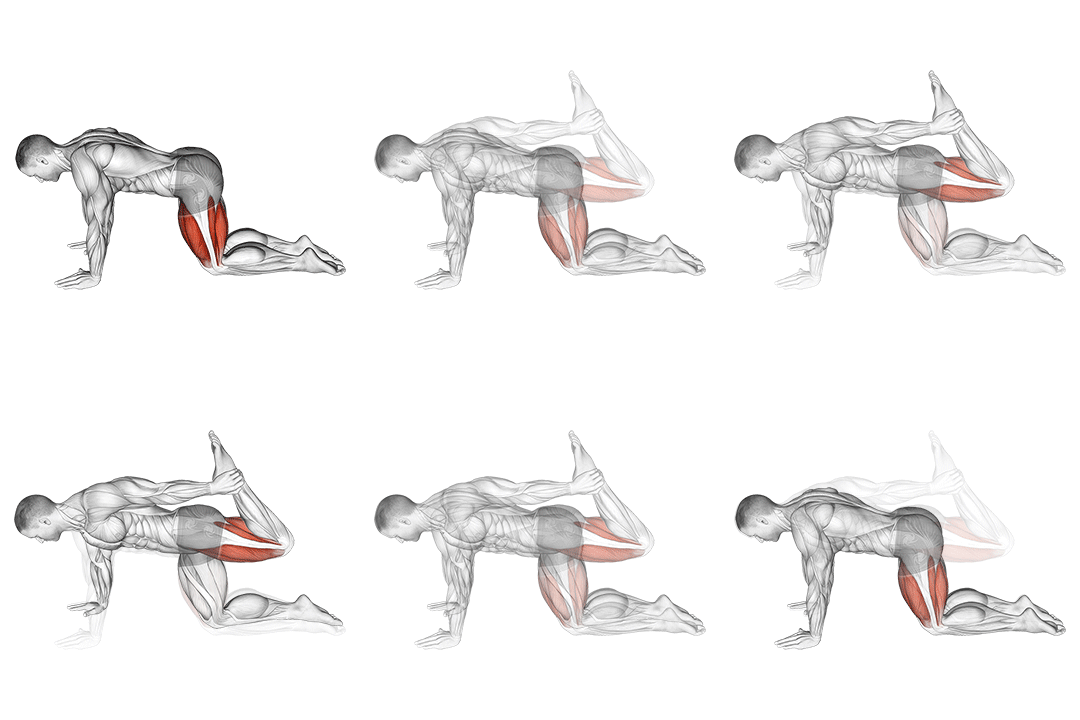
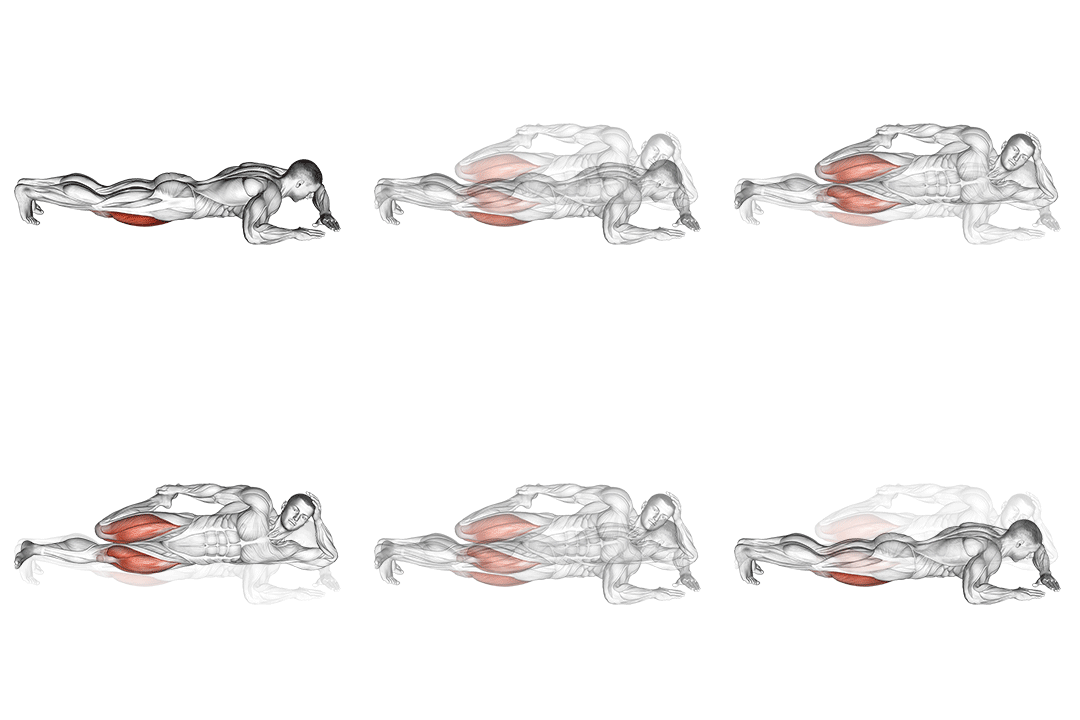
All Fours Squad Stretch
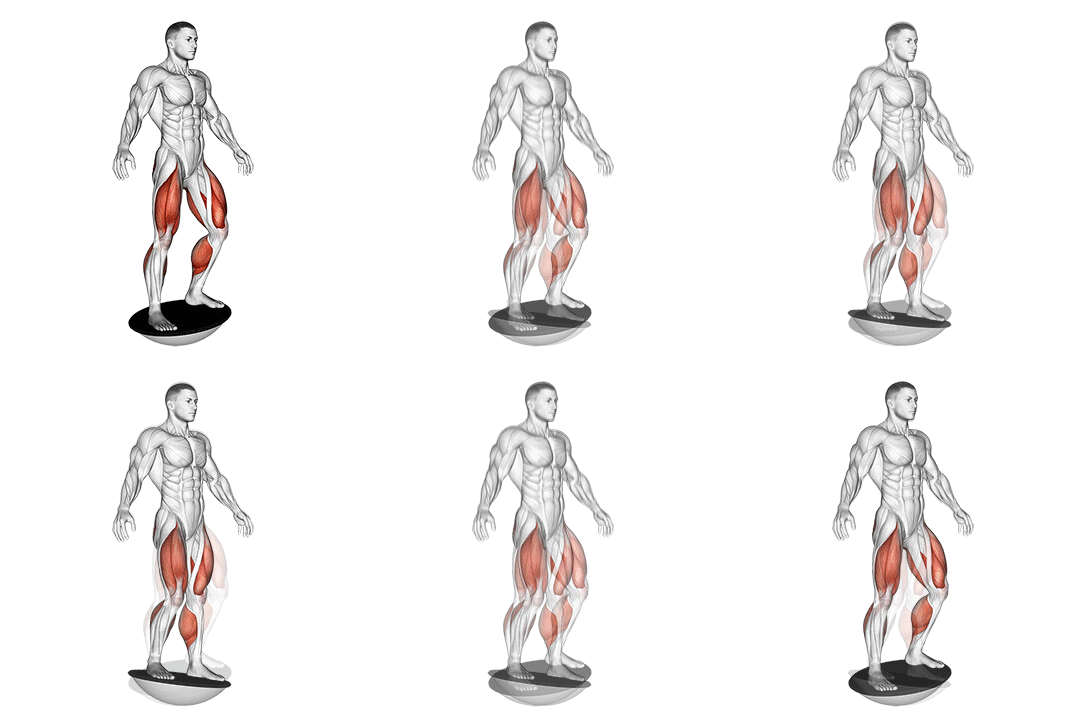
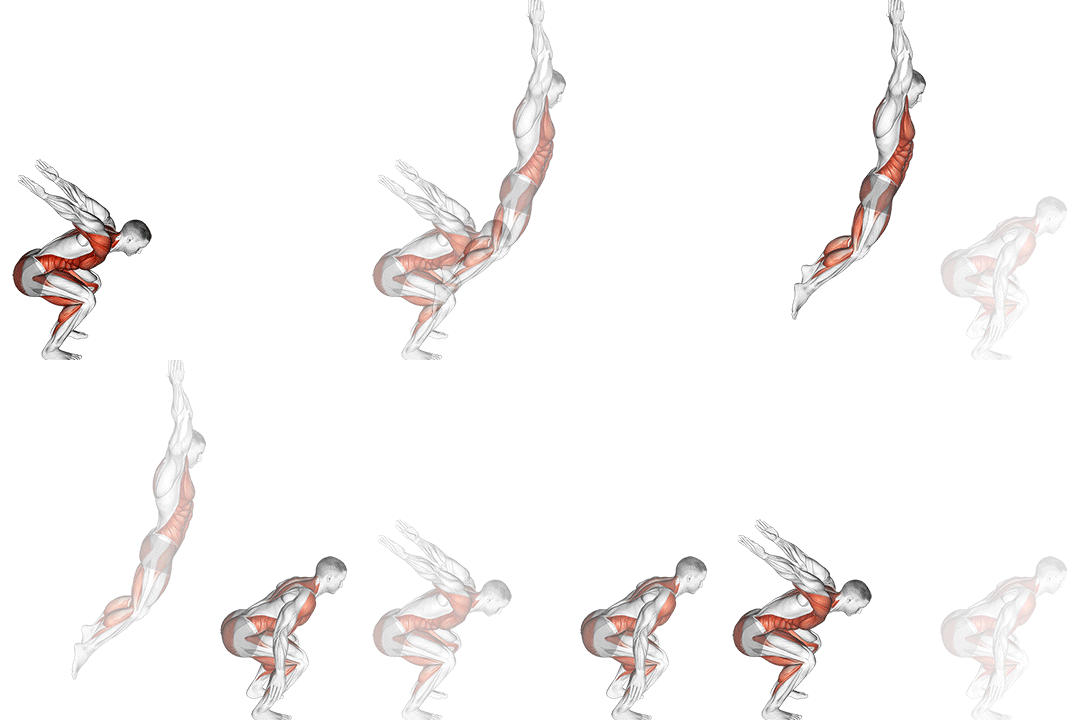
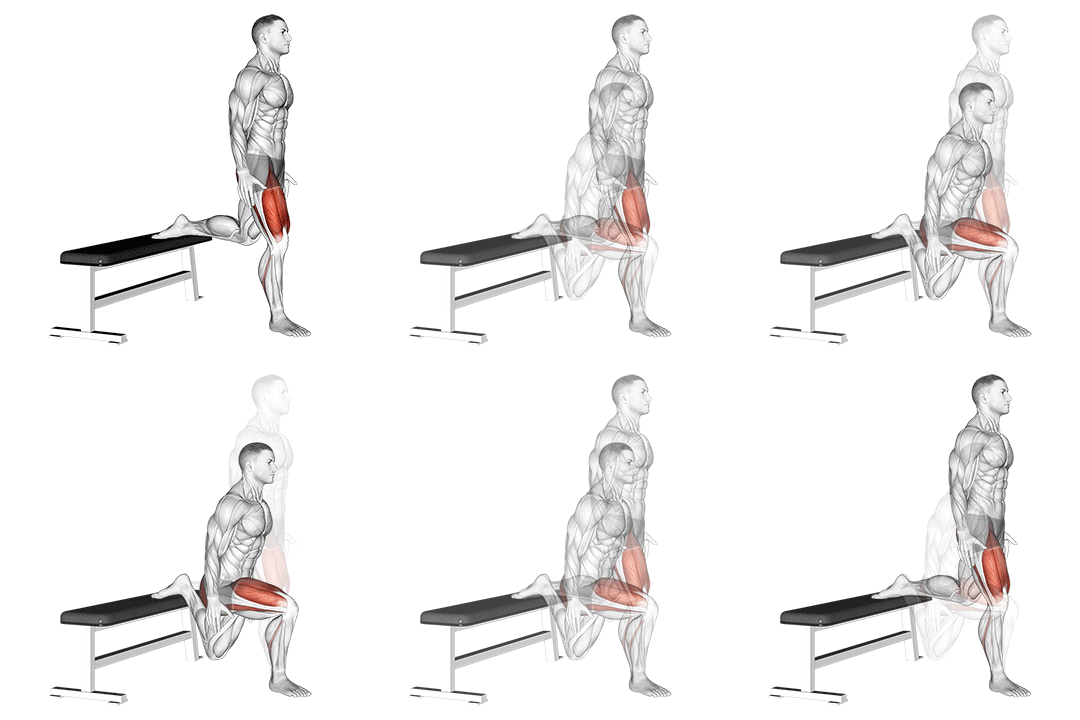
Balance Board
Head-to-Head Comparison
| Attribute | All Fours Squad Stretch | Balance Board |
|---|---|---|
| Target Muscle |
Quads
|
Quads
|
| Body Part |
Upper-legs
|
Upper-legs
|
| Equipment |
Body-weight
|
Body-weight
|
| Difficulty |
Beginner
|
Intermediate
|
| Movement Type |
Isolation
|
Compound
|
| Secondary Muscles |
2
|
3
|
Secondary Muscles Activated
All Fours Squad Stretch
Balance Board
Visual Comparison
Overview
All Fours Squad Stretch vs Balance Board — two quad-focused moves that look similar on paper but train your upper-legs in different ways. You’ll get a clear, practical comparison of primary muscle activation, secondary recruitment, required equipment, and learning curve. I’ll show technique cues, give rep and hold ranges, explain the biomechanics (length-tension, moment arms, and co-contraction), and tell you which to pick for muscle growth, strength, beginner training, or home workouts. Read this to pick the right movement for your goal and skill level.
Key Differences
- All Fours Squad Stretch is an isolation exercise, while Balance Board is a compound movement.
- Difficulty levels differ: All Fours Squad Stretch is beginner, while Balance Board is intermediate.
- Both exercises target the Quads using Body-weight. The main differences are in their movement patterns and muscle activation angles.
Pros & Cons
All Fours Squad Stretch
+ Pros
- Zero equipment — do it anywhere
- Strong quad isolation for focused time-under-tension
- Low technical demand and low fall risk
- Easy to use for rehab-style or corrective work
− Cons
- Limited capacity for progressive overload with bodyweight alone
- Less carryover to dynamic, multi-joint function
- Can encourage lumbar extension if you don’t cue pelvic neutral
Balance Board
+ Pros
- Builds quad strength with simultaneous balance and ankle control
- Greater hip and calf co-contraction improves functional stability
- Easily progressed by increasing instability or adding load
- Enhances proprioception and joint coordination
− Cons
- Higher technical demand and fall risk for beginners
- Requires purchase of a balance board and space
- Instability can reduce maximal force output if you need pure overload
When Each Exercise Wins
All Fours lets you isolate quads and control time under tension (8–15 reps tempo 3-1-3 or 20–40s isometrics) to maximize mechanical tension. With limited equipment and lower instability, you can better target quad fibers and manage the length-tension window for hypertrophy.
Balance Board challenges the neuromuscular system and forces co-contraction across joints, improving force transfer and functional strength. Its compound pattern and ability to add instability or external load give you more routes to progressive overload for strength.
All Fours has a shallow learning curve, low risk of falls, and clear cues (neutral pelvis, knee angle ~90°) that let you safely train quads. Use it to build base quad endurance and movement awareness before progressing to unstable compound work.
No equipment, minimal space, and versatile progressions (longer holds, slow eccentrics) make All Fours ideal at home. Balance Board requires gear and a safe setup, limiting spontaneous home sessions.
Frequently Asked Questions
Can I do both All Fours Squad Stretch and Balance Board in the same workout?
Yes. Use All Fours as a focused warm-up or activation (2–3 sets of 8–12 slow reps or 20–30s holds), then progress to Balance Board for compound sets to train strength and stability. Sequence isolation first to prime the quads, then challenge coordination when fatigue is lower.
Which exercise is better for beginners?
All Fours Squad Stretch is better for beginners because it has lower balance demands and clear technique cues (neutral pelvis, avoid lumbar extension). It builds quad control and allows you to safely increase time under tension before adding instability.
How do the muscle activation patterns differ?
All Fours produces sustained quad activation with limited ankle/calf involvement, exploiting a more constant length-tension window. Balance Board creates shifting activation: dynamic knee extension plus high calf and hip stabilizer co-contraction driven by changing ground reaction force vectors and proprioceptive corrections.
Can Balance Board replace All Fours Squad Stretch?
Not entirely — Balance Board is great for functional strength and stability but does not isolate the quads as cleanly for hypertrophy or rehab-style work. If your goal is targeted quad development or a low-risk home option, keep All Fours in your program.
Expert Verdict
Choose All Fours Squad Stretch when your priority is focused quad work, low-risk technique, and training in small spaces — use 3–4 sets of 8–15 slow reps or 20–40 second isometrics to maximize mechanical tension. Pick Balance Board if you want compound strength, ankle and hip stability, and neuromuscular challenge; start with 3 sets of 8–12 controlled reps at 15–30° knee flexion and progress instability slowly. For a balanced plan, begin with All Fours to build quad control, then add Balance Board sessions for functional strength and proprioception as your technique improves.
Also Compare
More comparisons with All Fours Squad Stretch
Compare More Exercises
Use our free comparison tool to analyze any two exercises head-to-head.
Compare Exercises