

All Fours Squad Stretch vs Forward Jump: Complete Comparison Guide
All Fours Squad Stretch vs Forward Jump — you’re comparing a beginner-friendly quad isolation stretch with an intermediate compound plyometric. I’ll walk you through muscle activation, biomechanics, equipment needs, difficulty, and when to program each movement. You’ll get clear technique cues (knee angles, spine position, landing mechanics), rep and set suggestions, and decisive recommendations for hypertrophy, strength, beginners, and home workouts. Read on to pick the exercise that matches your current ability and training goal, and learn how to use each movement safely and effectively.
Exercise Comparison
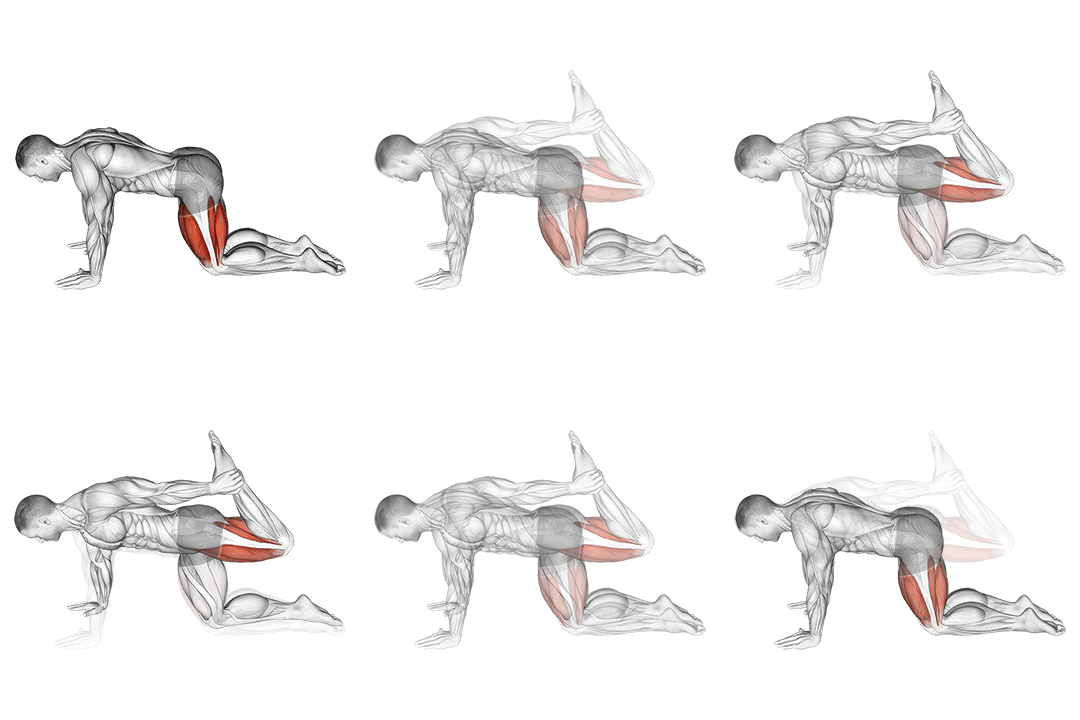
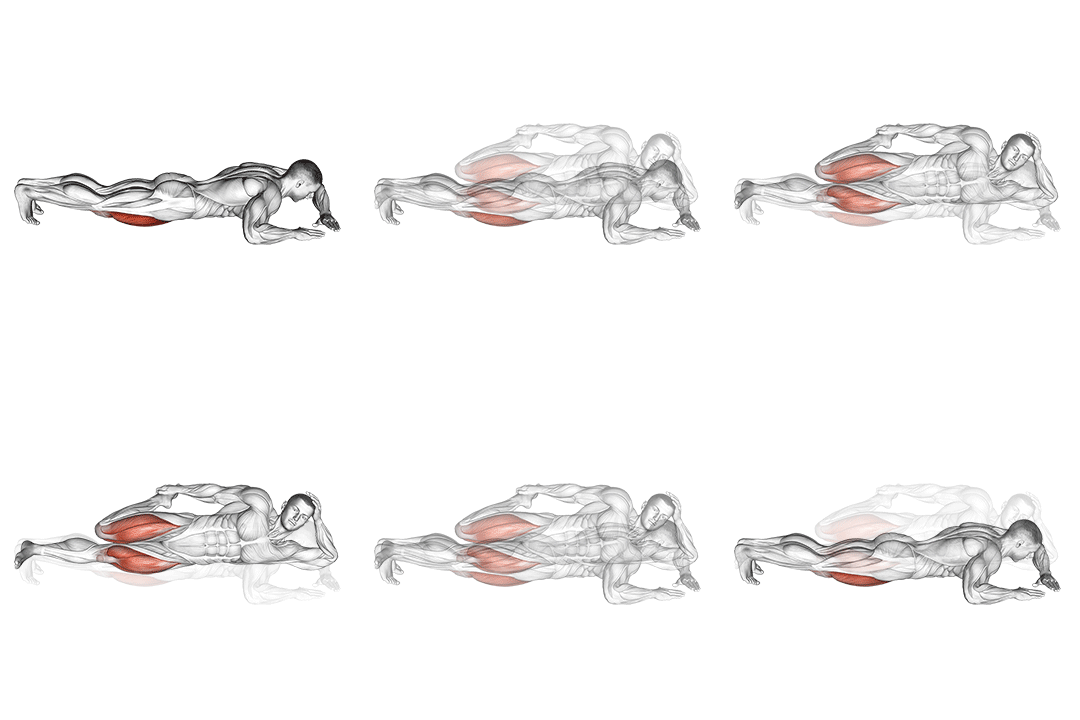
All Fours Squad Stretch
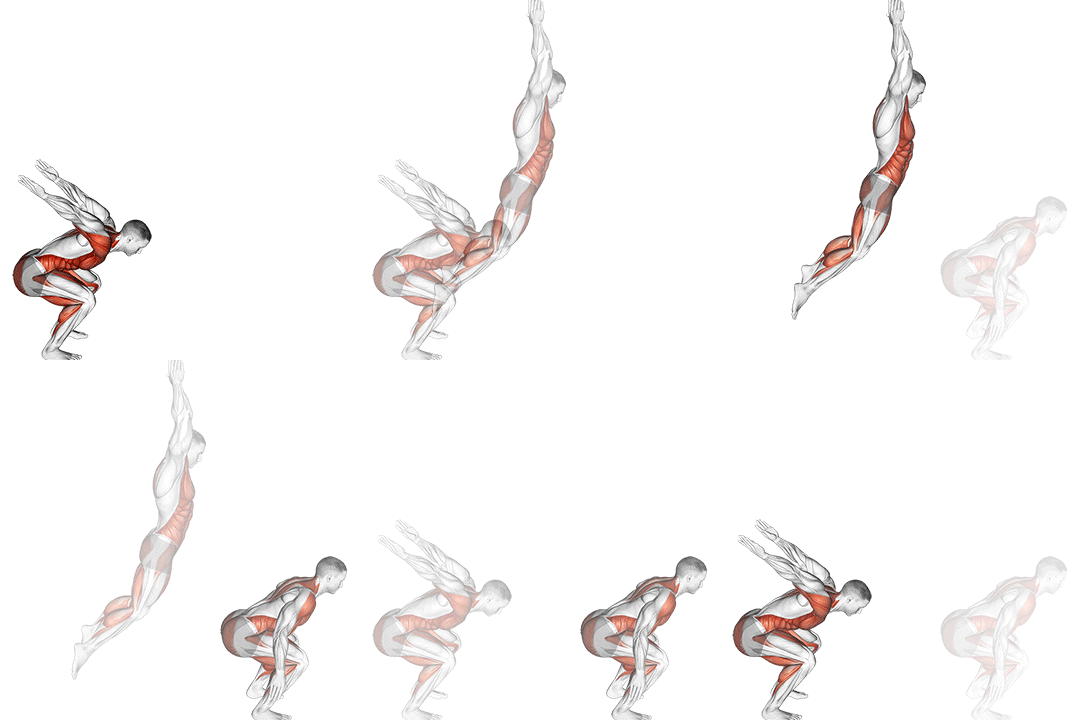
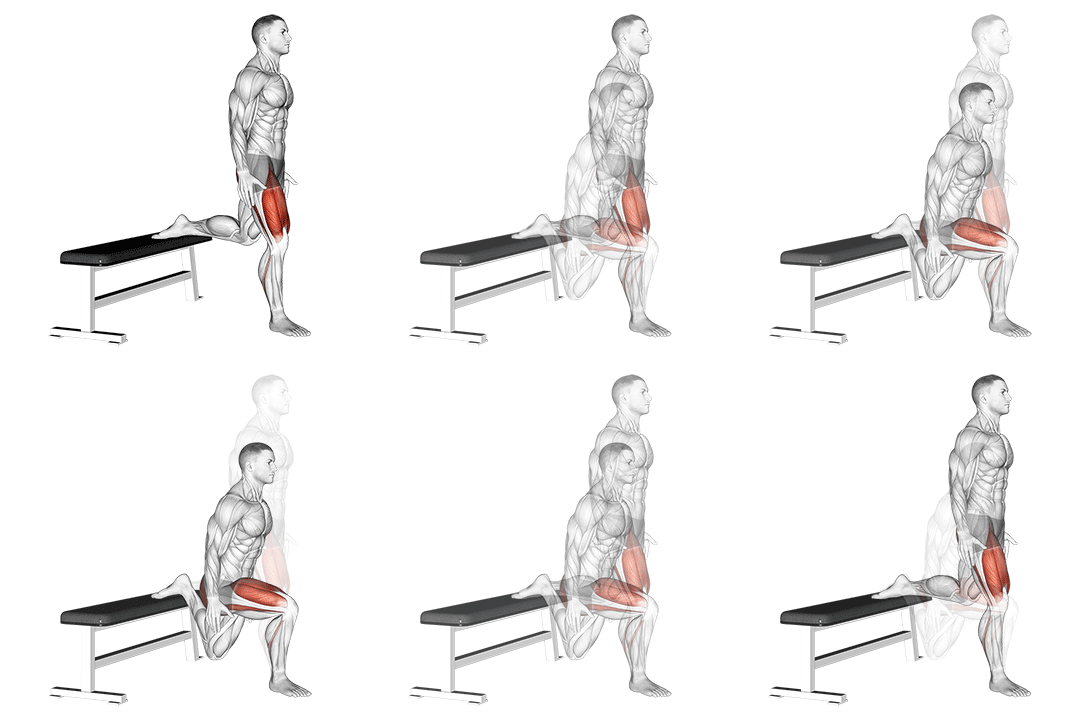
Forward Jump
Head-to-Head Comparison
| Attribute | All Fours Squad Stretch | Forward Jump |
|---|---|---|
| Target Muscle |
Quads
|
Quads
|
| Body Part |
Upper-legs
|
Upper-legs
|
| Equipment |
Body-weight
|
Body-weight
|
| Difficulty |
Beginner
|
Intermediate
|
| Movement Type |
Isolation
|
Compound
|
| Secondary Muscles |
2
|
3
|
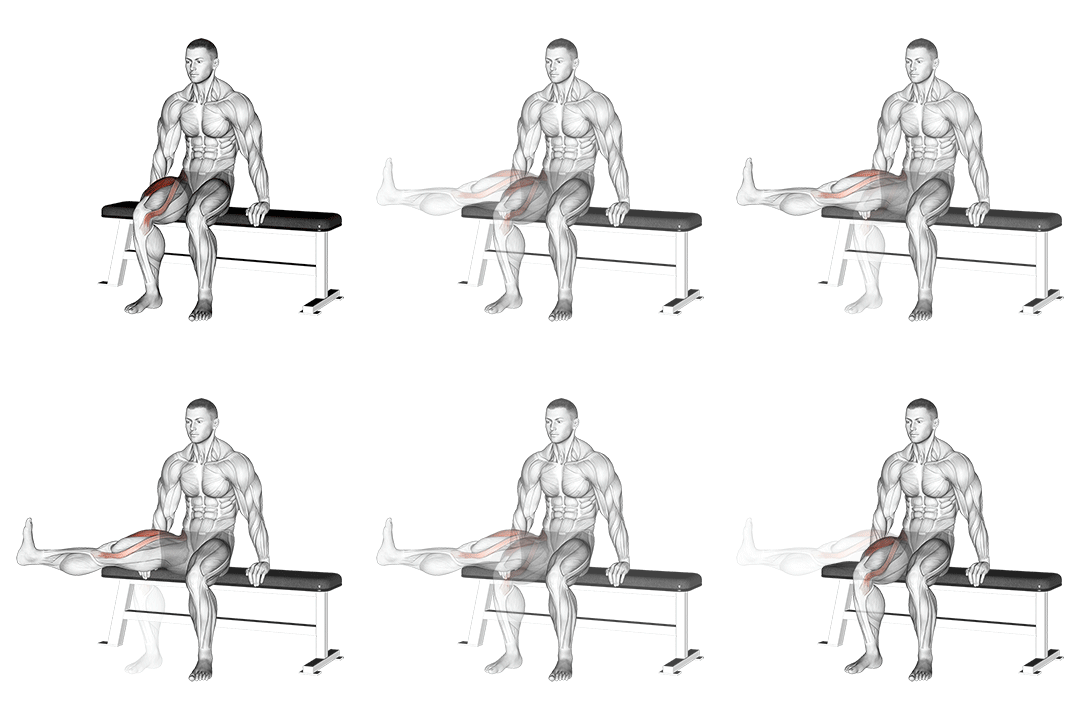
Secondary Muscles Activated
All Fours Squad Stretch
Forward Jump
Visual Comparison
Overview
All Fours Squad Stretch vs Forward Jump — you’re comparing a beginner-friendly quad isolation stretch with an intermediate compound plyometric. I’ll walk you through muscle activation, biomechanics, equipment needs, difficulty, and when to program each movement. You’ll get clear technique cues (knee angles, spine position, landing mechanics), rep and set suggestions, and decisive recommendations for hypertrophy, strength, beginners, and home workouts. Read on to pick the exercise that matches your current ability and training goal, and learn how to use each movement safely and effectively.
Key Differences
- All Fours Squad Stretch is an isolation exercise, while Forward Jump is a compound movement.
- Difficulty levels differ: All Fours Squad Stretch is beginner, while Forward Jump is intermediate.
- Both exercises target the Quads using Body-weight. The main differences are in their movement patterns and muscle activation angles.
Pros & Cons
All Fours Squad Stretch
+ Pros
- Very low injury risk when performed correctly
- No equipment or large space required
- Improves quad flexibility and knee extension ROM (hold 20–40s for benefits)
- Useful as a warm-up or rehab tool to reduce passive tension and improve tracking
− Cons
- Minimal eccentric or concentric overload — limited for muscle growth
- Doesn’t develop power or rate-of-force development
- Can be uncomfortable for people with knee pathology if technique is poor
Forward Jump
+ Pros
- High concentric and eccentric quad loading for muscle development and power
- Increases rate-of-force development and neuromuscular coordination
- Progressable via distance, load, or plyometric complexity
- Also trains calves, hamstrings, and glutes in a functional triple-extension pattern
− Cons
- Higher impact increases joint and tendon stress
- Requires space and decent baseline technique
- Greater injury risk if landing mechanics or surface are poor
When Each Exercise Wins
Forward Jump produces greater mechanical tension and eccentric loading across the quads, stimulating hypertrophy more than a static stretch. Use 6–12 reps, 3–4 sets or add load (vest) to increase muscle growth stimulus.
Forward Jump enhances rate-of-force development and functional strength via plyometric overload and eccentric control. Pair with heavier strength exercises for maximal strength; use 3–6 reps for maximal power focus.
All Fours is easier to learn, lowers injury risk, and improves knee extension and quad mobility before introducing dynamic or loaded work. Hold 20–40 seconds and progress to pulsed isometrics before adding jumps.
All Fours needs minimal space and no clearance for landing, making it safer for small areas. It’s also useful between workouts to maintain quad flexibility and reduce joint stiffness.
Frequently Asked Questions
Can I do both All Fours Squad Stretch and Forward Jump in the same workout?
Yes. Use All Fours as a mobility primer and dynamic warm-up before Forward Jumps to improve knee extension and reduce passive stiffness. Perform the stretch for 20–40 seconds, then progress to activation drills before executing 3–5 sets of jumps.
Which exercise is better for beginners?
All Fours Squad Stretch is better for beginners because it teaches quad awareness and increases range of motion with minimal impact. Master mobility and basic single-leg stability before introducing plyometric forward jumps.
How do the muscle activation patterns differ?
All Fours emphasizes passive/isometric tension across the quads at elongated lengths, while Forward Jump uses an eccentric-to-concentric stretch-shortening cycle with peak quad force around 30–50° knee flexion. Forward Jump recruits glutes and calves far more for propulsion.
Can Forward Jump replace All Fours Squad Stretch?
No—Forward Jump cannot fully replace the stretch’s mobility and low-impact quad lengthening benefits. If your goal is mobility or rehab, keep All Fours; if your goal is power or hypertrophy, prioritize Forward Jumps but retain the stretch for recovery and ROM maintenance.
Expert Verdict
Use All Fours Squad Stretch when your goal is mobility, recovery, or a low-risk way to expose the quads to lengthened positions. It’s ideal for beginners, post-workout cool-downs, and people training in small spaces. Choose Forward Jump when you need to develop power, higher mechanical tension, and functional quad strength; progress with distance, load, and controlled landings (aim for 30–50° knee flexion on contact). For balanced programming, keep All Fours as a mobility and prep tool, and add Forward Jumps 1–2 times weekly when technique and landing surfaces are adequate.
Also Compare
More comparisons with All Fours Squad Stretch
Compare More Exercises
Use our free comparison tool to analyze any two exercises head-to-head.
Compare Exercises