

All Fours Squad Stretch vs Lying (side) Quads Stretch: Complete Comparison Guide
All Fours Squad Stretch vs Lying (side) Quads Stretch — two beginner-friendly, bodyweight quad isolation moves that improve knee mobility and quad length. You’ll get clear technique cues, biomechanical reasons why one might suit your goals better, and practical program guidance: hold times, rep ranges, and progression options. I’ll compare primary and secondary muscle activation, equipment and accessibility, difficulty and injury risk, plus real-world winner scenarios (hypertrophy, strength, beginners, home). Read on so you can pick the stretch that fits your training plan and avoid common form mistakes.
Exercise Comparison
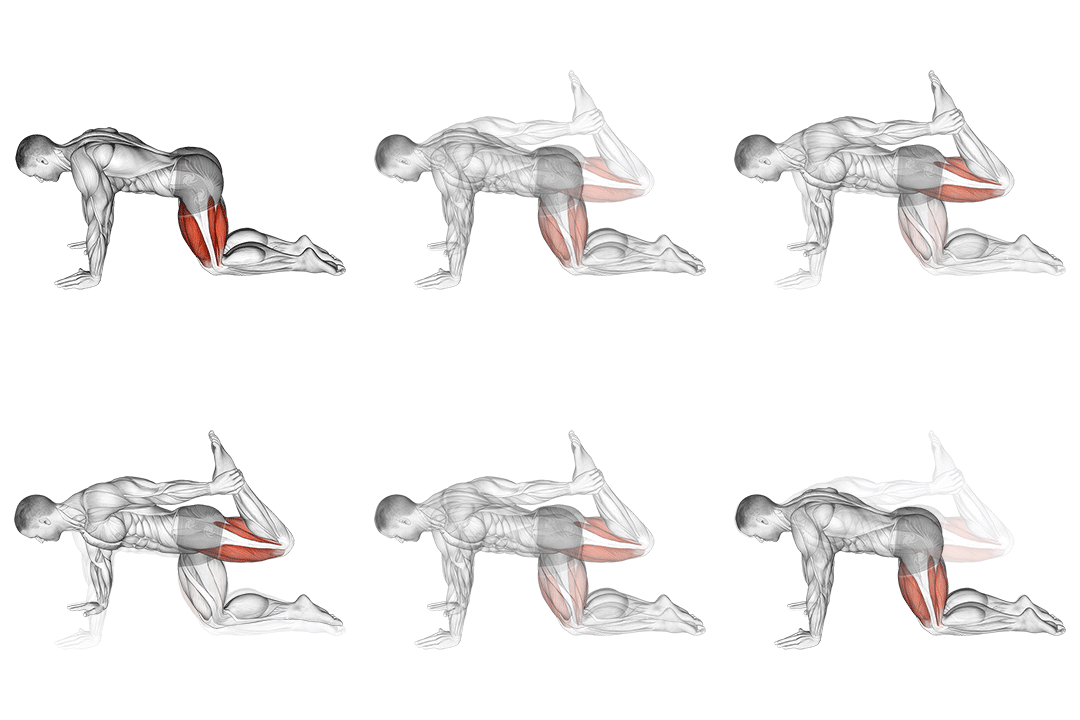
All Fours Squad Stretch
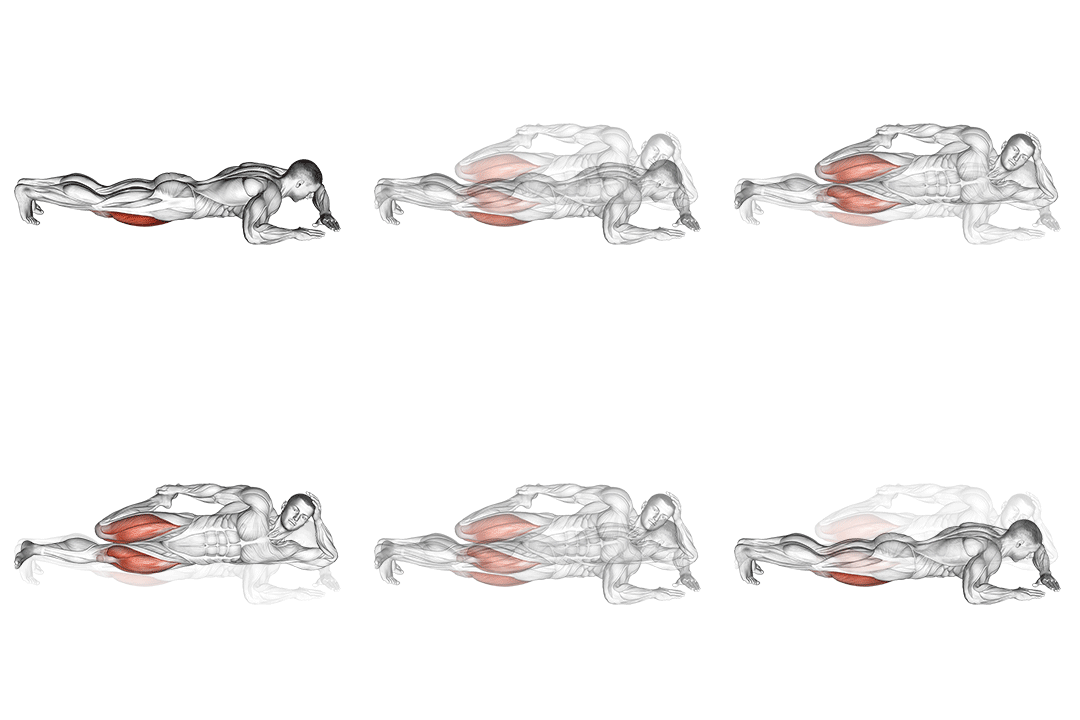
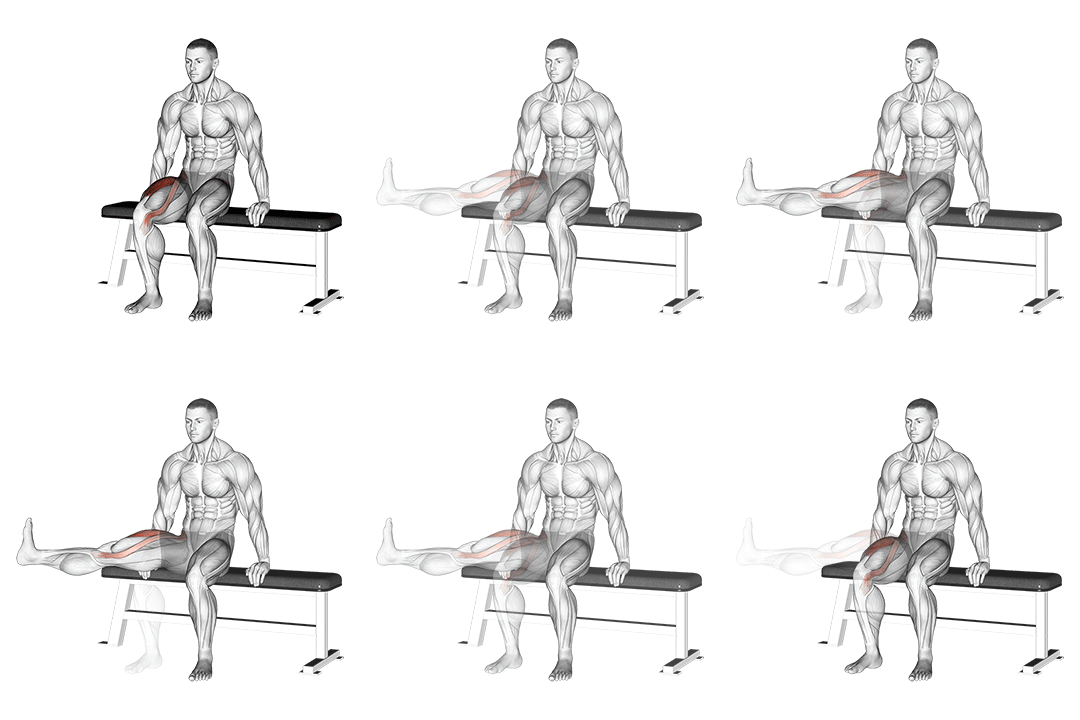
Lying (side) Quads Stretch
Head-to-Head Comparison
| Attribute | All Fours Squad Stretch | Lying (side) Quads Stretch |
|---|---|---|
| Target Muscle |
Quads
|
Quads
|
| Body Part |
Upper-legs
|
Upper-legs
|
| Equipment |
Body-weight
|
Body-weight
|
| Difficulty |
Beginner
|
Beginner
|
| Movement Type |
Isolation
|
Isolation
|
| Secondary Muscles |
2
|
1
|
Secondary Muscles Activated
All Fours Squad Stretch
Lying (side) Quads Stretch
Visual Comparison
Overview
All Fours Squad Stretch vs Lying (side) Quads Stretch — two beginner-friendly, bodyweight quad isolation moves that improve knee mobility and quad length. You’ll get clear technique cues, biomechanical reasons why one might suit your goals better, and practical program guidance: hold times, rep ranges, and progression options. I’ll compare primary and secondary muscle activation, equipment and accessibility, difficulty and injury risk, plus real-world winner scenarios (hypertrophy, strength, beginners, home). Read on so you can pick the stretch that fits your training plan and avoid common form mistakes.
Key Differences
- Both exercises target the Quads using Body-weight. The main differences are in their movement patterns and muscle activation angles.
Pros & Cons
All Fours Squad Stretch
+ Pros
- Easy to cue: neutral spine, hips over knees, pull heel toward glute
- Engages glutes/hamstrings for better pelvic control and transfer to squats
- Good for dynamic warm-ups—can be paired with active knee flexion reps (6–12)
- Requires zero equipment and translates to upright movement patterns
− Cons
- Can load wrists and shoulders due to quadruped support
- May under-isolate rectus femoris if hip position isn't adjusted
- Less comfortable on knees for people with knee joint sensitivity
Lying (side) Quads Stretch
+ Pros
- Strong isolation of quads with minimal compensation from hip extensors
- Very comfortable for beginners and those with balance issues
- Easily modified with strap for reduced reach or ankle weight for tension
- Clear feedback on quad tightness—good for passive lengthening and recovery
− Cons
- Less carryover to upright strength posture compared with quadruped variants
- Can allow pelvic rotation if you don’t brace the core
- May not sufficiently engage glutes/hamstrings as stabilizers
When Each Exercise Wins
Lying (side) permits longer passive holds (30–90s) and PNF contract-relax work that improve muscle length and ROM, which lets you load squats and leg presses through fuller ranges for better hypertrophy. Use it as a preparatory mobility tool to increase effective training stimulus during heavy sets.
All Fours integrates hip and core stabilization, creating better neural carryover to bilateral and unilateral strength moves. Its dynamic options (active knee flexion reps, isometric holds) help translate mobility into force production across the hip-knee force vector.
Lying (side) is the simplest to learn: your body is supported, you can control knee flexion angle, and you get immediate sensory feedback on quad tightness. That stability makes it easier to achieve safe, effective 20–60 second holds.
All Fours is quick, needs almost zero floor space and no mat if you prefer kneeling, making it ideal for short home sessions. It also pairs well with bodyweight warm-ups and requires minimal setup.
Frequently Asked Questions
Can I do both All Fours Squad Stretch and Lying (side) Quads Stretch in the same workout?
Yes. Do Lying (side) first for passive lengthening (30–60s), then use All Fours to perform 6–12 active knee-flexion reps or shorter isometric holds to reinforce neuromuscular control. That sequence moves you from passive mobility to active stability.
Which exercise is better for beginners?
Lying (side) Quads Stretch is better for most beginners because it’s stable and easy to control, reducing balance and core demands. It allows you to dial in 20–60 second holds and learn how the quad should feel without compensatory hip movement.
How do the muscle activation patterns differ?
All Fours creates co-contraction: the stretched quad sustains knee-flexion torque while glutes and hamstrings stabilize the hip, increasing multi-joint activation. Lying (side) isolates tensile load on the quad with minimal hip extensor involvement, so activation is more focused on quad fibers and passive tissues.
Can Lying (side) Quads Stretch replace All Fours Squad Stretch?
It can replace it for pure quad isolation or rehab-focused mobility, but not if your goal is to build hip-knee coordination for squats and single-leg strength. If you need transfer to upright movements, keep All Fours in your program at least 1–2 times weekly.
Expert Verdict
Use All Fours Squad Stretch when you want mobility that translates directly to upright, loaded movement—its co-activation of glutes and hamstrings improves pelvic stability and squat patterning. Choose Lying (side) Quads Stretch when you need focused quad isolation, longer passive holds, or a comfortable option to manage tight rectus femoris without balance demands. Program both: 2–3 sets of 20–90 seconds per leg, 3–5 times per week for mobility goals; add active repetitions (6–12) in All Fours to build strength-related tolerance. Pick the stretch that matches your pain profile and training goal, then measure ROM gains over 4–8 weeks.
Also Compare
More comparisons with All Fours Squad Stretch
Compare More Exercises
Use our free comparison tool to analyze any two exercises head-to-head.
Compare Exercises