

All Fours Squad Stretch vs Quads: Complete Comparison Guide
All Fours Squad Stretch vs Quads — which should you use in your routine? You get a clear, usable comparison that walks through muscle activation, technique cues, equipment needs, difficulty, and when to pick one over the other. I’ll show how each movement loads the quadriceps, how hamstrings and glutes assist, give rep and hold ranges, and explain biomechanics like length-tension and force vectors. Read on and you’ll know exactly when to use the All Fours Squad Stretch for mobility or the Quads compound pattern for progressive overload and strength.
Exercise Comparison
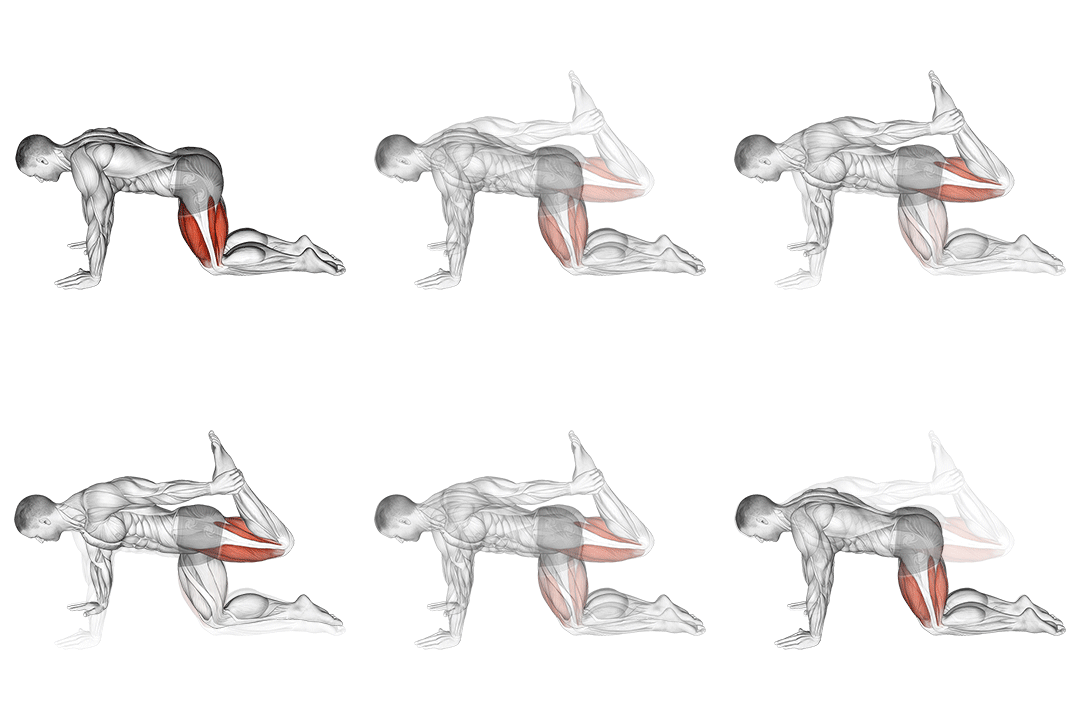
All Fours Squad Stretch
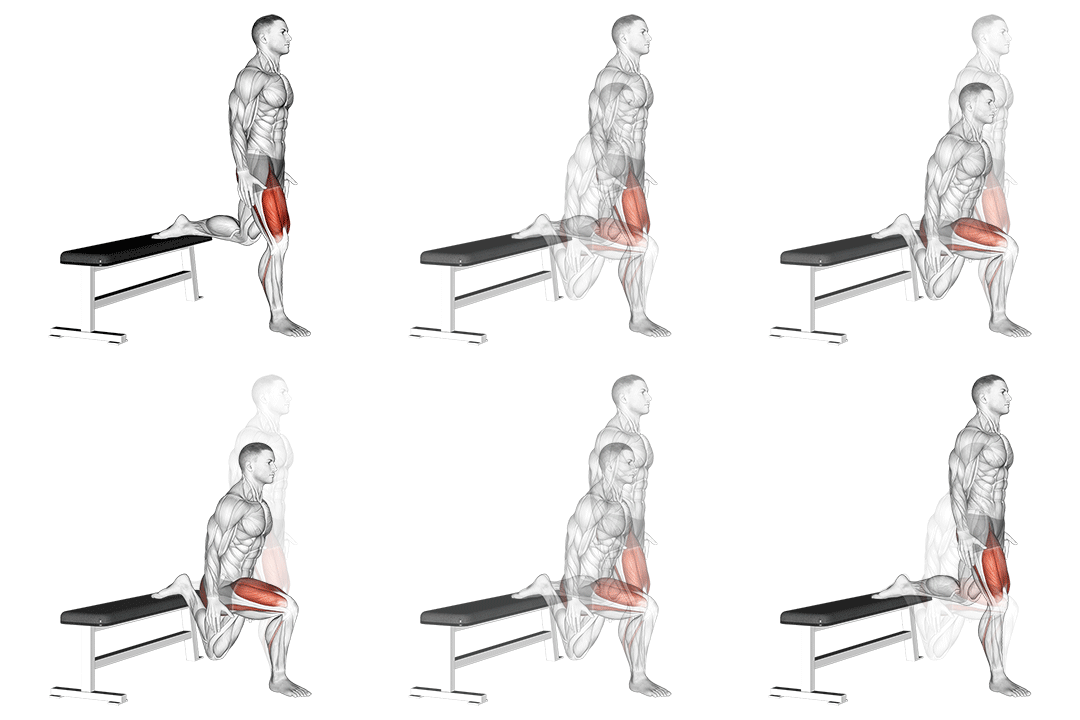
Quads
Head-to-Head Comparison
| Attribute | All Fours Squad Stretch | Quads |
|---|---|---|
| Target Muscle |
Quads
|
Quads
|
| Body Part |
Upper-legs
|
Upper-legs
|
| Equipment |
Body-weight
|
Body-weight
|
| Difficulty |
Beginner
|
Beginner
|
| Movement Type |
Isolation
|
Compound
|
| Secondary Muscles |
2
|
2
|
Secondary Muscles Activated
All Fours Squad Stretch
Quads
Visual Comparison
Overview
All Fours Squad Stretch vs Quads — which should you use in your routine? You get a clear, usable comparison that walks through muscle activation, technique cues, equipment needs, difficulty, and when to pick one over the other. I’ll show how each movement loads the quadriceps, how hamstrings and glutes assist, give rep and hold ranges, and explain biomechanics like length-tension and force vectors. Read on and you’ll know exactly when to use the All Fours Squad Stretch for mobility or the Quads compound pattern for progressive overload and strength.
Key Differences
- All Fours Squad Stretch is an isolation exercise, while Quads is a compound movement.
- Both exercises target the Quads using Body-weight. The main differences are in their movement patterns and muscle activation angles.
Pros & Cons
All Fours Squad Stretch
+ Pros
- Isolates quads at long muscle lengths for mobility and targeted loading
- Requires only a mat — extremely low equipment need
- Low coordination and low-impact; great for early-stage rehab
- Useful as a warm-up stretch or accessory to improve knee flexion tolerance
− Cons
- Limited progressive overload options for muscle growth
- Produces less active concentric quad force compared with compound moves
- Can be uncomfortable on knees without padding or proper alignment
Quads
+ Pros
- Generates higher active quad force for hypertrophy and strength
- Easier to progress with added load, tempo, and unilateral variations
- Improves functional movement patterns involving hip and knee extension
- Elevates metabolic demand and builds transferable strength
− Cons
- Higher technical and coordination demands for safe execution
- Greater joint compression and injury risk if form or loading is poor
- Requires more space or equipment for meaningful progression
When Each Exercise Wins
Quads wins because the compound pattern allows progressive overload — add weight, increase volume, or change tempo to drive muscle growth. Aim for 6–20 reps per set with 3–5 sets, and emphasize full concentric control through 30–90 degrees of knee flexion.
Quads offers higher peak torque and force vectors that translate to strength improvements when loaded. Use heavier loads with lower reps (4–6) and slow eccentrics to increase knee extension moment and neural adaptation.
All Fours has a simpler setup, lower coordination demand, and minimal joint loading, making it ideal to teach quad engagement and develop tolerance to knee flexion before advancing to compound patterns.
Both are bodyweight-friendly, but the All Fours variation requires less space and no props, so it fits tight home environments and still improves quad function and mobility.
Frequently Asked Questions
Can I do both All Fours Squad Stretch and Quads in the same workout?
Yes. Use the All Fours Squad Stretch as a mobility primer or activation set (30–60 second holds or 8–12 slow reps) before doing Quads compound work to improve range of motion and reduce injury risk. Place the compound Quads sets after activation for heavier loading and progressive overload.
Which exercise is better for beginners?
All Fours Squad Stretch is better for absolute beginners because it teaches quad engagement with low coordination and joint load. After mastering alignment and tolerance, progress to the Quads compound pattern for strength and loadable progressions.
How do the muscle activation patterns differ?
The All Fours Squad Stretch biases long-length and isometric/quasi-isometric tension with less concentric work, while the Quads pattern cycles concentric and eccentric contractions with peak activation in mid-range knee angles. Biomechanically, the compound pattern produces larger knee extension moments and greater active EMG.
Can Quads replace All Fours Squad Stretch?
Quads can replace All Fours when your goal is overload and strength, but it won’t match the isolated long-length stretch and mobility benefits of the All Fours. If you need targeted quad lengthening or knee flexion tolerance, keep the All Fours as an accessory.
Expert Verdict
Choose the All Fours Squad Stretch when your priority is quad isolation, mobility, rehabilitation, or when you need a low-impact, easy-to-learn option at home. Use 30–60 second holds or 8–12 controlled repeats focusing on knee alignment and hip neutral. Choose the Quads compound pattern when your goal is progressive strength or muscle growth — load the movement, train mid-range knee angles (30–90°), and use structured rep ranges (4–6 for strength, 8–20 for hypertrophy). Follow technique cues like tracking the knee over the middle toes, maintaining a neutral spine, and controlling eccentric phases. Be decisive: use the All Fours for mobility and the Quads for overload and strength.
Also Compare
More comparisons with All Fours Squad Stretch
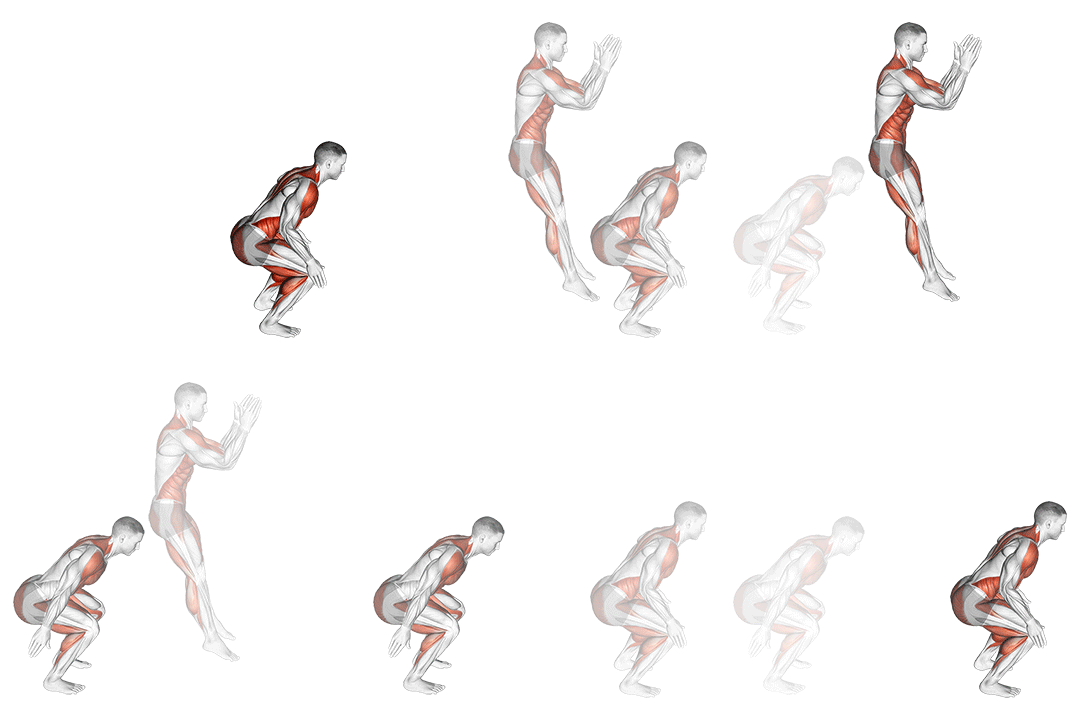
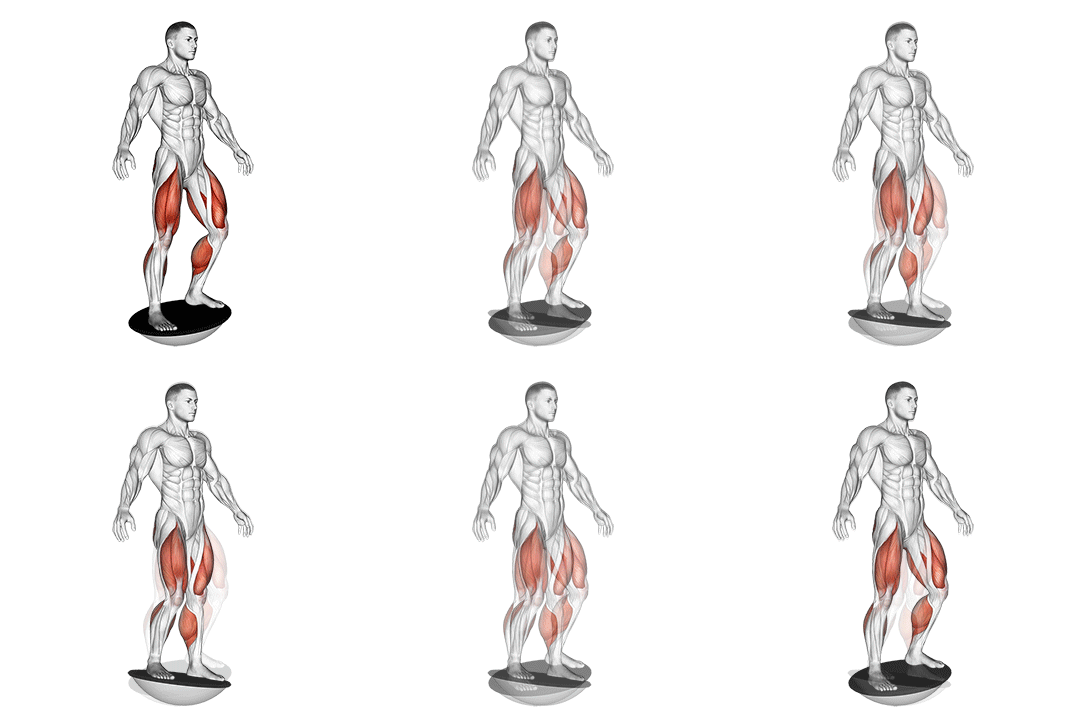
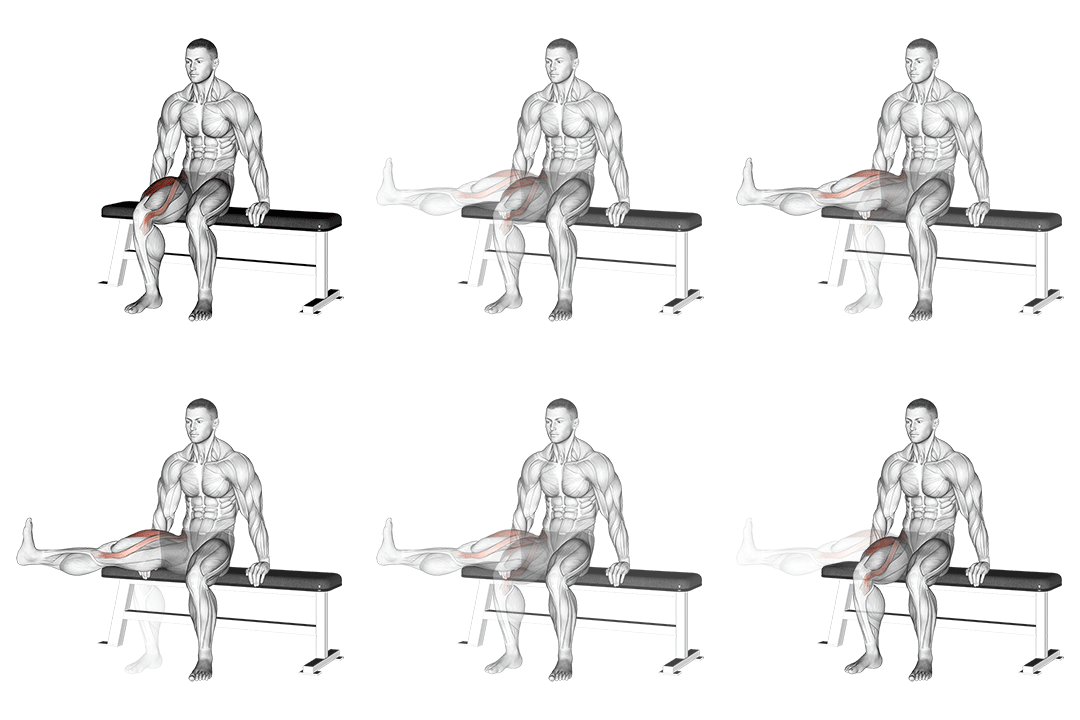
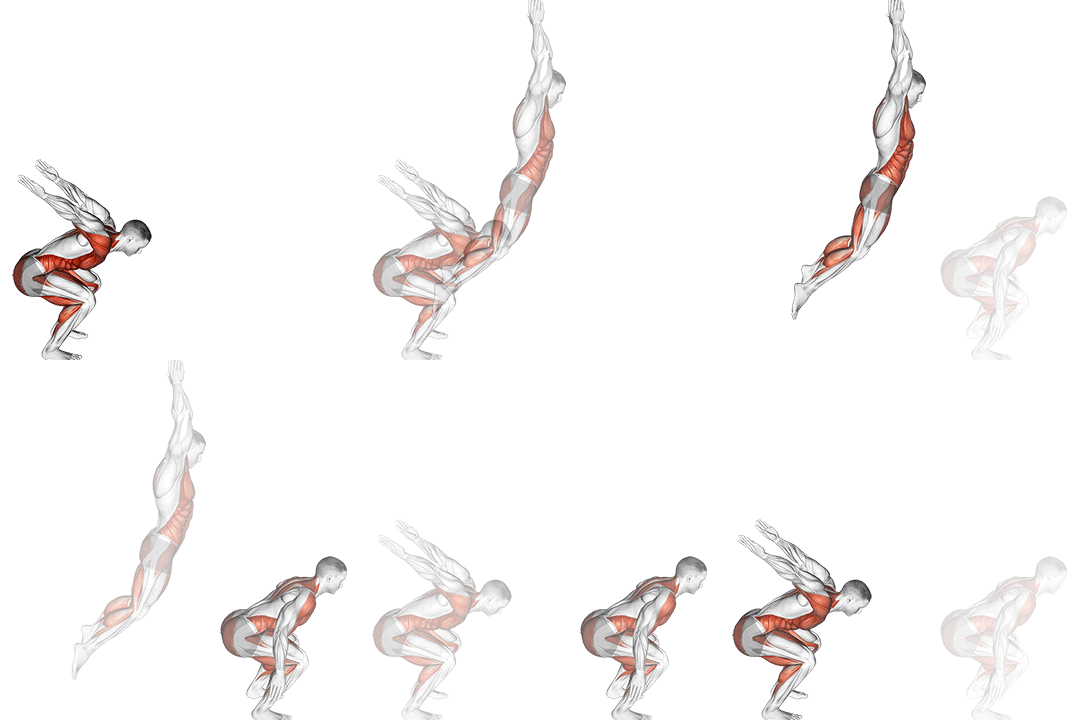
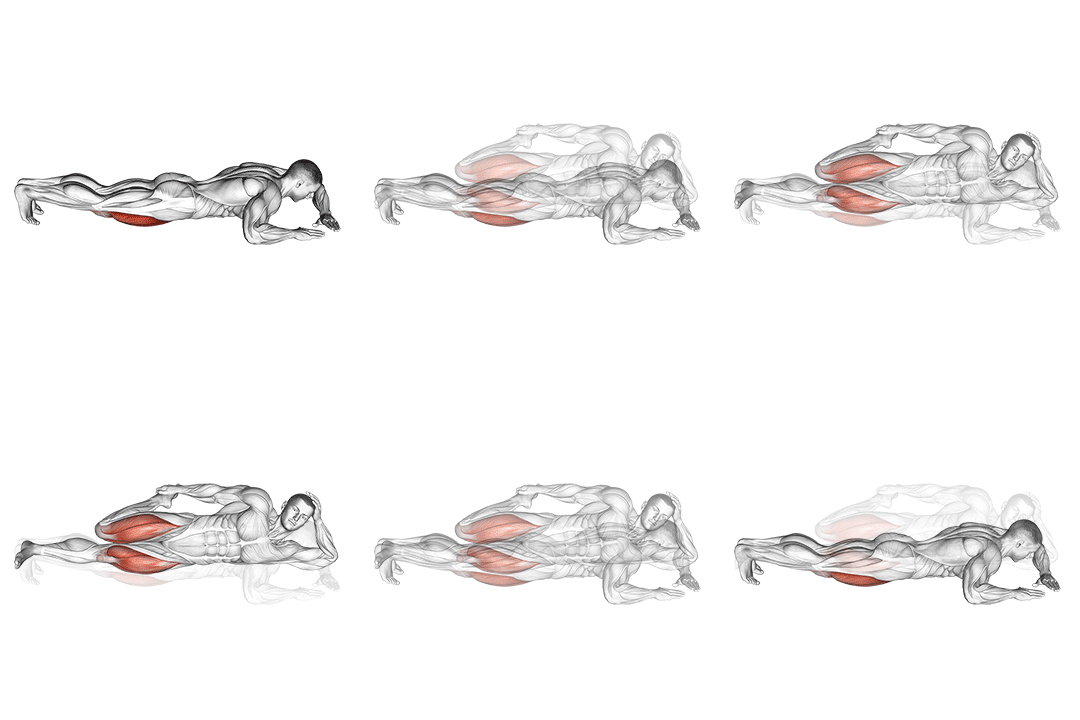
Compare More Exercises
Use our free comparison tool to analyze any two exercises head-to-head.
Compare Exercises