

Ankle Circles vs Band Two Legs Calf Raise - (band Under Both Legs) V. 2: Complete Comparison Guide
Ankle Circles vs Band Two Legs Calf Raise - (band Under Both Legs) V. 2 puts a mobility-first move against a light-resistance calf load. You’ll get clear guidance so you can pick the right exercise for ankle health, muscle development, or rehab. I’ll compare primary activation, secondary muscle work, equipment needs, learning curve, progression options, and injury risk. Expect specific technique cues (foot alignment, ROM targets like ~20° dorsiflexion to ~40° plantarflexion), rep ranges for goals, and practical recommendations you can use in your next session.
Exercise Comparison
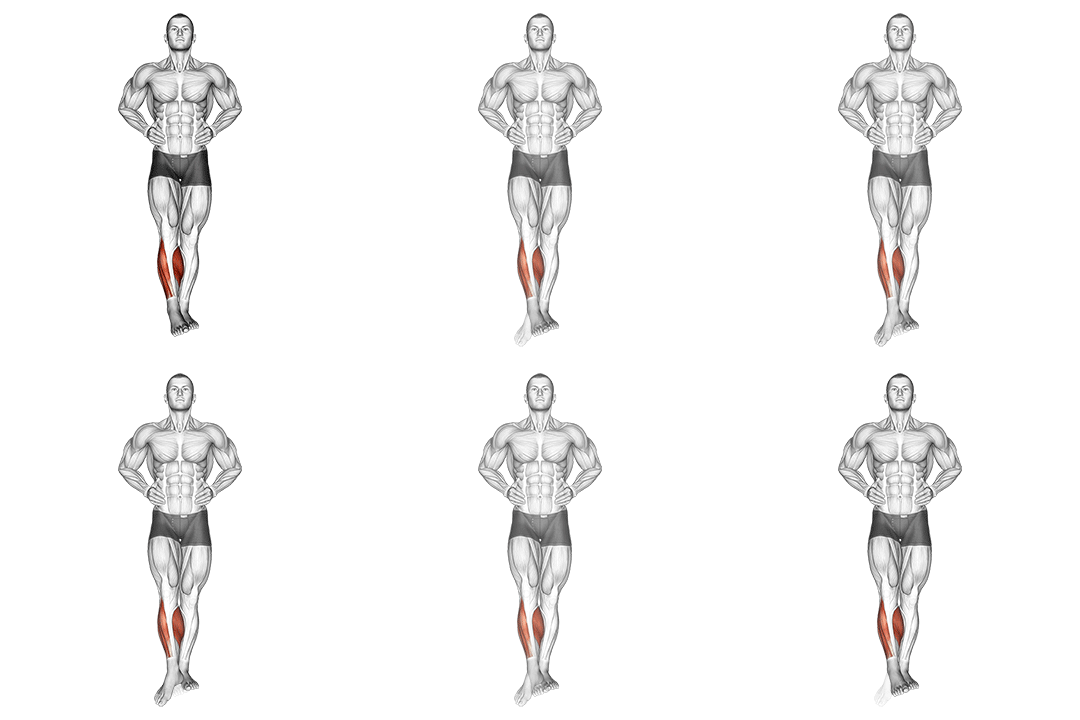
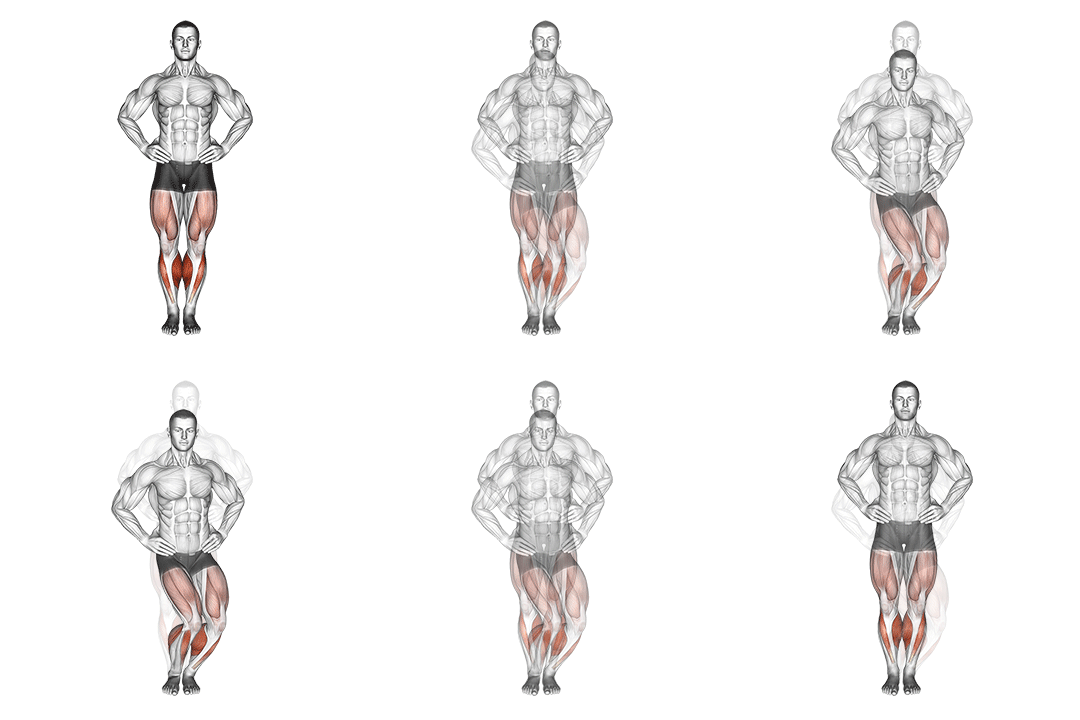
Ankle Circles
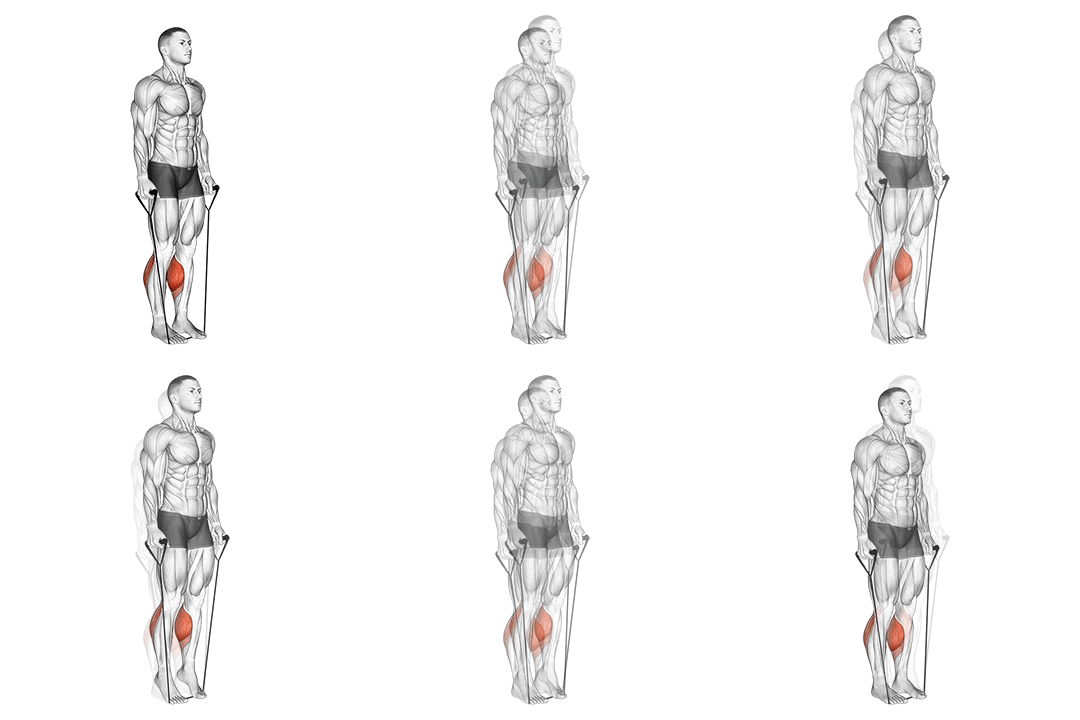
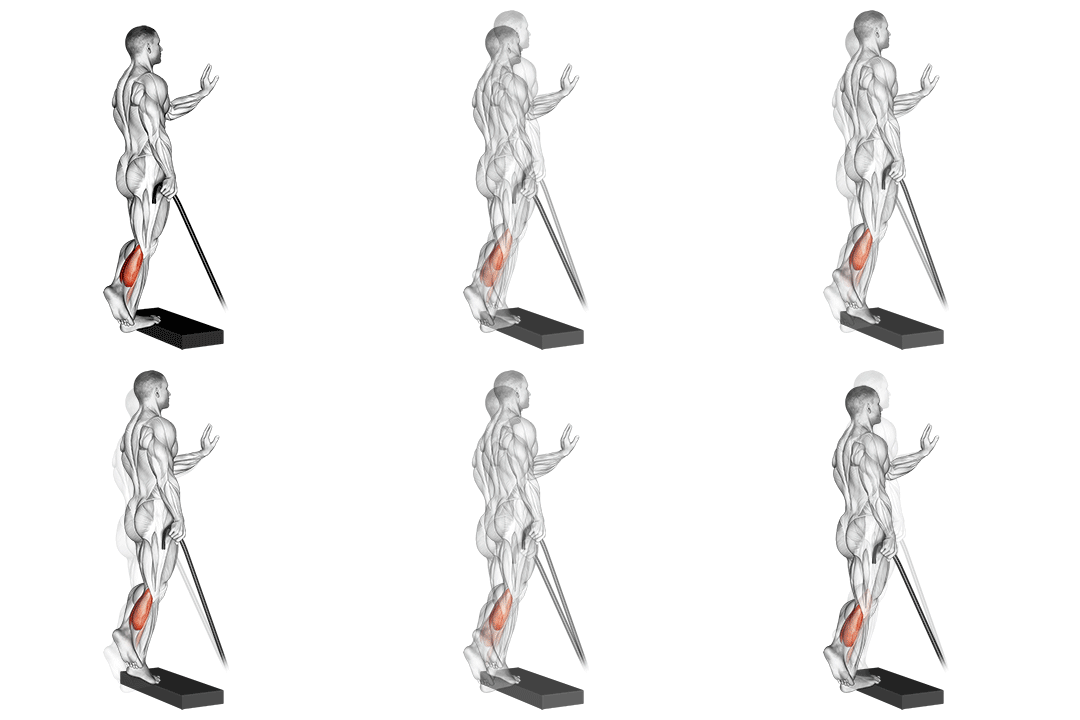
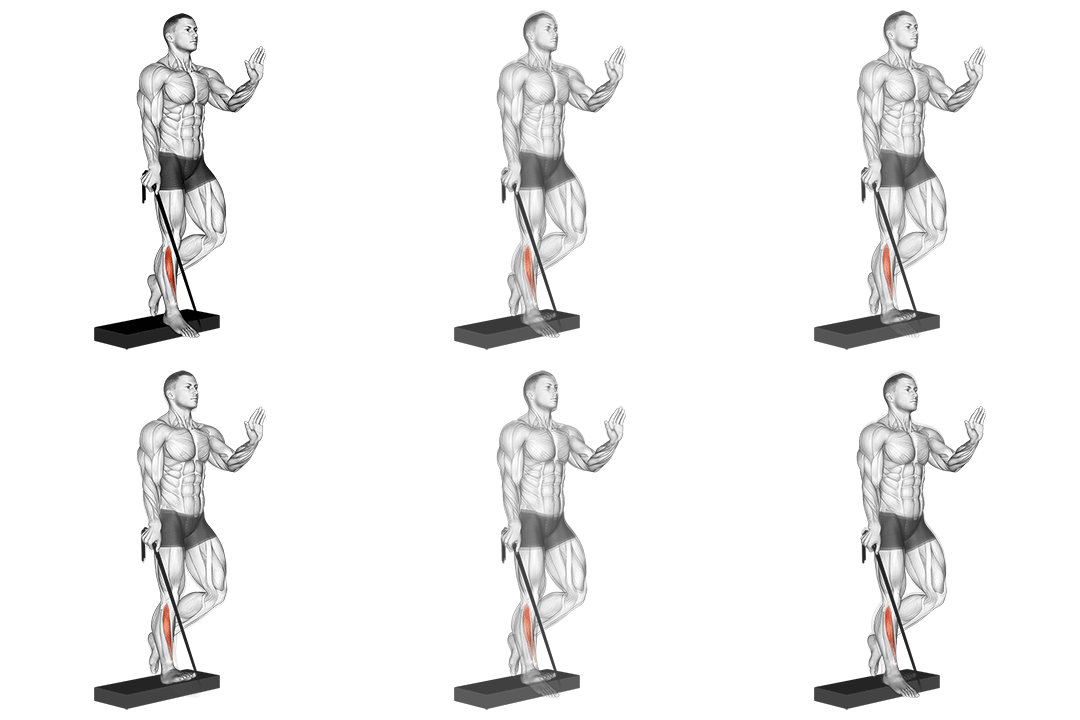
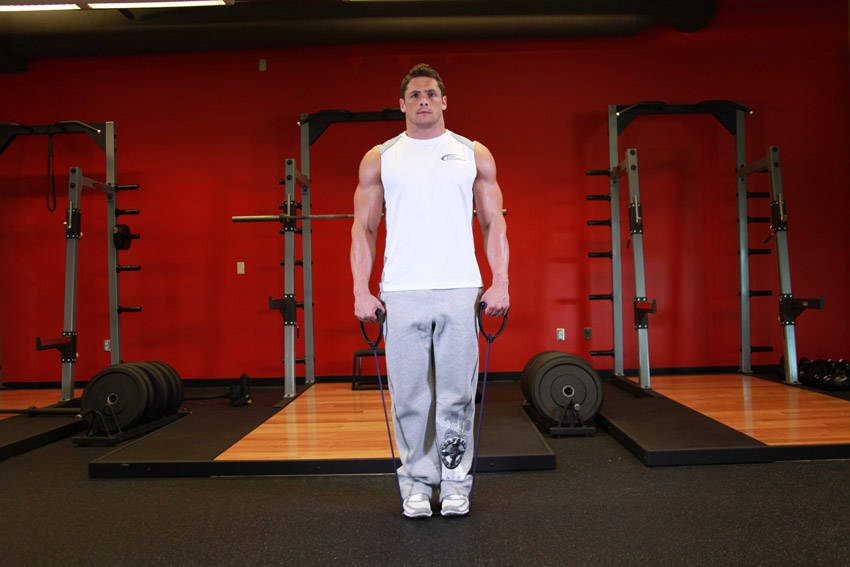
Band Two Legs Calf Raise - (band Under Both Legs) V. 2
Head-to-Head Comparison
| Attribute | Ankle Circles | Band Two Legs Calf Raise - (band Under Both Legs) V. 2 |
|---|---|---|
| Target Muscle |
Calves
|
Calves
|
| Body Part |
Lower-legs
|
Lower-legs
|
| Equipment |
Body-weight
|
Band
|
| Difficulty |
Beginner
|
Beginner
|
| Movement Type |
Isolation
|
Isolation
|
| Secondary Muscles |
1
|
2
|
Secondary Muscles Activated
Ankle Circles
Band Two Legs Calf Raise - (band Under Both Legs) V. 2
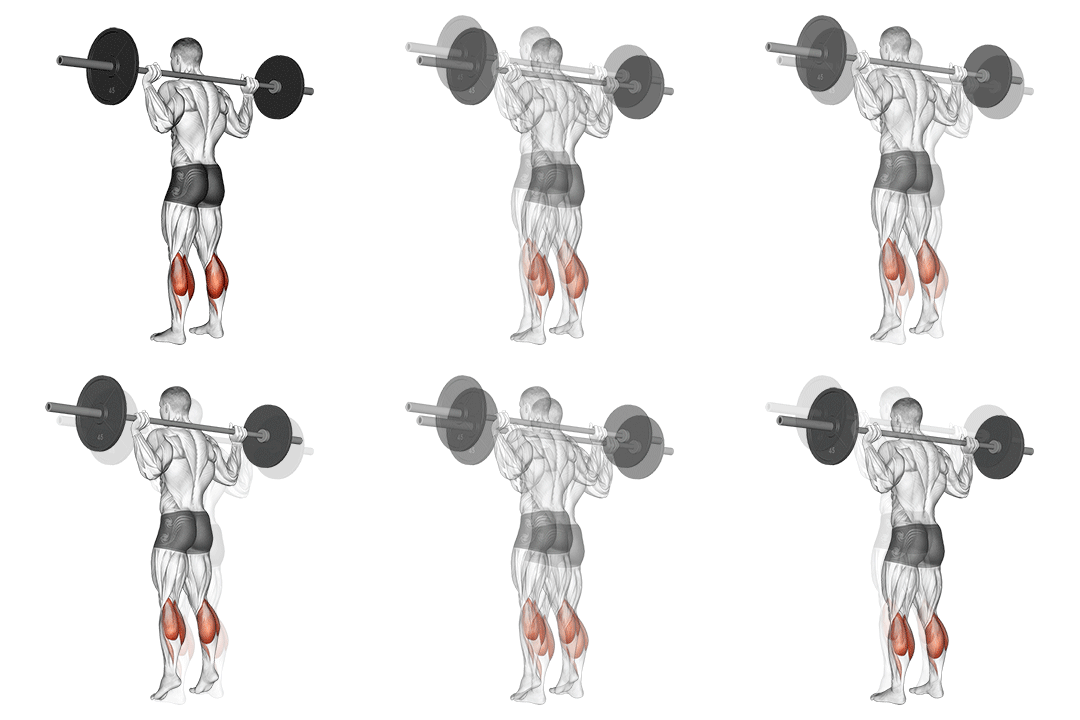
Visual Comparison
Overview
Ankle Circles vs Band Two Legs Calf Raise - (band Under Both Legs) V. 2 puts a mobility-first move against a light-resistance calf load. You’ll get clear guidance so you can pick the right exercise for ankle health, muscle development, or rehab. I’ll compare primary activation, secondary muscle work, equipment needs, learning curve, progression options, and injury risk. Expect specific technique cues (foot alignment, ROM targets like ~20° dorsiflexion to ~40° plantarflexion), rep ranges for goals, and practical recommendations you can use in your next session.
Key Differences
- Equipment differs: Ankle Circles uses Body-weight, while Band Two Legs Calf Raise - (band Under Both Legs) V. 2 requires Band.
Pros & Cons
Ankle Circles
+ Pros
- Zero equipment — ideal for warm-ups and rehab
- Improves ankle ROM and subtalar control (pronation/supination)
- Low injury risk and suitable for acute ankle pain management
- Enhances proprioception and stabilizer endurance
− Cons
- Low peak mechanical load — limited for hypertrophy
- Minimal progressive overload options compared to resisted raises
- Less direct stimulus to gastrocnemius under high tension
Band Two Legs Calf Raise - (band Under Both Legs) V. 2
+ Pros
- Provides meaningful mechanical tension for muscle growth
- Easy progressive overload by increasing band resistance or reps
- Recruits intrinsic foot muscles and trains concentric/eccentric control
- Portable and low-cost equipment
− Cons
- Requires band setup and basic technique cuing
- Higher overload risk if band tension is too high
- Less multi-planar ankle stability work compared with circles
When Each Exercise Wins
Band calf raises deliver higher peak tension on gastrocnemius and soleus and allow progressive overload (increase band resistance or reps). Use 8–20 reps for hypertrophy, 3–5 sets, and emphasize a 2–3 second eccentric to increase time under tension.
Strength requires load above typical body-weight ranges; bands let you manipulate force vectors and resistance levels. Progress to single-leg or shorter-lever variations to raise relative load and stimulus.
They teach ankle control, improve ROM (aim for ~20° dorsiflexion and 40° plantarflexion range), and have minimal coordination demands. Start with 2–3 sets of 20–30 seconds per direction to build stability before adding load.
No equipment needed and they fit small spaces. If you have a band, Band Two Legs Calf Raise is excellent, but ankle circles are always available for warm-ups, cooldowns, and quick sessions.
Frequently Asked Questions
Can I do both Ankle Circles and Band Two Legs Calf Raise - (band Under Both Legs) V. 2 in the same workout?
Yes — start with ankle circles as a 2–3 minute warm-up to restore ROM and neuromuscular control, then perform band calf raises for strength or hypertrophy. That order primes the ankle and reduces compensations during loaded plantarflexion.
Which exercise is better for beginners?
Ankle Circles are better for absolute beginners because they teach joint awareness and require no equipment. Once you have consistent ROM and no pain, add band calf raises to introduce progressive loading.
How do the muscle activation patterns differ?
Ankle circles produce low-amplitude, continuous activation across stabilizers and intrinsic foot muscles with multi-planar torque. Band calf raises create concentrated concentric-eccentric activation in gastrocnemius and soleus with peak tension near end-range plantarflexion due to the length-tension relationship.
Can Band Two Legs Calf Raise - (band Under Both Legs) V. 2 replace Ankle Circles?
Not completely — band raises can replace some strength and load needs but lack the multi-planar stabilizer training that ankle circles provide. Keep ankle circles for mobility and subtalar control alongside band raises for best results.
Expert Verdict
Use ankle circles when your priority is ankle mobility, injury prevention, rehab, or proprioception. They’re ideal as a warm-up or daily maintenance to improve subtalar control and stabilizer endurance. Choose Band Two Legs Calf Raise - (band Under Both Legs) V. 2 when you want a stronger mechanical stimulus for calf muscle growth and strength; manipulate band tension, rep ranges (8–20), and tempo (2–3s eccentric) to progress. For balanced programming, pair ankle circles for mobility and stability with band calf raises for load-bearing adaptation — that combination addresses both control and hypertrophy.
Also Compare
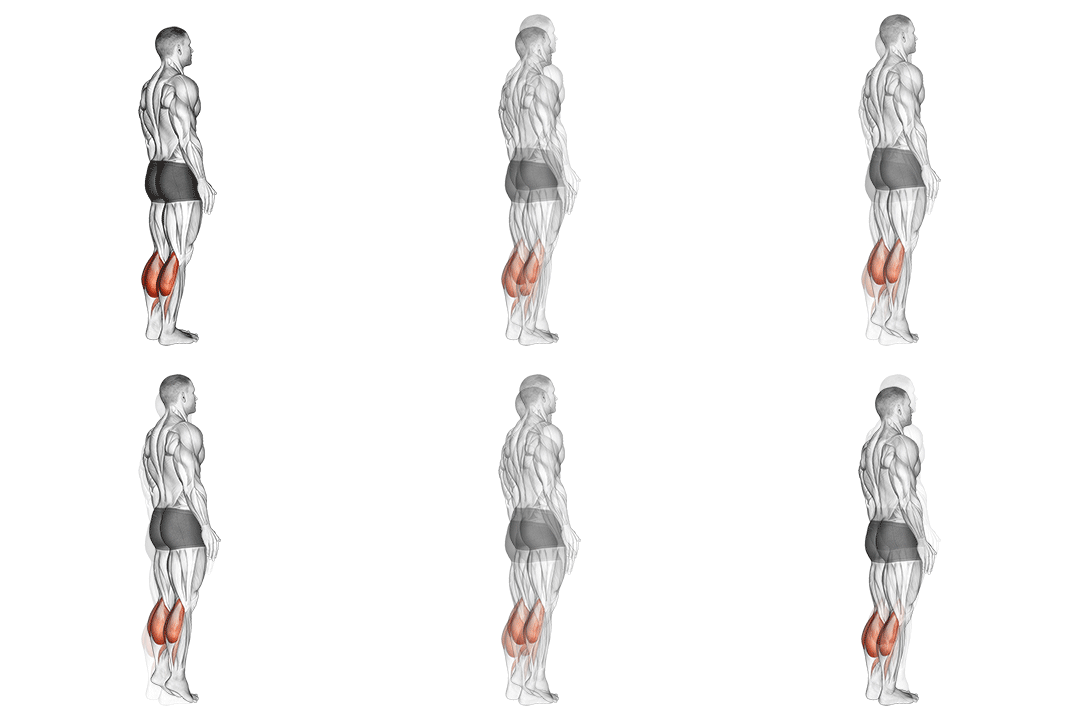
More comparisons with Ankle Circles
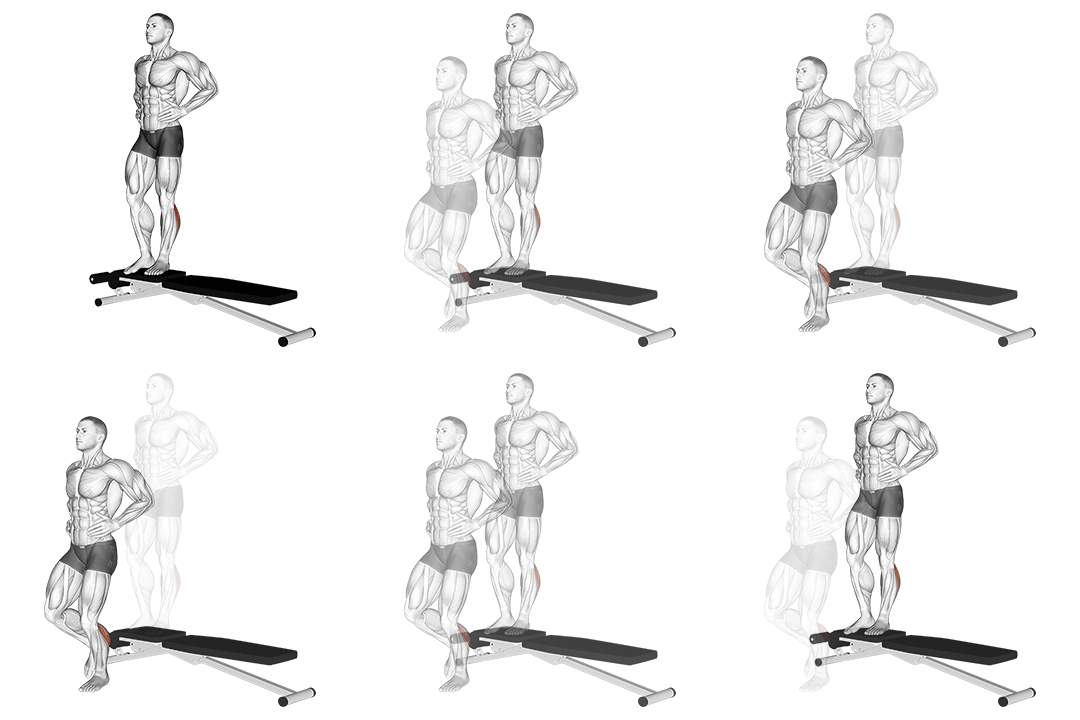
More comparisons with Band Two Legs Calf Raise - (band Under Both Legs) V. 2
Compare More Exercises
Use our free comparison tool to analyze any two exercises head-to-head.
Compare Exercises