

Ankle Circles vs Calf Raises - With Bands: Complete Comparison Guide
Ankle Circles vs Calf Raises - With Bands puts two beginner-friendly calf isolation moves side by side so you can pick the right tool for your goals. You’ll get a clear look at muscle activation, joint mechanics, equipment needs, and how to progress each exercise. Read on for specific technique cues, recommended rep ranges (10–25 for mobility and endurance, 8–12 for hypertrophy), and practical examples you can use in warm-ups, rehabilitation, or strength work.
Exercise Comparison
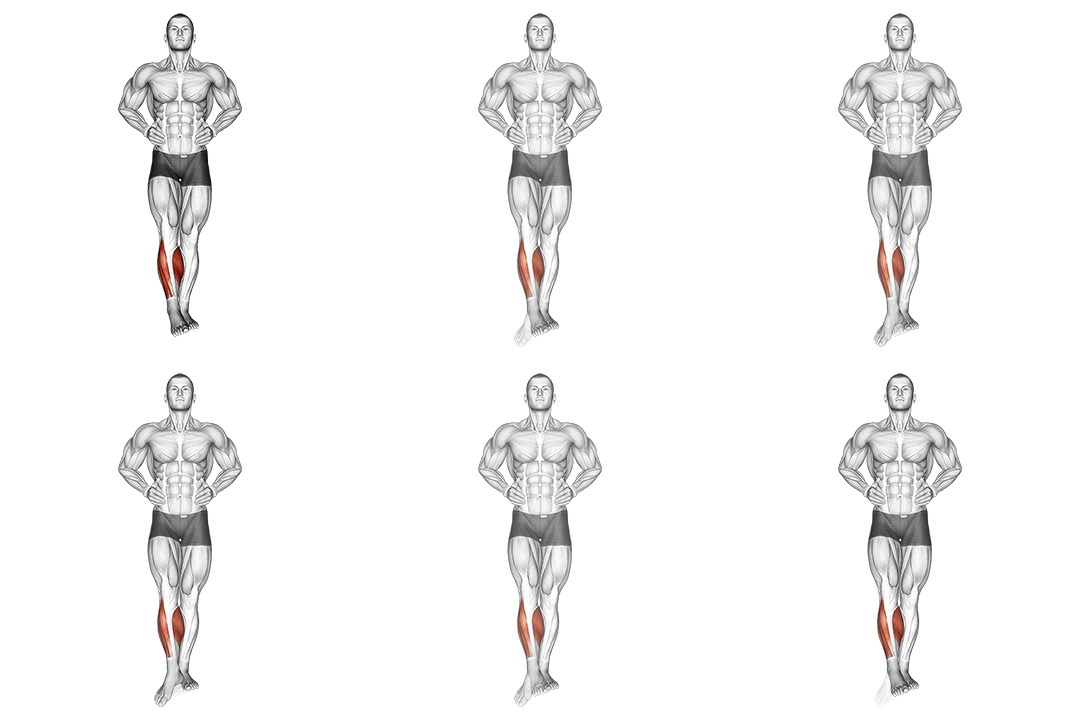
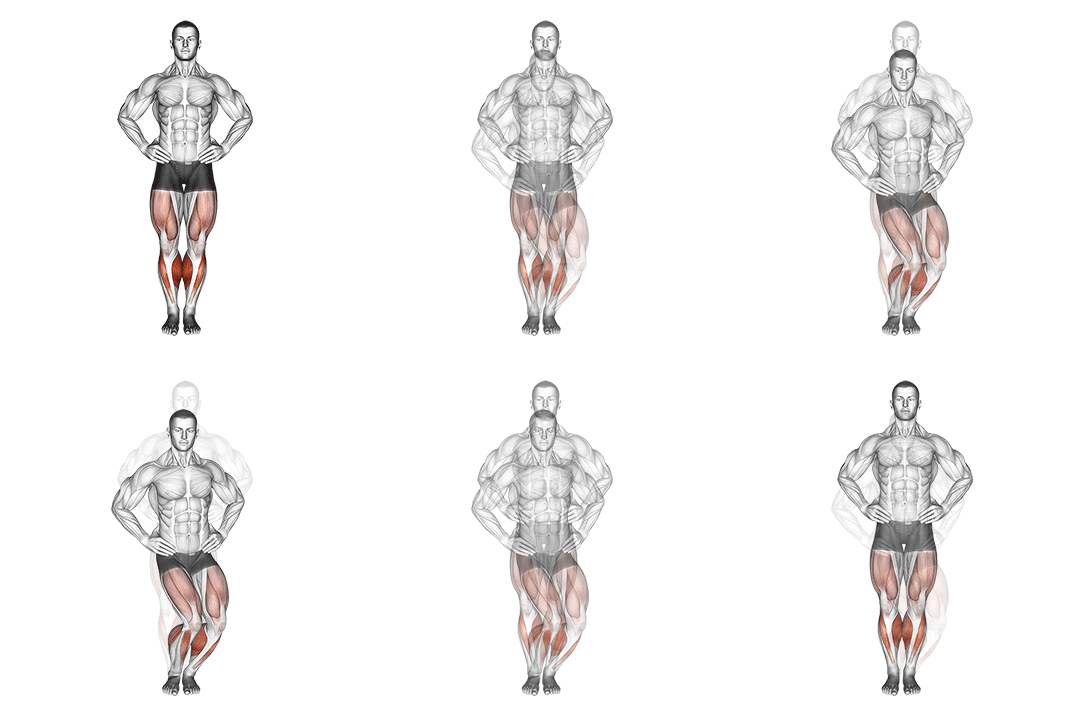
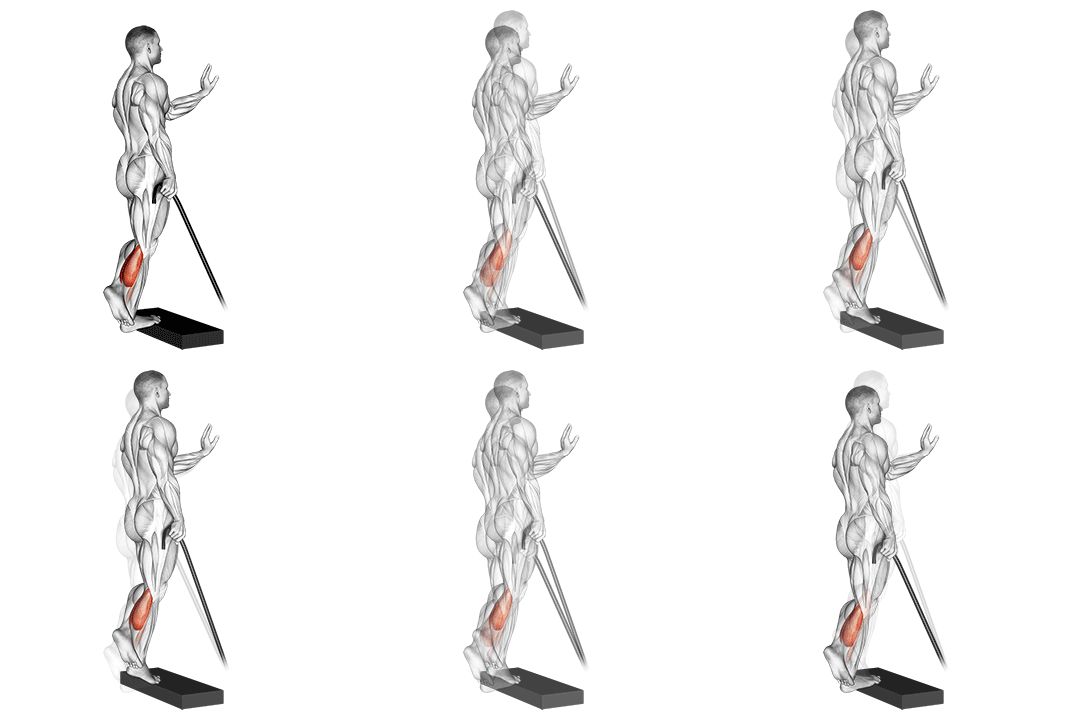
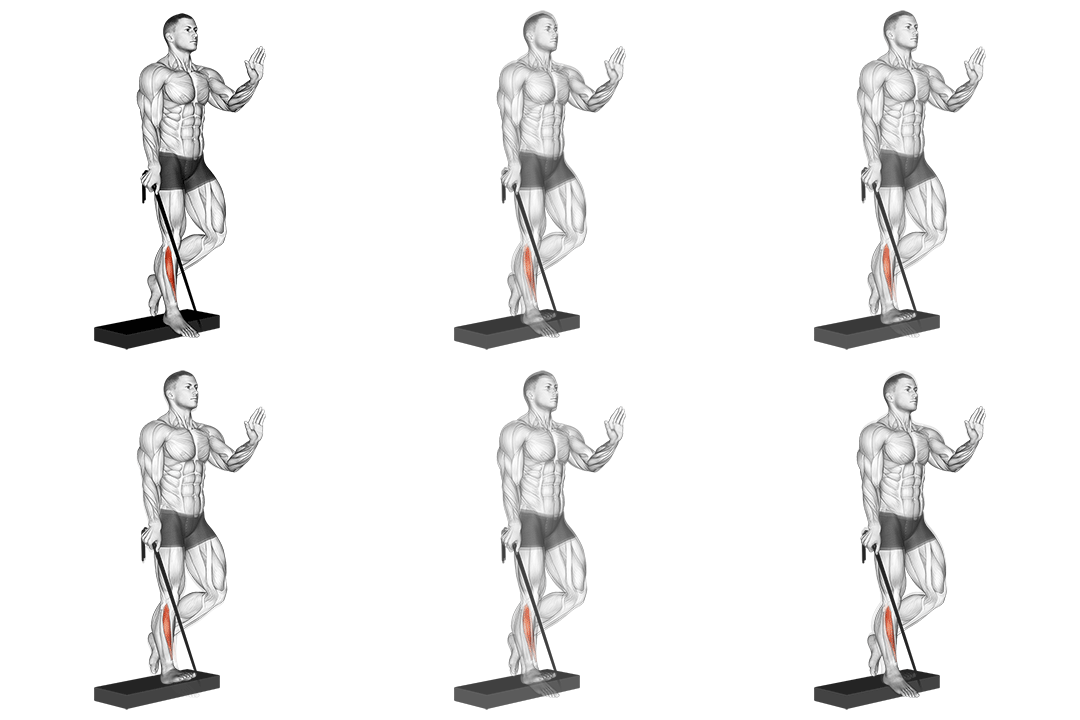
Ankle Circles
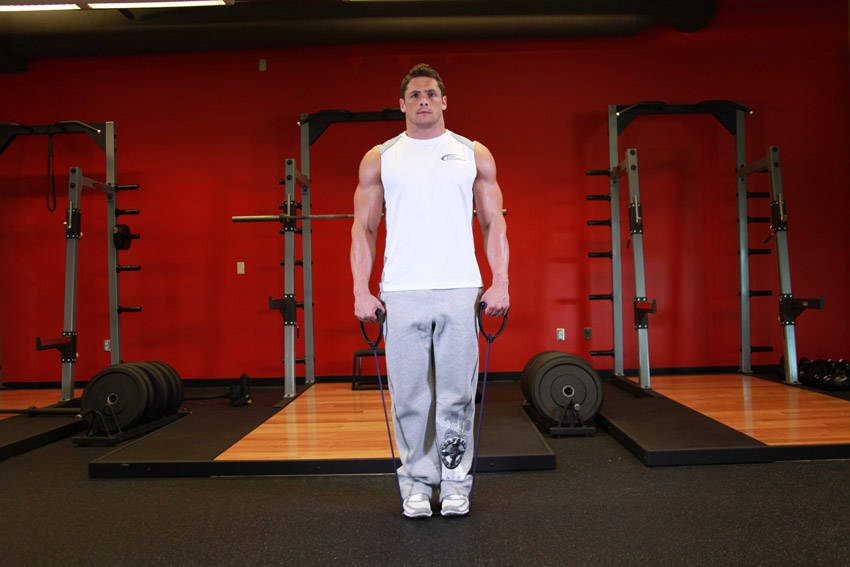
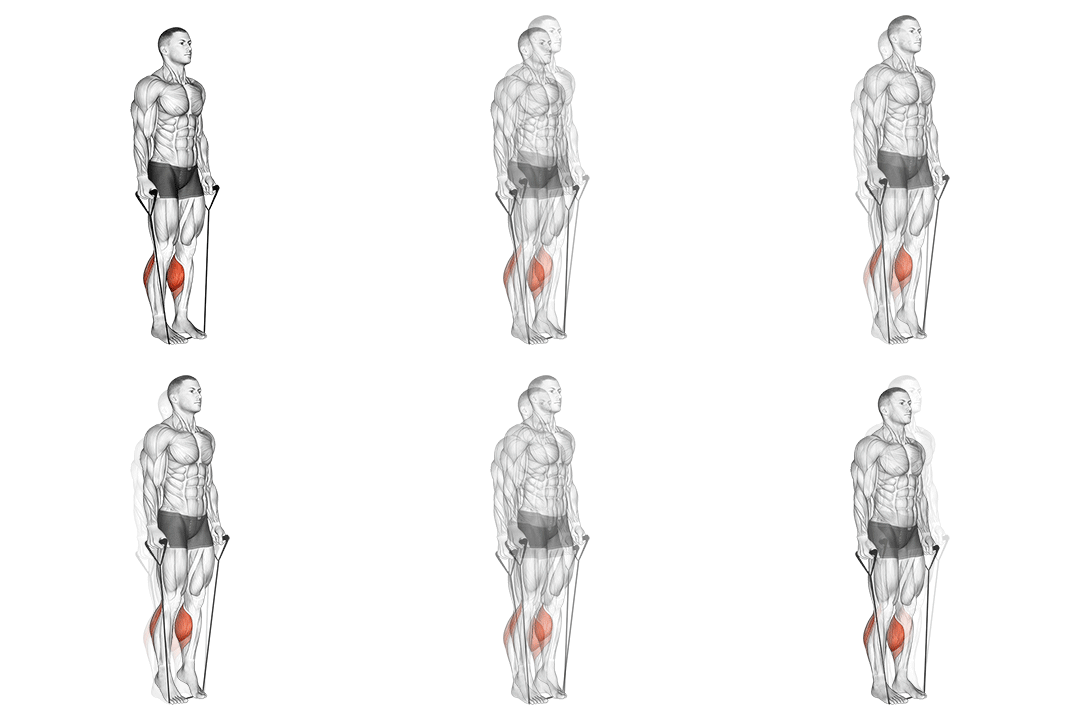
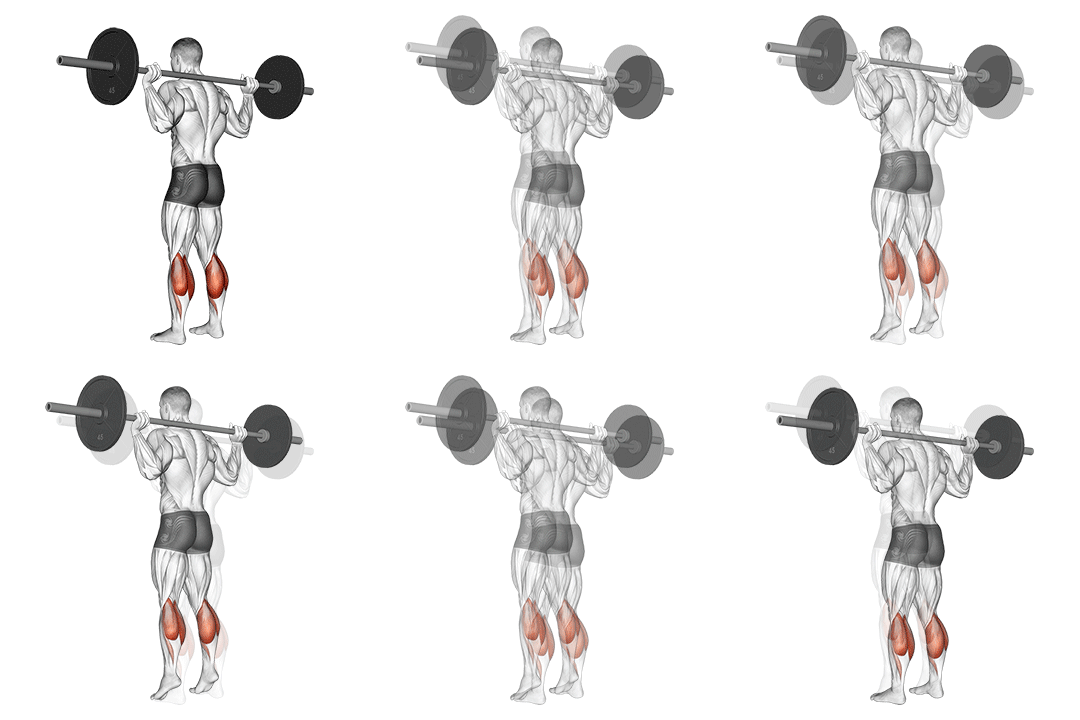
Calf Raises - With Bands
Head-to-Head Comparison
| Attribute | Ankle Circles | Calf Raises - With Bands |
|---|---|---|
| Target Muscle |
Calves
|
Calves
|
| Body Part |
Lower-legs
|
Lower-legs
|
| Equipment |
Body-weight
|
Band
|
| Difficulty |
Beginner
|
Beginner
|
| Movement Type |
Isolation
|
Isolation
|
| Secondary Muscles |
1
|
0
|
Secondary Muscles Activated
Ankle Circles
Calf Raises - With Bands
Visual Comparison
Overview
Ankle Circles vs Calf Raises - With Bands puts two beginner-friendly calf isolation moves side by side so you can pick the right tool for your goals. You’ll get a clear look at muscle activation, joint mechanics, equipment needs, and how to progress each exercise. Read on for specific technique cues, recommended rep ranges (10–25 for mobility and endurance, 8–12 for hypertrophy), and practical examples you can use in warm-ups, rehabilitation, or strength work.
Key Differences
- Equipment differs: Ankle Circles uses Body-weight, while Calf Raises - With Bands requires Band.
Pros & Cons
Ankle Circles
+ Pros
- No equipment — usable anywhere
- Improves ankle mobility and proprioception
- Activates ankle stabilizers and intrinsic foot muscles
- Low injury risk; good for rehab and warm-ups
− Cons
- Insufficient mechanical load for substantial muscle growth
- Hard to progressively overload beyond increasing reps
- Limited carryover to maximal plantarflexion force demands
Calf Raises - With Bands
+ Pros
- Provides measurable external resistance for hypertrophy
- Easy to progress by increasing band tension or tempo
- Targets gastrocnemius and soleus effectively in sagittal plane
- Can be adapted to single-leg to increase load per limb
− Cons
- Requires a band and proper setup
- Higher Achilles and calf strain risk if overloaded
- Band tension curve changes load through the range, altering peak moment arms
When Each Exercise Wins
Banded raises create higher time under tension and allow progressive overload (8–12 reps with heavier bands or 3–5s eccentrics). The vertical plantarflexion force vector produces greater mechanical stress on gastrocnemius and soleus needed for muscle growth.
You can manipulate band tension and perform heavy single-leg variations to increase plantarflexion torque. This produces larger force output and neural adaptation compared with the low-load rotational work of ankle circles.
Ankle Circles teach ankle control and improve mobility with minimal load and low coordination demands. They reduce stiffness and prepare the joint for loaded plantarflexion work.
They require zero equipment and take up no space, so you can perform them anywhere. Use ankle circles to warm up, then add banded raises if you have a resistance band.
Frequently Asked Questions
Can I do both Ankle Circles and Calf Raises - With Bands in the same workout?
Yes. Do ankle circles first as a mobility and activation drill (10–20 per direction) to increase ROM and neuromuscular control, then follow with banded calf raises for loading (3–4 sets of 8–15 reps). That order leverages priming and reduces injury risk.
Which exercise is better for beginners?
For absolute beginners start with ankle circles to build ankle control and reduce stiffness. Once you can control plantarflexion through a decent ROM and tolerate body-weight rises, add banded calf raises to introduce progressive resistance.
How do the muscle activation patterns differ?
Ankle circles produce multi-planar, low-tension activation that emphasizes stabilizers and proprioception. Banded calf raises produce sagittal-plane, high-tension activation with peak force near end-range plantarflexion, increasing gastrocnemius and soleus recruitment and time under tension.
Can Calf Raises - With Bands replace Ankle Circles?
Not completely. Banded raises replace the loading role but don’t train multi-directional ankle control or intrinsic stabilizers as effectively. Keep ankle circles for mobility and rehab while using banded raises for strength and hypertrophy.
Expert Verdict
Use Ankle Circles when your goal is mobility, rehab, or to prime the ankle stabilizers — they improve proprioception, dorsiflexion/plantarflexion control, and are safe for daily use. Choose Calf Raises - With Bands when you want progressive overload for muscle growth or strength: increase band tension, use single-leg variations, and control eccentrics (3–5 seconds) to maximize stimulus. For balanced programming, start sessions with ankle circles (10–20 per direction) as a warm-up, then perform 3–4 sets of banded calf raises (8–15 reps) to build calf strength and size.
Also Compare
More comparisons with Ankle Circles
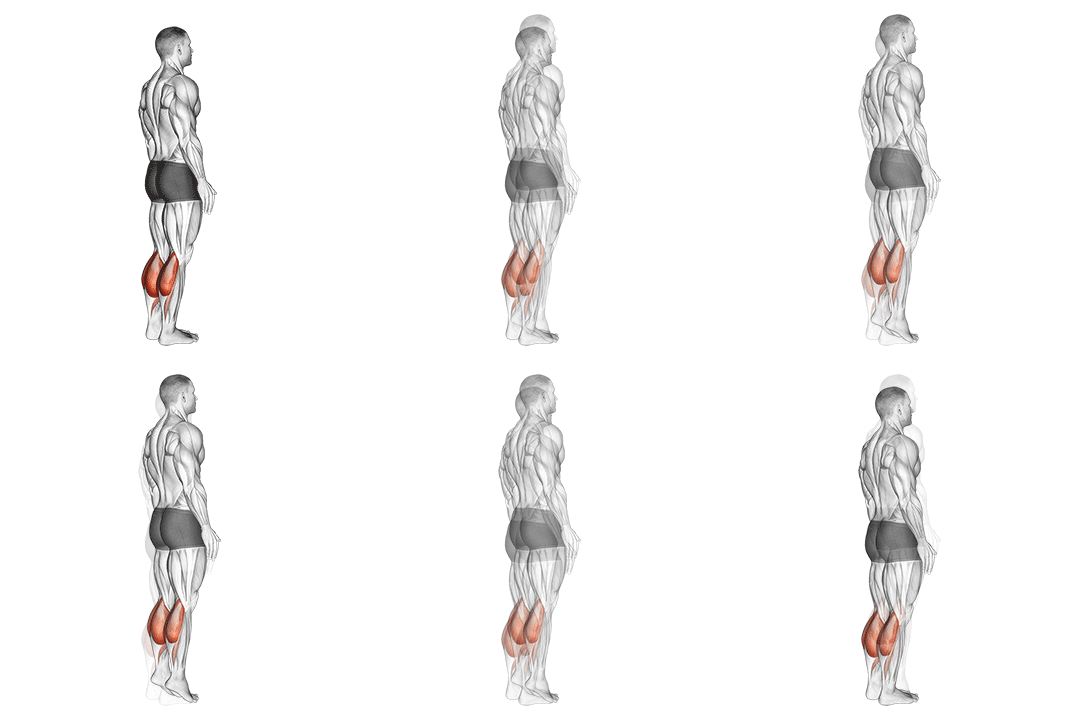
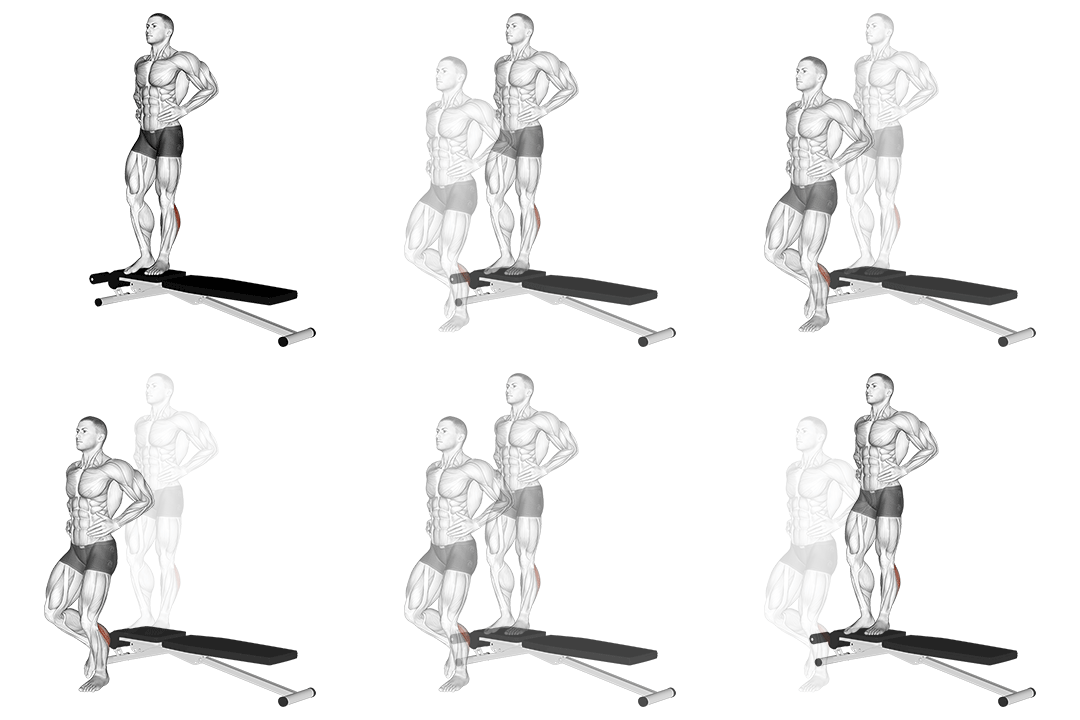
More comparisons with Calf Raises - With Bands
Compare More Exercises
Use our free comparison tool to analyze any two exercises head-to-head.
Compare Exercises