

Archer Push Up vs Pushups: Complete Comparison Guide
Archer Push Up vs Pushups — two bodyweight chest presses that look similar but load your muscles very differently. If you want clear guidance on which to use, this comparison walks you through primary and secondary muscle activation, equipment needs, difficulty and progression, injury considerations, and precise technique cues (hand placement, elbow angles, tempo). Read on and you’ll know when to build a training base with pushups, when to progress to Archer Push Ups for unilateral overload, and how to program reps, sets, and tempo for muscle growth and strength development.
Exercise Comparison
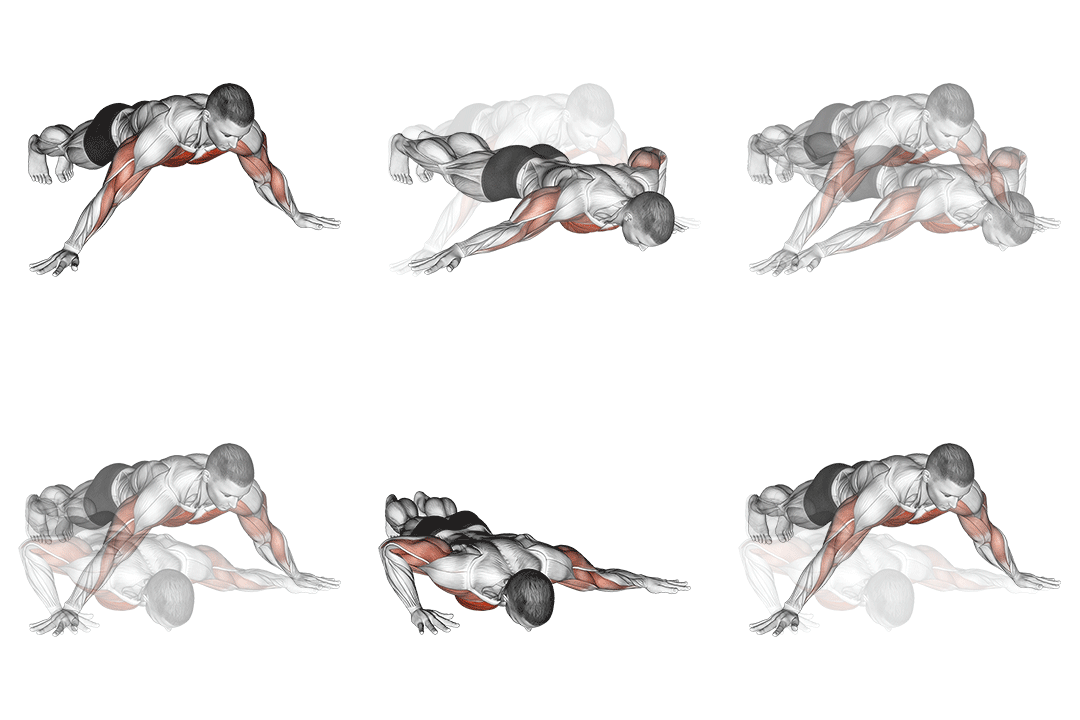
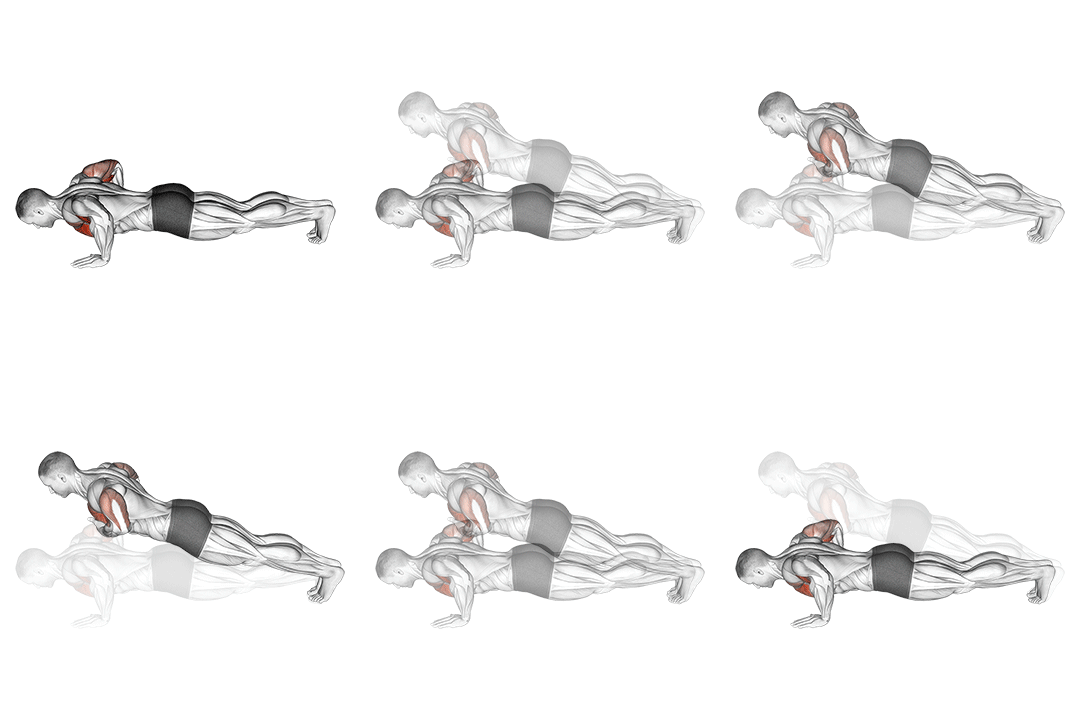
Archer Push Up
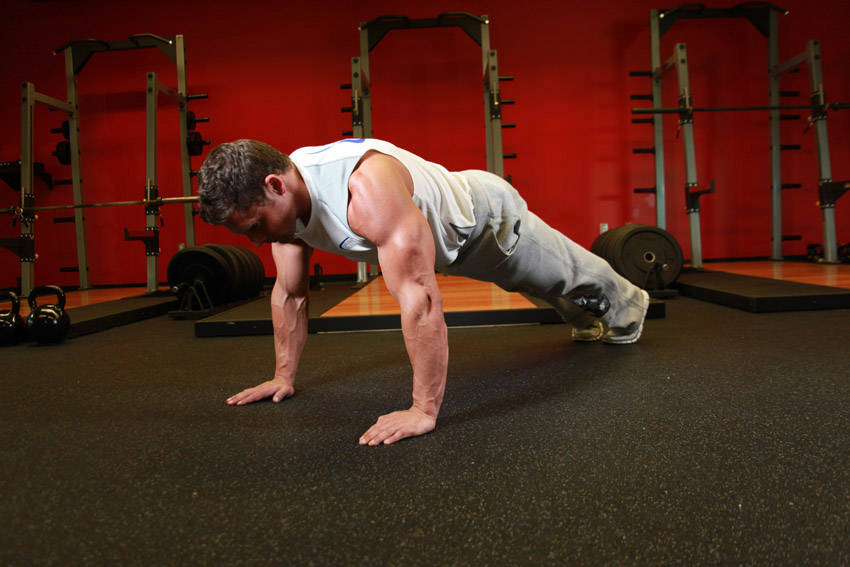
Pushups
Head-to-Head Comparison
| Attribute | Archer Push Up | Pushups |
|---|---|---|
| Target Muscle |
Pectorals
|
Pectorals
|
| Body Part |
Chest
|
Chest
|
| Equipment |
Body-weight
|
Body-weight
|
| Difficulty |
Advanced
|
Beginner
|
| Movement Type |
Compound
|
Compound
|
| Secondary Muscles |
3
|
2
|
Secondary Muscles Activated
Archer Push Up
Pushups
Visual Comparison
Overview
Archer Push Up vs Pushups — two bodyweight chest presses that look similar but load your muscles very differently. If you want clear guidance on which to use, this comparison walks you through primary and secondary muscle activation, equipment needs, difficulty and progression, injury considerations, and precise technique cues (hand placement, elbow angles, tempo). Read on and you’ll know when to build a training base with pushups, when to progress to Archer Push Ups for unilateral overload, and how to program reps, sets, and tempo for muscle growth and strength development.
Key Differences
- Difficulty levels differ: Archer Push Up is advanced, while Pushups is beginner.
- Both exercises target the Pectorals using Body-weight. The main differences are in their movement patterns and muscle activation angles.
Pros & Cons
Archer Push Up
+ Pros
- High unilateral overload for each pectoral, accelerating side-to-side balance and strength
- Direct progression toward one-arm push-up strength
- Greater anti-rotation core and serratus activation due to asymmetric loading
- Increases time under tension on the working side, aiding hypertrophy when programmed correctly
− Cons
- Higher technical demand — needs shoulder stability and mobility
- Increased compressive/shear forces at the shoulder joint if technique is poor
- Harder to accumulate volume safely for beginners without fatigue-driven form breakdown
Pushups
+ Pros
- Extremely accessible and scalable for all fitness levels
- Easy to accumulate volume for hypertrophy (8–20+ reps per set)
- Simple to modify with incline, decline, tempo, or added weight
- Lower technical demand and lower immediate injury risk for novices
− Cons
- Less unilateral overload and carryover to single-arm strength
- Plateau potential if you lack progressive overload tools (weight, tempo)
- Can under-recruit core anti-rotation patterns compared to unilateral variations
When Each Exercise Wins
Archer Push Ups produce higher unilateral tension and longer muscle length under load, which increases per-side mechanical stimulus. Use 3–4 sets of 6–12 reps per side with 2–3 second eccentrics to elicit hypertrophic adaptations.
Because the movement loads one side more and creates a longer moment arm, it builds unilateral pressing strength that transfers to one-arm press variations. Practice heavy sets of 3–6 reps per side and progress toward reduced assistance or increased range.
Pushups allow immediate scaling (incline, knees, tempo) so you can build foundational chest, triceps and scapular control safely. Aim for consistent volume—3–4 sets of 8–20 reps—before attempting advanced unilateral variants.
Pushups require no special space or handles and offer dozens of scalable variations to match your environment. Add tempo changes or a backpack with weight plates to progress without gym equipment.
Frequently Asked Questions
Can I do both Archer Push Up and Pushups in the same workout?
Yes. Start with Archer Push Ups when you are fresh to prioritize unilateral strength (3–6 reps per side), then finish with pushup sets for volume and hypertrophy (8–15 reps). Monitor fatigue so your scapular control and elbow angles stay consistent throughout the session.
Which exercise is better for beginners?
Pushups are the better starting point because they scale easily (incline, knees) and teach basic scapular and core control. Build up to 20+ quality reps before introducing Archer Push Ups to reduce shoulder injury risk.
How do the muscle activation patterns differ?
Standard pushups produce symmetric bilateral activation across pecs, anterior deltoids, and triceps with force vectors aligned evenly. Archer Push Ups shift the force vector toward the working arm, increasing horizontal adduction torque and creating higher unilateral pec and triceps activation while the opposite side functions more isometrically for stability.
Can Pushups replace Archer Push Up?
Pushups can substitute for general chest development and endurance, but they won’t replicate the unilateral overload and anti-rotation demand of Archer Push Ups. If your goal is side-to-side strength balance or progression to a one-arm push-up, include Archer variations in your program.
Expert Verdict
Use pushups to establish a solid pressing foundation: they’re the easiest way to build volume, teach scapular control, and scale load via tempo or added weight. Once you can perform 20–30 quality pushups and maintain neutral wrist, 45° elbow tuck, and controlled scapular motion, add Archer Push Ups to develop unilateral strength, address left-right imbalances, and increase per-side hypertrophic stimulus. Program both: 2–3 sessions per week of pushups for base volume (8–20 reps) and 1–2 sessions of Archer work (3–8 reps per side) for unilateral strength. Maintain slow eccentrics (2–4 s) and keep elbows ~30–45° to protect the shoulder.
Also Compare
More comparisons with Archer Push Up
Compare More Exercises
Use our free comparison tool to analyze any two exercises head-to-head.
Compare Exercises