

Chest Tap Push-up (male) vs Pushups: Complete Comparison Guide
Chest Tap Push-up (male) vs Pushups is a head-to-head look at two bodyweight chest builders. If you want to know which movement gives more power, muscle growth, or is easier to learn, this guide has your back. You'll get clear technique cues (hand placement, elbow angle at ~45°), biomechanical explanations (force vectors, length-tension of the pecs), rep ranges for different goals, and practical progressions. I’ll compare primary and secondary muscle activation, equipment and accessibility, injury risk, and give a decisive recommendation based on your goal—strength, hypertrophy, or home-training simplicity.
Exercise Comparison
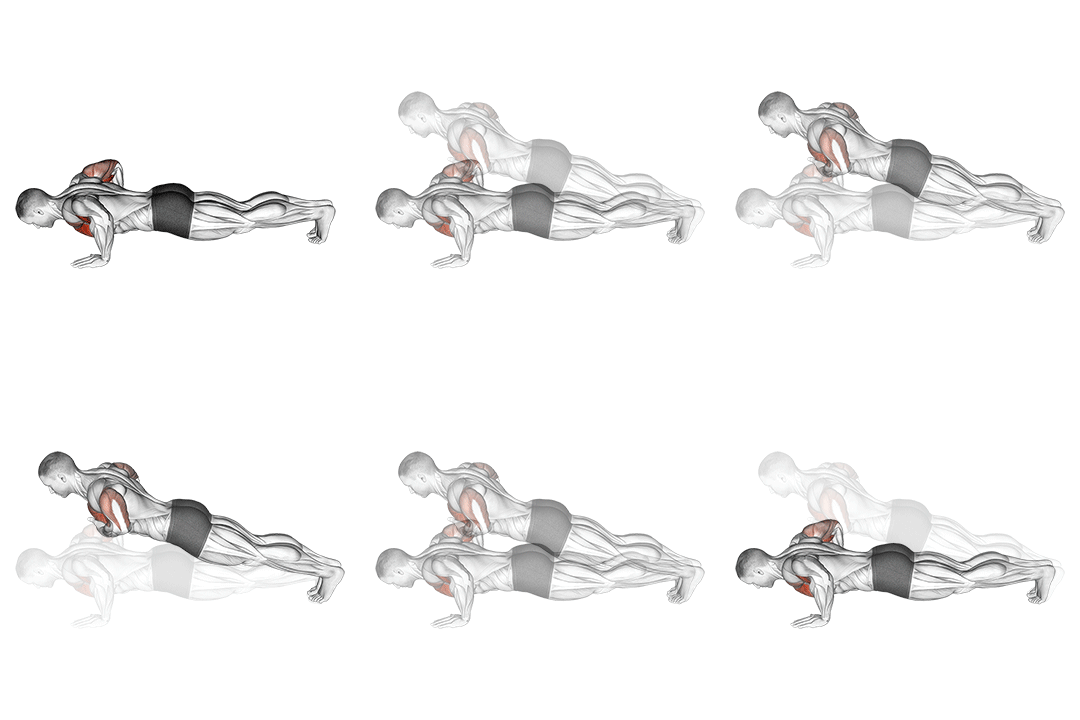
Chest Tap Push-up (male)
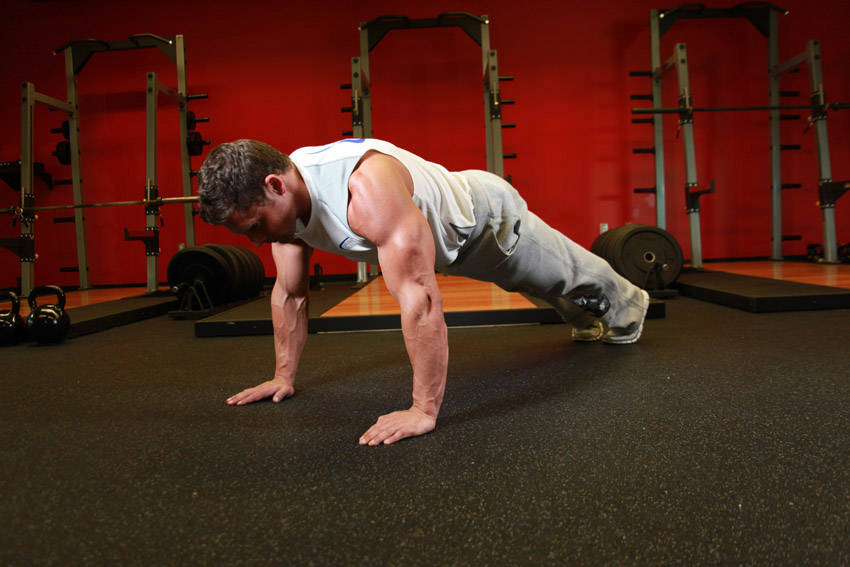
Pushups
Head-to-Head Comparison
| Attribute | Chest Tap Push-up (male) | Pushups |
|---|---|---|
| Target Muscle |
Pectorals
|
Pectorals
|
| Body Part |
Chest
|
Chest
|
| Equipment |
Body-weight
|
Body-weight
|
| Difficulty |
Advanced
|
Beginner
|
| Movement Type |
Compound
|
Compound
|
| Secondary Muscles |
2
|
2
|
Secondary Muscles Activated
Chest Tap Push-up (male)
Pushups
Visual Comparison
Overview
Chest Tap Push-up (male) vs Pushups is a head-to-head look at two bodyweight chest builders. If you want to know which movement gives more power, muscle growth, or is easier to learn, this guide has your back. You'll get clear technique cues (hand placement, elbow angle at ~45°), biomechanical explanations (force vectors, length-tension of the pecs), rep ranges for different goals, and practical progressions. I’ll compare primary and secondary muscle activation, equipment and accessibility, injury risk, and give a decisive recommendation based on your goal—strength, hypertrophy, or home-training simplicity.
Key Differences
- Difficulty levels differ: Chest Tap Push-up (male) is advanced, while Pushups is beginner.
- Both exercises target the Pectorals using Body-weight. The main differences are in their movement patterns and muscle activation angles.
Pros & Cons
Chest Tap Push-up (male)
+ Pros
- Develops explosive upper-body power and improves rate of force development (RFD)
- Increases core and scapular stabilizer demand due to flight and re-stabilization
- Transfers to sports that require horizontal pushing power and reactive strength
- Challenging progression options (clap, single-arm tap) for continued overload
− Cons
- Higher injury and wrist/shoulder impact risk if mechanics or strength are insufficient
- Requires good baseline strength and coordination—poor form amplifies risk
- Less time under tension per rep, so not optimal alone for hypertrophy-focused volume
Pushups
+ Pros
- Highly accessible and easy to regress or progress (knees, incline, weighted)
- Great for hypertrophy when done for 8–20 reps with controlled tempo and full range
- Lower impact and easier on wrists and shoulders when performed with correct alignment
- Can be performed anywhere with minimal space or equipment
− Cons
- Can plateau without added load or variation—limited progressive overload if only bodyweight
- Less stimulus for explosive power and RFD compared to plyometric variations
- Form breakdown (flared elbows, sagging hips) reduces effectiveness and increases injury risk
When Each Exercise Wins
Pushups win because they allow controlled eccentrics and sustained time under tension (1–3 s per rep), which is optimal for hypertrophy. You can easily manipulate volume, tempo, and add weight to drive progressive overload.
In a strict bodyweight comparison, chest taps better develop explosive strength and rate of force development; perform sets of 3–6 explosive reps to maximize nervous system adaptations. For maximal force, combine push-up strength programs with loaded presses.
Pushups are easier to regress (incline, knees) and teach proper shoulder and scapular mechanics before progressing. They let you build the eccentric control and baseline strength needed to attempt plyometric chest taps safely.
Pushups require minimal space and lower skill while delivering hypertrophy and endurance benefits with simple variations. When you need convenience and consistency, standard pushups fit more workout contexts.
Frequently Asked Questions
Can I do both Chest Tap Push-up (male) and Pushups in the same workout?
Yes. Pair pushups early in a session for volume and hypertrophy (3–4 sets of 8–15), then use chest taps at the end for 2–4 short sets of 3–6 explosive reps to train power without fatiguing landing mechanics.
Which exercise is better for beginners?
Pushups are better for beginners because you can regress them (incline or knee) and build eccentric control and scapular stability before attempting plyometrics. Mastering 10–20 strict pushups is a reasonable prerequisite for chest taps.
How do the muscle activation patterns differ?
Pushups prioritize sustained pectoral tension through slow eccentrics and concentric phases, maximizing TUT. Chest Tap Push-ups use a rapid concentric and quick eccentric braking that leverages the stretch-shortening cycle to spike RFD and recruit fast-twitch fibers.
Can Pushups replace Chest Tap Push-up (male)?
For hypertrophy and general strength, pushups can replace chest taps and are often preferable. If you need explosive horizontal pushing power or sport-specific transfer, chest taps add a unique stimulus that pushups alone don't provide.
Expert Verdict
Use pushups as your foundational chest builder: they’re scalable, lower risk, and superior for hypertrophy when you prioritize volume and controlled eccentrics (8–20 reps, 2–3 sets or more). Reserve Chest Tap Push-ups for athletes and advanced lifters who already have solid pushup strength (able to do 20 strict reps) and want to add power and RFD work—keep sets short (3–6 reps) and focus on soft landings and scapular control. If your goal is raw muscle growth or home convenience, choose pushups; if you need explosion, sport transfer, or nervous-system training, add chest taps as a supplementary, carefully progressed exercise.
Also Compare
More comparisons with Chest Tap Push-up (male)
Compare More Exercises
Use our free comparison tool to analyze any two exercises head-to-head.
Compare Exercises