

Chest Dip (on Dip-pull-up Cage) vs Pushups: Complete Comparison Guide
Chest Dip (on Dip-pull-up Cage) vs Pushups — you want to pick the right chest builder for your goals and situation. I’ll break down how each exercise loads the pectorals, which secondary muscles carry the work, and the biomechanics that drive muscle growth and strength. You’ll get clear technique cues (body angle, elbow position, range of motion), practical progressions and rep ranges (strength, hypertrophy, endurance), and a decisive recommendation for when to use each in your program.
Exercise Comparison
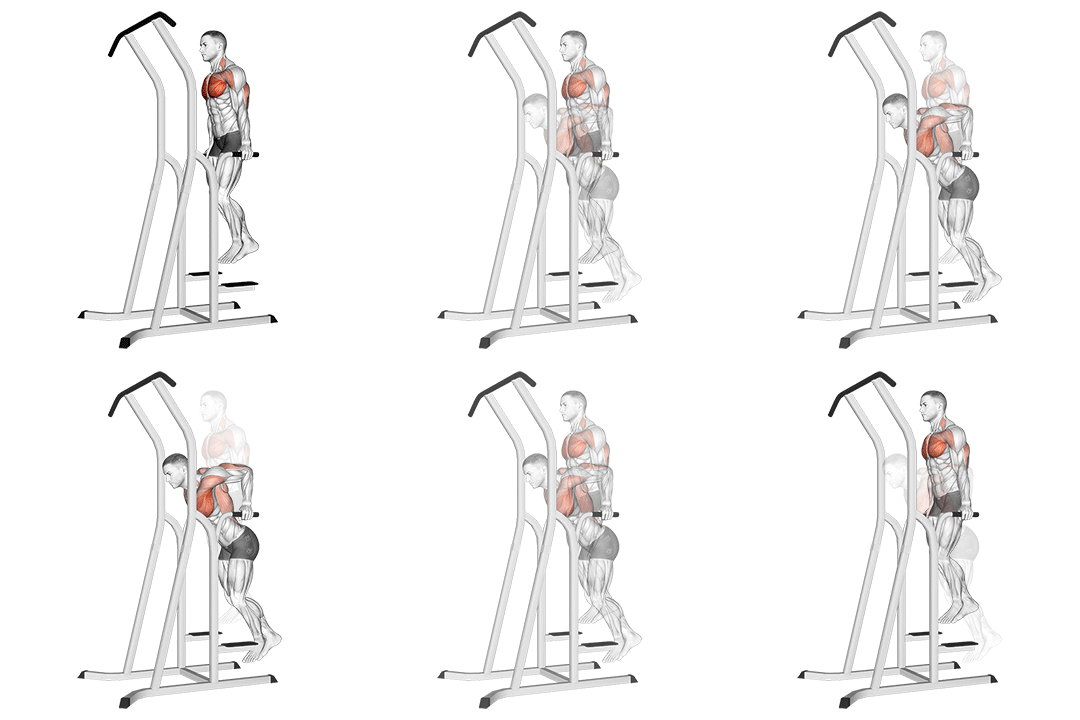
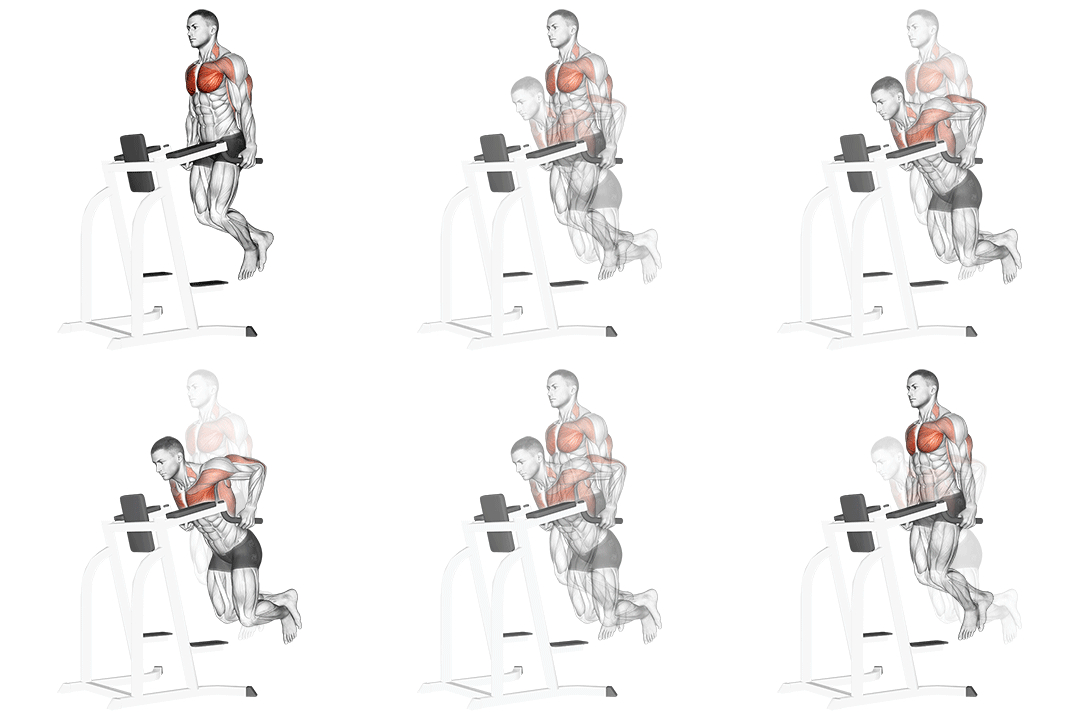
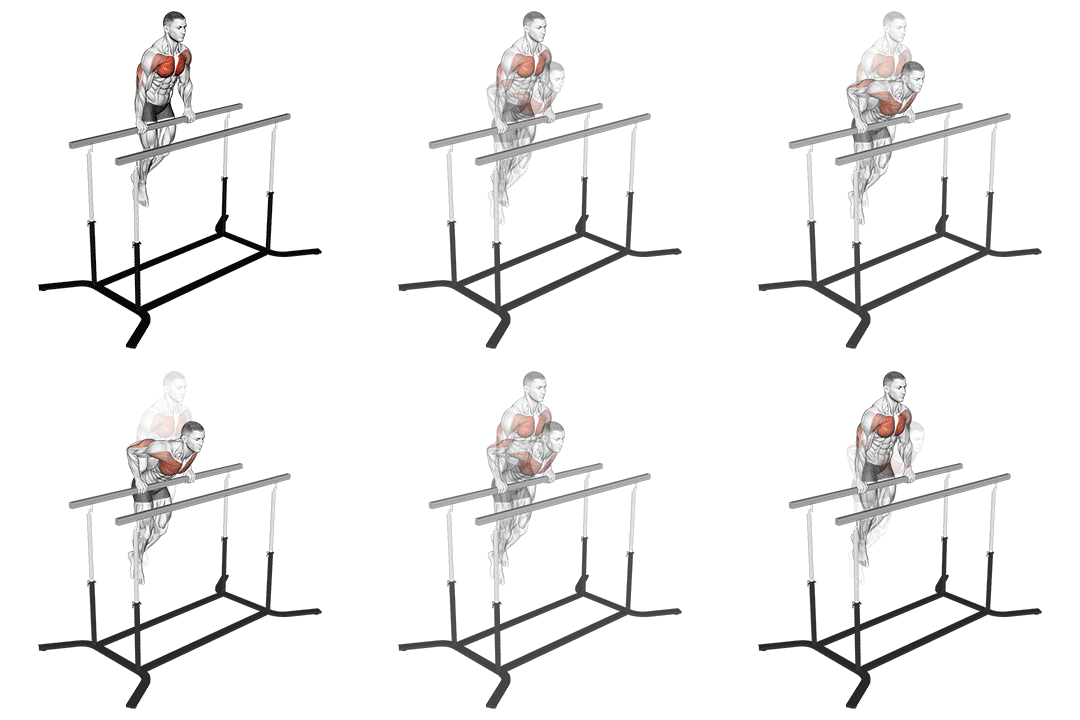
Chest Dip (on Dip-pull-up Cage)
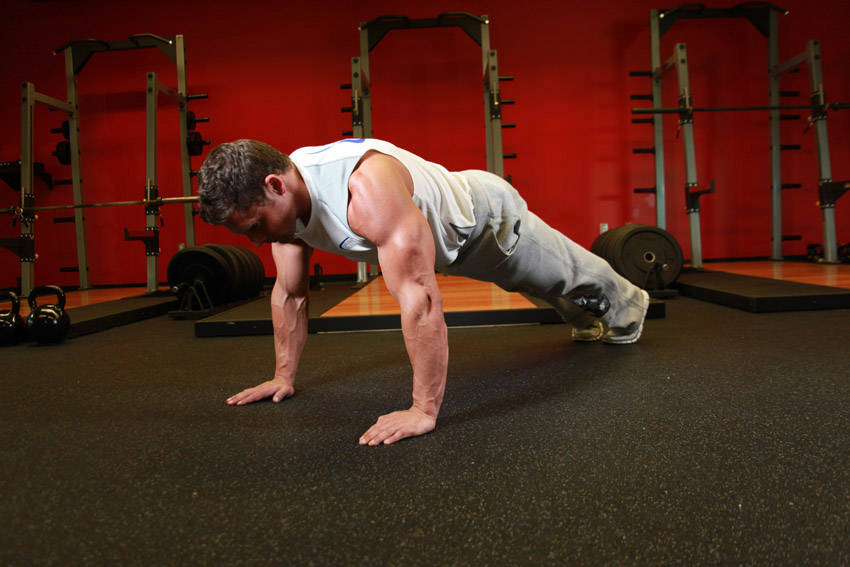
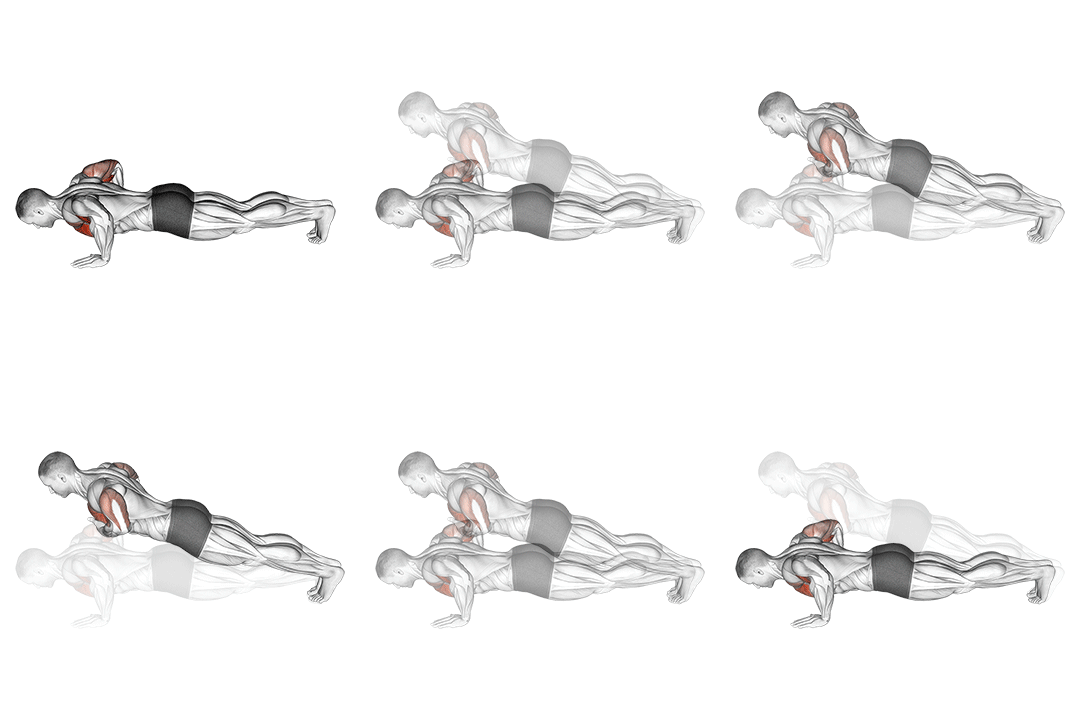
Pushups
Head-to-Head Comparison
| Attribute | Chest Dip (on Dip-pull-up Cage) | Pushups |
|---|---|---|
| Target Muscle |
Pectorals
|
Pectorals
|
| Body Part |
Chest
|
Chest
|
| Equipment |
Body-weight
|
Body-weight
|
| Difficulty |
Intermediate
|
Beginner
|
| Movement Type |
Compound
|
Compound
|
| Secondary Muscles |
2
|
2
|
Secondary Muscles Activated
Chest Dip (on Dip-pull-up Cage)
Pushups
Visual Comparison
Overview
Chest Dip (on Dip-pull-up Cage) vs Pushups — you want to pick the right chest builder for your goals and situation. I’ll break down how each exercise loads the pectorals, which secondary muscles carry the work, and the biomechanics that drive muscle growth and strength. You’ll get clear technique cues (body angle, elbow position, range of motion), practical progressions and rep ranges (strength, hypertrophy, endurance), and a decisive recommendation for when to use each in your program.
Key Differences
- Difficulty levels differ: Chest Dip (on Dip-pull-up Cage) is intermediate, while Pushups is beginner.
- Both exercises target the Pectorals using Body-weight. The main differences are in their movement patterns and muscle activation angles.
Pros & Cons
Chest Dip (on Dip-pull-up Cage)
+ Pros
- Greater pectoral stretch and mechanical tension at the bottom position
- Easier to add progressive overload with weight belts or chains
- Stronger emphasis on lower sternal pec fibers and triceps strength
- Efficient compound lift for building pressing strength and mass
− Cons
- Requires a dip station or cage with sufficient clearance
- Higher shoulder stress—can aggravate instability or impingement
- Harder to scale for true beginners without regressions
Pushups
+ Pros
- Requires no equipment and is extremely accessible
- Easy to regress or progress (knees, incline, decline, weighted)
- Lower shoulder strain when performed with good scapular control
- Great for conditioning, endurance, and core integration
− Cons
- Limited maximal overload without added weight or advanced variations
- Less stretch at bottom compared to dips, potentially reducing peak tension
- Body proportions can change leverage—taller lifters may find less chest stimulus
When Each Exercise Wins
Dips place the pecs in a longer stretched position and allow straightforward progressive overload with added weight, making them superior for increasing mechanical tension and muscle growth when you can control shoulder mechanics.
Because you can load dips with plates or a belt and maintain a deep ROM, dips provide a clearer pathway to increase maximal pressing force and overload the pectorals and triceps for strength.
Pushups are simpler to learn, easy to regress (knees or incline), and teach core and scapular stability with lower shoulder risk, making them the safer entry point for most novices.
No equipment, scalable intensity, and many variations let you target the chest effectively from home; you can use incline/decline or bands to increase difficulty without a dip station.
Frequently Asked Questions
Can I do both Chest Dip (on Dip-pull-up Cage) and Pushups in the same workout?
Yes. Use pushups as a warm-up or volume set to prime the chest and shoulders, then perform weighted or full-range dips as the primary strength/hypertrophy exercise. Keep total pressing volume manageable—example: 3–4 working sets of dips and 2–3 sets of pushup variations for accessory volume.
Which exercise is better for beginners?
Pushups are better for most beginners because you can regress them (knees, incline) and develop scapular control and core stability. Dips usually require more baseline strength and shoulder mobility, so save them until you can perform controlled full-range pushups.
How do the muscle activation patterns differ?
Pushups emphasize horizontal adduction with stable shoulder positions and shorter pec lengths at the bottom, while dips create greater shoulder extension and a larger pectoral stretch. That longer muscle length in dips increases tension via the length–tension relationship, shifting more mechanical load onto the lower sternal fibers and increasing triceps torque.
Can Pushups replace Chest Dip (on Dip-pull-up Cage)?
Pushups can substitute for dips for strength endurance and general chest development, but they don’t fully replace dips for maximal overload and the deep-stretch stimulus. If your goal is heavy progressive overload and maximal hypertrophy of the lower pecs, prioritize dips when you have the equipment and shoulder capacity.
Expert Verdict
Use pushups if you need an accessible, low-risk way to build chest strength, core stability and endurance—especially as a beginner or for home workouts. Choose chest dips when you can maintain shoulder mobility and want to maximize mechanical tension and progressive overload for hypertrophy or heavy pressing strength. Programmatically, include both: start with pushup progressions to build control, then add weighted dips or deeper bodyweight dips for focused chest overload. Aim for 6–12 reps for hypertrophy, 3–5 reps for strength with added load, and 12–20 reps for endurance work.
Also Compare
More comparisons with Chest Dip (on Dip-pull-up Cage)
Compare More Exercises
Use our free comparison tool to analyze any two exercises head-to-head.
Compare Exercises