

Arm Circles vs Rear Deltoid Stretch: Complete Comparison Guide
Arm Circles vs Rear Deltoid Stretch. Which one should you use for shoulder health, activation, or mobility? I'll walk you through biomechanics, muscle activation, equipment needs, difficulty, and practical use cases so you can pick the right move for your goals. Arm Circles deliver dynamic, cyclic deltoid activation across anterior, lateral, and posterior fibers depending on direction and circle size. Rear Deltoid Stretch places the posterior deltoid on a lengthened, low-force hold and recruits scapular retractors like the trapezius and rhomboids. Read on for technique cues, angles, rep ranges, and clear recommendations.
Exercise Comparison
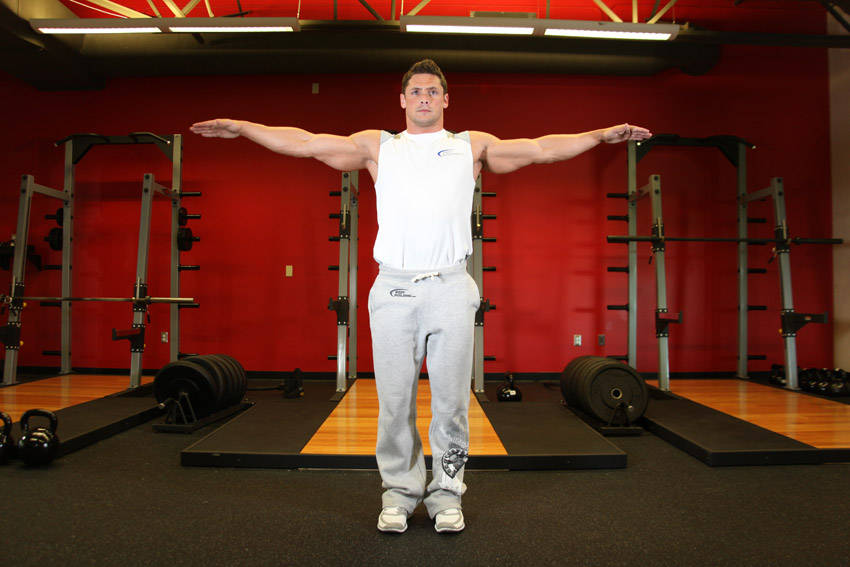
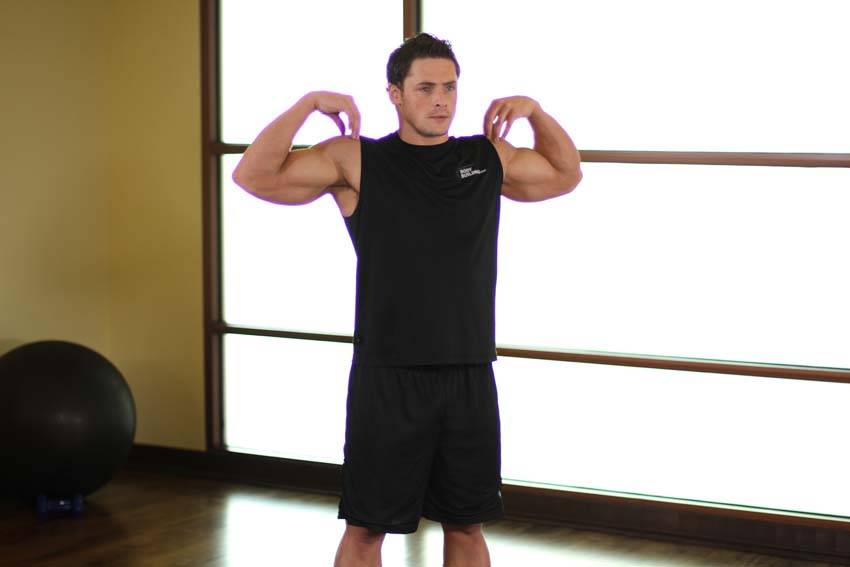
Arm Circles
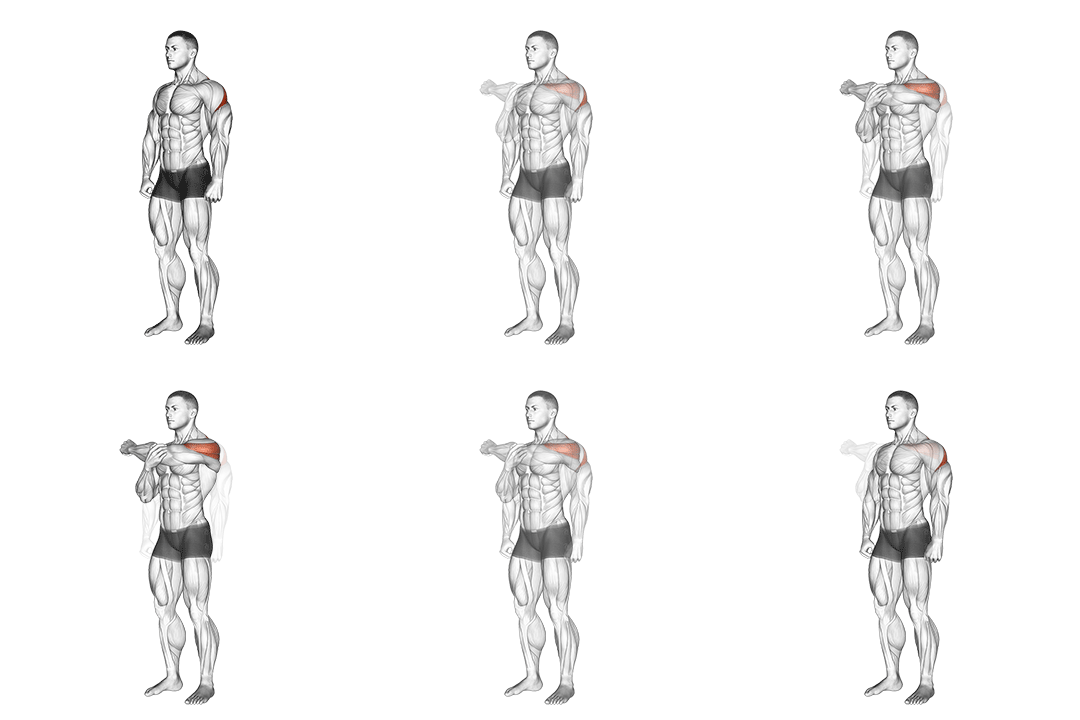
Rear Deltoid Stretch
Head-to-Head Comparison
| Attribute | Arm Circles | Rear Deltoid Stretch |
|---|---|---|
| Target Muscle |
Delts
|
Delts
|
| Body Part |
Shoulders
|
Shoulders
|
| Equipment |
Body-weight
|
Body-weight
|
| Difficulty |
Beginner
|
Beginner
|
| Movement Type |
Isolation
|
Isolation
|
| Secondary Muscles |
1
|
2
|
Secondary Muscles Activated
Arm Circles
Rear Deltoid Stretch
Visual Comparison
Overview
Arm Circles vs Rear Deltoid Stretch. Which one should you use for shoulder health, activation, or mobility? I'll walk you through biomechanics, muscle activation, equipment needs, difficulty, and practical use cases so you can pick the right move for your goals. Arm Circles deliver dynamic, cyclic deltoid activation across anterior, lateral, and posterior fibers depending on direction and circle size. Rear Deltoid Stretch places the posterior deltoid on a lengthened, low-force hold and recruits scapular retractors like the trapezius and rhomboids. Read on for technique cues, angles, rep ranges, and clear recommendations.
Key Differences
- Both exercises target the Delts using Body-weight. The main differences are in their movement patterns and muscle activation angles.
Pros & Cons
Arm Circles
+ Pros
- Dynamic warm-up: raises tissue temperature and neural drive quickly
- Scalable: change speed, circle size, or add light weights for progressive loading
- Improves shoulder rhythm and coordination across multiple deltoid heads
- Requires zero equipment and can be done anywhere
− Cons
- Limited maximal load for true hypertrophy or heavy strength work
- Poor form or excessive range can lead to subacromial irritation
- May reinforce anterior-dominant patterns if you only do forward circles
Rear Deltoid Stretch
+ Pros
- Directly targets posterior deltoid length and mobility
- Improves scapular retraction and posture when performed correctly
- Low-force option for recovery days or prehabilitation
- Requires no equipment and is easy to combine with soft-tissue work
− Cons
- Minimal concentric loading — limited for strength or hypertrophy
- Requires good scapular control to be effective
- Progression options are limited compared to dynamic loading
When Each Exercise Wins
Arm Circles win because you can add progressive overload (wrist weights, small dumbbells, longer sets) and manipulate time under tension. For hypertrophy aim for 3–4 sets of 30–60 seconds or 12–20 controlled reps with small added load to stimulate muscle growth.
Arm Circles are better for practical strength transfer because they allow concentric-eccentric work and can be loaded or paired with compound pressing for progressive resistance. For actual strength improvements you should still prioritize external-loaded exercises, but arm circles can complement those efforts by improving shoulder endurance and control.
For absolute beginners the Rear Deltoid Stretch is easier to control and teaches scapular retraction and posterior shoulder awareness without dynamic coordinates. Hold 20–30 seconds, 2–4 times to build mobility and teach stable positioning before adding dynamic drills.
Arm Circles are ideal at home: no partner or props needed and they serve as warm-up, metabolic conditioning, or light resistance when weighted. They fit into circuits and require only a small footprint.
Frequently Asked Questions
Can I do both Arm Circles and Rear Deltoid Stretch in the same workout?
Yes. Start with Arm Circles as a dynamic warm-up (30–60 seconds per set) to increase blood flow and muscle activation, then use the Rear Deltoid Stretch post-workout or between sets to relieve tension and reinforce scapular control. Pairing them balances activation and mobility for healthier shoulders.
Which exercise is better for beginners?
For beginners who need to learn shoulder position and mobility, the Rear Deltoid Stretch is slightly better because it teaches scapular retraction and posterior awareness with low force. Add simple Arm Circles afterward to build dynamic control once basic mobility is present.
How do the muscle activation patterns differ?
Arm Circles create repeated concentric-eccentric contractions across the deltoid with phasic force vectors; activation varies by circle direction and size. The Rear Deltoid Stretch is primarily an isometric or lengthened hold that shifts load to scapular retractors and places the posterior deltoid at greater muscle length with low active force.
Can Rear Deltoid Stretch replace Arm Circles?
Not completely. The Rear Deltoid Stretch improves posterior mobility and posture but does little for concentric muscle work or dynamic conditioning. Use the stretch for mobility and recovery, and keep Arm Circles for warm-ups, activation, and light progressive loading.
Expert Verdict
Use Arm Circles when you want dynamic activation, warm-up utility, or a simple way to add low-level progressive load to the deltoids. They improve neuromuscular coordination, can be scaled by speed and small weights, and are the go-to for preparing the shoulder for heavier work. Use the Rear Deltoid Stretch when you need posterior shoulder length, improved scapular retraction, or recovery-focused mobility; hold the stretch 20–40 seconds and pair it with activation drills to restore balanced posture. If your goal is muscle growth or strength, prioritize loaded rotational and pressing work and use arm circles as an accessory; for mobility and pain reduction, prioritize the rear deltoid stretch.
Also Compare
More comparisons with Arm Circles
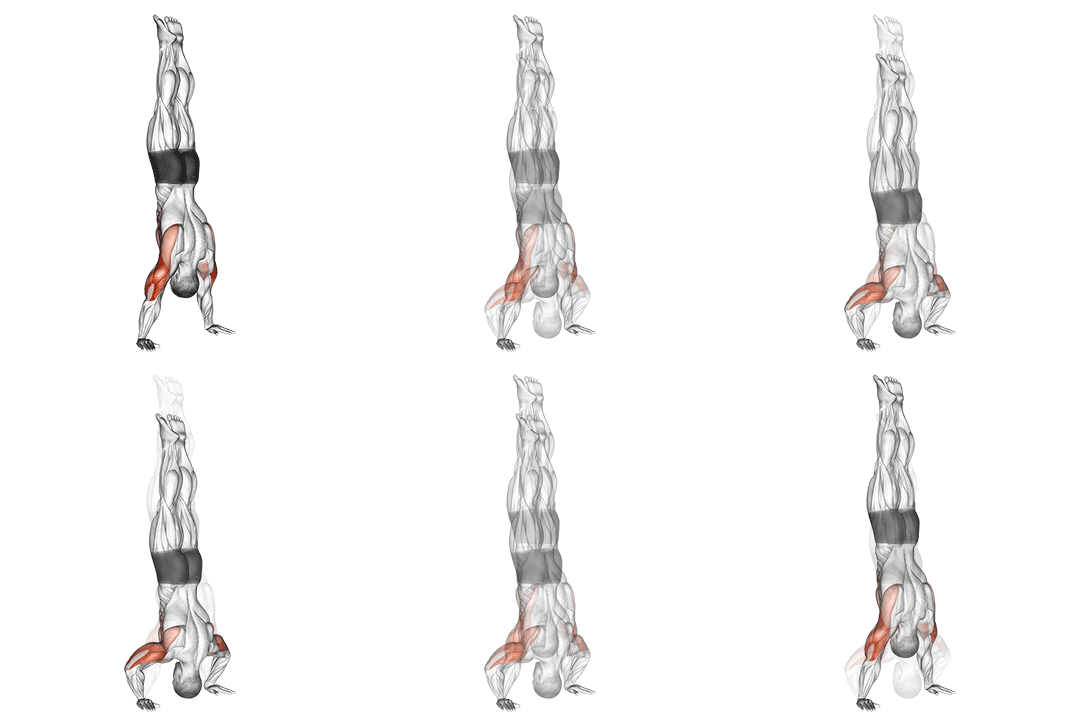
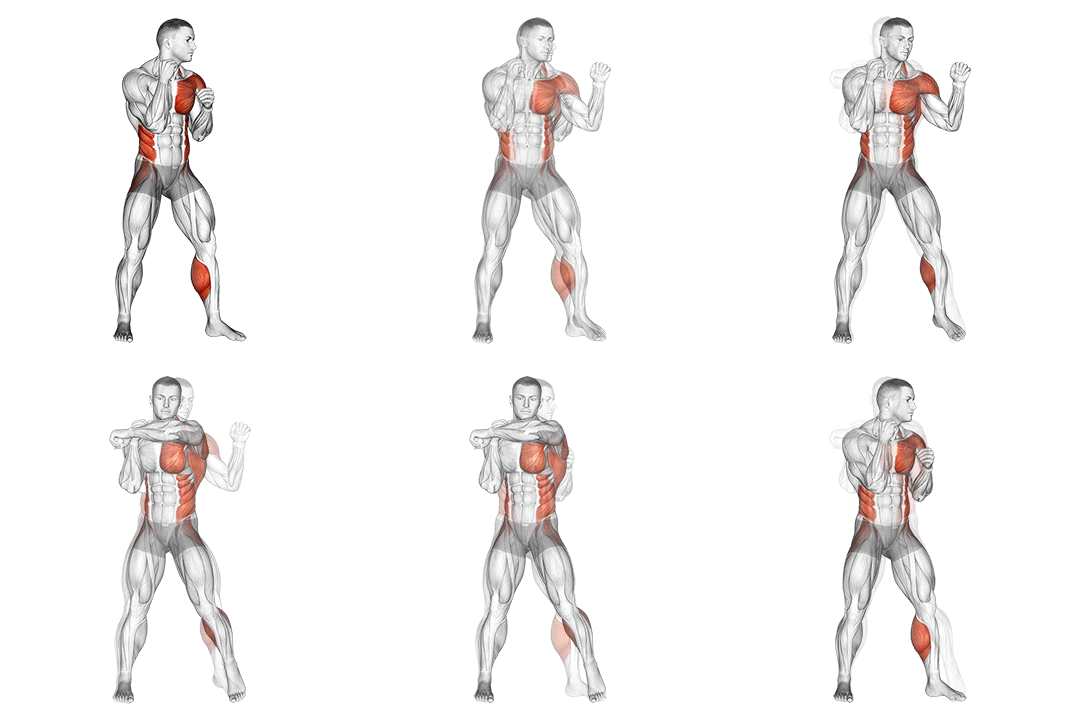
Compare More Exercises
Use our free comparison tool to analyze any two exercises head-to-head.
Compare Exercises