

Arm Circles vs Elbow Circles: Complete Comparison Guide
Arm Circles vs Elbow Circles — two bodyweight shoulder isolation moves that look similar but load your delts and traps differently. This guide helps you pick which to use for warm-ups, conditioning, or low-load shoulder work. You’ll get clear technique cues, a biomechanics breakdown (force vectors, length-tension, joint angles), rep and set recommendations, and decisive recommendations for hypertrophy, strength, beginners, and home training. Read on and you’ll know which drill to keep in your routine and how to progress it safely.
Exercise Comparison
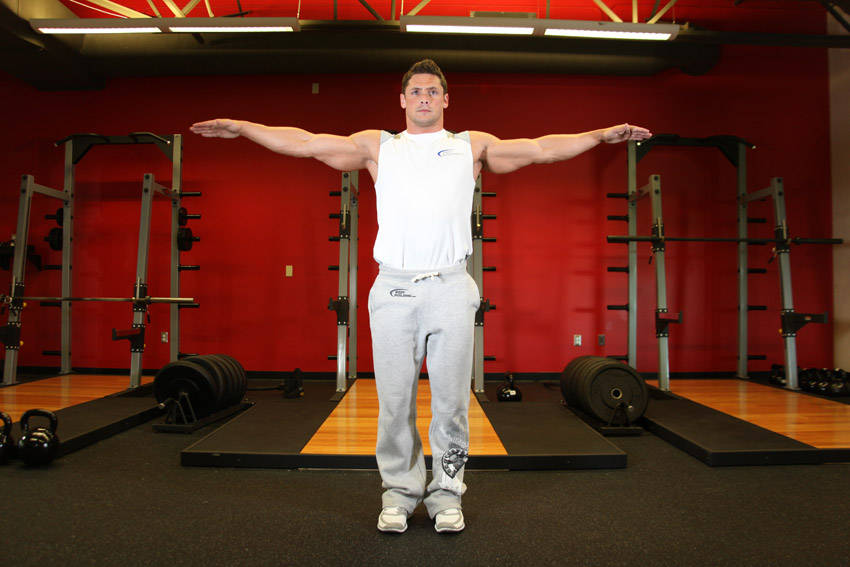
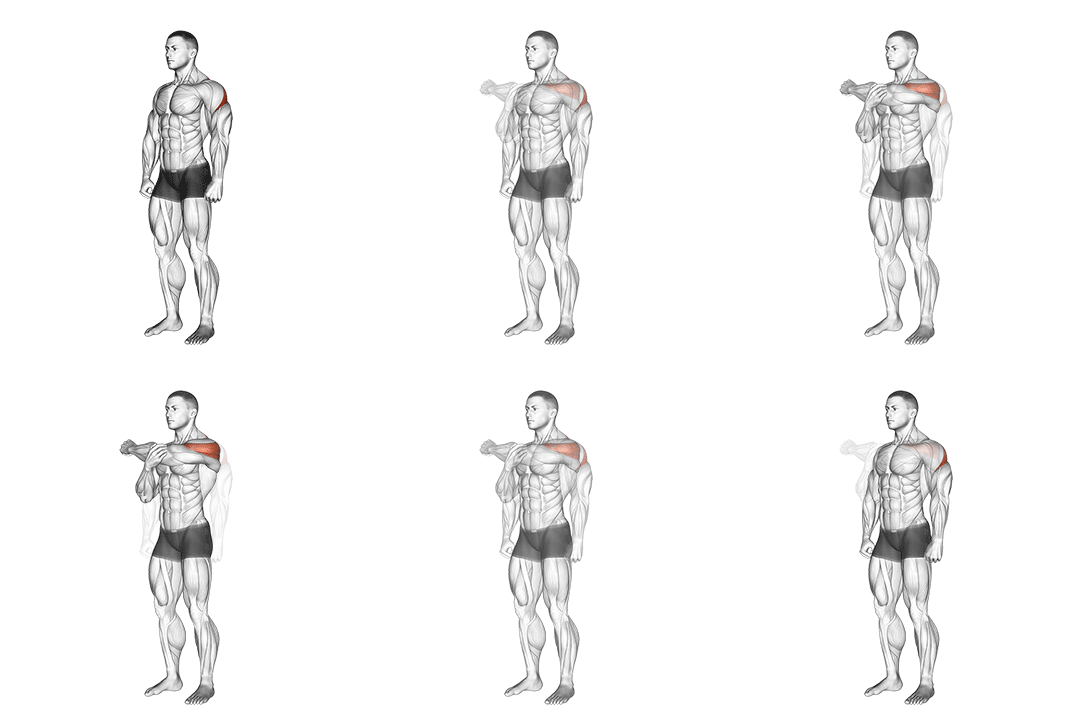
Arm Circles
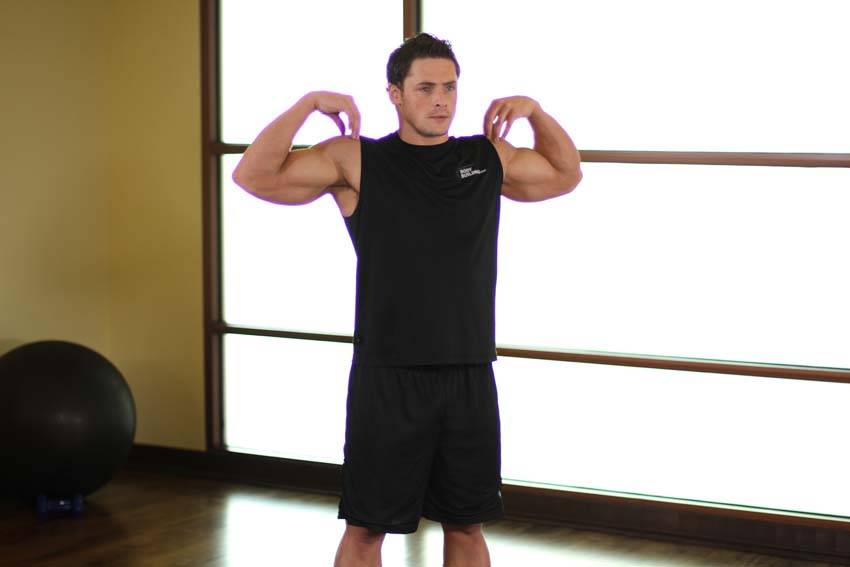
Elbow Circles
Head-to-Head Comparison
| Attribute | Arm Circles | Elbow Circles |
|---|---|---|
| Target Muscle |
Delts
|
Delts
|
| Body Part |
Shoulders
|
Shoulders
|
| Equipment |
Body-weight
|
Body-weight
|
| Difficulty |
Beginner
|
Beginner
|
| Movement Type |
Isolation
|
Isolation
|
| Secondary Muscles |
1
|
1
|
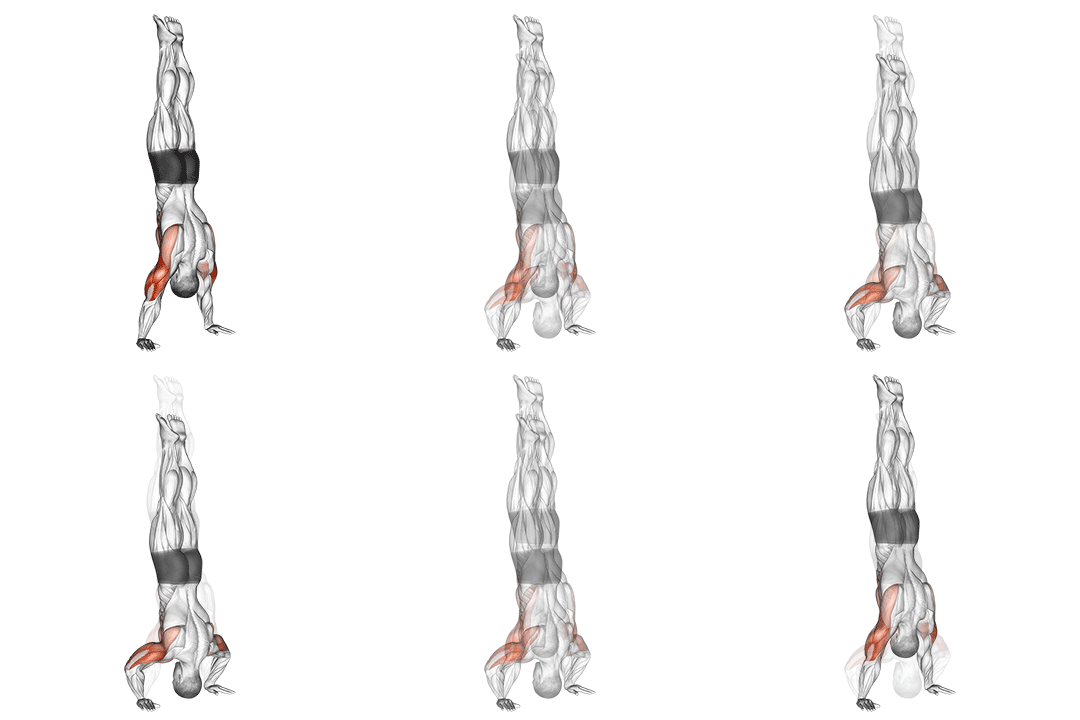
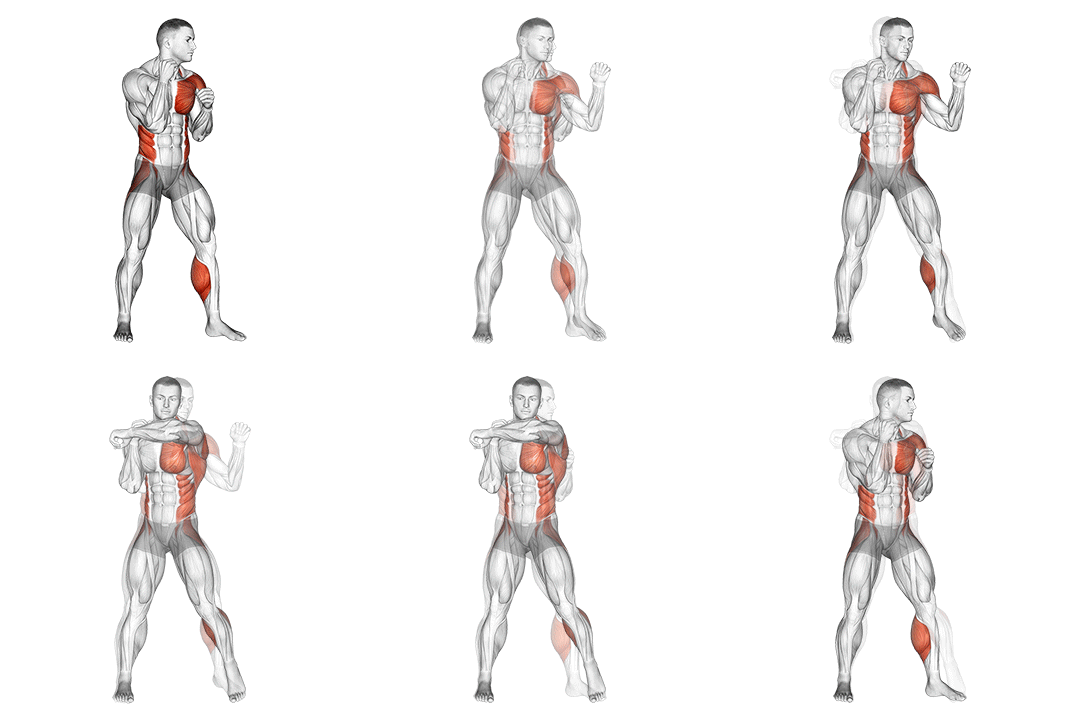
Secondary Muscles Activated
Arm Circles
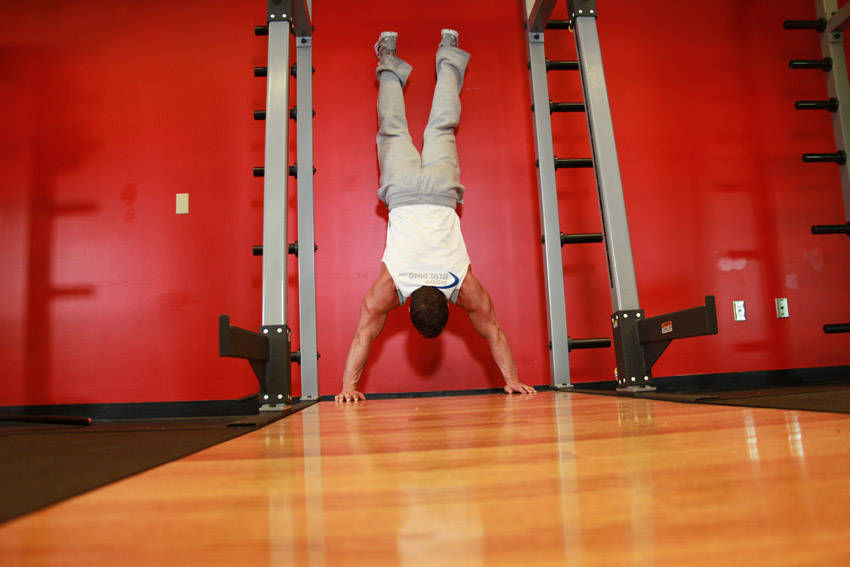
Elbow Circles
Visual Comparison
Overview
Arm Circles vs Elbow Circles — two bodyweight shoulder isolation moves that look similar but load your delts and traps differently. This guide helps you pick which to use for warm-ups, conditioning, or low-load shoulder work. You’ll get clear technique cues, a biomechanics breakdown (force vectors, length-tension, joint angles), rep and set recommendations, and decisive recommendations for hypertrophy, strength, beginners, and home training. Read on and you’ll know which drill to keep in your routine and how to progress it safely.
Key Differences
- Both exercises target the Delts using Body-weight. The main differences are in their movement patterns and muscle activation angles.
Pros & Cons
Arm Circles
+ Pros
- Large ROM engages middle deltoid and improves shoulder mobility
- Easy to scale by adding small dumbbells or increasing radius
- Great as a dynamic warm-up to boost scapular upward rotation
- Simple visual cues make symmetry and tempo easy to monitor
− Cons
- Limited mechanical overload compared to loaded presses
- Can aggravate anterior shoulder if performed with poor scapular control
- Less specific for rotator cuff endurance and fine scapular stability
Elbow Circles
+ Pros
- Highlights scapular and rotator-cuff stabilization demands
- Low-space, low-impact option useful for rehab-style work
- Smaller radius reduces gross momentum, allowing precise tempo work
- Useful for improving proprioception around the elbow-shoulder complex
− Cons
- Harder to progressively overload with external weight
- Smaller perceived delt tension per rep—less stimulus for hypertrophy
- Requires better motor control; poor form can stress the cuff or neck
When Each Exercise Wins
Arm Circles produce a larger humeral arc and more continuous tension on the middle deltoid, and they’re easier to overload (add 1–5 kg or increase radius). Use 3–4 sets of 12–30 slow reps or 30–60s rounds to increase time under tension.
Strength gains require progressive external load and favorable torque angles; Arm Circles scale more readily with small dumbbells and larger moment arms, making them a better low-load bridge to presses and loaded abductions.
Arm Circles have an easier learning curve and clearer visual feedback. Start with 10–20 slow reps per direction to build range and motor patterns before adding complexity.
Both require no equipment, but Arm Circles offer more utility: warm-up, conditioning, and easy progression with household weights or water bottles, making them the more versatile home choice.
Frequently Asked Questions
Can I do both Arm Circles and Elbow Circles in the same workout?
Yes. Layer them: use Arm Circles as the dynamic warm-up (1–2 minutes) to prime delts and scapula, then add 2–3 sets of Elbow Circles to challenge scapular control and rotator cuff endurance. Keep total volume moderate to avoid shoulder fatigue.
Which exercise is better for beginners?
Arm Circles are better for most beginners because the movement is easier to learn and visualize. Start with slow, controlled 10–20 reps per direction and focus on scapular movement and posture.
How do the muscle activation patterns differ?
Arm Circles produce steady tension across the deltoid with peak activation near 60–90° of elevation due to optimal length-tension and lever arm. Elbow Circles create smaller bursts of deltoid activity but raise stabilizer (traps, rotator cuff) engagement because the shoulder resists rotational torque.
Can Elbow Circles replace Arm Circles?
Not fully. Elbow Circles are useful for stability and rehab goals but provide less sustained deltoid tension and fewer easy overload options. If your aim is hypertrophy or progressive strength, keep Arm Circles as the primary choice and use Elbow Circles as a supplemental drill.
Expert Verdict
Use Arm Circles when you want a simple, scalable drill that loads the middle deltoid, improves mobility, and can be progressed toward hypertrophy or low-load strength work. They’re the go-to for warm-ups and home sessions (3–4 sets of 30–60 seconds or 12–30 reps). Keep Elbow Circles in your toolbox when you need targeted scapular and rotator-cuff stabilization, or when space and momentum must be minimized; perform them for 2–4 sets of 20–40 small controlled repetitions. Choose Arm Circles for general development, and add Elbow Circles selectively for stability and rehab.
Also Compare
More comparisons with Arm Circles
Compare More Exercises
Use our free comparison tool to analyze any two exercises head-to-head.
Compare Exercises