

Assisted Lying Calves Stretch vs Calf Raises - With Bands: Complete Comparison Guide
Assisted Lying Calves Stretch vs Calf Raises - With Bands is a practical head-to-head for anyone working on lower-leg strength, mobility, or rehab. You’ll get clear guidance on muscle targets, biomechanics, and which drill to choose for hypertrophy, strength, mobility, or home training. I’ll cover muscle activation, exact technique cues (ankle angles, foot placement, band tension), progression options, and injury considerations so you can pick the move that matches your goal and training history.
Exercise Comparison
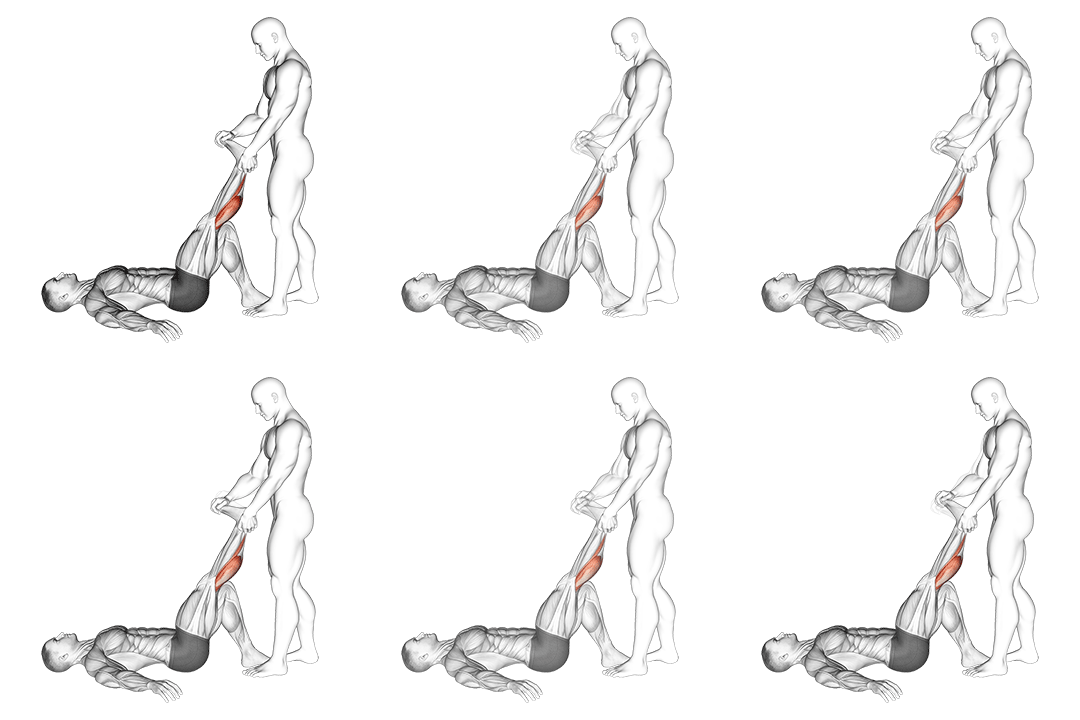
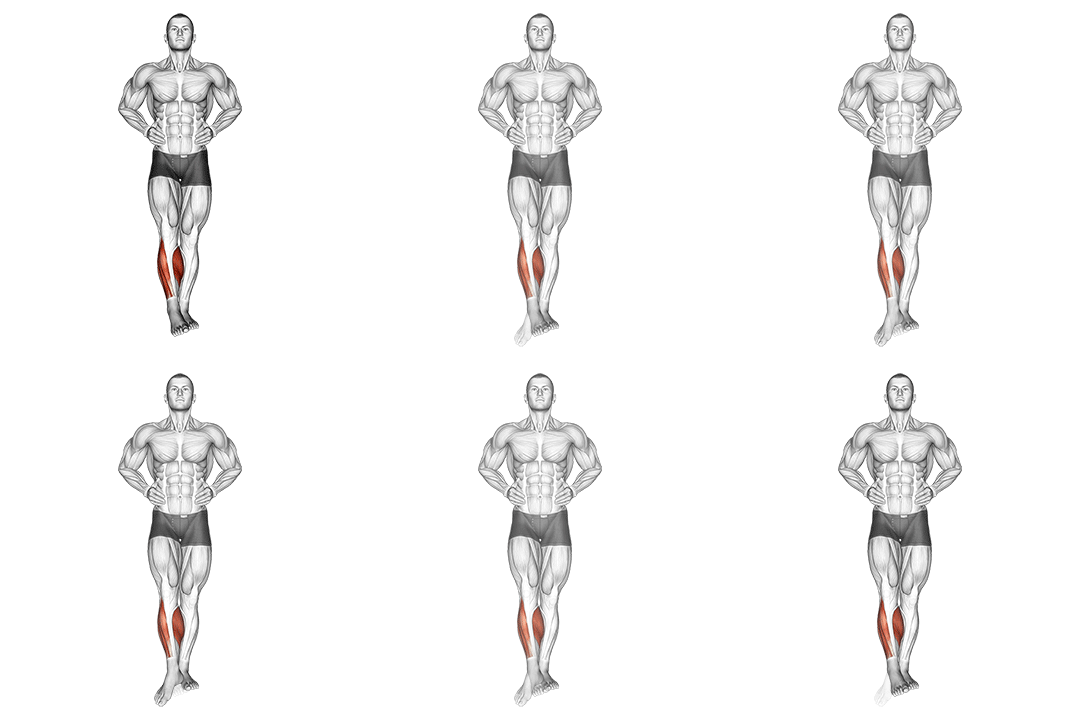
Assisted Lying Calves Stretch
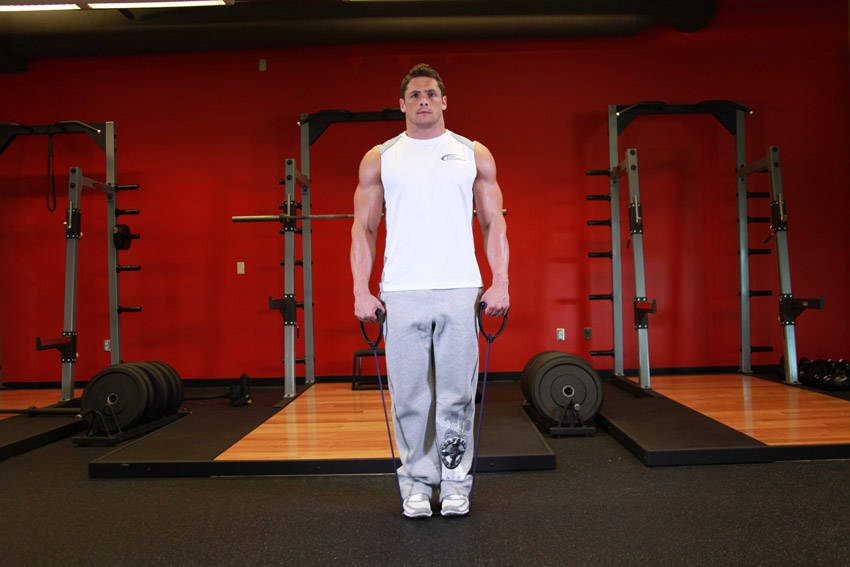
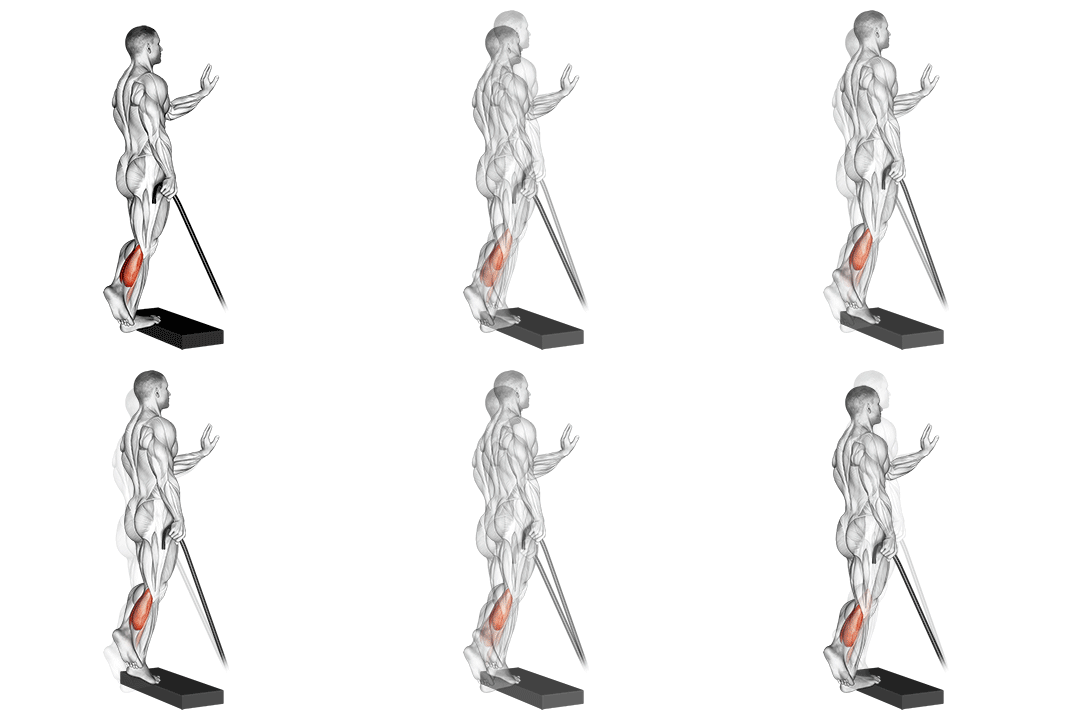
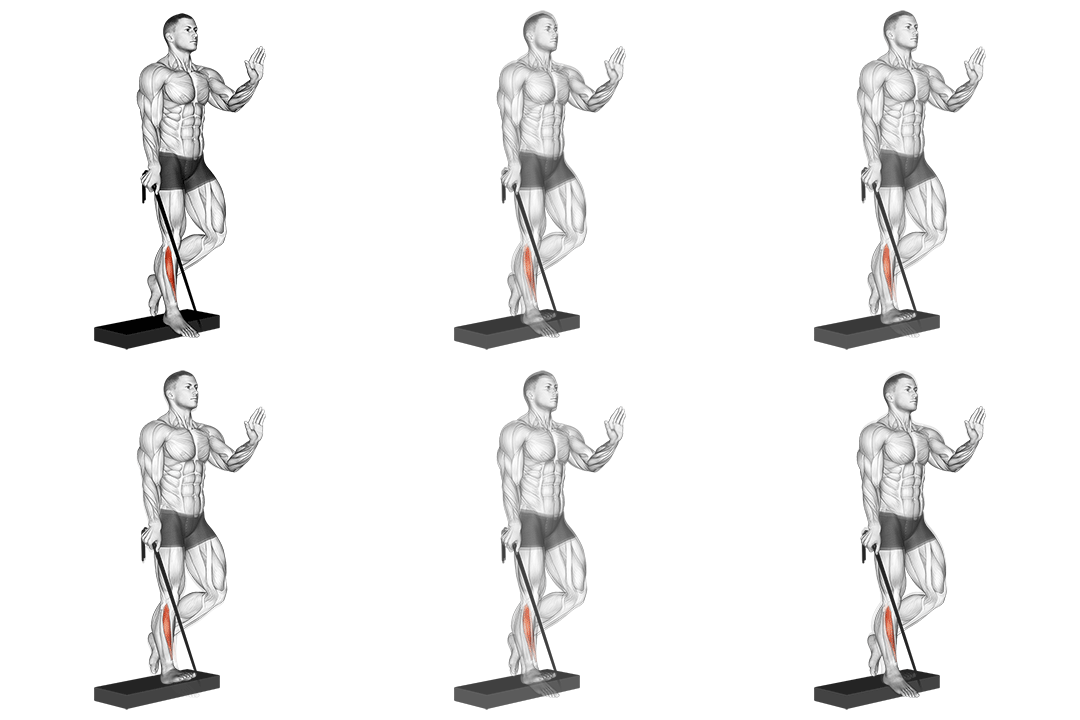
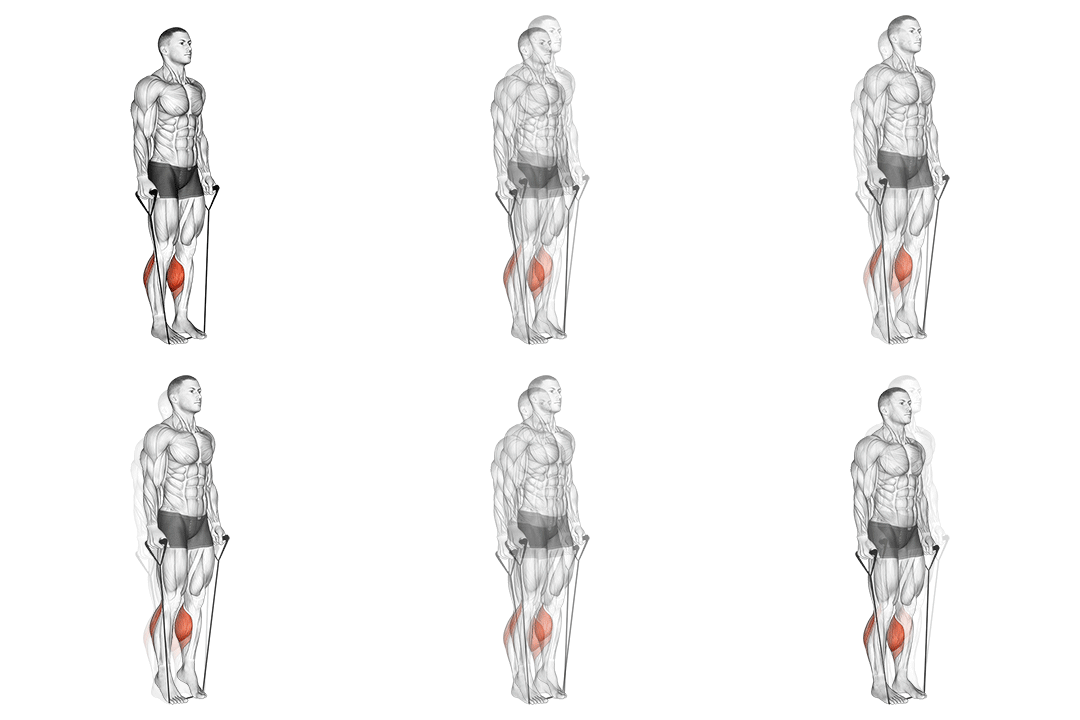
Calf Raises - With Bands
Head-to-Head Comparison
| Attribute | Assisted Lying Calves Stretch | Calf Raises - With Bands |
|---|---|---|
| Target Muscle |
Calves
|
Calves
|
| Body Part |
Lower-legs
|
Lower-legs
|
| Equipment |
Band
|
Band
|
| Difficulty |
Beginner
|
Beginner
|
| Movement Type |
Isolation
|
Isolation
|
| Secondary Muscles |
1
|
0
|
Secondary Muscles Activated
Assisted Lying Calves Stretch
Calf Raises - With Bands
Visual Comparison
Overview
Assisted Lying Calves Stretch vs Calf Raises - With Bands is a practical head-to-head for anyone working on lower-leg strength, mobility, or rehab. You’ll get clear guidance on muscle targets, biomechanics, and which drill to choose for hypertrophy, strength, mobility, or home training. I’ll cover muscle activation, exact technique cues (ankle angles, foot placement, band tension), progression options, and injury considerations so you can pick the move that matches your goal and training history.
Key Differences
- Both exercises target the Calves using Band. The main differences are in their movement patterns and muscle activation angles.
Pros & Cons
Assisted Lying Calves Stretch
+ Pros
- Places calf in a lengthened position to improve ankle dorsiflexion and mobility
- Low balance demand; easy for beginners or rehabbing athletes
- Good for pain-free passive tension and slow active contractions (30–90s holds)
- Minimal equipment and setup—one band and a flat surface
− Cons
- Limited progressive overload for maximal strength or hypertrophy
- Can overstretch the Achilles if performed aggressively
- Less activation of stabilizer muscles and functional balance compared to standing work
Calf Raises - With Bands
+ Pros
- Easily progressive by increasing band resistance or using single-leg variations
- Higher active force production for muscle growth and strength (8–20 rep ranges)
- Trains functional balance and ankle stabilizers
- Simple to program into sets/rep schemes and tempo work
− Cons
- Requires good balance and hip/core stability for single-leg or heavy sets
- Higher mechanical load raises tendon stress and potential soreness
- Harder to load extremely high without multiple bands or anchors
When Each Exercise Wins
Calf raises let you increase active load and time under tension (3–5 sets of 8–15 reps, slow eccentrics) which drives more motor unit recruitment and muscle growth compared with a passive stretch.
Standing banded raises allow progressive overload and single-leg loading to increase maximal plantarflexion torque; heavier bands and low reps (<8–12) target force development better than a static stretch.
The lying stretch reduces balance demands and teaches ankle control while safely loading the calf in a lengthened position, making it ideal for those new to calf work or in early rehab.
Banded calf raises require minimal space, scale easily by swapping bands, and fit into squat or deadlift circuits—making them the most practical at home.
Frequently Asked Questions
Can I do both Assisted Lying Calves Stretch and Calf Raises - With Bands in the same workout?
Yes. Start with assisted stretches as a warm-up or to increase dorsiflexion, then follow with banded calf raises for loading. Use the stretch for 1–2 minutes per side and 3–5 sets of raises to avoid overloading the tendon in one session.
Which exercise is better for beginners?
Assisted Lying Calves Stretch is better for absolute beginners because it minimizes balance demands and teaches ankle range control. Once you master pain-free mobility, progress to banded raises for strength and hypertrophy.
How do the muscle activation patterns differ?
The stretch biases passive tension at longer muscle lengths and engages slow, sustained activation, while banded calf raises produce higher active, concentric-driven activation during mid-to-end plantarflexion. Knee angle changes also shift load between gastrocnemius and soleus via length-tension mechanics.
Can Calf Raises - With Bands replace Assisted Lying Calves Stretch?
Not entirely. Banded raises replace loading needs for strength and hypertrophy, but they don’t replicate the long-length passive tension and mobility benefits of an assisted stretch. Use both when you need mobility plus load.
Expert Verdict
Use Assisted Lying Calves Stretch when your priority is ankle mobility, improving calf tolerance at long muscle lengths, or early-stage rehab—perform 2–4 sets of 30–90 second holds and small active contractions. Choose Calf Raises - With Bands when you want progressive overload, muscle growth, or strength: aim for 3–5 sets of 8–20 reps, control the eccentric for 2–4 seconds, and progress band tension or switch to single-leg variants. Both can complement each other: stretch for mobility and recovery, banded raises for load and adaptation.
Also Compare
More comparisons with Assisted Lying Calves Stretch
More comparisons with Calf Raises - With Bands
Compare More Exercises
Use our free comparison tool to analyze any two exercises head-to-head.
Compare Exercises