

Assisted Lying Gluteus And Piriformis Stretch vs Band Bent-over Hip Extension: Complete Comparison G
Assisted Lying Gluteus And Piriformis Stretch vs Band Bent-over Hip Extension — you’re comparing a mobility-focused, passive isolation stretch to a resisted hip-extension exercise that targets the same region. In this guide you’ll learn how each movement hits the glutes and hamstrings, which one offers progressive overload, equipment needs, injury risk, and when to use each in your routine. Read on for technique cues, biomechanics (length-tension, force vectors, hip angles) and clear recommendations for reps, holds, and programming.
Exercise Comparison
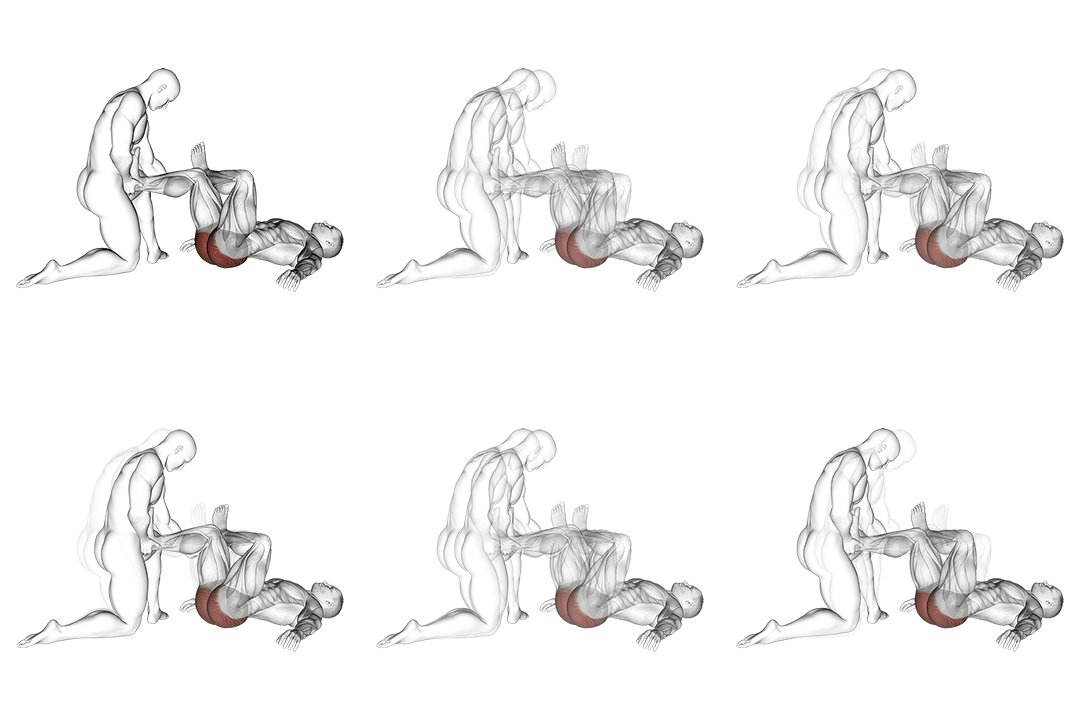
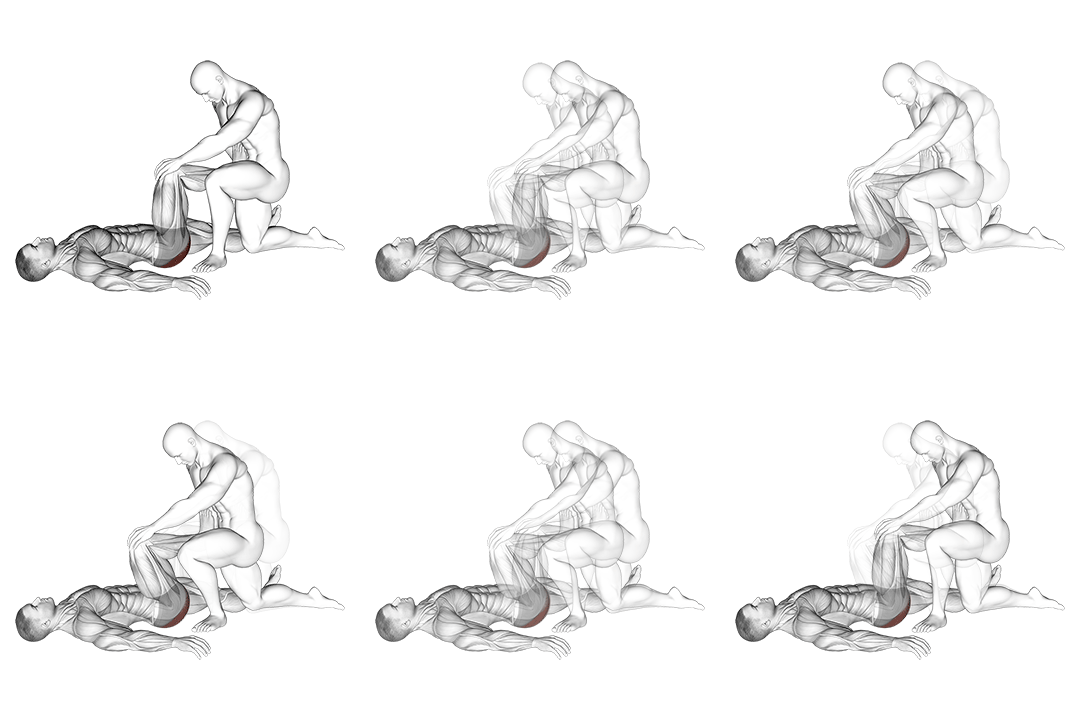
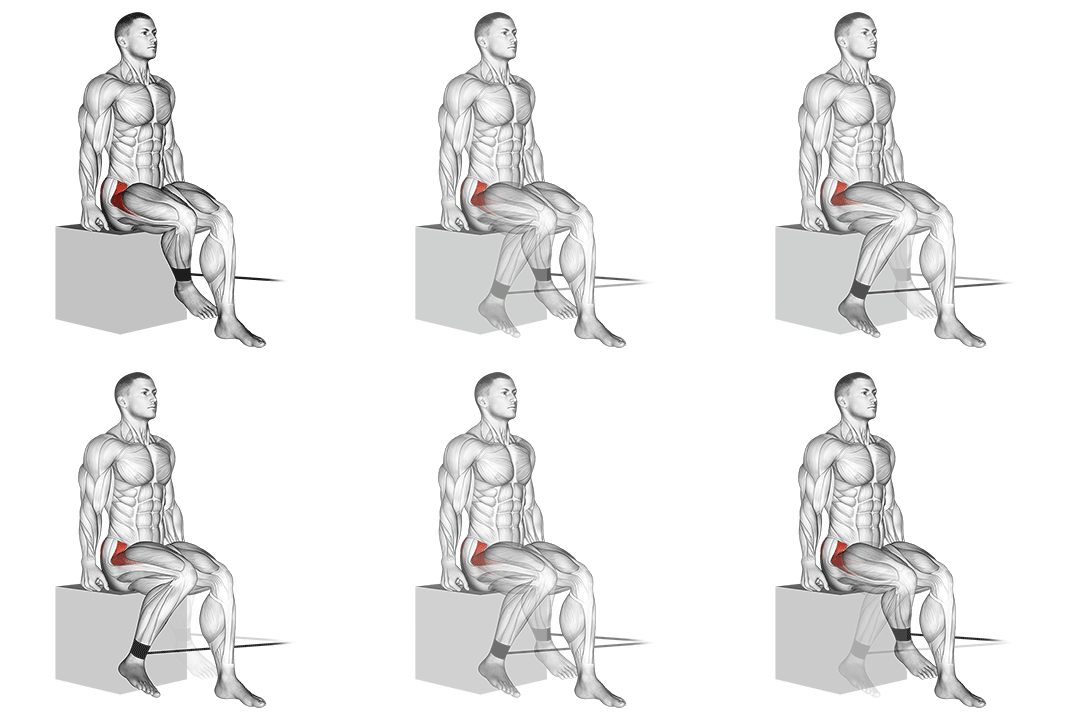
Assisted Lying Gluteus And Piriformis Stretch
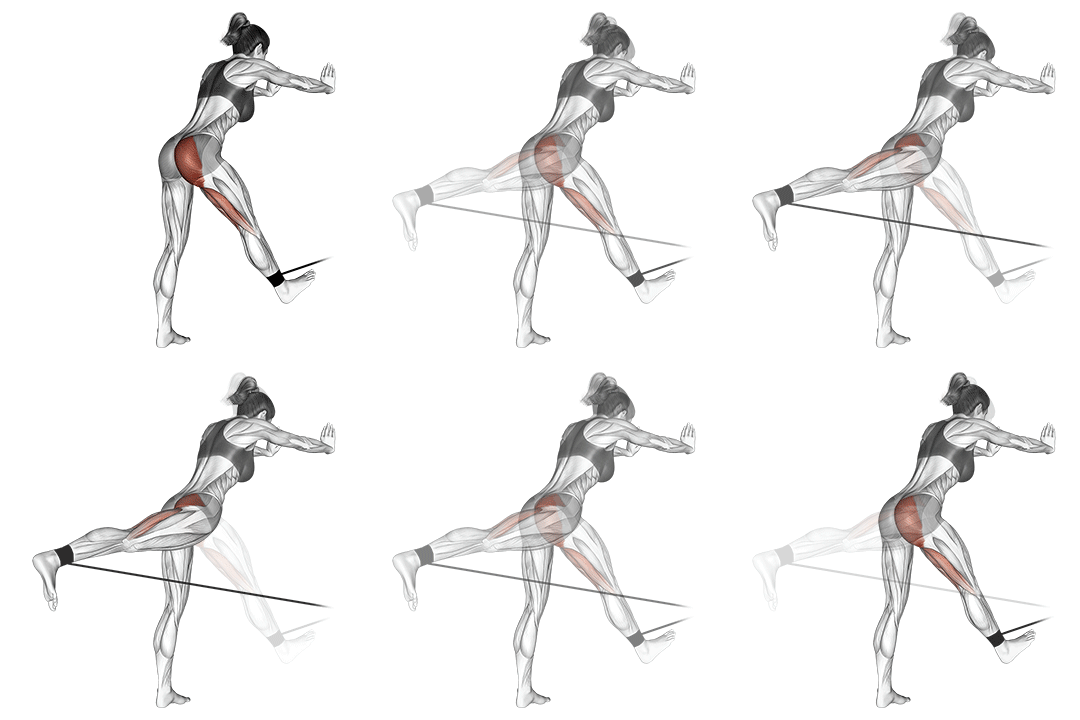
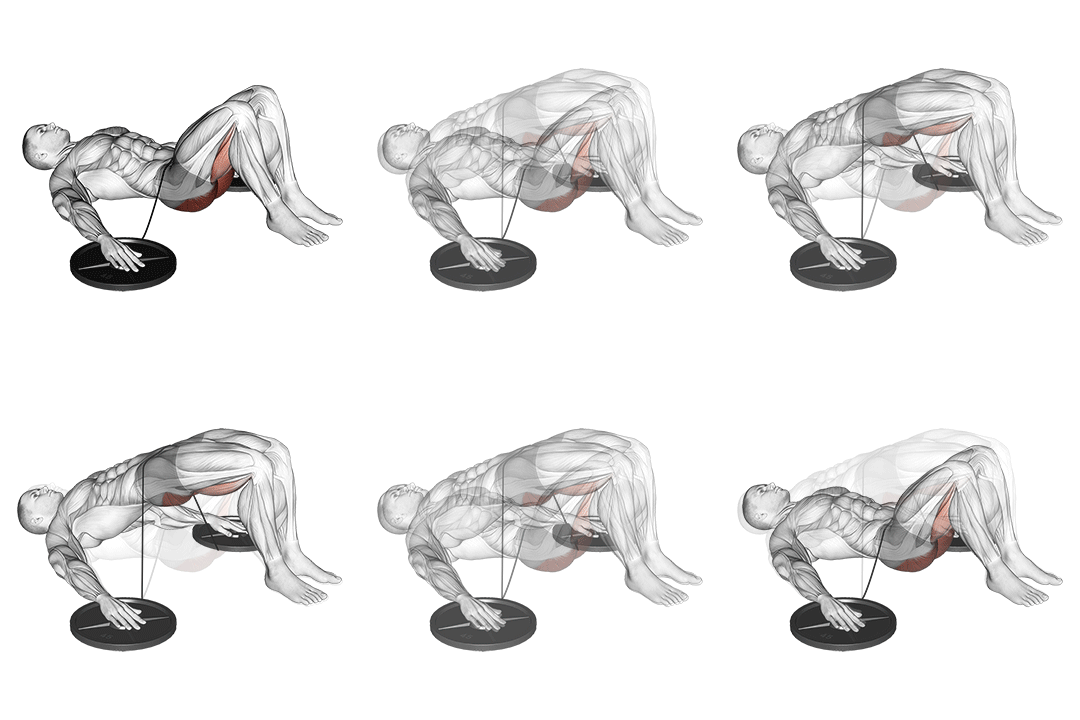
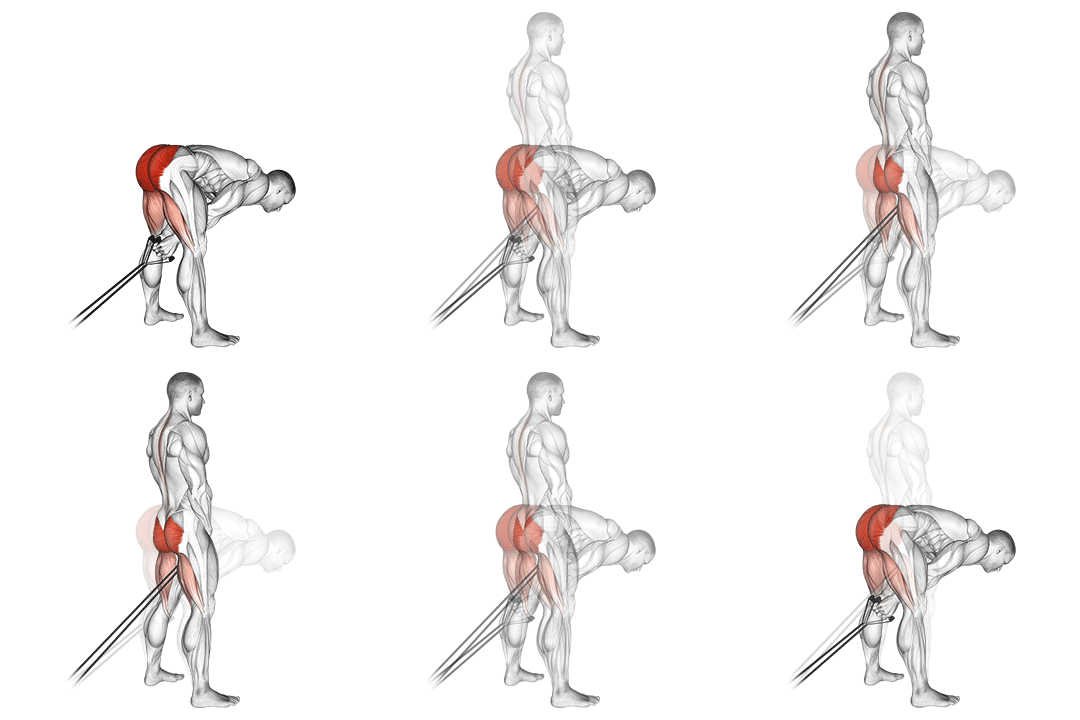
Band Bent-over Hip Extension
Head-to-Head Comparison
| Attribute | Assisted Lying Gluteus And Piriformis Stretch | Band Bent-over Hip Extension |
|---|---|---|
| Target Muscle |
Glutes
|
Glutes
|
| Body Part |
Upper-legs
|
Upper-legs
|
| Equipment |
Other
|
Band
|
| Difficulty |
Beginner
|
Beginner
|
| Movement Type |
Isolation
|
Isolation
|
| Secondary Muscles |
1
|
2
|
Secondary Muscles Activated
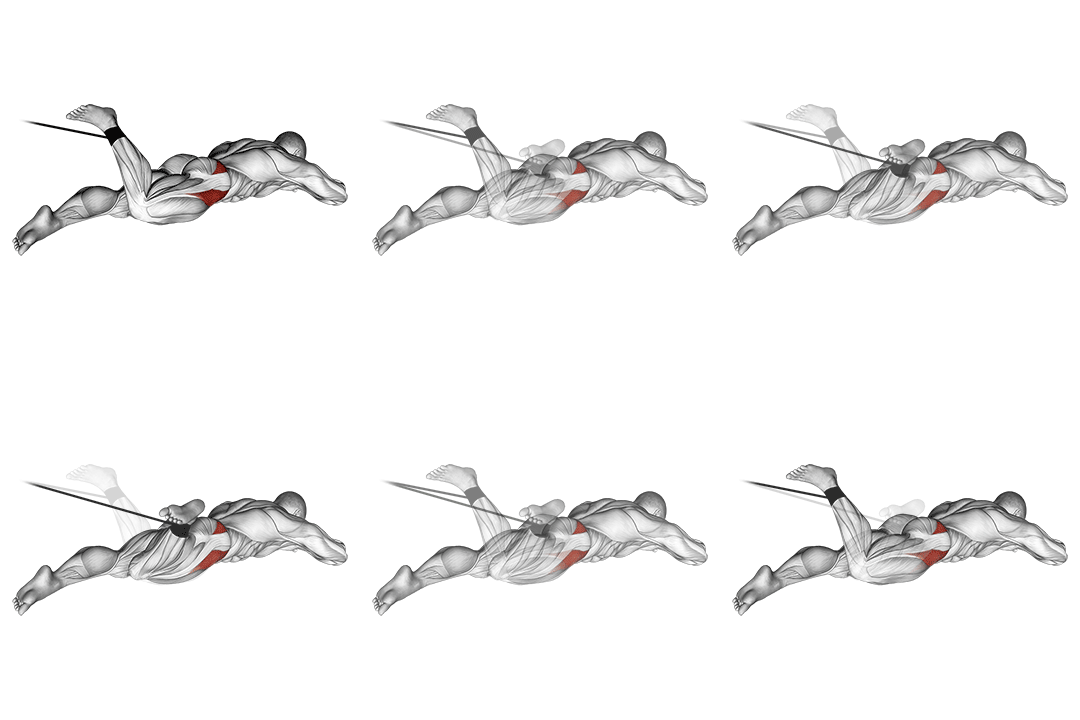
Assisted Lying Gluteus And Piriformis Stretch
Band Bent-over Hip Extension
Visual Comparison
Overview
Assisted Lying Gluteus And Piriformis Stretch vs Band Bent-over Hip Extension — you’re comparing a mobility-focused, passive isolation stretch to a resisted hip-extension exercise that targets the same region. In this guide you’ll learn how each movement hits the glutes and hamstrings, which one offers progressive overload, equipment needs, injury risk, and when to use each in your routine. Read on for technique cues, biomechanics (length-tension, force vectors, hip angles) and clear recommendations for reps, holds, and programming.
Key Differences
- Equipment differs: Assisted Lying Gluteus And Piriformis Stretch uses Other, while Band Bent-over Hip Extension requires Band.
Pros & Cons
Assisted Lying Gluteus And Piriformis Stretch
+ Pros
- Excellent for increasing hip external rotation and piriformis mobility
- Very low equipment needs — mat and strap or partner
- Low coordination and learning curve; beginner friendly
- Good prehab/recovery use and to reduce neural tension with 30–60s holds
− Cons
- Does not provide progressive overload for muscle growth
- Limited concentric gluteus maximus activation
- Can irritate sciatic symptoms if over-pressed or held too long
Band Bent-over Hip Extension
+ Pros
- Produces concentric and eccentric glute activation for muscle growth
- Easy to progress by increasing band tension or reps (8–15 range)
- Also trains hamstrings and lower-back stabilization during hinge
- Portable and ideal for home strength work
− Cons
- Requires solid hip-hinge mechanics to protect the lower back
- Band tension can be hard to quantify precisely (variable loading)
- May be uncomfortable for those with acute lower-back or hamstring strains
When Each Exercise Wins
The band provides progressive overload and repeated concentric/eccentric contractions; perform 3–4 sets of 8–15 reps to drive muscle growth in the gluteus maximus and hamstrings.
Strength requires tension under load. The band allows increasing resistance and tempo work (slow eccentrics), producing higher force outputs and neural adaptation than a passive stretch.
Beginners benefit from simple positioning and low coordination demand to learn glute and hip external-rotation awareness, with minimal injury risk and clear 30–60s hold prescriptions.
Bands are inexpensive, compact and let you add measurable resistance for progressive sessions at home, enabling both strength and hypertrophy work without heavy equipment.
Frequently Asked Questions
Can I do both Assisted Lying Gluteus And Piriformis Stretch and Band Bent-over Hip Extension in the same workout?
Yes. Start with the assisted stretch as a mobility primer (30–60s per side) to improve hip range, then perform band hip extensions (3–4 sets of 8–15 reps) to load the glutes. The stretch can improve muscle length-tension and enhance force production during the resisted sets.
Which exercise is better for beginners?
The assisted lying stretch is better for absolute beginners because it teaches hip positioning and relieves neural tension with minimal coordination. Once you can hinge safely, add band hip extensions to develop strength.
How do the muscle activation patterns differ?
The stretch creates sustained passive tension at end-range, biasing gluteal external rotators and medial glute fibers, while the band hip extension produces phasic concentric and eccentric contractions of gluteus maximus with hamstring and lower-back coactivation during the hinge.
Can Band Bent-over Hip Extension replace Assisted Lying Gluteus And Piriformis Stretch?
No — they serve different purposes. The band exercise replaces load and strength work but won’t restore restricted external rotation or reduce piriformis tightness as effectively as the passive assisted stretch. Use both when mobility and strength are goals.
Expert Verdict
Use the Assisted Lying Gluteus And Piriformis Stretch when your priority is hip mobility, pain reduction, or prehab: hold 30–60 seconds per side to bias the piriformis and gluteus medius/minimus at ~90° hip flexion and external rotation. Choose the Band Bent-over Hip Extension when you want to build gluteus maximus strength and size — hinge at 30–45° hip flexion and drive to neutral/hyperextension, 3–4 sets of 8–15 reps with progressive band tension. For balanced programming, pair both: use the stretch to improve range and the band exercise to load the muscle for growth and strength.
Also Compare
More comparisons with Assisted Lying Gluteus And Piriformis Stretch
More comparisons with Band Bent-over Hip Extension
Compare More Exercises
Use our free comparison tool to analyze any two exercises head-to-head.
Compare Exercises