

Backward Jump vs Chair Leg Extended Stretch: Complete Comparison Guide
Backward Jump vs Chair Leg Extended Stretch — you’re comparing two quad-focused moves with very different roles. You’ll get clear direction on how each stresses the quads, what secondary muscles fire, required equipment and space, learning difficulty, injury risk, and when to use one or both in your program. Read on for specific technique cues, recommended rep ranges (3–6 explosive reps vs 8–15 controlled reps or 20–60s holds), and biomechanical notes like force vectors, knee angles, and stretch-shortening cycle implications.
Exercise Comparison
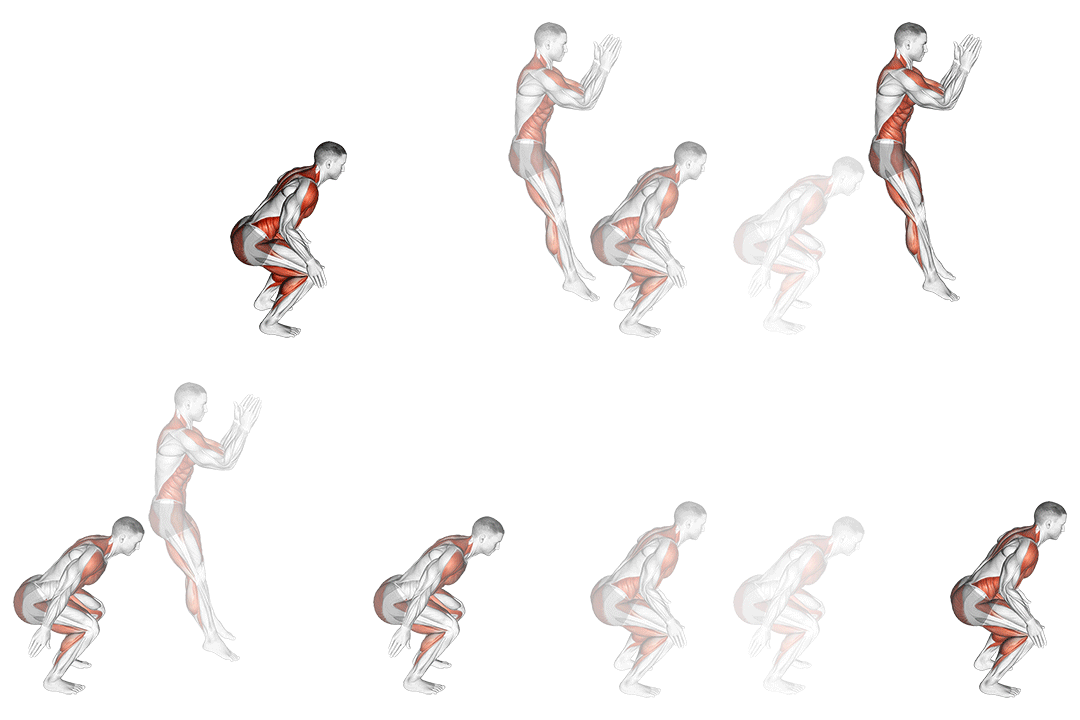
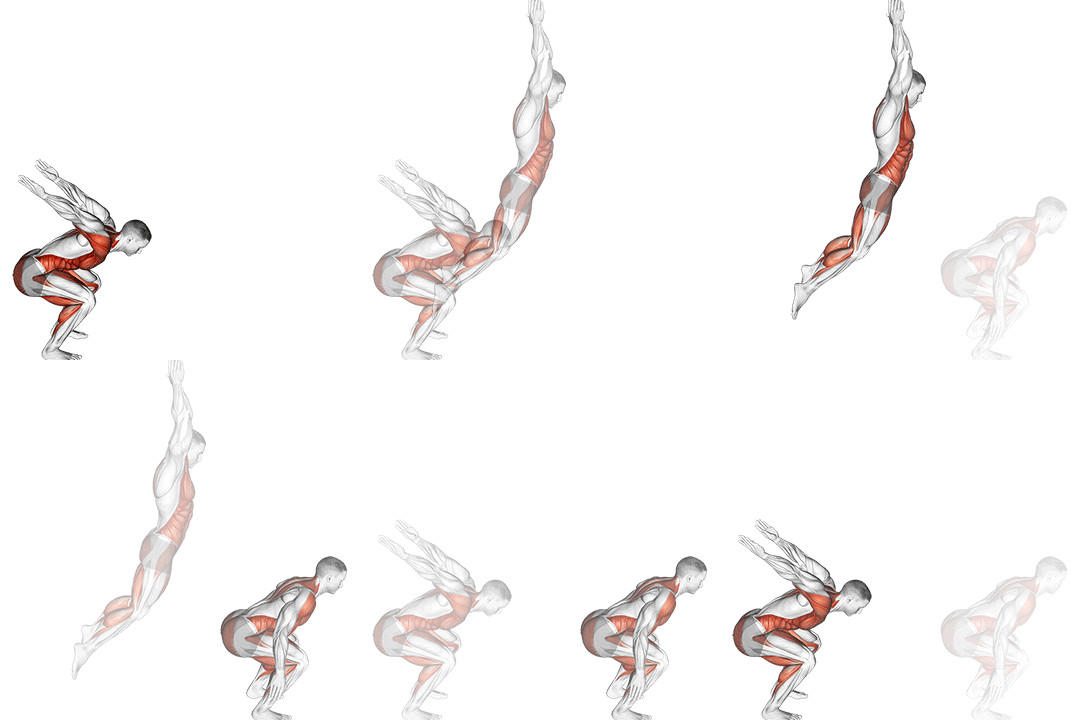
Backward Jump
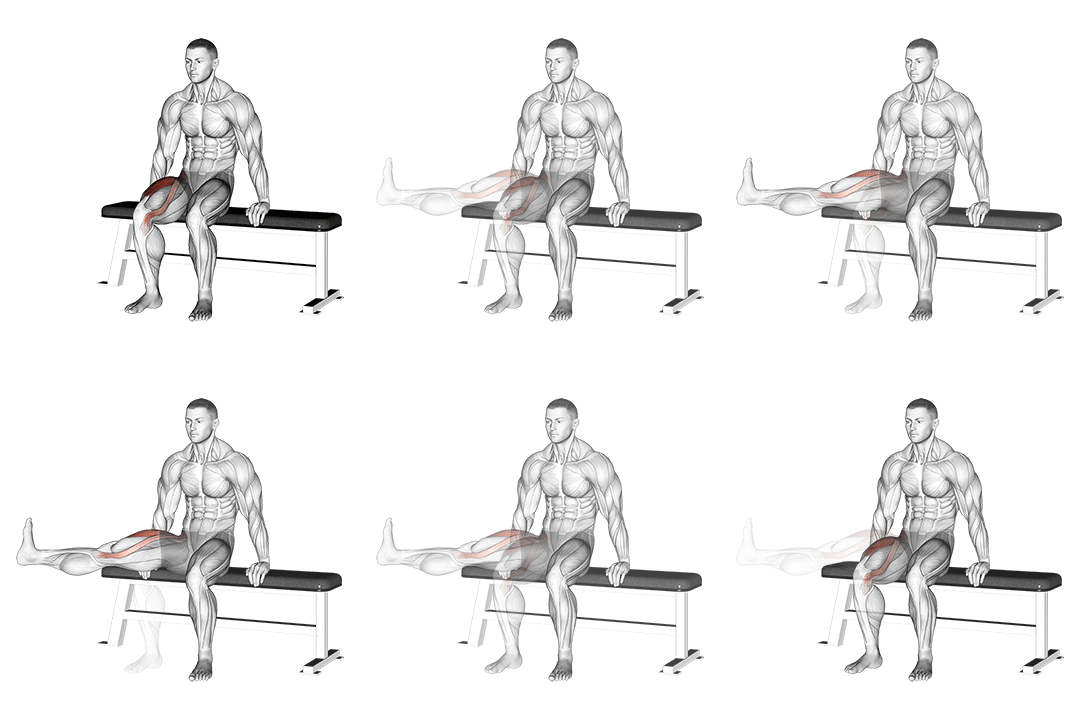
Chair Leg Extended Stretch
Head-to-Head Comparison
| Attribute | Backward Jump | Chair Leg Extended Stretch |
|---|---|---|
| Target Muscle |
Quads
|
Quads
|
| Body Part |
Upper-legs
|
Upper-legs
|
| Equipment |
Body-weight
|
Body-weight
|
| Difficulty |
Intermediate
|
Beginner
|
| Movement Type |
Compound
|
Isolation
|
| Secondary Muscles |
3
|
2
|
Secondary Muscles Activated
Backward Jump
Chair Leg Extended Stretch
Visual Comparison
Overview
Backward Jump vs Chair Leg Extended Stretch — you’re comparing two quad-focused moves with very different roles. You’ll get clear direction on how each stresses the quads, what secondary muscles fire, required equipment and space, learning difficulty, injury risk, and when to use one or both in your program. Read on for specific technique cues, recommended rep ranges (3–6 explosive reps vs 8–15 controlled reps or 20–60s holds), and biomechanical notes like force vectors, knee angles, and stretch-shortening cycle implications.
Key Differences
- Backward Jump is a compound movement, while Chair Leg Extended Stretch is an isolation exercise.
- Difficulty levels differ: Backward Jump is intermediate, while Chair Leg Extended Stretch is beginner.
- Both exercises target the Quads using Body-weight. The main differences are in their movement patterns and muscle activation angles.
Pros & Cons
Backward Jump
+ Pros
- High-rate force development: improves explosive knee extension and power
- Multi-joint recruitment: quads, glutes, hamstrings, and calves work together
- Functional carryover to sprinting, jumping, and sport-specific actions
- Easy to overload via distance, height, or weighted vest
− Cons
- Higher impact and landing forces increase injury risk
- Requires coordination and decent baseline strength
- Needs more clear space and a safe surface
Chair Leg Extended Stretch
+ Pros
- True quad isolation for targeted strengthening and rehab
- Low impact and beginner-friendly
- Requires only a stable chair — highly accessible
- Easy to manipulate time under tension (eccentric holds or slow reps)
− Cons
- Limited overload unless you add bands/weights
- Minimal posterior chain recruitment compared with compound moves
- Less carryover to explosive power and athletic tasks
When Each Exercise Wins
The Chair Leg Extended Stretch allows controlled time under tension and precise loading of the quads—use 8–15 slow reps or 20–60s isometric holds, or add ankle weights/bands to reach progressive overload for muscle growth.
Backward Jump trains high peak forces and rate of force development across multiple joints. For strength and power development choose explosive sets (3–6 reps, 3–5 sets) and progress with increased height or added load.
Its single-joint nature, low impact, and simple cues (neutral spine, full control through 0°–90° knee range) make it the safer and faster-to-learn option for novice trainees.
It requires only a stable chair and small space, avoids high-impact landings, and can be scaled with bands or ankle weights—ideal for small apartments or limited equipment.
Frequently Asked Questions
Can I do both Backward Jump and Chair Leg Extended Stretch in the same workout?
Yes. Do Backward Jumps early to prioritize power (3–6 reps, 3–5 sets), then use Chair Leg Extended Stretch as a finisher for quad hypertrophy or motor control (8–15 reps or 20–60s holds). That sequence uses neural freshness for explosive work and safer isolated loading afterward.
Which exercise is better for beginners?
Chair Leg Extended Stretch is better for beginners because it’s low impact and easy to coach: sit tall, extend through the knee without locking, and control the return. Start with bodyweight or light bands before progressing.
How do the muscle activation patterns differ?
Backward Jumps produce brief, high-amplitude quad activation via a stretch‑shortening cycle with rapid eccentric braking and concentric drive, increasing RFD. Chair Leg Extended Stretch produces sustained, lower-amplitude activation with longer time under tension and greater isolation of the quad muscle fibers.
Can Chair Leg Extended Stretch replace Backward Jump?
Not if your aim is explosive power or multi-joint strength—Chair Leg Extended Stretch won’t train rate of force development or posterior chain coordination the way jumps do. For rehab, hypertrophy, or space-limited training, the chair move is a valid substitute.
Expert Verdict
Use Backward Jumps when your goal is power, athleticism, and multi-joint strength — perform them early in a session as 3–6 explosive reps per set with full focus on soft, knee-aligned landings. Use Chair Leg Extended Stretch when you want direct quad overload, rehab a knee, or train with limited space; aim for 8–15 controlled reps, slow 3–4 second eccentrics, or 20–60s holds and add bands or ankle weights for progression. Combine them: train jumps for power and finish with chair extensions for targeted hypertrophy and motor control.
Also Compare
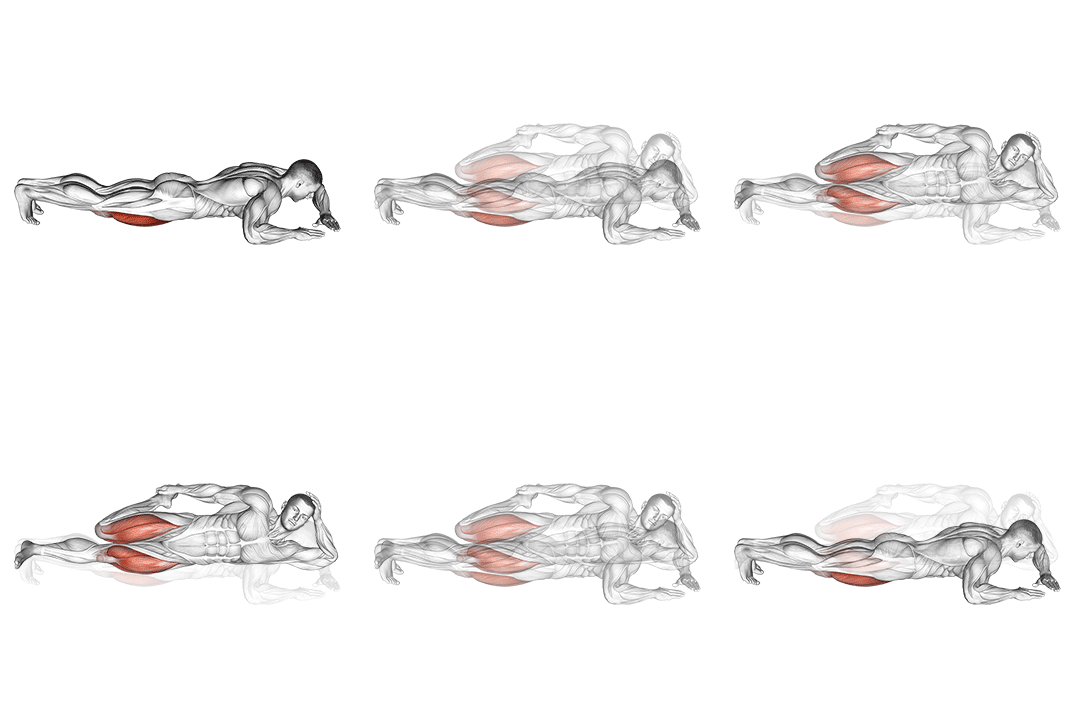
More comparisons with Backward Jump
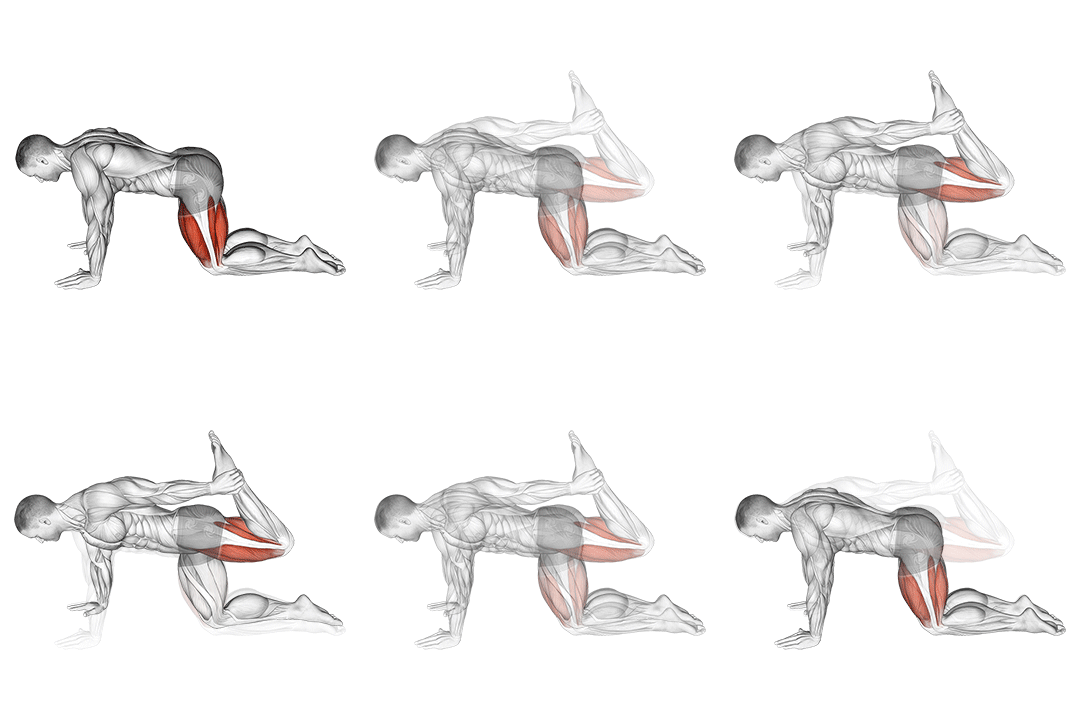
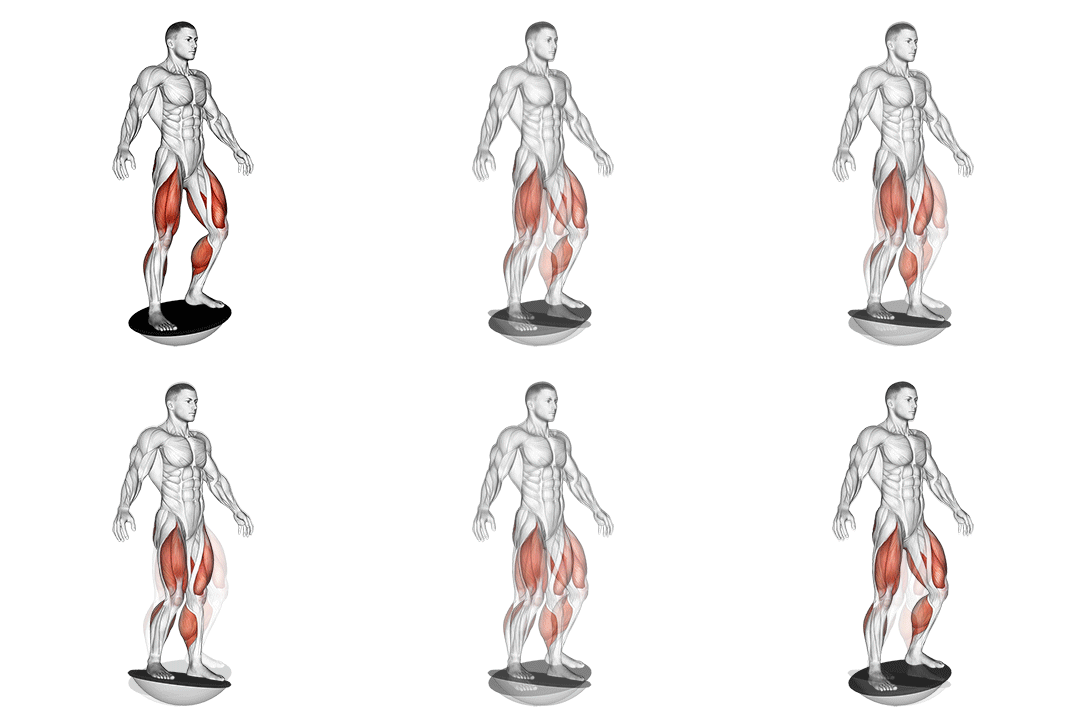
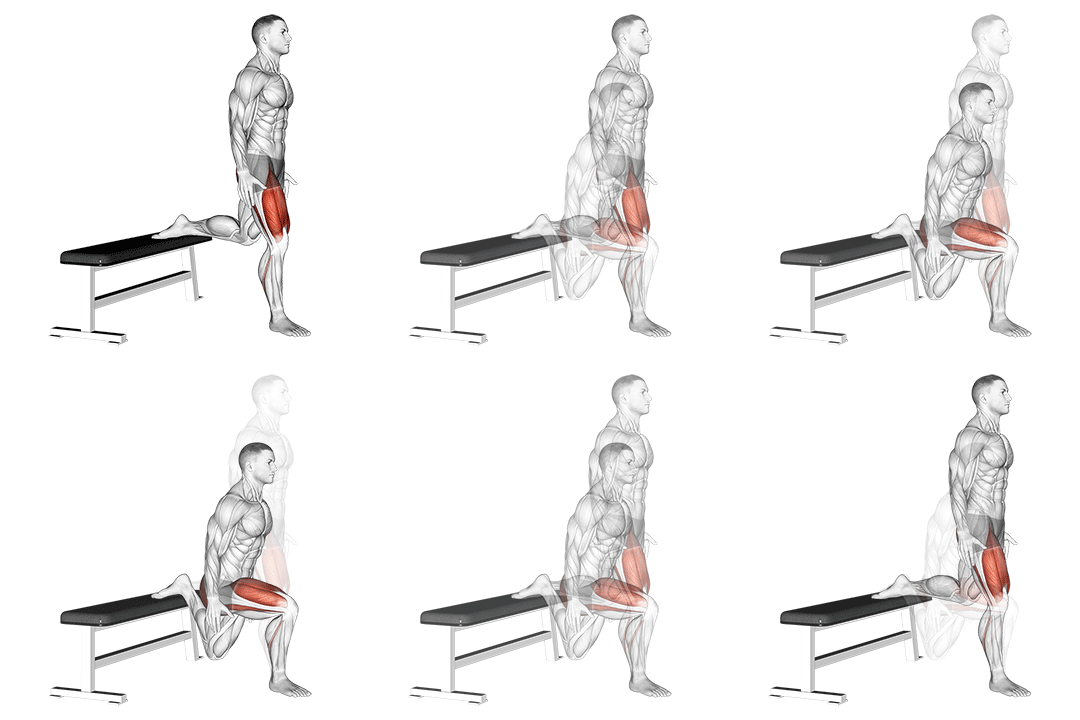
More comparisons with Chair Leg Extended Stretch
Compare More Exercises
Use our free comparison tool to analyze any two exercises head-to-head.
Compare Exercises