

Balance Board vs Chair Leg Extended Stretch: Complete Comparison Guide
Balance Board vs Chair Leg Extended Stretch — two ways to load and challenge your quads, but they do it very differently. You’ll get a practical breakdown of primary and secondary muscle recruitment, equipment needs, difficulty and progression, plus clear technique cues so you can try both safely. Read on to see which option better fits your goals: muscle growth, strength, rehab, or home convenience. I’ll give specific rep ranges, angles, and movement cues so you can test each method and track progress.
Exercise Comparison
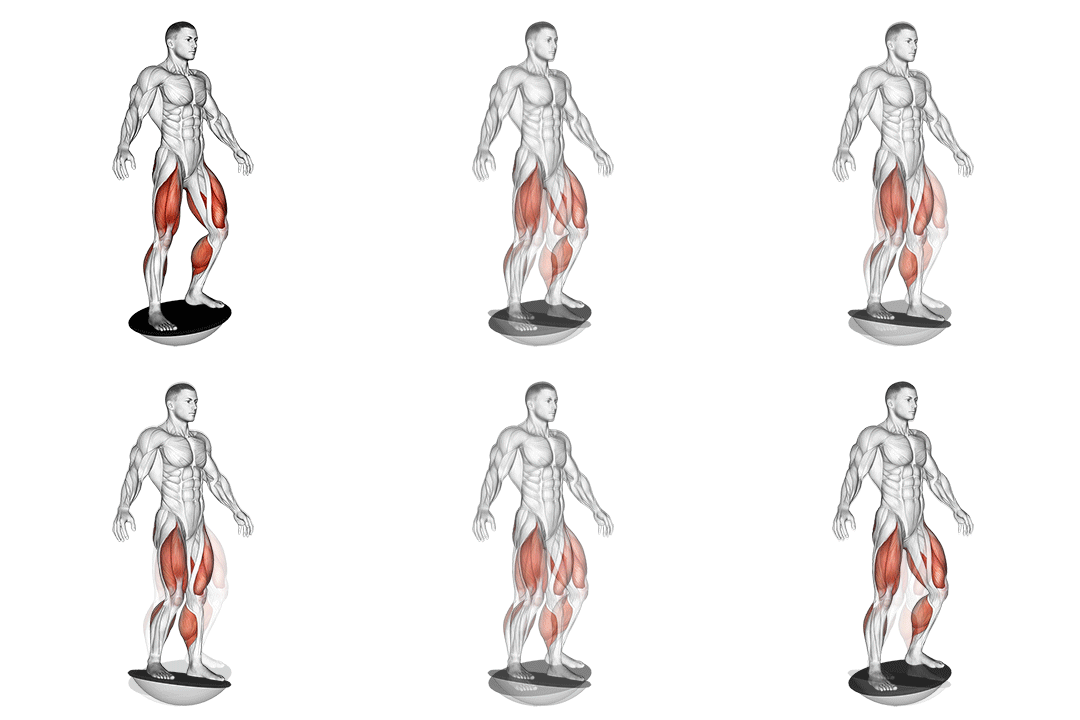
Balance Board
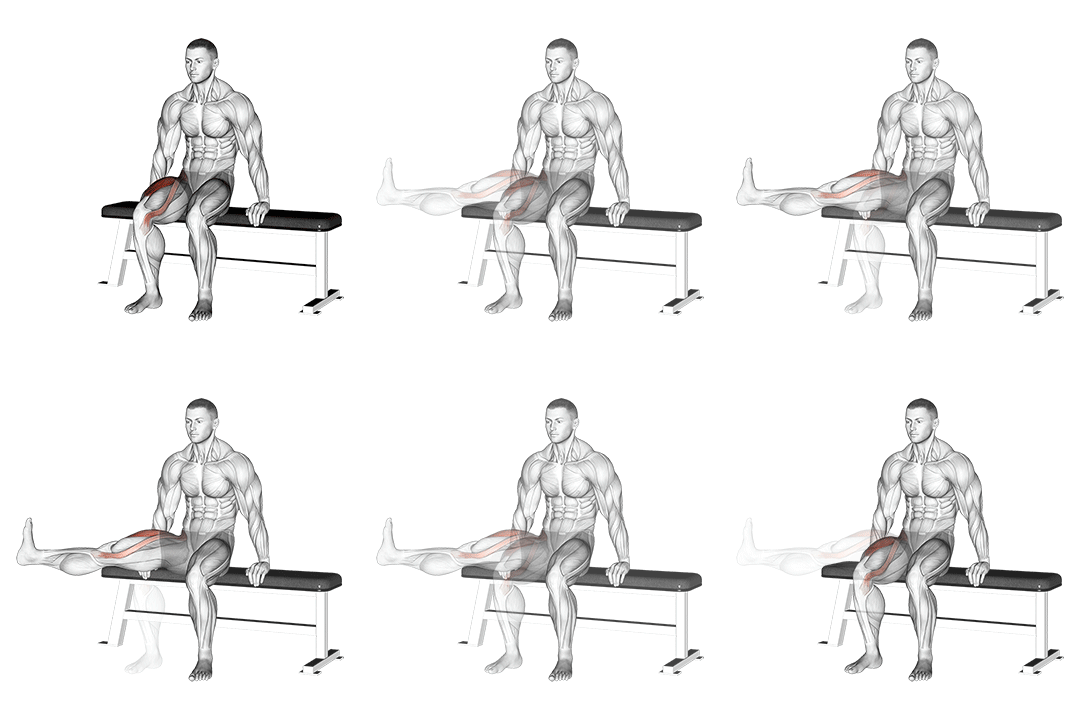
Chair Leg Extended Stretch
Head-to-Head Comparison
| Attribute | Balance Board | Chair Leg Extended Stretch |
|---|---|---|
| Target Muscle |
Quads
|
Quads
|
| Body Part |
Upper-legs
|
Upper-legs
|
| Equipment |
Body-weight
|
Body-weight
|
| Difficulty |
Intermediate
|
Beginner
|
| Movement Type |
Compound
|
Isolation
|
| Secondary Muscles |
3
|
2
|
Secondary Muscles Activated
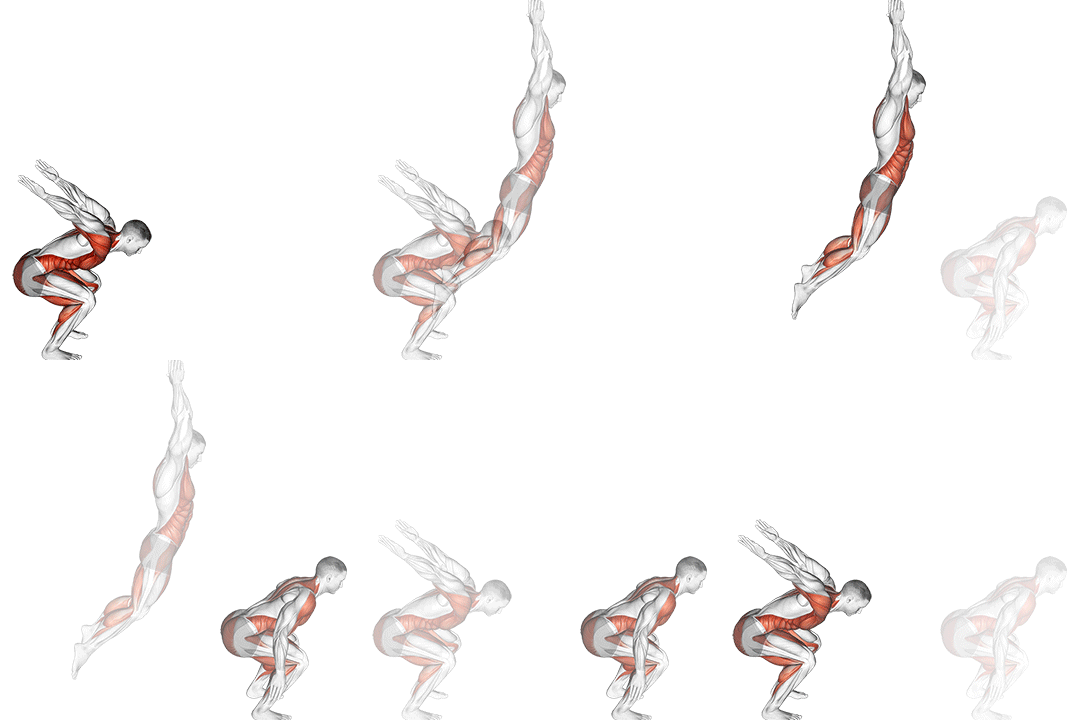
Balance Board
Chair Leg Extended Stretch
Visual Comparison
Overview
Balance Board vs Chair Leg Extended Stretch — two ways to load and challenge your quads, but they do it very differently. You’ll get a practical breakdown of primary and secondary muscle recruitment, equipment needs, difficulty and progression, plus clear technique cues so you can try both safely. Read on to see which option better fits your goals: muscle growth, strength, rehab, or home convenience. I’ll give specific rep ranges, angles, and movement cues so you can test each method and track progress.
Key Differences
- Balance Board is a compound movement, while Chair Leg Extended Stretch is an isolation exercise.
- Difficulty levels differ: Balance Board is intermediate, while Chair Leg Extended Stretch is beginner.
- Both exercises target the Quads using Body-weight. The main differences are in their movement patterns and muscle activation angles.
Pros & Cons
Balance Board
+ Pros
- Builds quad strength while training ankle and hip stabilizers
- Improves proprioception and balance control for functional movement
- Engages calves and glutes, producing a compound, coordinated pattern
- Multiple progression paths: single-leg, added instability, timed holds
− Cons
- Higher balance and coordination demand—harder for beginners
- Greater acute injury risk for unstable ankles/knees
- Harder to isolate quads for pure hypertrophy without added load
Chair Leg Extended Stretch
+ Pros
- Simple to teach and perform with low balance requirements
- Excellent for isolating quads and teaching proper knee extension
- Very accessible for home setups—only a chair required
- Low acute injury risk when performed with controlled range
− Cons
- Limited engagement of hips and calves—less functional carryover
- Progression options are narrower without adding external load
- Can encourage passive locking of the knee if technique is poor
When Each Exercise Wins
It isolates the quads, allowing you to target time-under-tension (8–15 reps or 3–5 sets, slow eccentrics 3–4s) and minimize assistance from glutes/hamstrings for focused muscle growth.
The balance board trains compound strength and stabilizer recruitment. Use single-leg weighted progressions or tempo variations to build force production across the hip–knee–ankle chain.
Lower motor control demand and clear movement pattern make it safer and easier to learn proper knee tracking and quad activation before advancing to instability work.
A chair is nearly universal in homes and the exercise requires minimal space and no special equipment, making it the most accessible daily option.
Frequently Asked Questions
Can I do both Balance Board and Chair Leg Extended Stretch in the same workout?
Yes. Start with the balance board for 2–3 sets of stability and compound recruitment (20–60s or 6–10 single-leg reps), then finish with 3 sets of chair leg extended work for isolated quad fatigue (8–15 reps or 10–20s holds). This order preserves balance quality and adds targeted volume.
Which exercise is better for beginners?
Chair Leg Extended Stretch is better for beginners because it isolates knee extension and requires minimal balance control. It teaches quad activation and safe knee tracking before introducing instability.
How do the muscle activation patterns differ?
Balance board work produces phasic, co-contraction patterns across quads, glutes and calves to manage oscillations, increasing stabilizer activation. The chair exercise yields steady, monotonic quad activation focused on knee extension and mid-range length–tension force production.
Can Chair Leg Extended Stretch replace Balance Board?
If your goal is pure quad hypertrophy or simple rehab, the chair exercise can replace balance board work. However, it won’t replicate the proprioceptive and multi-joint stability benefits of the balance board if you need functional balance and ankle/hip control.
Expert Verdict
Use the Chair Leg Extended Stretch when your priority is isolated quad work, rehabilitation, or easy at-home training: focus on 8–15 reps, 3–5 sets, or 15–45s isometric holds with strict knee tracking. Choose the Balance Board when you need integrated strength, better proprioception, and hip–ankle stability; progress from two-legged holds to single-leg, add tempo, or external load for higher intensity. For pure muscle growth pick the chair isolation for controlled overload; for functional strength and balance pick the balance board. Combine both across a training week to hit isolation and stability demands.
Also Compare
More comparisons with Balance Board
More comparisons with Chair Leg Extended Stretch
Compare More Exercises
Use our free comparison tool to analyze any two exercises head-to-head.
Compare Exercises