

Band Single Leg Reverse Calf Raise vs Band Two Legs Calf Raise - (band Under Both Legs) V. 2: Comple
Band Single Leg Reverse Calf Raise vs Band Two Legs Calf Raise - (band Under Both Legs) V. 2 is a tight match for improving lower-leg strength. You’ll learn how each move targets the gastrocnemius and soleus, which secondary muscles get involved, the equipment you need, and exact technique cues to get safer, faster progress. I’ll compare activation patterns, give rep and progression ranges (8–20 reps for hypertrophy, 4–8 for strength), and recommend which exercise fits your goals and home setup so you can pick the best option for consistent muscle growth.
Exercise Comparison
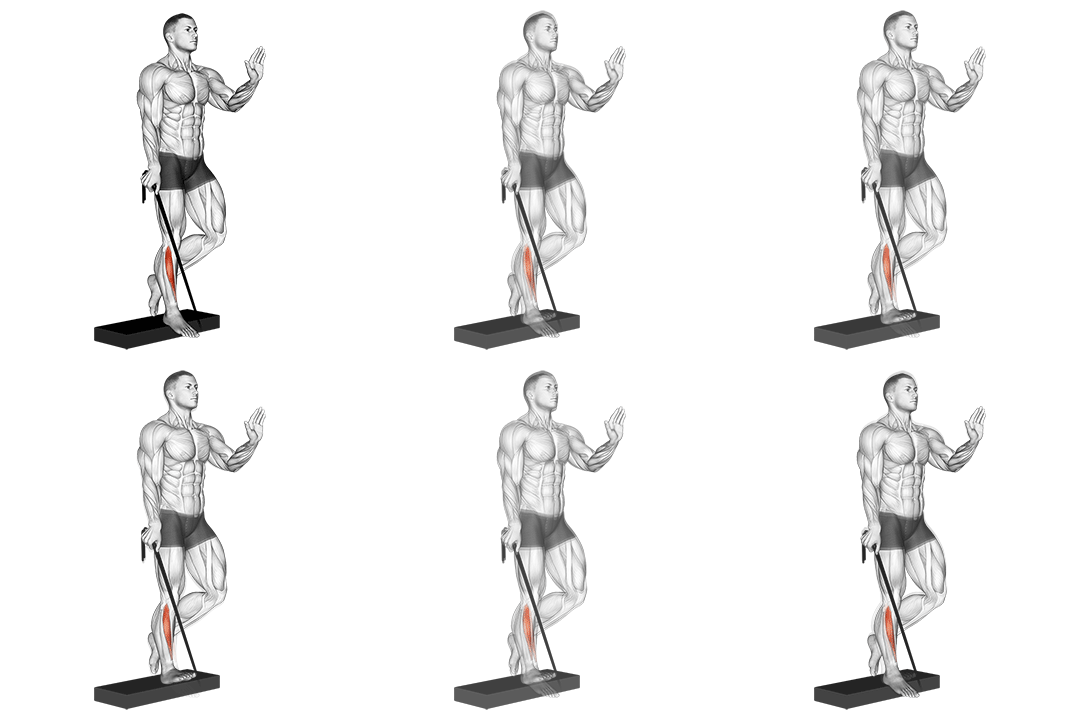
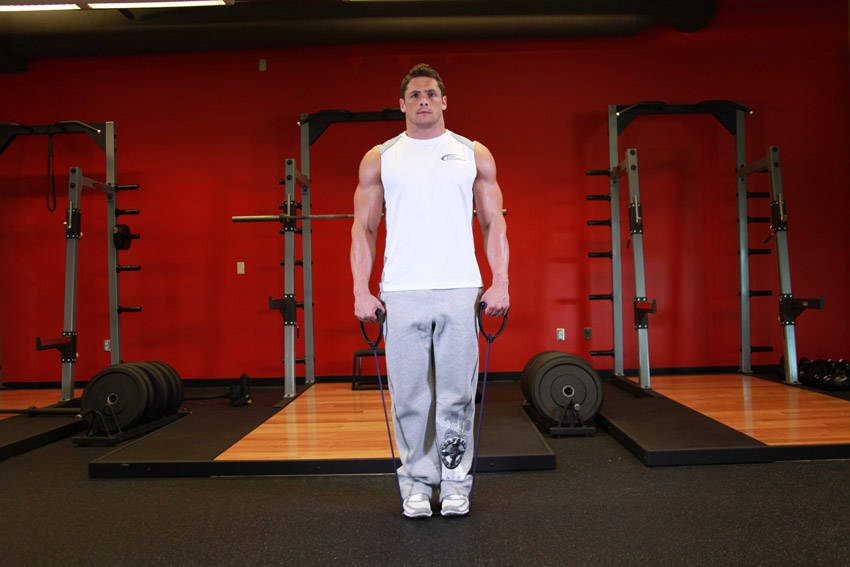
Band Single Leg Reverse Calf Raise
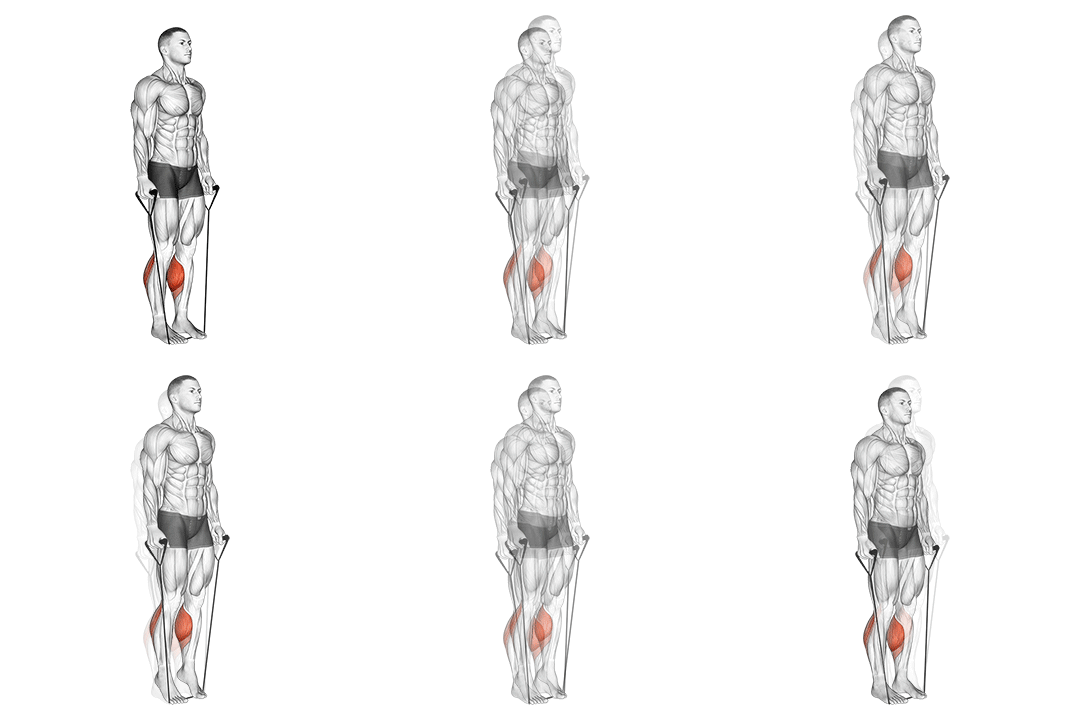
Band Two Legs Calf Raise - (band Under Both Legs) V. 2
Head-to-Head Comparison
| Attribute | Band Single Leg Reverse Calf Raise | Band Two Legs Calf Raise - (band Under Both Legs) V. 2 |
|---|---|---|
| Target Muscle |
Calves
|
Calves
|
| Body Part |
Lower-legs
|
Lower-legs
|
| Equipment |
Band
|
Band
|
| Difficulty |
Beginner
|
Beginner
|
| Movement Type |
Isolation
|
Isolation
|
| Secondary Muscles |
2
|
2
|
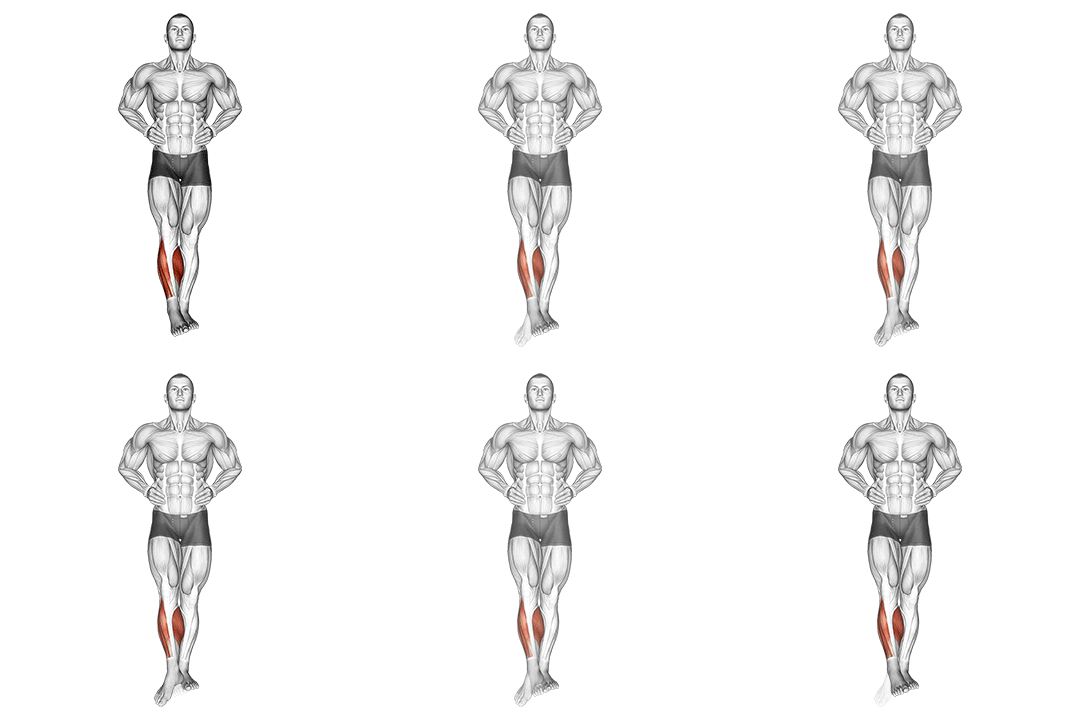
Secondary Muscles Activated
Band Single Leg Reverse Calf Raise
Band Two Legs Calf Raise - (band Under Both Legs) V. 2
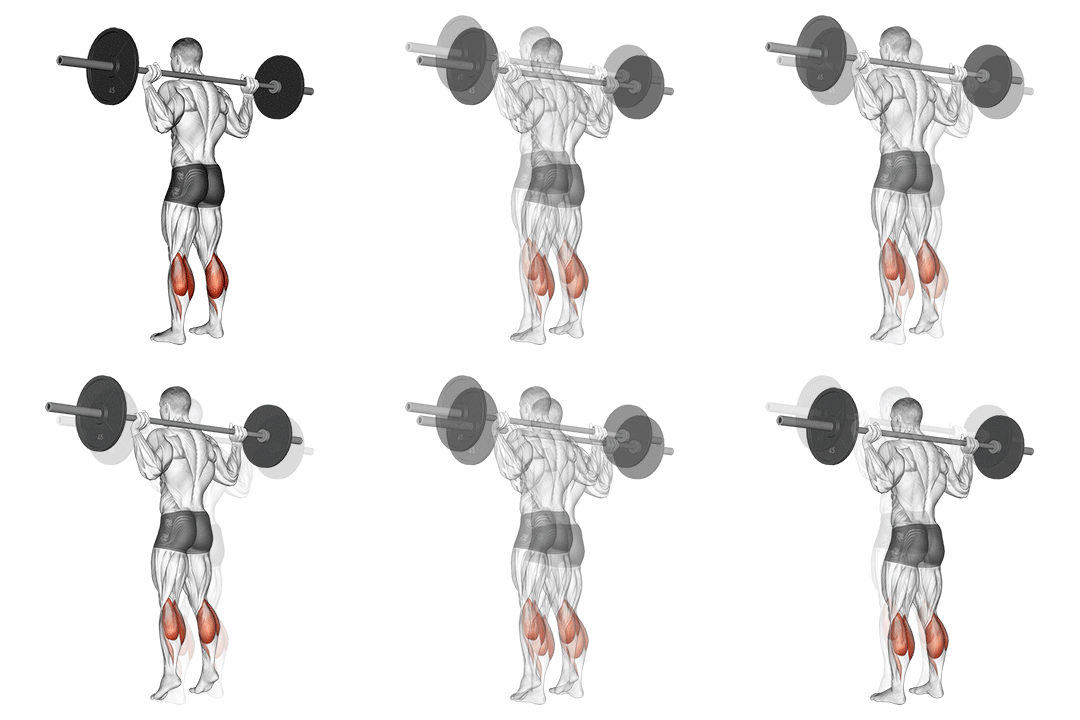
Visual Comparison
Overview
Band Single Leg Reverse Calf Raise vs Band Two Legs Calf Raise - (band Under Both Legs) V. 2 is a tight match for improving lower-leg strength. You’ll learn how each move targets the gastrocnemius and soleus, which secondary muscles get involved, the equipment you need, and exact technique cues to get safer, faster progress. I’ll compare activation patterns, give rep and progression ranges (8–20 reps for hypertrophy, 4–8 for strength), and recommend which exercise fits your goals and home setup so you can pick the best option for consistent muscle growth.
Key Differences
- Both exercises target the Calves using Band. The main differences are in their movement patterns and muscle activation angles.
Pros & Cons
Band Single Leg Reverse Calf Raise
+ Pros
- Higher unilateral load per limb increases muscle tension and hypertrophy stimulus
- Improves single-leg balance and functional stability
- Greater range of motion and longer time under tension possible
- Easy to scale with heavier bands or tempo manipulations
− Cons
- Requires better balance and hip stability (risk for beginners)
- May need heavier bands to reach sufficient resistance per leg
- Higher technical demand increases chance of form breakdown
Band Two Legs Calf Raise - (band Under Both Legs) V. 2
+ Pros
- Very accessible for beginners and home setups
- Lower balance demand—easier to maintain strict plantarflexion form
- Targets ankle and foot stabilizers for better overall foot function
- Simple to scale by changing band thickness or stance width
− Cons
- Lower per-limb load reduces peak muscle activation
- Less carryover to single-leg functional strength
- Can under-challenge stronger trainees without very heavy bands
When Each Exercise Wins
Unilateral loading increases tension per calf, allows longer time under tension, and forces a greater range of motion, which together create a stronger hypertrophy stimulus when done for 8–20 reps with controlled eccentrics.
The single-leg version lets you overload each limb and work in lower rep ranges (4–8) with heavier bands, producing higher peak force per limb and better transfer to single-leg strength tasks.
Its bilateral stance reduces balance and hip demands, making it easier to learn strict plantarflexion mechanics and build foundational calf strength safely.
It requires minimal setup, lower band strength to feel resistance, and a smaller footprint—ideal when you have limited equipment or space.
Frequently Asked Questions
Can I do both Band Single Leg Reverse Calf Raise and Band Two Legs Calf Raise - (band Under Both Legs) V. 2 in the same workout?
Yes. Start with the bilateral two-leg raises as a warm-up (2–3 sets of 12–15) to prime the calves, then perform single-leg reverse raises for heavier, focused work (3–4 sets of 6–12 per leg). Monitor fatigue and keep good form — reduce volume if ankle stiffness or pain appears.
Which exercise is better for beginners?
Band Two Legs Calf Raise - (band Under Both Legs) V. 2 is better for beginners because it has lower balance and coordination demands, letting you learn proper plantarflexion mechanics and progressively increase resistance safely.
How do the muscle activation patterns differ?
Single-leg raises create higher unilateral force and longer muscle length-tension exposure, driving greater peak gastrocnemius activation and hip stabilizer engagement. Two-leg raises spread load bilaterally, emphasizing symmetrical plantarflexion and ankle/foot intrinsic activation with lower per-limb peak activation.
Can Band Two Legs Calf Raise - (band Under Both Legs) V. 2 replace Band Single Leg Reverse Calf Raise?
It can replace it for foundational conditioning, rehab, or volume work, but it won’t fully replicate the unilateral overload and balance transfer of single-leg raises. If your goal is maximal unilateral strength or targeted hypertrophy, keep the single-leg version in your program periodically.
Expert Verdict
Use the Band Single Leg Reverse Calf Raise when you want targeted unilateral overload, more joint range, and greater stimulus for muscle growth or single-leg strength—perform 3–4 sets of 6–12 reps per leg with 2–3 second eccentrics and a 1 second pause at the bottom. Choose Band Two Legs Calf Raise - (band Under Both Legs) V. 2 if you’re a beginner, rehabbing, or need a quick, safe way to load the calves at home—do 3–4 sets of 12–20 reps with steady tempo. For balanced programming, cycle both: build base strength bilaterally, then apply unilateral overload for extra progress.
Also Compare
More comparisons with Band Single Leg Reverse Calf Raise
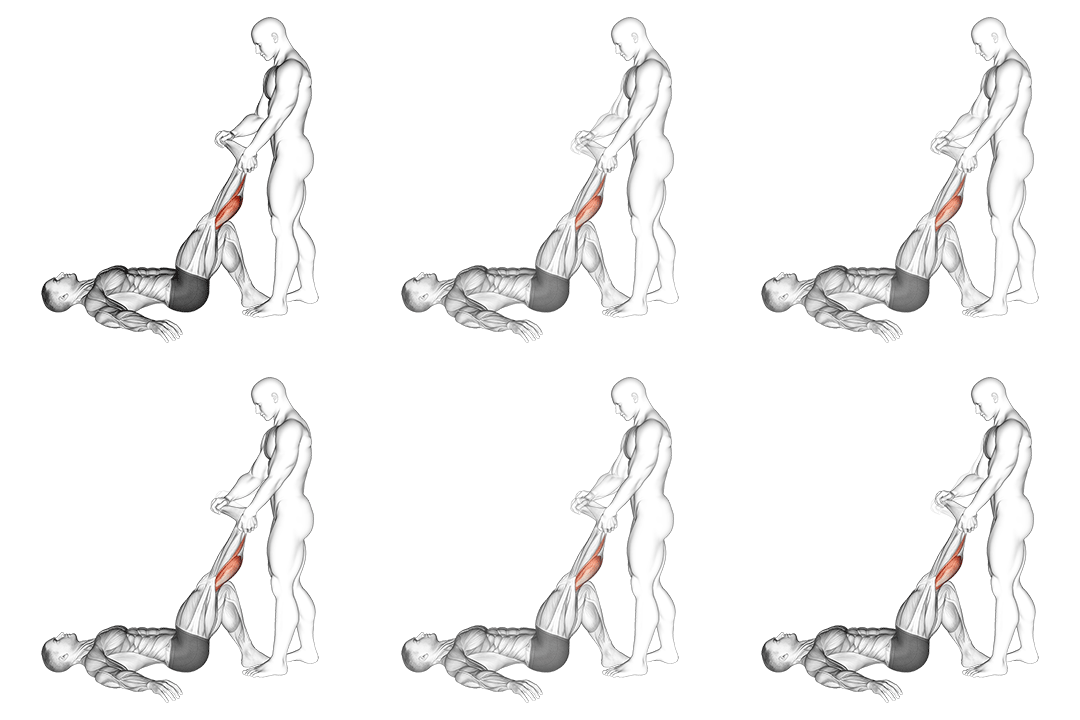
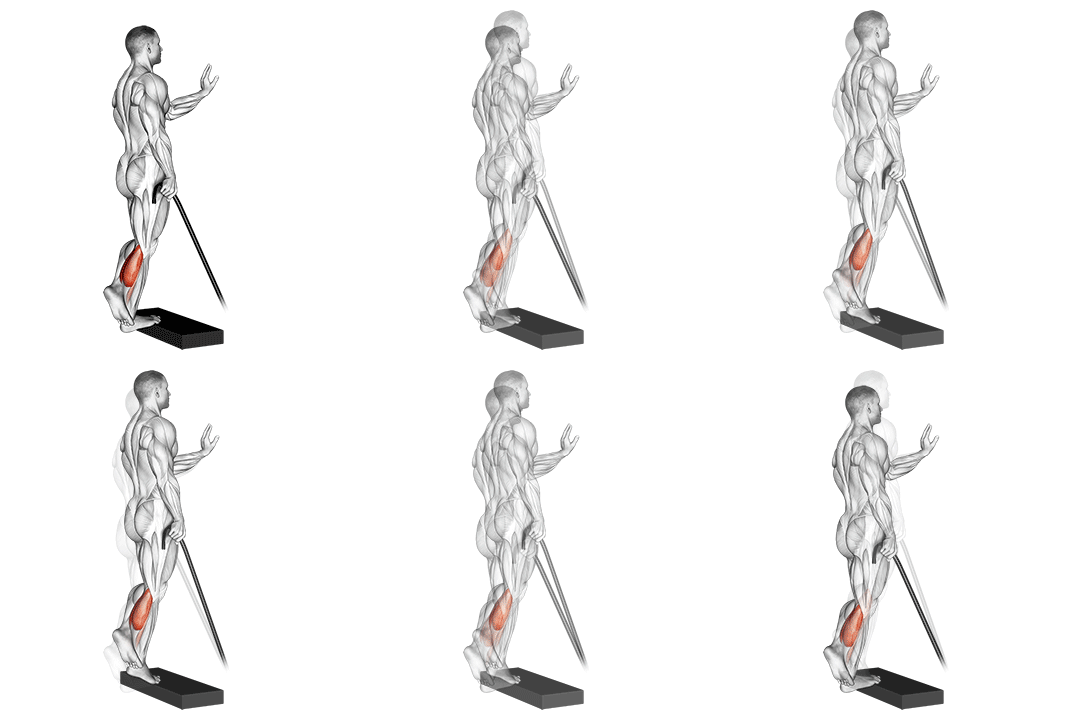
More comparisons with Band Two Legs Calf Raise - (band Under Both Legs) V. 2
Compare More Exercises
Use our free comparison tool to analyze any two exercises head-to-head.
Compare Exercises