

Band Two Legs Calf Raise - (band Under Both Legs) V. 2 vs Calf Raises - With Bands: Complete Compari
Band Two Legs Calf Raise - (band Under Both Legs) V. 2 vs Calf Raises - With Bands is the head-to-head you need when choosing simple banded calf work. I'll walk you through how each loads the gastrocnemius and soleus, the setup and technique cues you should use, and which one to pick for hypertrophy, strength, stability, or home training. Read on to get practical rep ranges, progression options, and clear biomechanics so you can pick the right calf exercise for your goals.
Exercise Comparison
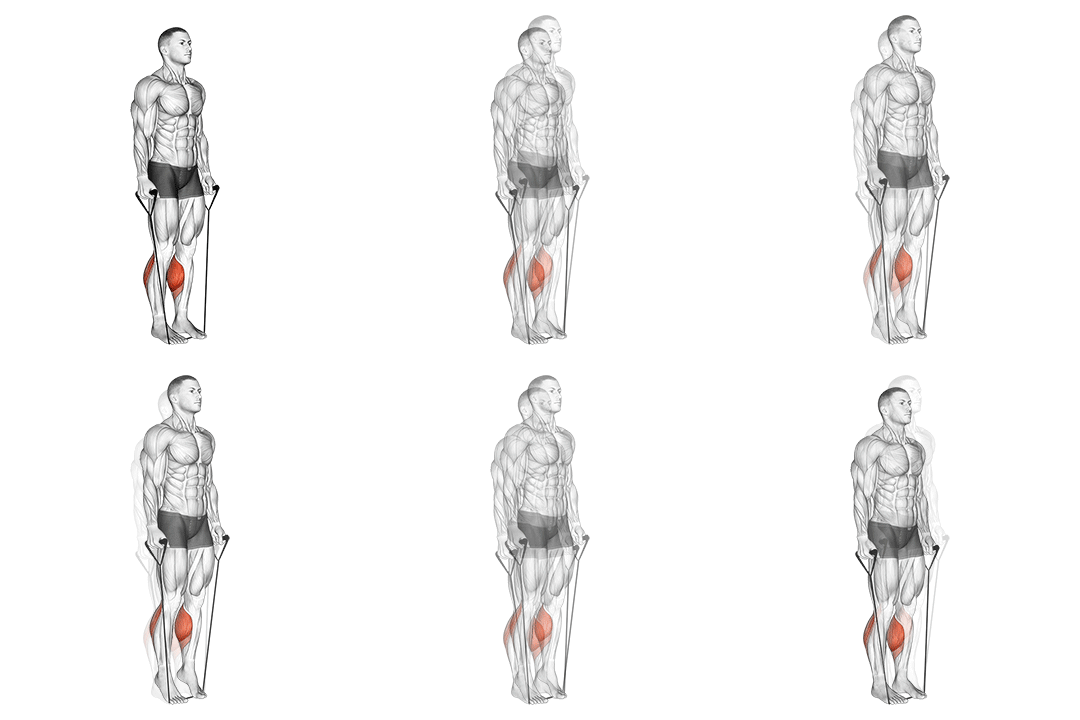
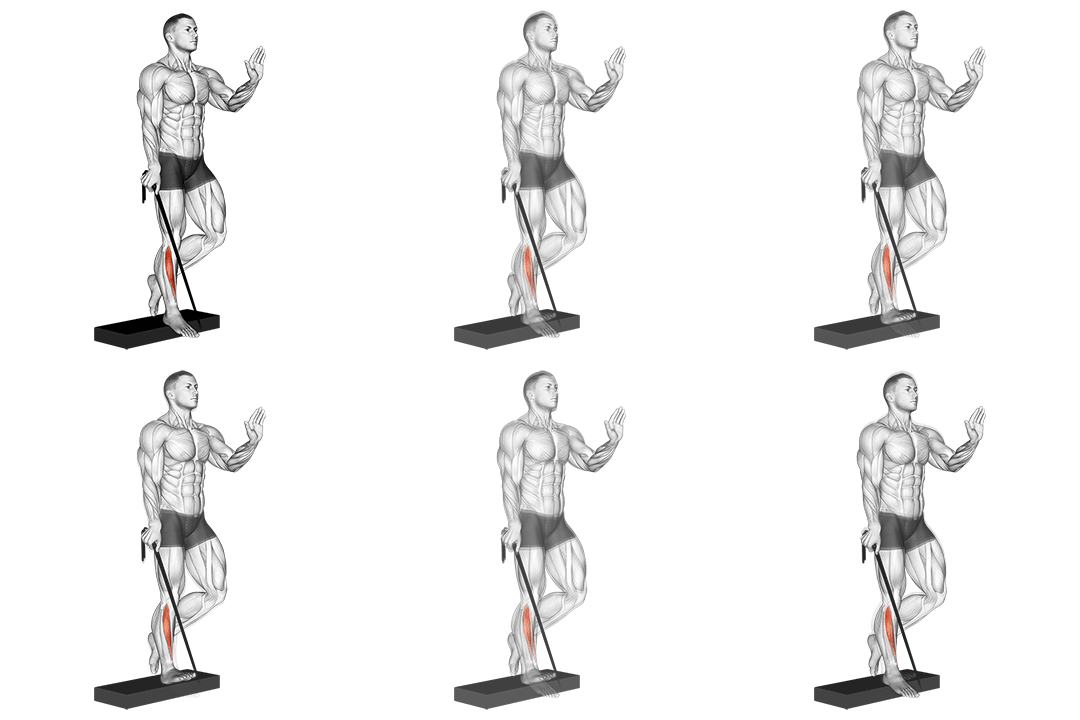
Band Two Legs Calf Raise - (band Under Both Legs) V. 2
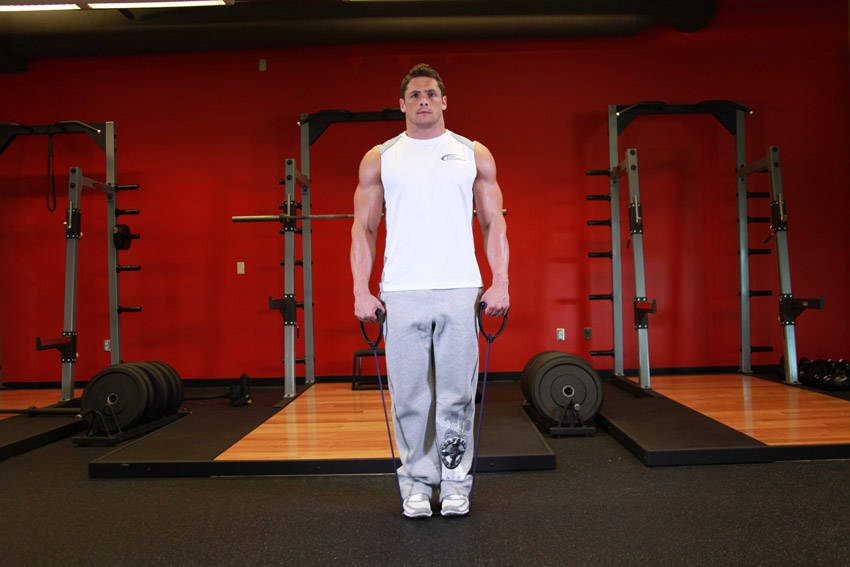
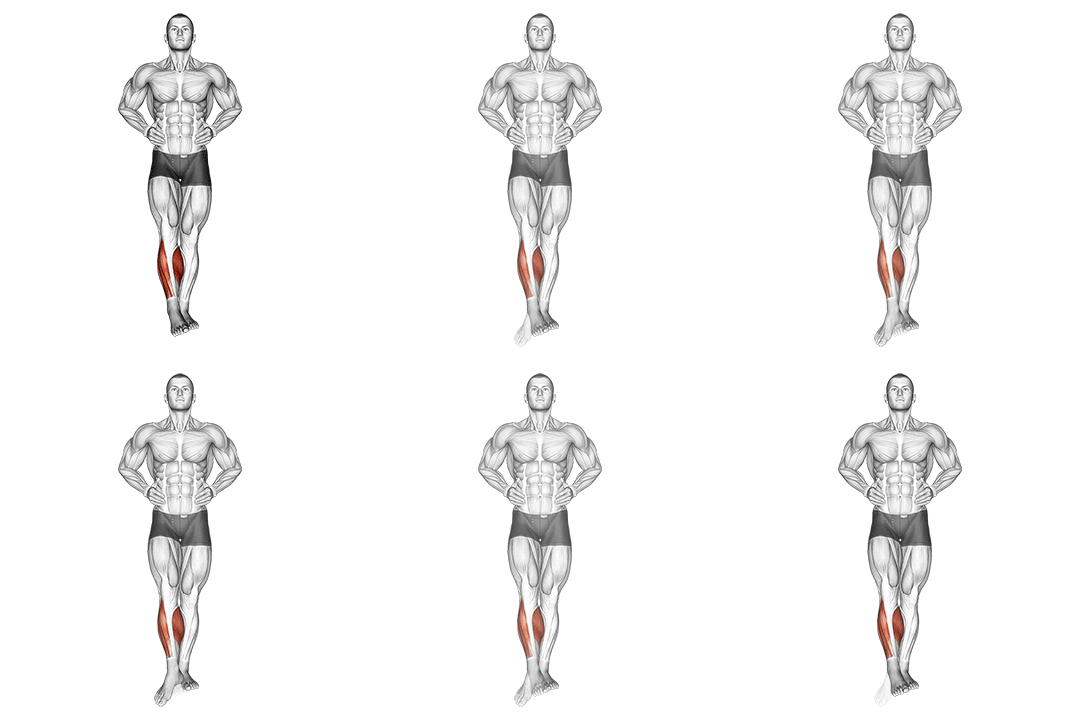
Calf Raises - With Bands
Head-to-Head Comparison
| Attribute | Band Two Legs Calf Raise - (band Under Both Legs) V. 2 | Calf Raises - With Bands |
|---|---|---|
| Target Muscle |
Calves
|
Calves
|
| Body Part |
Lower-legs
|
Lower-legs
|
| Equipment |
Band
|
Band
|
| Difficulty |
Beginner
|
Beginner
|
| Movement Type |
Isolation
|
Isolation
|
| Secondary Muscles |
2
|
0
|
Secondary Muscles Activated
Band Two Legs Calf Raise - (band Under Both Legs) V. 2
Calf Raises - With Bands
Visual Comparison
Overview
Band Two Legs Calf Raise - (band Under Both Legs) V. 2 vs Calf Raises - With Bands is the head-to-head you need when choosing simple banded calf work. I'll walk you through how each loads the gastrocnemius and soleus, the setup and technique cues you should use, and which one to pick for hypertrophy, strength, stability, or home training. Read on to get practical rep ranges, progression options, and clear biomechanics so you can pick the right calf exercise for your goals.
Key Differences
- Both exercises target the Calves using Band. The main differences are in their movement patterns and muscle activation angles.
Pros & Cons
Band Two Legs Calf Raise - (band Under Both Legs) V. 2
+ Pros
- Simple setup—band under both feet works without anchors
- Stable bilateral stance reduces balance demands for beginners
- Good for high-rep endurance work (12–25 reps)
- Easily used as a warm-up or finisher to improve ankle proprioception
− Cons
- Lower peak per-calf load limits maximal strength progress
- Variable resistance loads top range more than bottom range
- Fewer progression options compared to unilateral banded raises
Calf Raises - With Bands
+ Pros
- Easier to overload a single calf for hypertrophy and strength
- Flexible anchoring and leverage options offer progressive overload
- Can emphasize gastrocnemius (straight knee) or soleus (bent knee)
- Improves unilateral balance and hip stabilization when done single-leg
− Cons
- Requires more setup (anchors or different band wrapping)
- Higher balance and technique demand for beginners
- Band tension can spike at end range—manage tempo to avoid jerky motion
When Each Exercise Wins
Calf Raises - With Bands lets you overload one calf at a time and use heavier bands or altered leverage, producing higher peak per-muscle tension. That higher localized load combined with 8–15 reps optimizes mechanical tension for muscle growth.
Strength requires higher relative load and progressive overload; single-leg or anchored band raises allow lower-rep, higher-tension sets (4–8 reps) and eccentric focus—both are superior for increasing maximal plantarflexion force.
The bilateral setup is more stable and simpler to cue, letting you learn correct heel-rise mechanics, 1–2 second concentric and 2–3 second eccentric tempos, and safe range (aim for 10–20° dorsiflexion into 30–40° plantarflexion) before advancing.
It needs minimal setup and no anchor—just a band under both feet—so you can perform effective calf work anywhere. Use higher reps (12–20) or superset with single-leg work when you have heavier bands.
Frequently Asked Questions
Can I do both Band Two Legs Calf Raise - (band Under Both Legs) V. 2 and Calf Raises - With Bands in the same workout?
Yes — combine them by using the two-legs version as a warm-up or activation (12–20 reps) and follow with heavier single-leg or anchored Calf Raises - With Bands for 6–12 working reps. This sequence primes ankle control before higher-load sets and manages fatigue distribution.
Which exercise is better for beginners?
Band Two Legs Calf Raise - (band Under Both Legs) V. 2 is better for beginners because the bilateral stance is more stable and easier to cue. Focus on full ROM and controlled tempo before progressing to unilateral banded raises.
How do the muscle activation patterns differ?
Both show rising activation toward plantarflexion because band tension increases with shortening; unilateral or anchored Calf Raises concentrate force on one limb, raising peak activation per muscle. Bilateral band-under-both-feet spreads load, reducing peak per-calf activation but improving symmetry and endurance.
Can Calf Raises - With Bands replace Band Two Legs Calf Raise - (band Under Both Legs) V. 2?
Yes, for many goals Calf Raises - With Bands can replace the bilateral version if you can manage balance and band setup. However, keep the bilateral version in rotation for high-rep endurance, warm-ups, or when you need a simpler, more accessible option at home.
Expert Verdict
Use Band Two Legs Calf Raise - (band Under Both Legs) V. 2 when you want a quick, low-skill calf stimulus, high-rep endurance work, or a stable bilateral warm-up that also improves ankle proprioception. Choose Calf Raises - With Bands when you want targeted hypertrophy or strength: load a single calf, manipulate band leverage, and use 4–15 rep ranges with controlled tempo for maximal mechanical tension. If your goal is foundational control and simplicity, start with the bilateral version for 2–4 weeks, then progress to unilateral or anchored band raises to increase per-calf load and drive stronger muscle growth and force production.
Also Compare
More comparisons with Band Two Legs Calf Raise - (band Under Both Legs) V. 2
More comparisons with Calf Raises - With Bands
Compare More Exercises
Use our free comparison tool to analyze any two exercises head-to-head.
Compare Exercises