

Barbell Bench Front Squat vs Barbell Clean And Press: Complete Comparison Guide
Barbell Bench Front Squat vs Barbell Clean And Press — two barbell staples that both load the quads but serve very different goals. If you want clear guidance on which to program, this comparison walks you through muscle activation, movement mechanics, equipment needs, difficulty and programming cues. You’ll get technique checkpoints (elbow position, knee angle, hip drive), suggested rep ranges for hypertrophy and strength, and decisive recommendations so you can pick the lift that matches your goal: quad-specialization or full-body power and conditioning.
Exercise Comparison
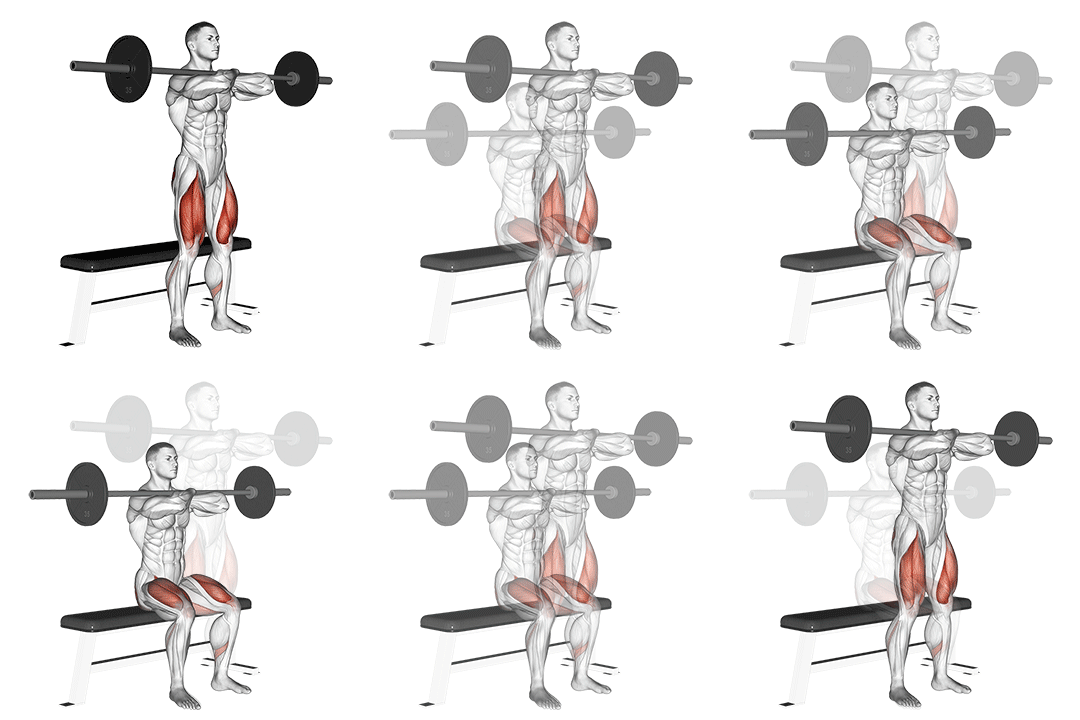
Barbell Bench Front Squat
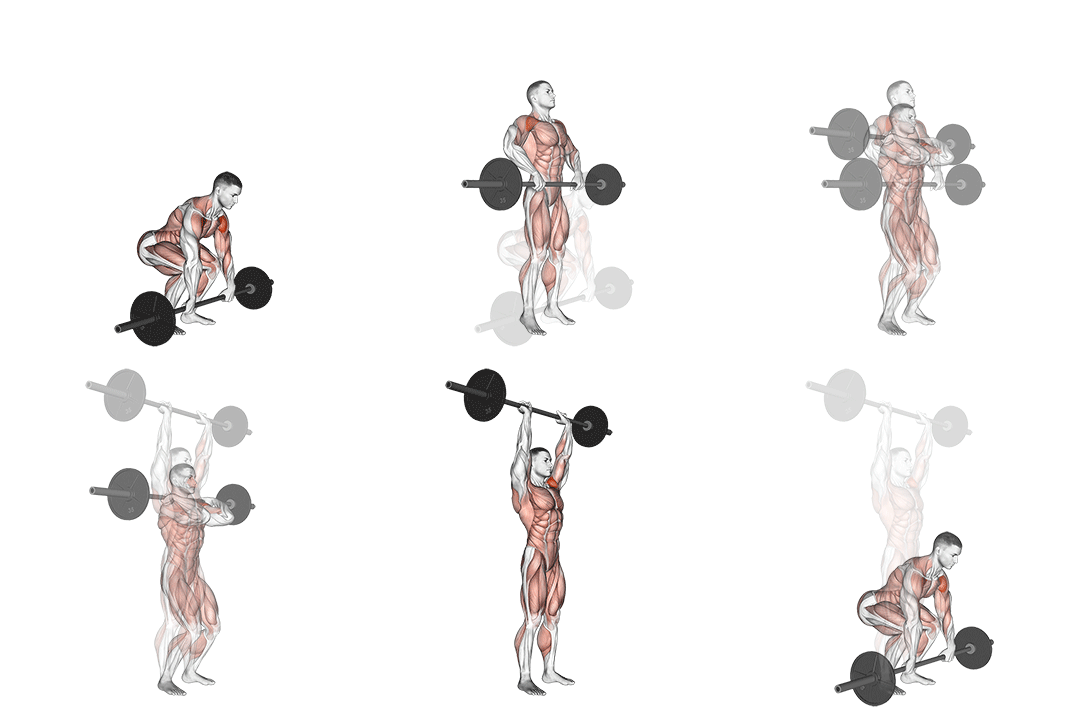
Barbell Clean And Press
Head-to-Head Comparison
| Attribute | Barbell Bench Front Squat | Barbell Clean And Press |
|---|---|---|
| Target Muscle |
Quads
|
Quads
|
| Body Part |
Upper-legs
|
Upper-legs
|
| Equipment |
Barbell
|
Barbell
|
| Difficulty |
Intermediate
|
Advanced
|
| Movement Type |
Compound
|
Compound
|
| Secondary Muscles |
3
|
4
|
Secondary Muscles Activated
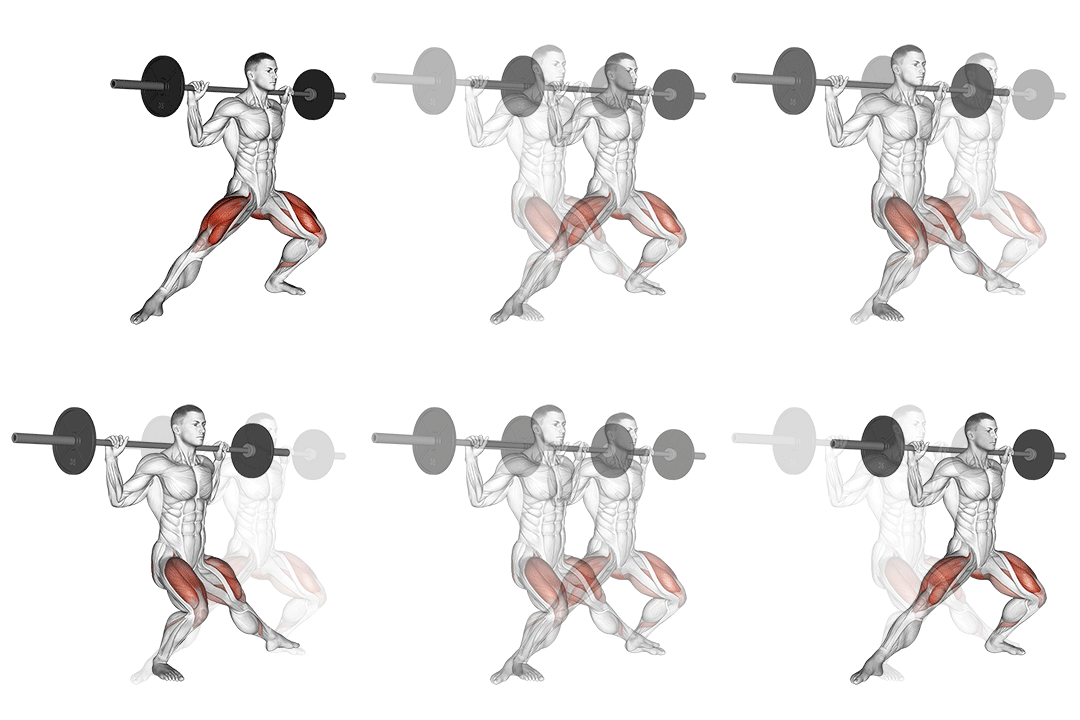
Barbell Bench Front Squat
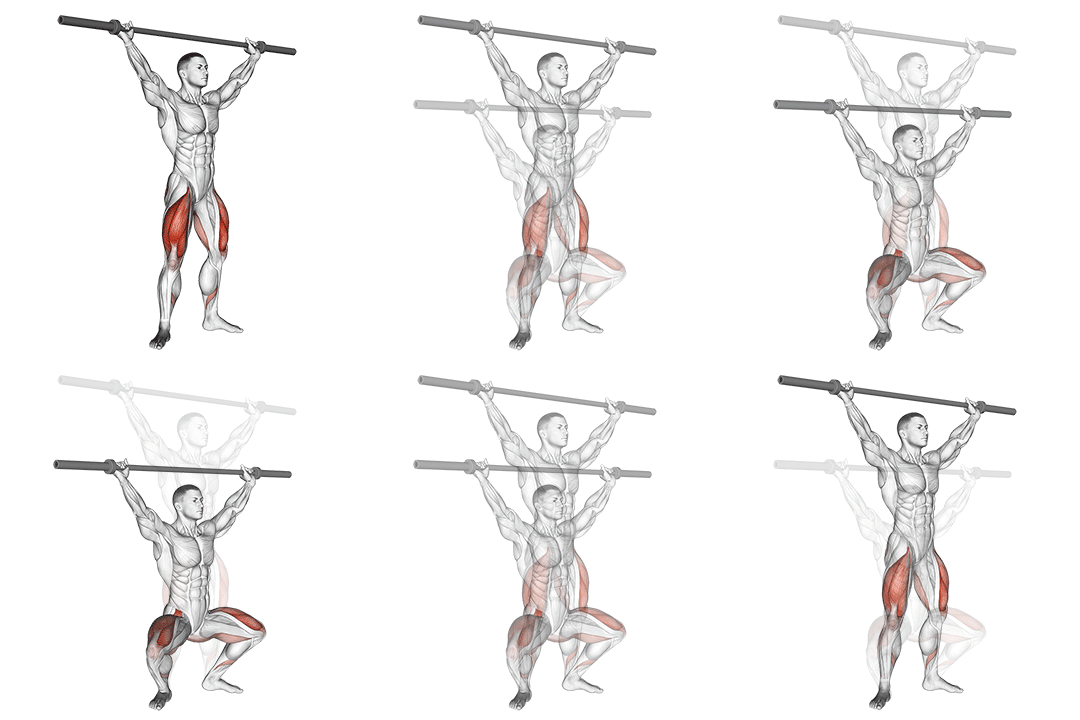
Barbell Clean And Press
Visual Comparison
Overview
Barbell Bench Front Squat vs Barbell Clean And Press — two barbell staples that both load the quads but serve very different goals. If you want clear guidance on which to program, this comparison walks you through muscle activation, movement mechanics, equipment needs, difficulty and programming cues. You’ll get technique checkpoints (elbow position, knee angle, hip drive), suggested rep ranges for hypertrophy and strength, and decisive recommendations so you can pick the lift that matches your goal: quad-specialization or full-body power and conditioning.
Key Differences
- Difficulty levels differ: Barbell Bench Front Squat is intermediate, while Barbell Clean And Press is advanced.
- Both exercises target the Quads using Barbell. The main differences are in their movement patterns and muscle activation angles.
Pros & Cons
Barbell Bench Front Squat
+ Pros
- Direct quad loading with upright torso increases knee extensor torque
- Safer fail point—bench limits depth and reduces fall risk
- Easier to cue and coach (elbows high, chest up, drive through mid-foot)
- Excellent for hypertrophy with controllable time under tension (6–12 reps)
− Cons
- Requires a rack and a bench for safest setup
- Anterior shoulder pressure can limit bar position for some lifters
- Less carryover to overhead strength and full-body power
Barbell Clean And Press
+ Pros
- Develops explosive triple extension and full-body power
- Adds substantial upper-body strength demand (delts, triceps) via the press
- Versatile: scales for power, strength, and conditioning work
- No rack required—can be done from floor/blocks if technique allows
− Cons
- Steep technical learning curve with higher acute injury risk
- Requires more mobility (wrists, shoulders, thoracic extension)
- Harder to load heavily for pure quad hypertrophy without technical breakdown
When Each Exercise Wins
The front squat keeps the torso upright and maintains continuous knee-extensor torque, allowing 6–12 rep sets with controlled tempo to maximize time under tension for quad muscle growth.
Clean-and-press develops whole-body strength and power through heavy singles/doubles in the clean and strict or push-press variations overhead—ideal for neurological strength and force transfer across joints.
It’s simpler to coach: cue elbow position, chest up, and a bench stop at ~90° knee flexion. The fixed path and slower tempo reduce technical failure compared with dynamic cleans.
Clean-and-press requires only a barbell and plates and no rack or bench; when practiced with lighter loads and strict technique it’s space-efficient and builds strength and conditioning in one movement.
Frequently Asked Questions
Can I do both Barbell Bench Front Squat and Barbell Clean And Press in the same workout?
Yes. If you pair them, place the clean-and-press earlier to prioritize power (do 3–5 heavy singles/low reps), then perform front squats for hypertrophy or strength (3–5 sets of 6–10). Monitor fatigue—keep total volume in check to avoid technical breakdown.
Which exercise is better for beginners?
Barbell Bench Front Squat is typically better for beginners because of its simpler movement pattern and safer stopping point at the bench. Beginners can learn upright torso mechanics and knee tracking before attempting dynamic lifts like the clean.
How do the muscle activation patterns differ?
Front squats create continuous quad-dominant activation with peak knee-extensor torque near 70–90° of knee flexion. Clean-and-press produces a rapid, high-power quad/hip burst during triple extension and shifts activation to deltoids/triceps during the press, so activation is phase-dependent.
Can Barbell Clean And Press replace Barbell Bench Front Squat?
Not if your primary goal is targeted quad hypertrophy. The clean-and-press trains more full-body power and overhead strength; it can supplement quad work but won’t match the continuous knee-extensor loading and time under tension you get from front squats.
Expert Verdict
Choose the Barbell Bench Front Squat when your goal is quad specialization, muscle growth, or when you need a controlled lift you can coach easily. Program 4–6 sets of 6–12 reps, keep elbows high and descend to a bench at about a 90° knee angle to maintain optimal length-tension in the quadriceps. Choose the Barbell Clean And Press when you want full-body strength, power and conditioning—train triples to singles for power (1–5 reps) or complexes for conditioning (6–10 reps). The clean-and-press trains triple extension, scapular stability and overhead strength, but demands better mobility and technique, so prioritize progressions and drills.
Also Compare
More comparisons with Barbell Bench Front Squat
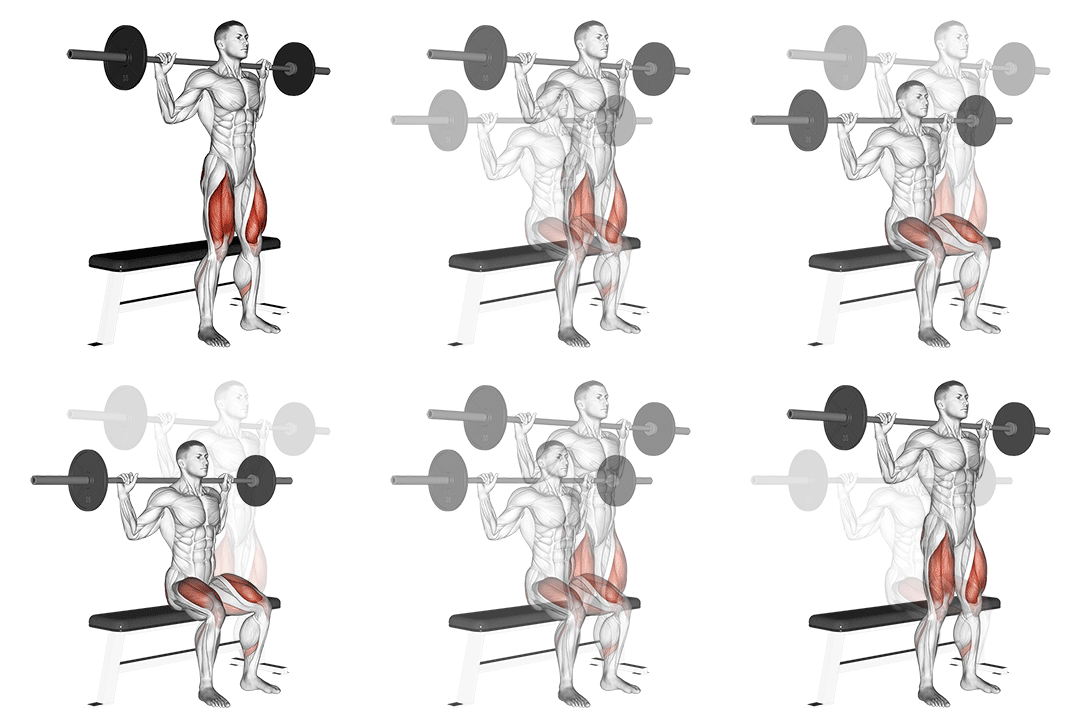
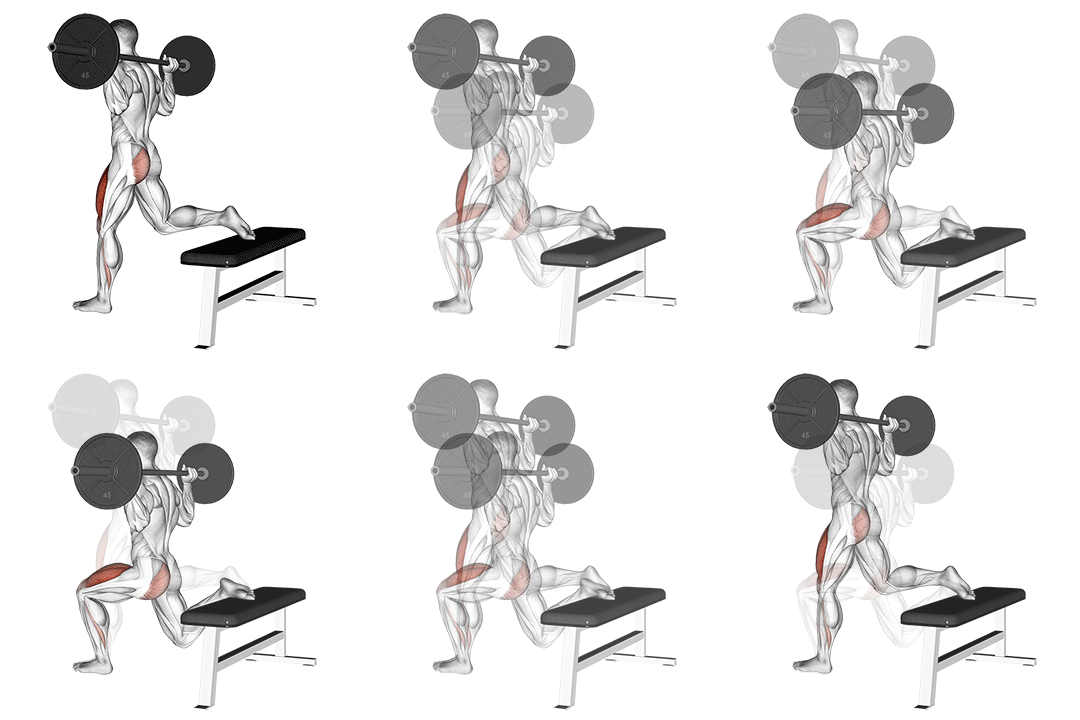
More comparisons with Barbell Clean And Press
Compare More Exercises
Use our free comparison tool to analyze any two exercises head-to-head.
Compare Exercises