

Barbell Bench Front Squat vs Barbell Overhead Squat: Complete Comparison Guide
Barbell Bench Front Squat vs Barbell Overhead Squat — two quad-dominant barbell movers that tax your legs in very different ways. If you want practical advice, this guide breaks down muscle activation, equipment needs, technical cues, mobility demands, and which exercise best fits hypertrophy, strength, or mobility goals. You’ll get clear comparisons of primary and secondary muscle work, learn specific technique cues (elbow position, bar path, trunk angle), and see rep-range recommendations so you can pick the right squat for your program.
Exercise Comparison
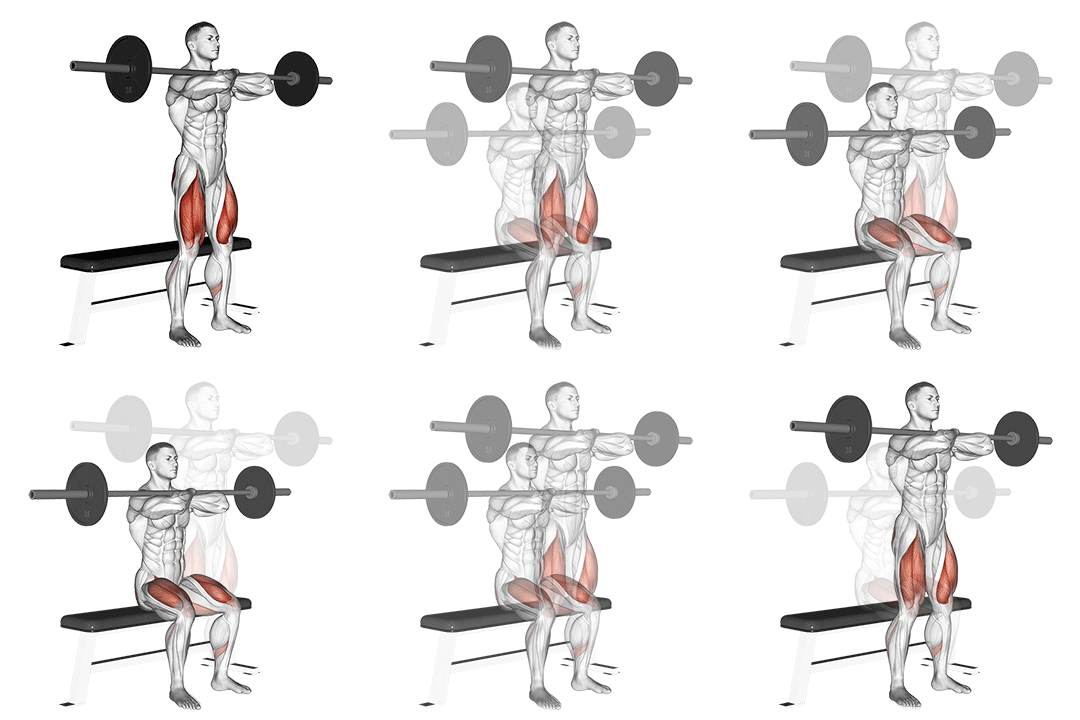
Barbell Bench Front Squat
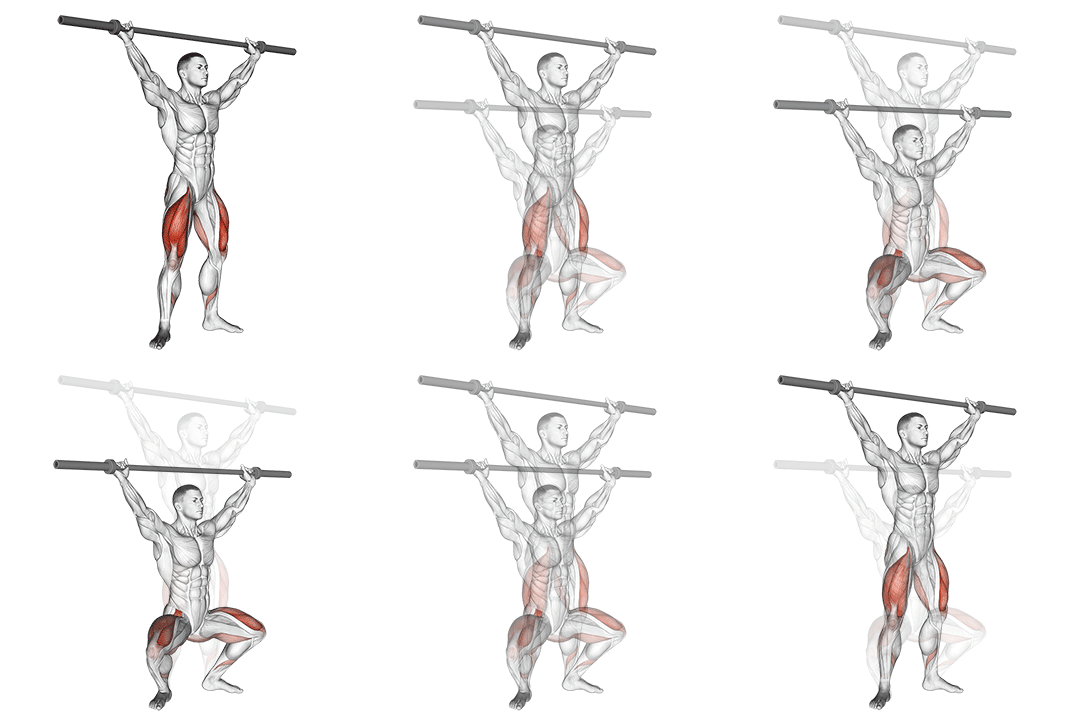
Barbell Overhead Squat
Head-to-Head Comparison
| Attribute | Barbell Bench Front Squat | Barbell Overhead Squat |
|---|---|---|
| Target Muscle |
Quads
|
Quads
|
| Body Part |
Upper-legs
|
Upper-legs
|
| Equipment |
Barbell
|
Barbell
|
| Difficulty |
Intermediate
|
Advanced
|
| Movement Type |
Compound
|
Compound
|
| Secondary Muscles |
3
|
4
|
Secondary Muscles Activated
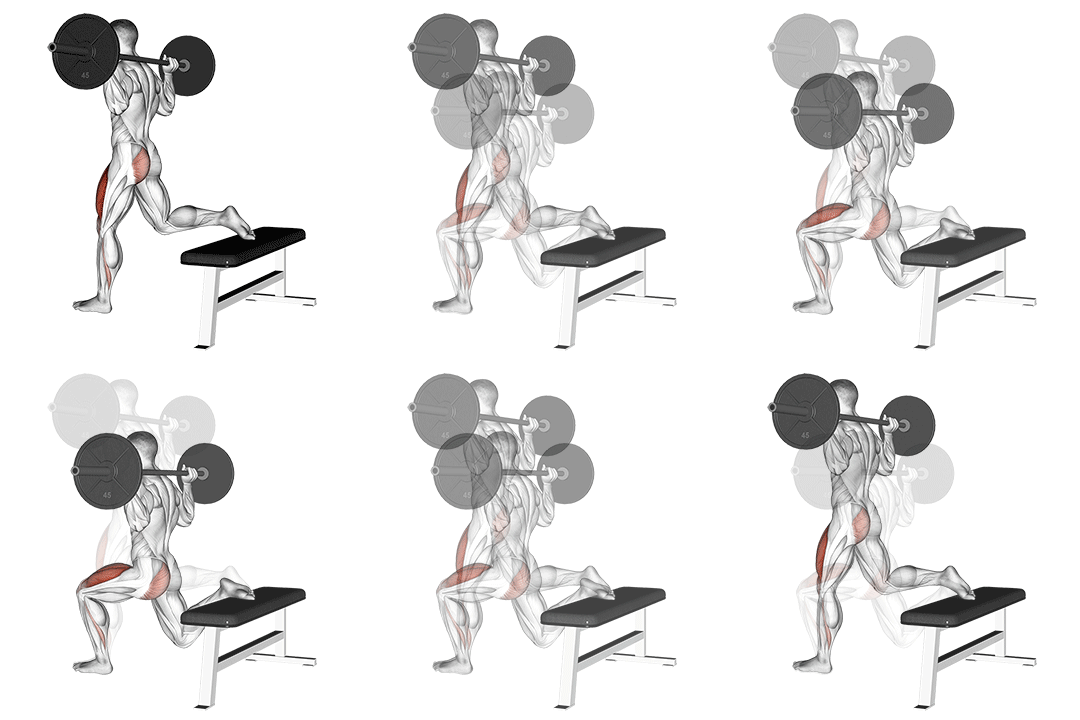
Barbell Bench Front Squat
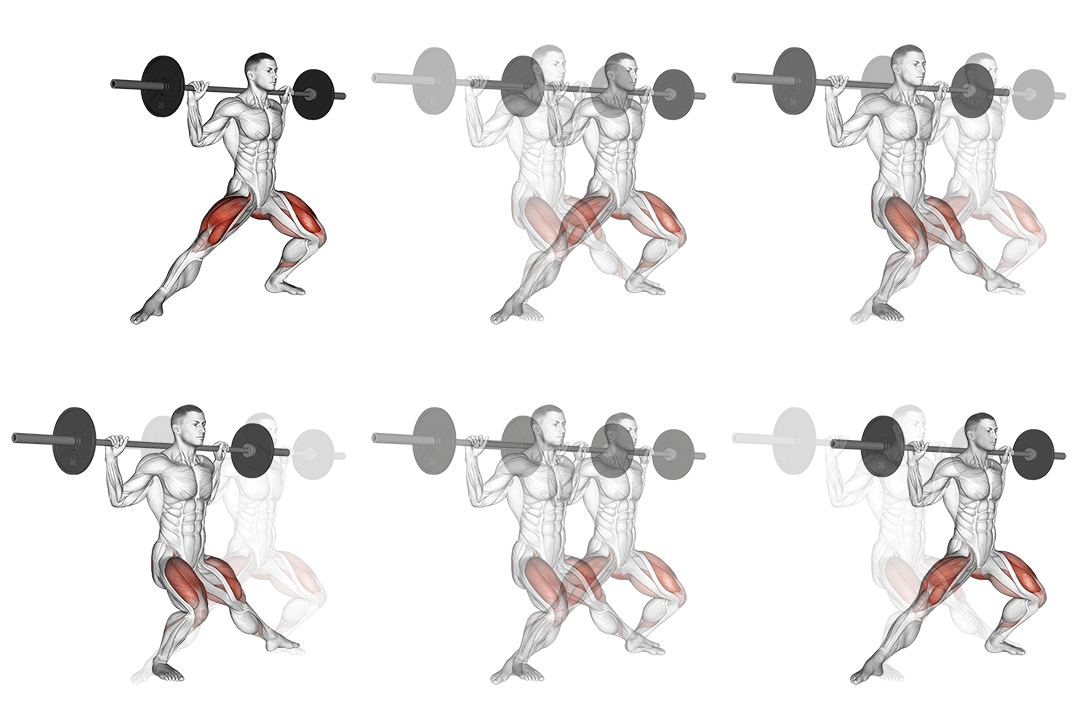
Barbell Overhead Squat
Visual Comparison
Overview
Barbell Bench Front Squat vs Barbell Overhead Squat — two quad-dominant barbell movers that tax your legs in very different ways. If you want practical advice, this guide breaks down muscle activation, equipment needs, technical cues, mobility demands, and which exercise best fits hypertrophy, strength, or mobility goals. You’ll get clear comparisons of primary and secondary muscle work, learn specific technique cues (elbow position, bar path, trunk angle), and see rep-range recommendations so you can pick the right squat for your program.
Key Differences
- Difficulty levels differ: Barbell Bench Front Squat is intermediate, while Barbell Overhead Squat is advanced.
- Both exercises target the Quads using Barbell. The main differences are in their movement patterns and muscle activation angles.
Pros & Cons
Barbell Bench Front Squat
+ Pros
- Direct quad emphasis via greater knee torque — ideal for hypertrophy (6–12 reps).
- Easier shoulder and thoracic mobility demands than overhead variations.
- Simple progressive overload: add load, pause at depth, change tempo.
- Safer for most lifters due to shorter lever arm and stable front rack.
− Cons
- Higher anterior knee stress if knees track poorly.
- Requires a good front-rack or clean grip; wrists can be stressed.
- Less demand on core and shoulder stability compared with overhead squat.
Barbell Overhead Squat
+ Pros
- Builds strong core and scapular stability due to long lever arm overhead.
- Improves thoracic extension, shoulder mobility, and balance through full ROM.
- Engages posterior chain more; useful for movement quality and athletic transfer.
- Challenges coordination and proprioception—great for technical development.
− Cons
- High mobility and technique demands — not beginner-friendly.
- Harder to load heavily for pure quad hypertrophy or maximal strength.
- Greater shoulder and low-back injury risk if mobility/technique are lacking.
When Each Exercise Wins
The front squat produces greater knee-extension torque and keeps the load close to the knees, which increases quad stress. Use 6–12 rep ranges, 3–5 sets, and paused reps to maximize time under tension and muscle growth.
Bench front squats allow heavier, more consistent loading and simpler progressive overload (3–6 rep heavy sets). Overhead squats are technical and limit raw load, so they’re less efficient for building maximal squat strength.
Front squats have a shorter learning curve and lower mobility requirements; you can scale with goblet squats and box touches to build technique before adding load.
Requires less overhead clearance and shoulder mobility and can be done with a basic rack and bench. Overhead squats often need bumper plates and space for safe unloading.
Frequently Asked Questions
Can I do both Barbell Bench Front Squat and Barbell Overhead Squat in the same workout?
Yes — but organize them smartly. Do heavy Barbell Bench Front Squats early for strength (3–6 or 6–12 reps), then use lighter Barbell Overhead Squat sets later as a mobility and stability finisher (8–15 reps) to avoid fatiguing the stabilizers before heavy lifts.
Which exercise is better for beginners?
Barbell Bench Front Squat is better for most beginners because it requires less shoulder and thoracic mobility and allows simpler load progression. Start with goblet squats and box-touch front squats to build the rack position and upright torso mechanics.
How do the muscle activation patterns differ?
Both target the quads via knee extension, but the front squat increases knee torque and quad dominance while the overhead squat increases posterior chain and core co-contraction due to a longer lever arm and higher trunk control demands. Overhead squats also recruit shoulder stabilizers continuously.
Can Barbell Overhead Squat replace Barbell Bench Front Squat?
Not if your primary goal is heavy quad development or maximal strength. Overhead squats train mobility, balance, and stability more than maximal load-bearing; use them to complement front squats rather than as a direct replacement.
Expert Verdict
Choose the Barbell Bench Front Squat when your primary goal is quad hypertrophy or straightforward strength progression — it increases knee-extension torque, tolerates limited shoulder mobility, and scales easily with sets of 3–12 reps. Use clear technique cues: elbows high, bar over mid-foot, knees tracking toes, and sit-back light if depth is coachable. Pick the Barbell Overhead Squat when you want to develop thoracic extension, shoulder stability, and core control; program it for mobility, balance, and movement quality with lighter loads and higher reps (8–15). Both have value — prioritize bench front squats for load-driven progress and overhead squats for mobility and stability work.
Also Compare
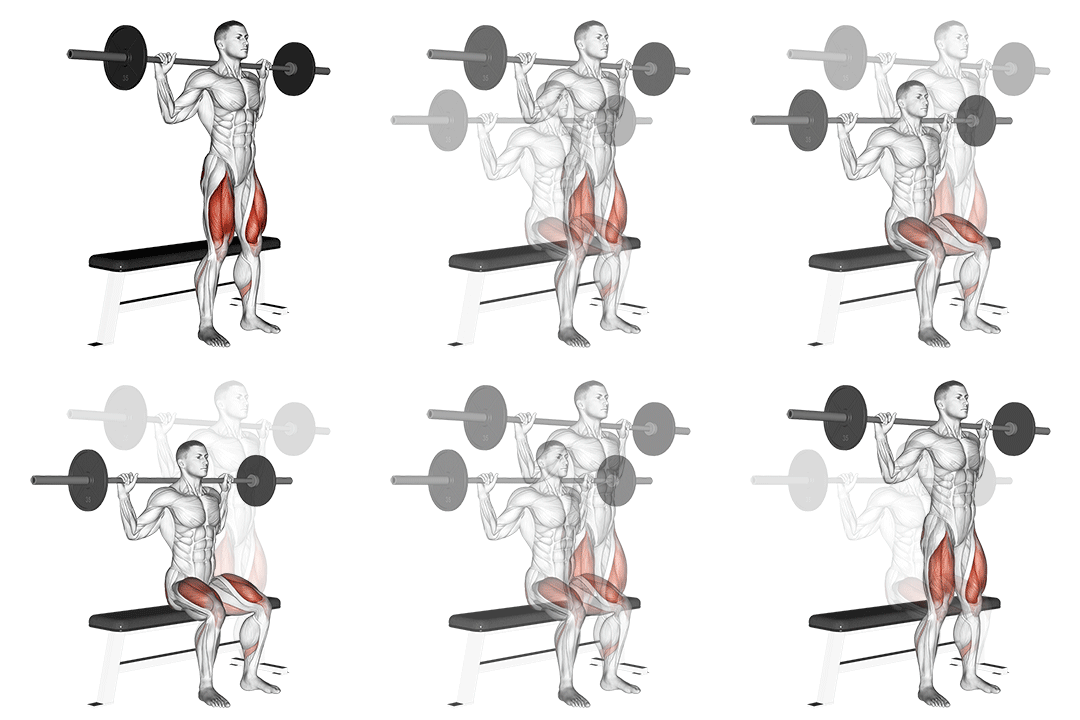
More comparisons with Barbell Bench Front Squat
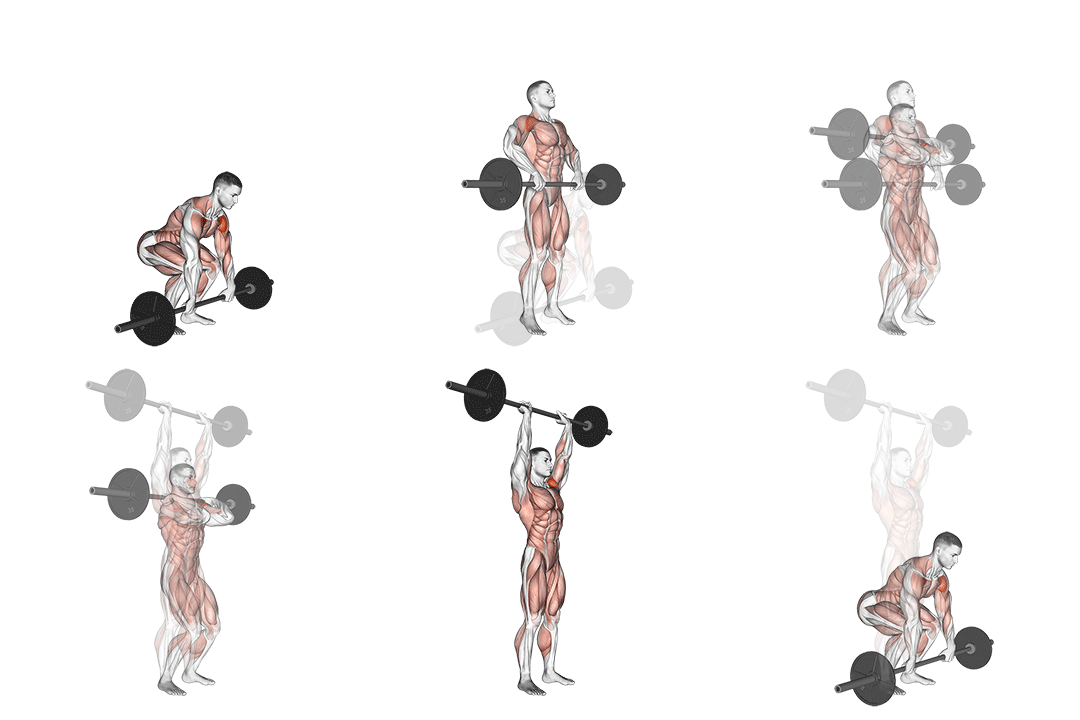
More comparisons with Barbell Overhead Squat
Compare More Exercises
Use our free comparison tool to analyze any two exercises head-to-head.
Compare Exercises