

Barbell Bench Squat vs Barbell Clean And Press: Complete Comparison Guide
Barbell Bench Squat vs Barbell Clean And Press — both use a barbell and hit your upper-legs, but they train your body very differently. In this comparison you'll get clear guidance on muscle activation, movement mechanics, equipment needs, and who should use each exercise for hypertrophy, strength, or power. I’ll cover technique cues you can apply right away, rep-range recommendations (6–12 for hypertrophy, 3–6 for strength, 1–5 for power), common faults, and progressions so you can choose the lift that matches your goals.
Exercise Comparison
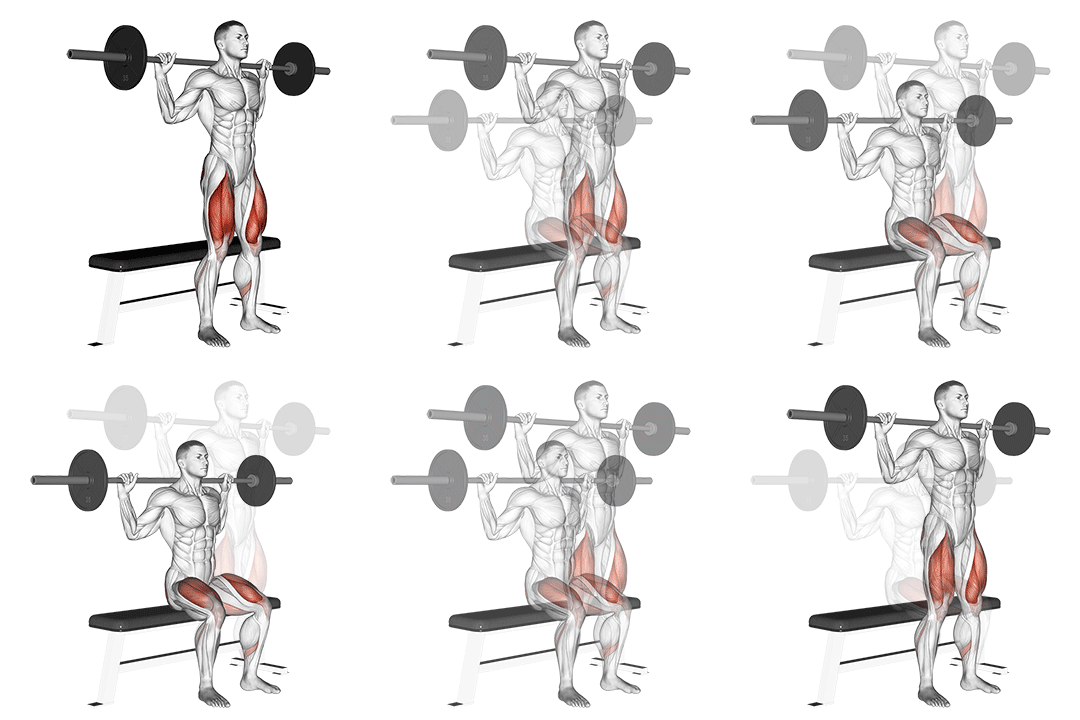
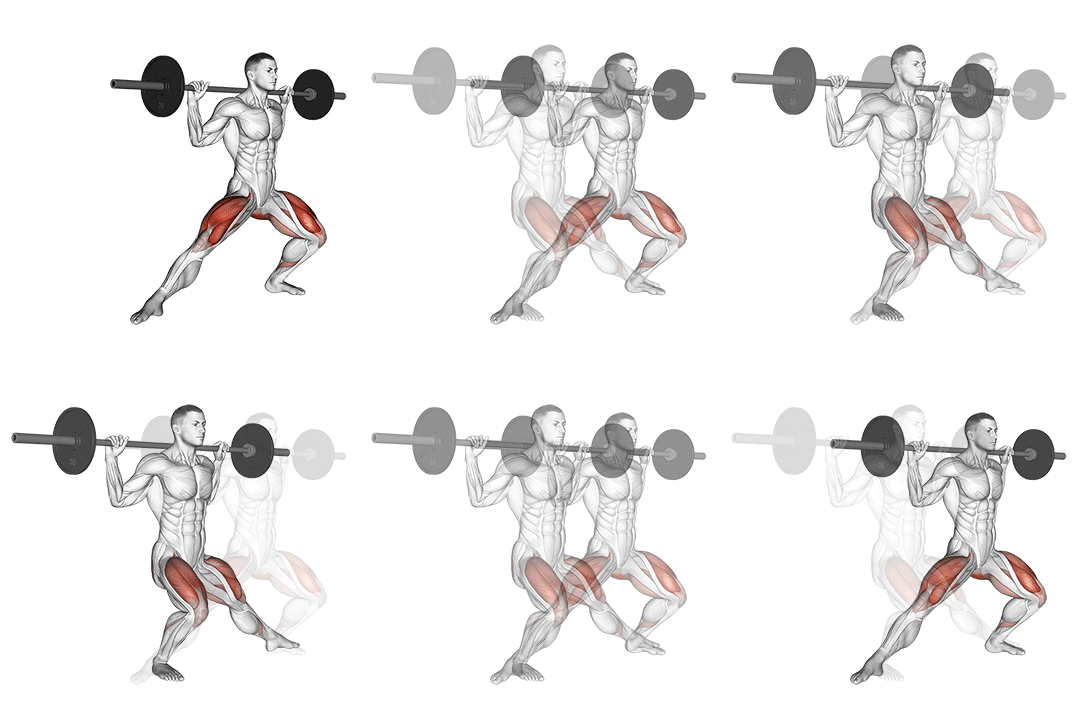
Barbell Bench Squat
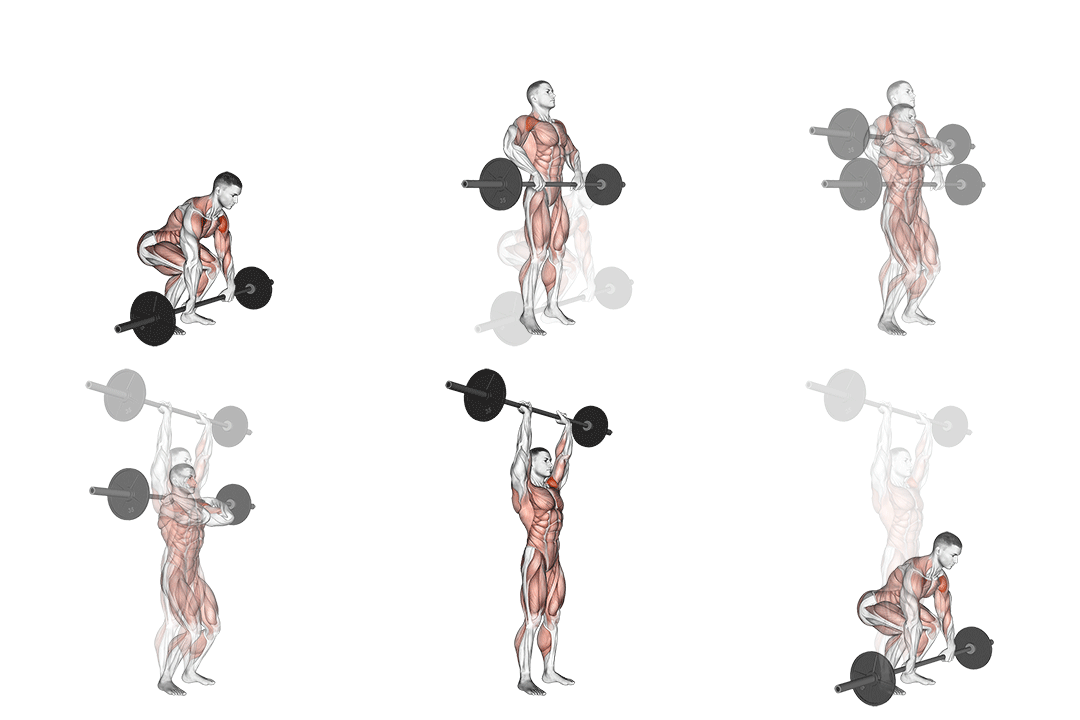
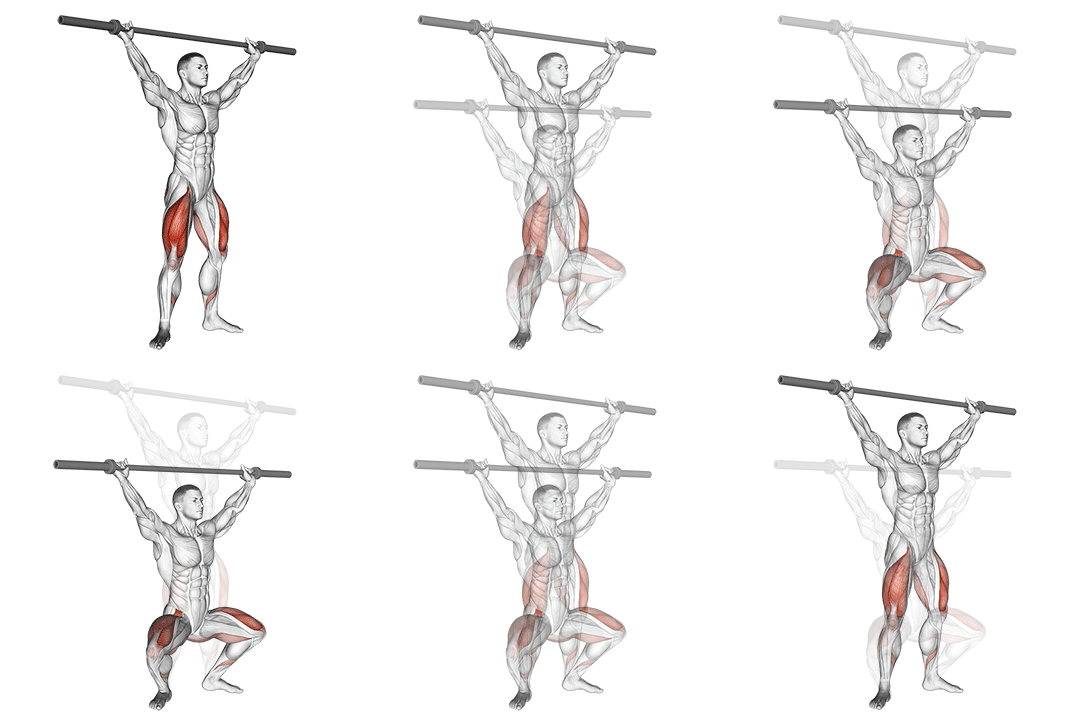
Barbell Clean And Press
Head-to-Head Comparison
| Attribute | Barbell Bench Squat | Barbell Clean And Press |
|---|---|---|
| Target Muscle |
Quads
|
Quads
|
| Body Part |
Upper-legs
|
Upper-legs
|
| Equipment |
Barbell
|
Barbell
|
| Difficulty |
Intermediate
|
Advanced
|
| Movement Type |
Compound
|
Compound
|
| Secondary Muscles |
3
|
4
|
Secondary Muscles Activated
Barbell Bench Squat
Barbell Clean And Press
Visual Comparison
Overview
Barbell Bench Squat vs Barbell Clean And Press — both use a barbell and hit your upper-legs, but they train your body very differently. In this comparison you'll get clear guidance on muscle activation, movement mechanics, equipment needs, and who should use each exercise for hypertrophy, strength, or power. I’ll cover technique cues you can apply right away, rep-range recommendations (6–12 for hypertrophy, 3–6 for strength, 1–5 for power), common faults, and progressions so you can choose the lift that matches your goals.
Key Differences
- Difficulty levels differ: Barbell Bench Squat is intermediate, while Barbell Clean And Press is advanced.
- Both exercises target the Quads using Barbell. The main differences are in their movement patterns and muscle activation angles.
Pros & Cons
Barbell Bench Squat
+ Pros
- Direct quad focus with vertical torso — great for isolating knee-extension force
- Lower technical demand than Olympic-style lifts; easier to teach and scale
- Safer to load heavy for hypertrophy and strength in 3–12 rep ranges
- Simple equipment needs: barbell and bench/box
− Cons
- Limited carryover to explosive athletic movements compared with cleans
- Can place repeated shear on knees if depth and technique are poor
- Less upper-body and posterior chain development than compound full-body lifts
Barbell Clean And Press
+ Pros
- Builds full-body power through triple extension and overhead strength
- High carryover to athletic performance and rate-of-force development
- Engages shoulders, triceps, upper back, and core in addition to legs
- Numerous progression pathways: complexes, power cleans, push presses
− Cons
- Technically demanding — requires coaching and practice to perform safely
- Higher injury risk if mobility or timing is poor, especially shoulders and lower back
- Requires more space and often bumper plates to train dynamically
When Each Exercise Wins
The bench squat allows sustained quad tension at deep knee angles (around 90°+) and easy volume loading in the 6–12 rep range, which maximizes time under tension and mechanical tension on muscle fibers for growth.
For pure lower-body strength focused on maximal bar-loaded knee-extension torque, heavy bench squats in the 3–6 rep range provide safer, more specific overload than the technical and velocity-dependent clean and press.
Its movement pattern is simpler to grasp, progressions are straightforward, and it requires less neuromuscular coordination than learning cleans and overhead transitions.
Requires minimal space and standard plates; you can perform it safely in a rack with a bench. The clean and press often needs bumpers and more room for dynamic movement.
Frequently Asked Questions
Can I do both Barbell Bench Squat and Barbell Clean And Press in the same workout?
Yes, but sequence matters. Do clean-and-press work early if you want quality power (1–5RM or speed sets), then use bench squats for heavier strength or hypertrophy sets. Alternating them in a session increases fatigue and tech breakdown risk.
Which exercise is better for beginners?
Barbell Bench Squat is better for most beginners because it has a simpler, repeatable pattern and lower ballistic demand. Start with tempo and depth control before adding load; introduce cleans later with coaching.
How do the muscle activation patterns differ?
Bench squat creates sustained quad activation through deep knee flexion and an upright torso, emphasizing force at longer muscle lengths. The clean drives force through a brief, explosive triple extension—quads contribute in a high-velocity burst before upper-body involvement in the press.
Can Barbell Clean And Press replace Barbell Bench Squat?
Not completely. The clean and press develops power and upper-body strength but distributes load across more joints, so it won’t match the sustained quad stimulus of bench squats for hypertrophy or pure knee-extension strength.
Expert Verdict
Choose the Barbell Bench Squat when your priority is focused quad development, repeatable heavy loading, and a lower technical barrier — it’s ideal for hypertrophy (6–12 reps) and strength blocks (3–6 reps) because of its vertical force vector and sustained knee torque. Choose the Barbell Clean And Press if you want full-body power, athletic transfer, and overhead strength; program it for low-rep power work (1–5 reps) and complexes that develop rate of force development. If you can, program both: use bench squats for quad volume and clean-and-press variations for power and conditioning on alternate days or phases.
Also Compare
More comparisons with Barbell Bench Squat
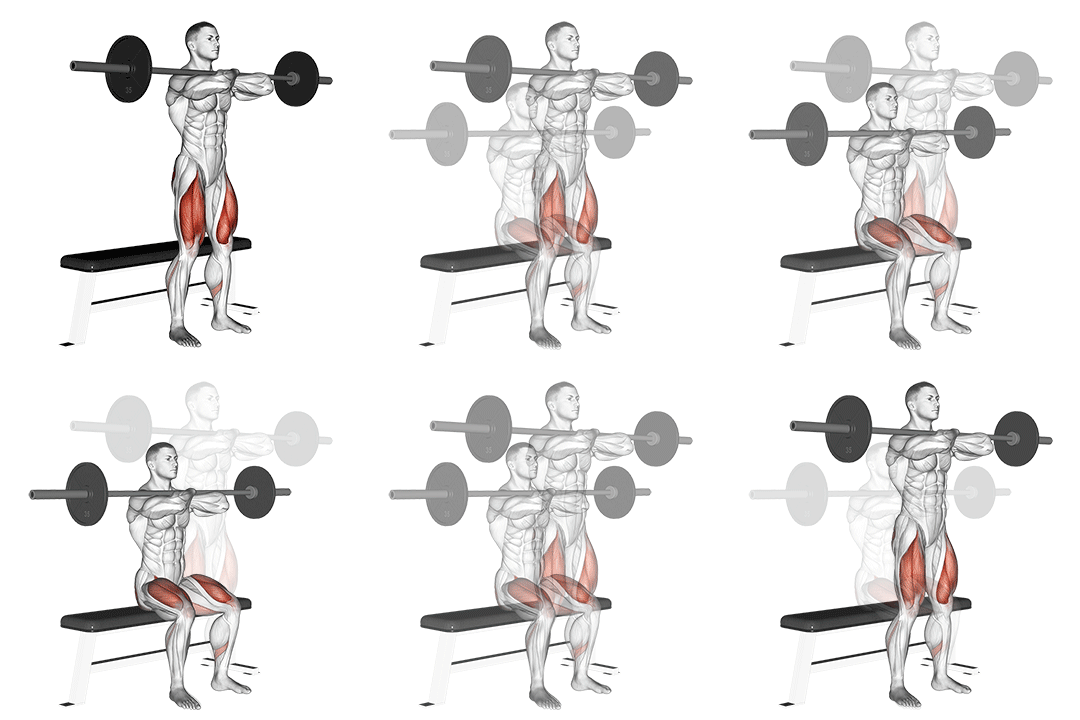
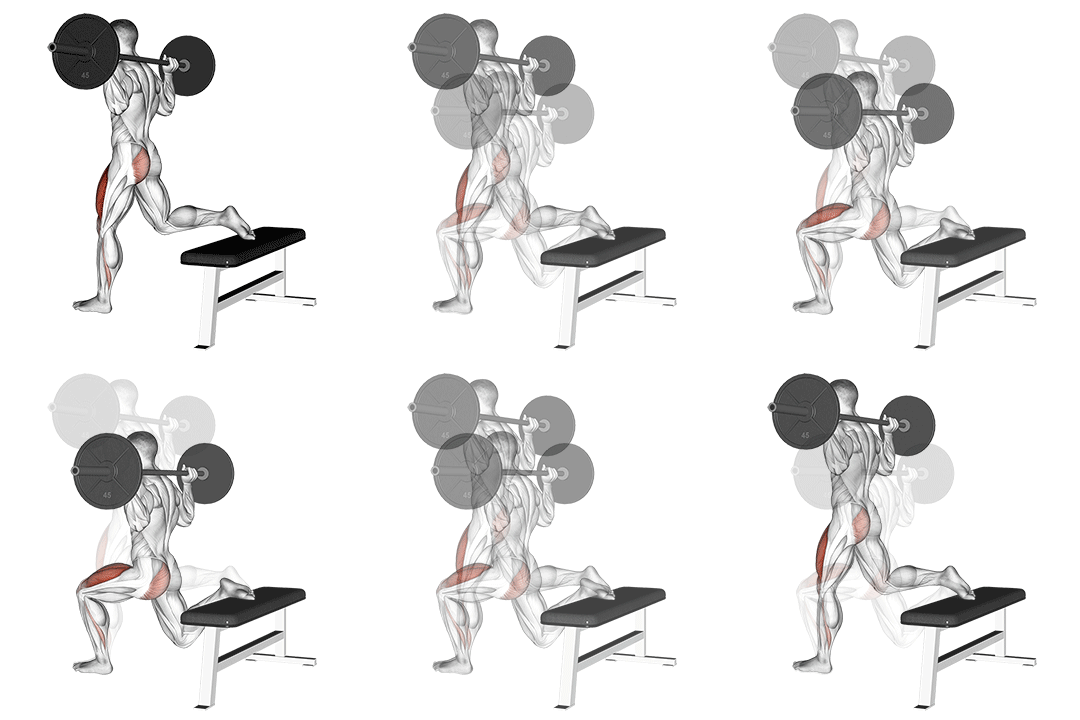
More comparisons with Barbell Clean And Press
Compare More Exercises
Use our free comparison tool to analyze any two exercises head-to-head.
Compare Exercises