

Barbell Bench Squat vs Barbell Overhead Squat: Complete Comparison Guide
Barbell Bench Squat vs Barbell Overhead Squat — you’ll learn exactly how these two quad-dominant, barbell-based compound lifts differ and which fits your goals. I’ll walk you through primary and secondary muscle recruitment, equipment needs, technical cues, mobility demands, and programming tips (rep ranges, tempo, progression). You’ll also find clear recommendations for hypertrophy, strength, beginners, and home workouts, plus short how-to cues to reduce injury risk. For quick scanning, each section uses practical technique cues and biomechanical explanations so you can apply this immediately. {Exercise1} vs {Exercise2}
Exercise Comparison
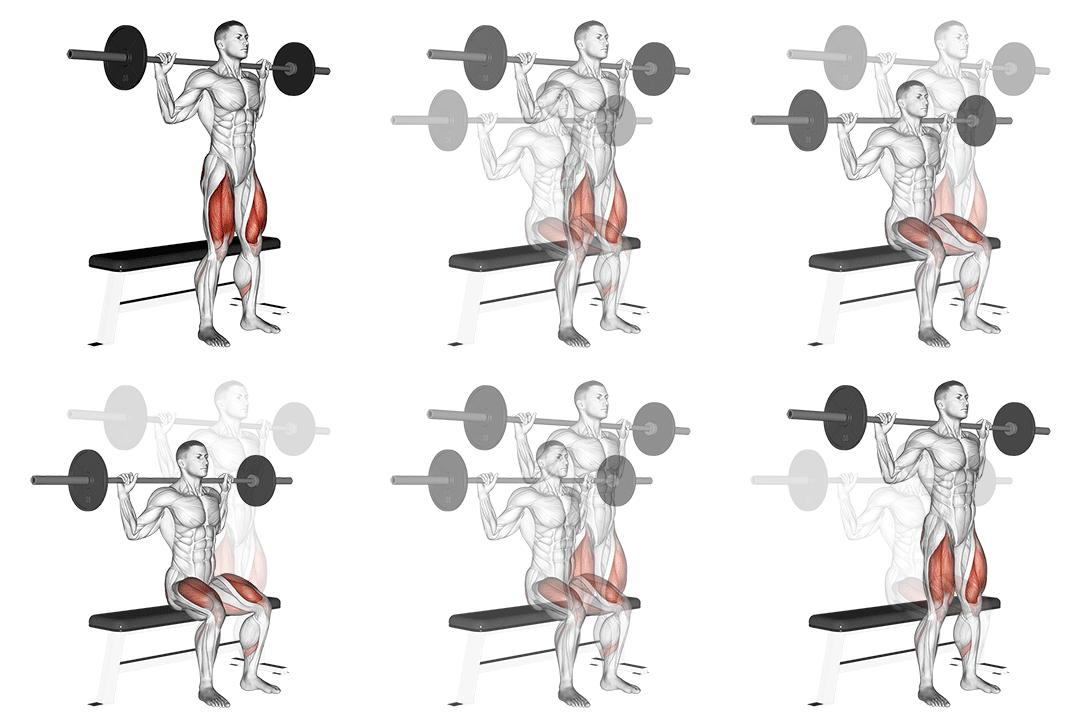
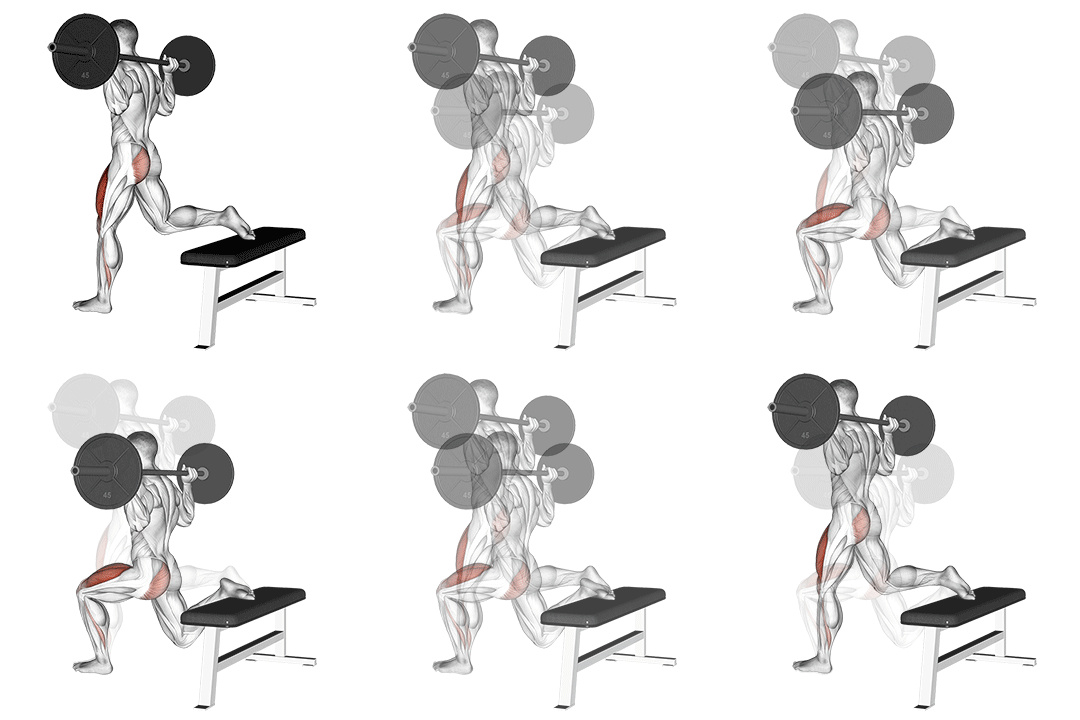
Barbell Bench Squat
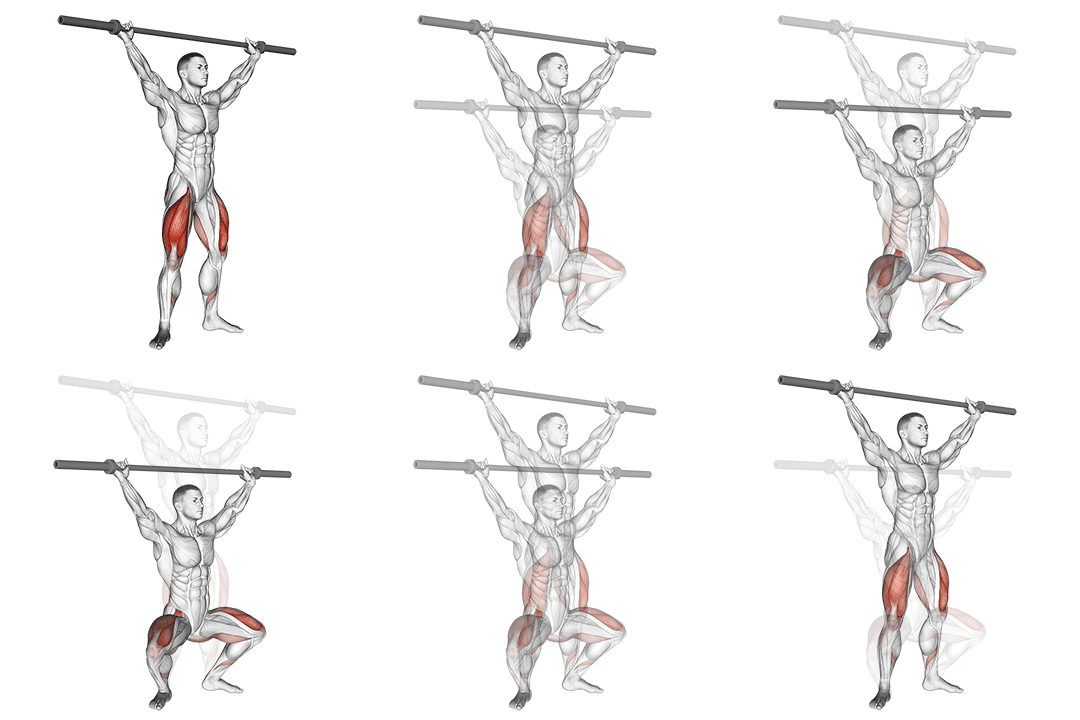
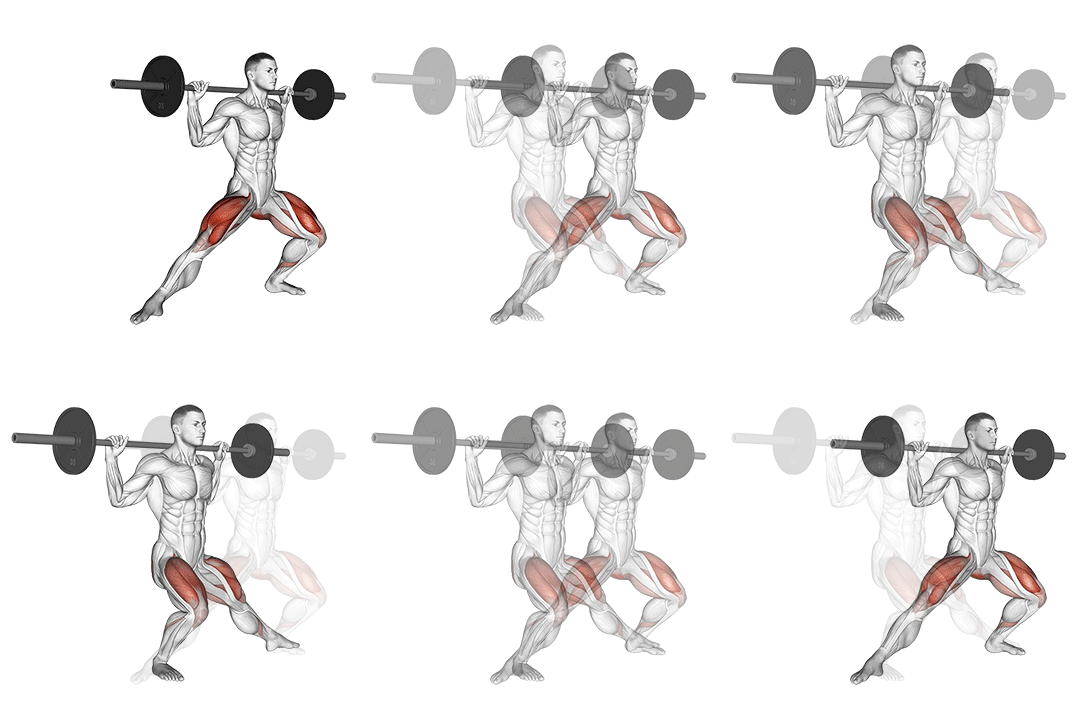
Barbell Overhead Squat
Head-to-Head Comparison
| Attribute | Barbell Bench Squat | Barbell Overhead Squat |
|---|---|---|
| Target Muscle |
Quads
|
Quads
|
| Body Part |
Upper-legs
|
Upper-legs
|
| Equipment |
Barbell
|
Barbell
|
| Difficulty |
Intermediate
|
Advanced
|
| Movement Type |
Compound
|
Compound
|
| Secondary Muscles |
3
|
4
|
Secondary Muscles Activated
Barbell Bench Squat
Barbell Overhead Squat
Visual Comparison
Overview
Barbell Bench Squat vs Barbell Overhead Squat — you’ll learn exactly how these two quad-dominant, barbell-based compound lifts differ and which fits your goals. I’ll walk you through primary and secondary muscle recruitment, equipment needs, technical cues, mobility demands, and programming tips (rep ranges, tempo, progression). You’ll also find clear recommendations for hypertrophy, strength, beginners, and home workouts, plus short how-to cues to reduce injury risk. For quick scanning, each section uses practical technique cues and biomechanical explanations so you can apply this immediately. {Exercise1} vs {Exercise2}
Key Differences
- Difficulty levels differ: Barbell Bench Squat is intermediate, while Barbell Overhead Squat is advanced.
- Both exercises target the Quads using Barbell. The main differences are in their movement patterns and muscle activation angles.
Pros & Cons
Barbell Bench Squat
+ Pros
- Allows heavier loading for progressive overload and strength (typical working sets 3–6 reps for strength, 6–12 for hypertrophy)
- Shorter technical learning curve — easy to teach box-touch and tempo variations
- Direct quad emphasis due to larger knee-extension moment and forward knee travel
- Easier to program into standard strength and hypertrophy blocks and use spotters/rack safety
− Cons
- Lower demand on core and upper-back stability compared with overhead variations
- Requires a rack and bench/box for safe loading—less usable without equipment
- Can encourage excessive forward knee stress or torso collapse if technique is poor
Barbell Overhead Squat
+ Pros
- Develops thoracic extension, shoulder stability, and anti-flexion core strength
- Improves mobility and balance—translates to better overhead positions and Olympic lifts
- Trains squat depth with an upright torso and challenges coordination
- Effective for full-body integration and teaching bar path control
− Cons
- High technical demand; long learning curve and greater mobility prerequisites
- Generally limits absolute load — you’ll use lighter weights than box/back squats
- Increased risk of shoulder or low-back strain if technique or mobility is lacking
When Each Exercise Wins
Bench squat lets you load the quads more heavily and consistently in the 6–12 rep range, producing greater mechanical tension through longer time under tension. The knee-extension dominant force vector places direct stress on the quadriceps for targeted hypertrophy.
Because you can safely handle heavier absolute loads and use progressive overload (add 2.5–10% per mesocycle), bench squat is superior for building raw lower-body strength. It allows heavier 1–5RM work while maintaining clean technique.
Bench squat has a shallower technical learning curve and lower mobility demands; beginners can learn box-to-stand progressions and safely increase load with rack safety. It develops quadriceps strength without requiring advanced shoulder or thoracic control.
If you lack a squat rack and bench, the overhead squat can be performed with a barbell or even a single-loaded implement in open space. It requires less fixed equipment, and you can scale load safely with lighter plates or a PVC/barbell to build mobility and stability.
Frequently Asked Questions
Can I do both Barbell Bench Squat and Barbell Overhead Squat in the same workout?
Yes. Pair them intelligently: place the technical overhead squat earlier for low-rep practice (3–6 reps) or use it as a mobility-priming single-set, then follow with loaded bench squat sets for strength or hypertrophy. Keep total volume manageable to avoid fatigue-driven technique breakdown.
Which exercise is better for beginners?
Barbell Bench Squat is better for most beginners because it has a shorter learning curve and lower mobility requirements. Start with box-to-stand progressions and build load once you can maintain upright posture and knee tracking.
How do the muscle activation patterns differ?
Bench squat produces higher knee-extension moments, biasing the quadriceps under longer muscle lengths at the bottom. Overhead squat requires higher anti-flexion core torque and upper-back activation to keep the bar over mid-foot, shifting part of the load to hip extensors and stabilizers while keeping quads active.
Can Barbell Overhead Squat replace Barbell Bench Squat?
Not as a direct replacement for strength or hypertrophy goals. Overhead squat builds mobility and stability but limits absolute load; it complements bench squats well. If your goal is maximal quad mass or 1RM strength, prioritize bench squats and use overhead squats as accessory work.
Expert Verdict
Use the Barbell Bench Squat when your priority is quad hypertrophy or raw strength and you have access to a rack and bench/box. Its knee-focused force vector and straightforward loading make it ideal for 3–6RM strength cycles and 6–12RM hypertrophy work. Choose tempo variations (3–1–1) and stop at a consistent box height to protect the low back and knees. Opt for the Barbell Overhead Squat when your goal is to improve thoracic extension, shoulder stability, and whole-body coordination—program it for technique and mobility (3–8 reps) rather than maximal load. For most lifters, prioritize bench squats for mass and strength, and add overhead squats as a mobility/stability accessory or sport-specific tool.
Also Compare
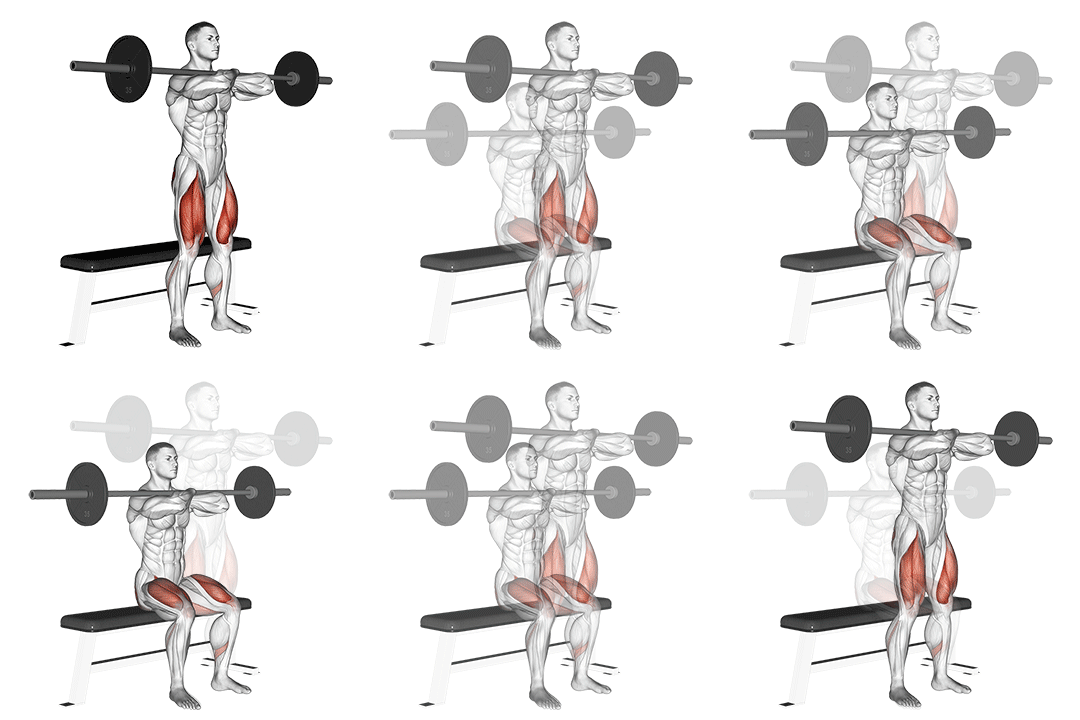
More comparisons with Barbell Bench Squat
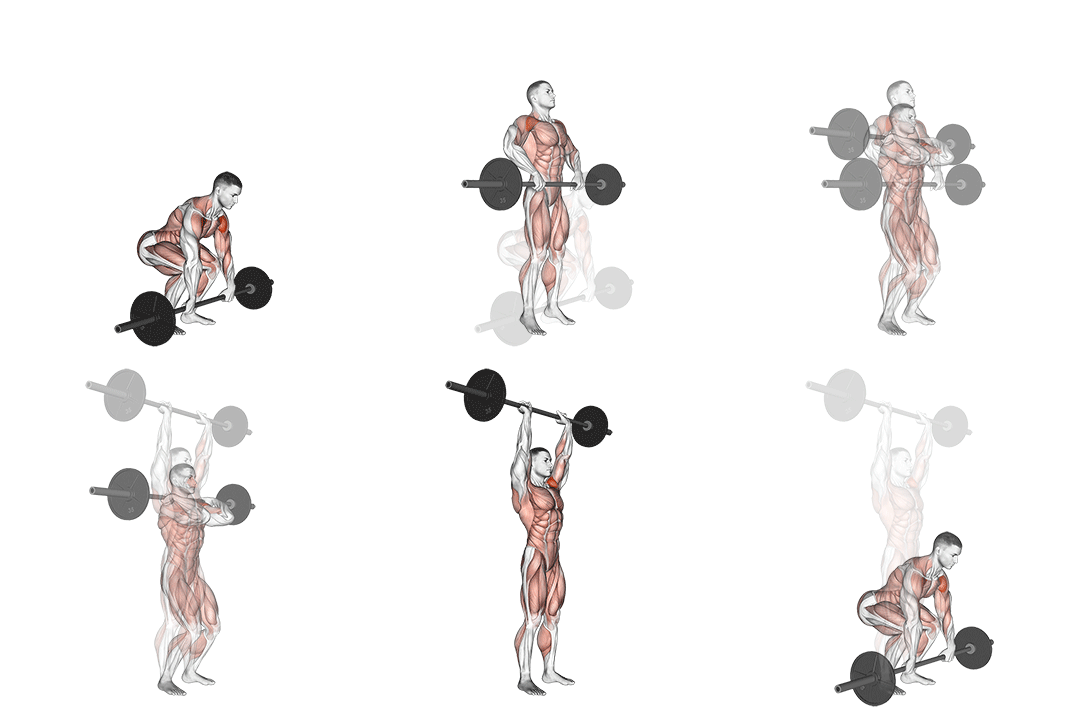
More comparisons with Barbell Overhead Squat
Compare More Exercises
Use our free comparison tool to analyze any two exercises head-to-head.
Compare Exercises