

Barbell Clean And Press vs Barbell One Leg Squat: Complete Comparison Guide
Barbell Clean And Press vs Barbell One Leg Squat — you’re choosing between a full-body power move and a high-skill unilateral leg builder. This guide walks you through muscle activation, movement mechanics, equipment needs, learning curve, and practical progressions. I’ll show specific technique cues (bar path, hip hinge, knee angles), rep ranges for strength and hypertrophy, and when to pick one exercise over the other based on your goals. Read on to learn which exercise loads the quads harder, which stresses shoulder and triceps, and how to program each into your week.
Exercise Comparison
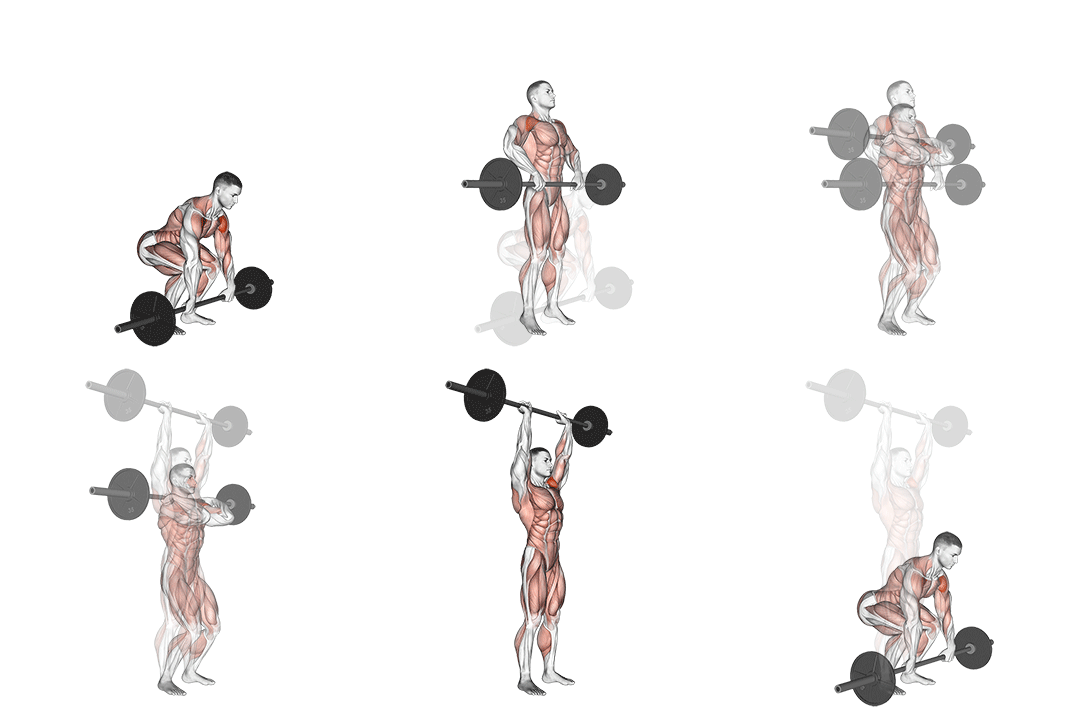
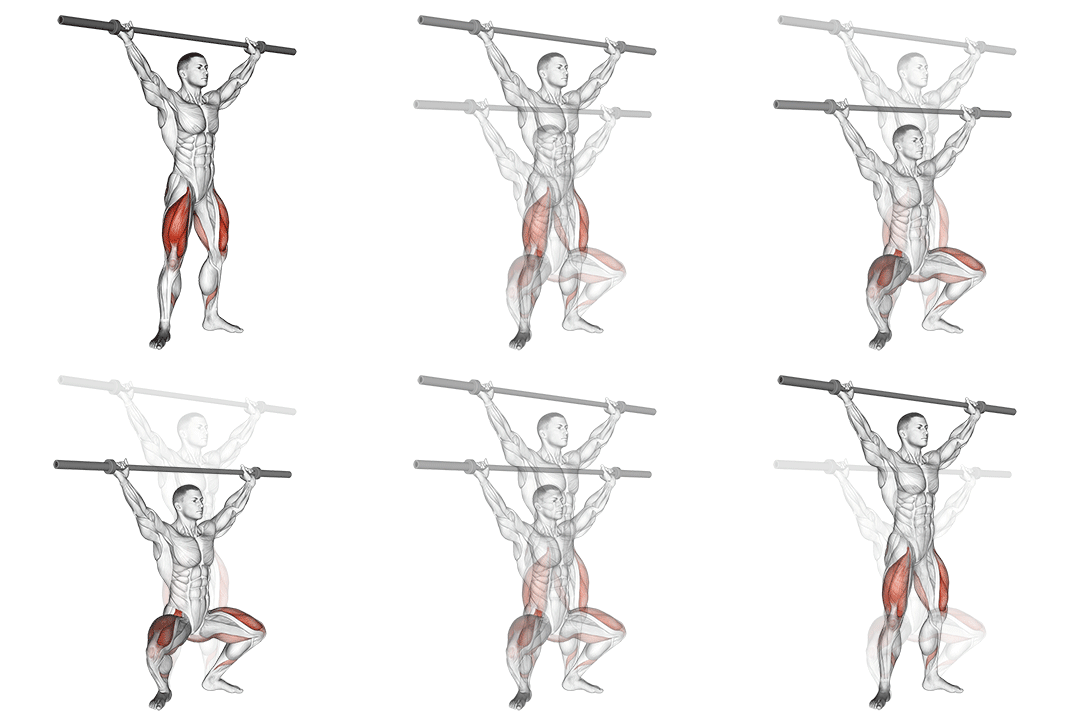
Barbell Clean And Press
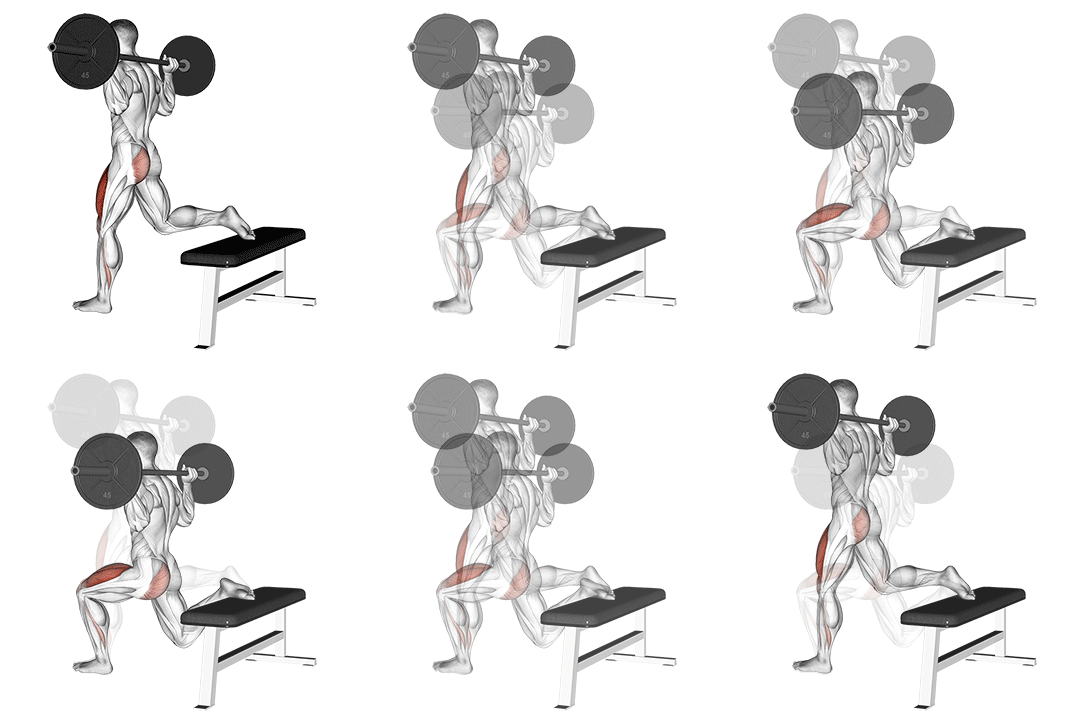
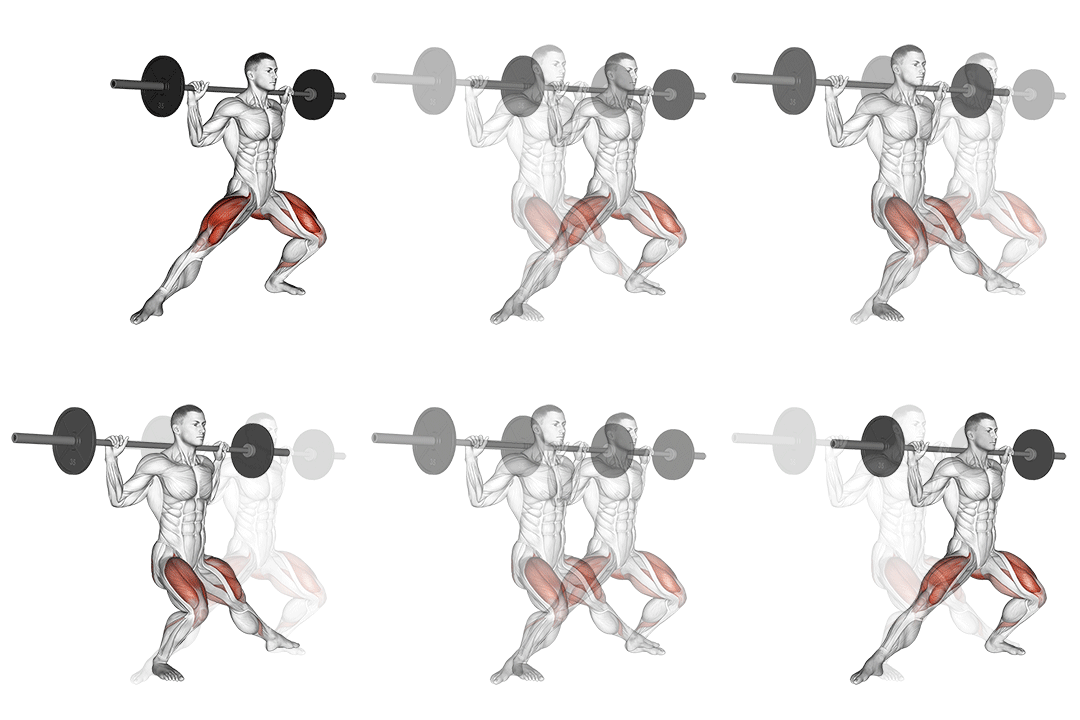
Barbell One Leg Squat
Head-to-Head Comparison
| Attribute | Barbell Clean And Press | Barbell One Leg Squat |
|---|---|---|
| Target Muscle |
Quads
|
Quads
|
| Body Part |
Upper-legs
|
Upper-legs
|
| Equipment |
Barbell
|
Barbell
|
| Difficulty |
Advanced
|
Advanced
|
| Movement Type |
Compound
|
Compound
|
| Secondary Muscles |
4
|
3
|
Secondary Muscles Activated
Barbell Clean And Press
Barbell One Leg Squat
Visual Comparison
Overview
Barbell Clean And Press vs Barbell One Leg Squat — you’re choosing between a full-body power move and a high-skill unilateral leg builder. This guide walks you through muscle activation, movement mechanics, equipment needs, learning curve, and practical progressions. I’ll show specific technique cues (bar path, hip hinge, knee angles), rep ranges for strength and hypertrophy, and when to pick one exercise over the other based on your goals. Read on to learn which exercise loads the quads harder, which stresses shoulder and triceps, and how to program each into your week.
Key Differences
- Both exercises target the Quads using Barbell. The main differences are in their movement patterns and muscle activation angles.
Pros & Cons
Barbell Clean And Press
+ Pros
- Develops explosive power through hip and knee triple extension
- Overhead press adds shoulder and triceps strength
- High peak force production useful for sport-specific transfer
- Efficient full-body compound that trains coordination and timing
− Cons
- High technical demand; poor form increases injury risk
- Less focus on unilateral stability and single-leg strength
- Requires ample space and confidence with bar path and catch
Barbell One Leg Squat
+ Pros
- Builds unilateral quad strength and balance under heavy load
- Increases glute and calf stabilization for gait and sprint transfer
- Longer time under tension, effective for hypertrophy in 6–12 rep ranges
- Easier to scale with regressions like box-supported pistols or split squats
− Cons
- Challenging to rack safely with heavy barbell loads
- High demand on ankle and knee stability; mobility limits depth
- Less upper-body and power development compared with the Clean And Press
When Each Exercise Wins
The unilateral squat increases time under tension and forces each quad to work independently, reducing dominance compensation. Use 3–4 sets of 6–12 reps with a controlled 3 s eccentric to maximize mechanical tension and hypertrophy.
Clean And Press trains full-body strength and high-force production via triple extension and heavy presses; 3–6 rep sets with 80–90% 1RM on the press portion build maximal strength while teaching force transfer through the kinetic chain.
Although advanced, single-leg squatting patterns are easier to regress (box pistols, split squats) and teach joint control without the high-speed complexity of a clean. Start with assisted variations and focus on 8–12 reps per leg.
You can regress the One Leg Squat to goblet or Bulgarian split squats with a dumbbell if a full barbell setup isn’t available. Clean And Press requires space and a barbell for safe technique, making it less practical at home.
Frequently Asked Questions
Can I do both Barbell Clean And Press and Barbell One Leg Squat in the same workout?
Yes. Pair them by goal: perform Clean And Press first for power or heavy strength (1–5 reps), then use One Leg Squat as an accessory for unilateral hypertrophy (3–4 sets of 6–12 reps). Keep total weekly volume and fatigue in check to maintain technique.
Which exercise is better for beginners?
The One Leg Squat offers easier regressions and teaches single-leg control, so it’s a better entry point for novices. Beginners should start with supported split squats or goblet variations before progressing to full barbell pistols.
How do the muscle activation patterns differ?
Clean And Press produces short, high-intensity bursts from the posterior chain and quads with rapid concentric firing, followed by overhead pressing of deltoids and triceps. One Leg Squat produces longer-duration concentric and eccentric activity in the quads, glutes, and calves with higher demands on stabilizers and ankle dorsiflexors.
Can Barbell One Leg Squat replace Barbell Clean And Press?
Not fully. The One Leg Squat can substitute for quad hypertrophy and unilateral strength, but it won’t develop the same level of explosive triple-extension power or overhead pressing strength that the Clean And Press provides. Choose the substitute based on whether you prioritize power or single-leg control.
Expert Verdict
Choose the Barbell Clean And Press when your goal is to develop explosive lower-body power, upper-body pressing strength, and intermuscular coordination — program it for low-rep strength and power blocks (1–6 reps, heavy loads, or fast triples). Opt for the Barbell One Leg Squat when you need unilateral quad overload, pelvic stability, and hypertrophy specificity — use higher time under tension and 6–12 rep ranges per leg. Both are advanced; prioritize the Clean And Press for sport and power, and the One Leg Squat for balanced leg development and injury-resilient single-leg strength.
Also Compare
More comparisons with Barbell Clean And Press
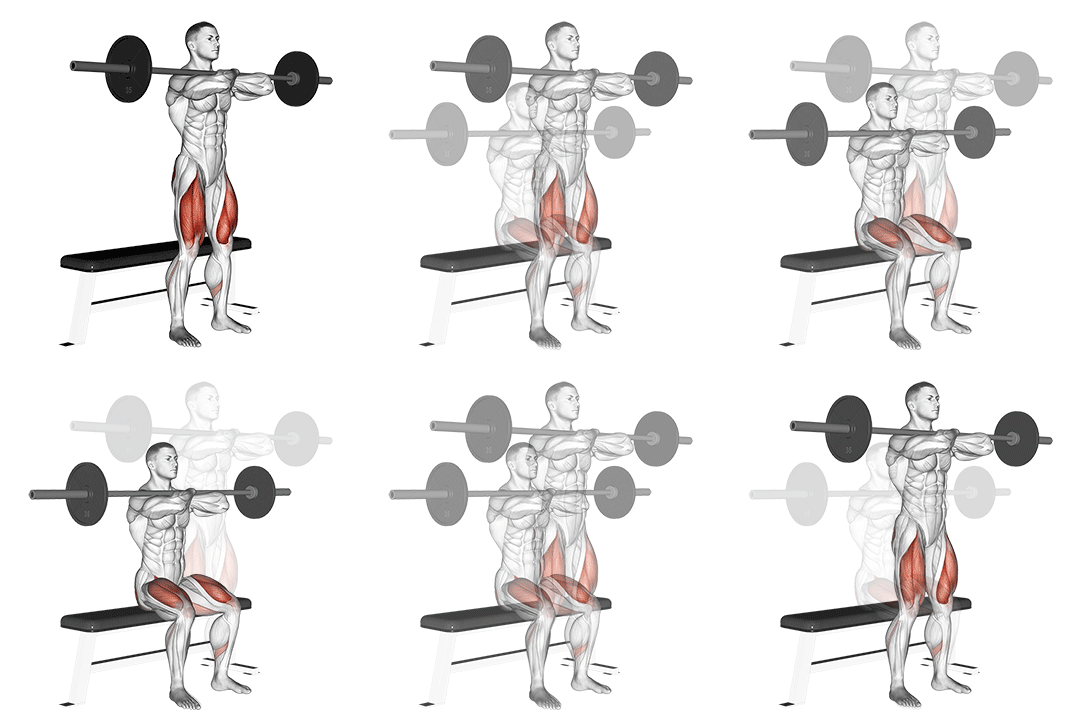
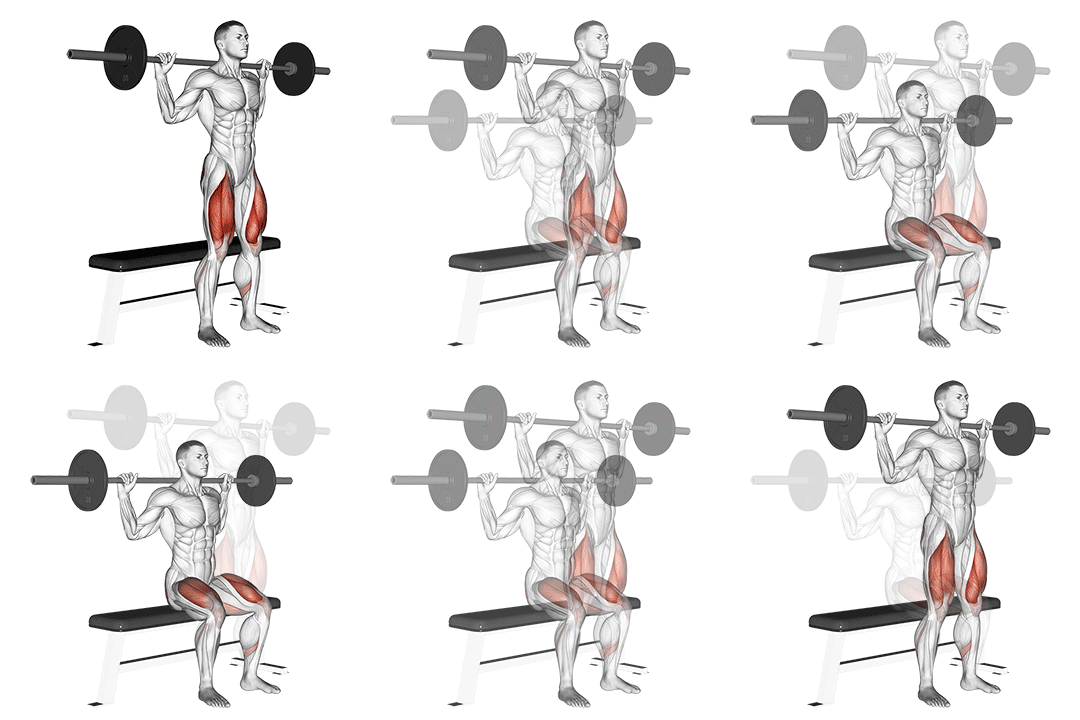
More comparisons with Barbell One Leg Squat
Compare More Exercises
Use our free comparison tool to analyze any two exercises head-to-head.
Compare Exercises