

Barbell Clean And Press vs Barbell Side Split Squat: Complete Comparison Guide
Barbell Clean And Press vs Barbell Side Split Squat is a matchup between an advanced, explosive full-body lift and a loaded lateral single-leg squat. If you want clear guidance on which better targets your quads, how they recruit hamstrings, glutes and shoulders, and which fits your equipment and skill level, you’re in the right place. You’ll get technique cues, biomechanics (force vectors, length-tension relationships), rep-range recommendations (power: 1-3, strength: 3-6, hypertrophy: 6-12) and practical programming choices so you can pick or combine them smartly.
Exercise Comparison
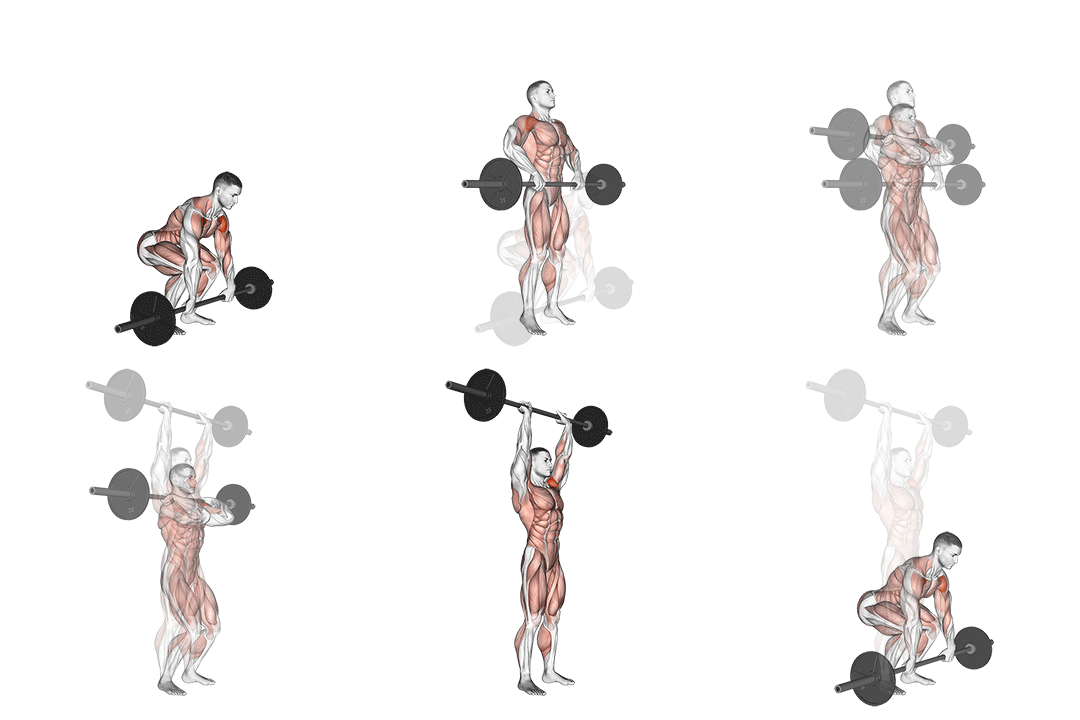
Barbell Clean And Press
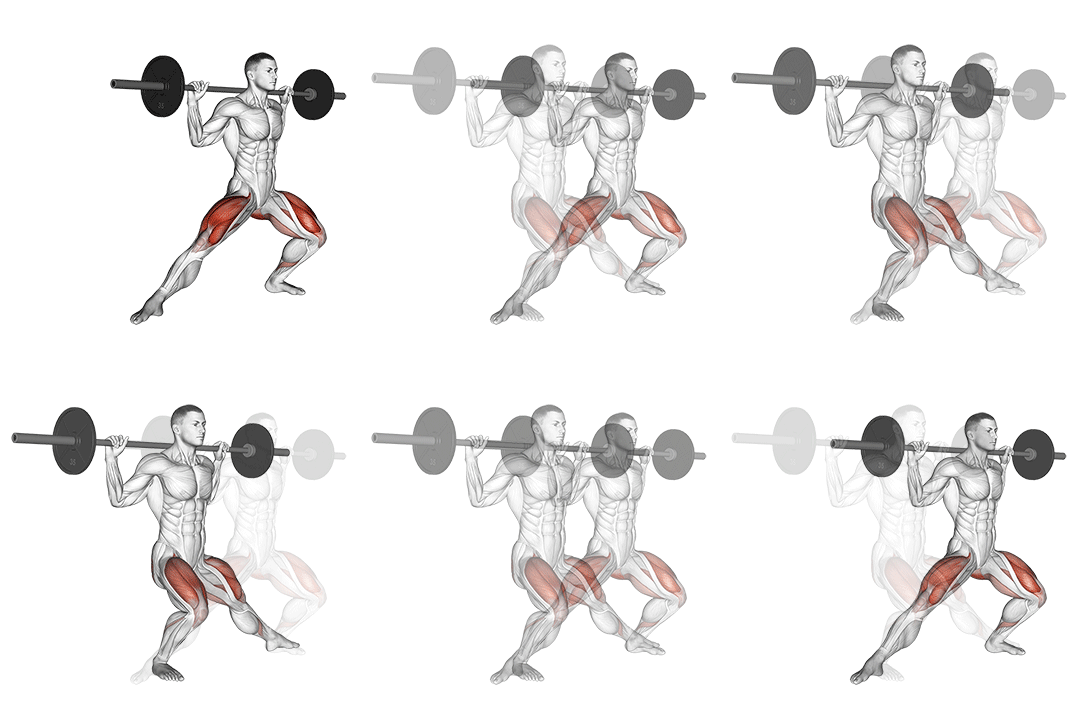
Barbell Side Split Squat
Head-to-Head Comparison
| Attribute | Barbell Clean And Press | Barbell Side Split Squat |
|---|---|---|
| Target Muscle |
Quads
|
Quads
|
| Body Part |
Upper-legs
|
Upper-legs
|
| Equipment |
Barbell
|
Barbell
|
| Difficulty |
Advanced
|
Intermediate
|
| Movement Type |
Compound
|
Compound
|
| Secondary Muscles |
4
|
3
|
Secondary Muscles Activated
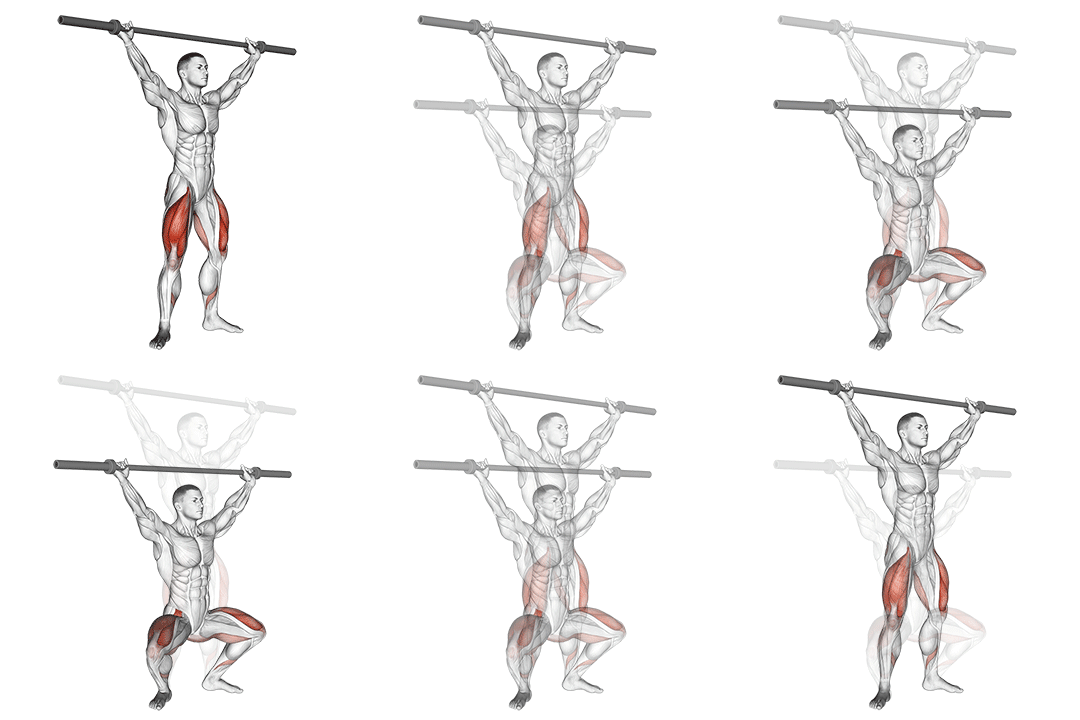
Barbell Clean And Press
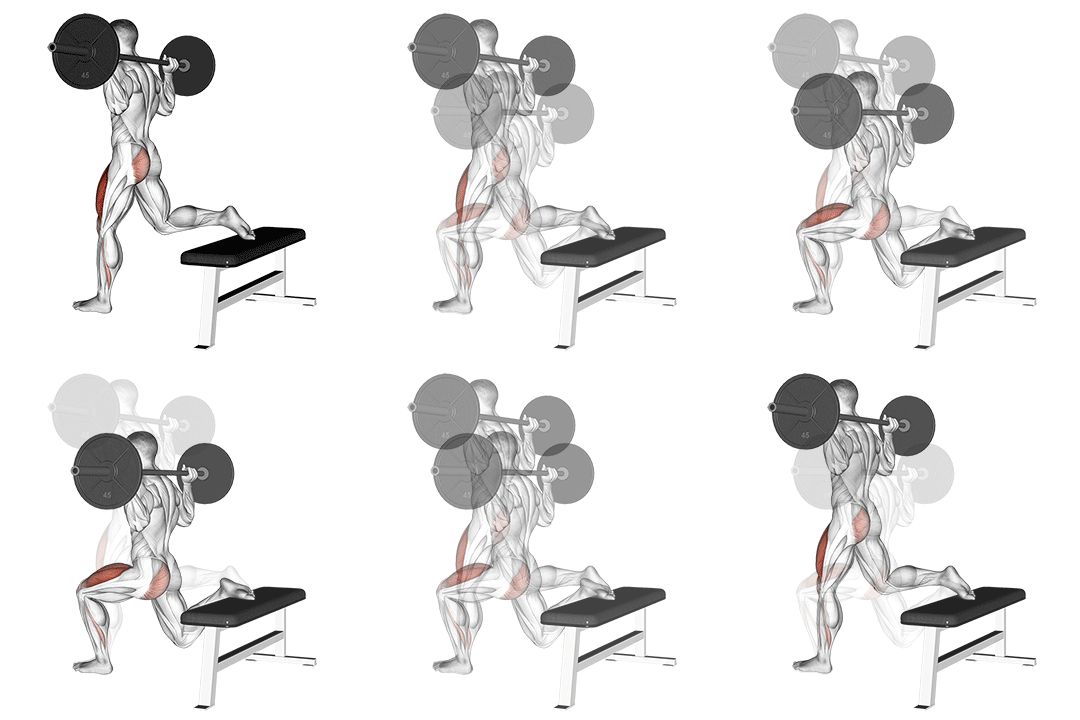
Barbell Side Split Squat
Visual Comparison
Overview
Barbell Clean And Press vs Barbell Side Split Squat is a matchup between an advanced, explosive full-body lift and a loaded lateral single-leg squat. If you want clear guidance on which better targets your quads, how they recruit hamstrings, glutes and shoulders, and which fits your equipment and skill level, you’re in the right place. You’ll get technique cues, biomechanics (force vectors, length-tension relationships), rep-range recommendations (power: 1-3, strength: 3-6, hypertrophy: 6-12) and practical programming choices so you can pick or combine them smartly.
Key Differences
- Difficulty levels differ: Barbell Clean And Press is advanced, while Barbell Side Split Squat is intermediate.
- Both exercises target the Quads using Barbell. The main differences are in their movement patterns and muscle activation angles.
Pros & Cons
Barbell Clean And Press
+ Pros
- Develops explosive triple extension and high rate of force development
- Loads quads, hamstrings, glutes and upper body in one compound sequence
- High carryover to athletic power and Olympic-style strength
- Efficient full-body exercise for strength and power with heavy loads
− Cons
- High technical demand and steep learning curve
- Requires more space and often bumper plates for safety
- Higher acute injury risk if performed with poor mechanics
Barbell Side Split Squat
+ Pros
- Strong unilateral quad stimulus with prolonged time under tension
- Easier to coach and scale for hypertrophy and imbalance correction
- Requires less space and lower peak power, making it gym- and home-friendly
- Improves lateral hip strength and adductor control
− Cons
- Less carryover to maximal whole-body power development
- Progression by absolute load is limited compared to bilateral barbell lifts
- Can stress knee or adductor tissues if stance, depth, or tracking are poor
When Each Exercise Wins
Its long eccentric phases and deep knee flexion (90–120°) place the rectus femoris and vasti at a favourable length‑tension position for hypertrophy. Unilateral loading lets you increase time under tension and correct side-to-side differences via 6–12 rep ranges.
You can move heavier absolute loads and train the neuromuscular system for greater force output. The clean trains triple extension and allows for heavy sets in 3–6 rep ranges, while the press adds upper body strength transfer.
It has a shallower technical learning curve and lower peak velocity, letting you build quad strength, balance and hip mobility safely. You can regress with box-assisted reps or lower loads while keeping solid biomechanics.
It needs less open space and no need for dropping weights, so you can train safely with a typical bar and plates or a rack. Tempo and unilateral volume provide strong stimulus without maximal explosive lifts.
Frequently Asked Questions
Can I do both Barbell Clean And Press and Barbell Side Split Squat in the same workout?
Yes—you can pair them, but order matters. Do cleans early when you’re fresh to protect technique and power (heavy sets 1–5 reps), then use side split squats as an accessory for 3–4 sets of 6–12 reps to target unilateral hypertrophy and stability.
Which exercise is better for beginners?
Barbell Side Split Squat is better for beginners because it has a simpler movement pattern and lower velocity, allowing you to learn knee tracking, hip positioning and balance before progressing to complex lifts like the clean and press.
How do the muscle activation patterns differ?
Clean and press produces short, high-amplitude activation spikes in quads and posterior chain during the explosive phase, driven by vertical force vectors and rapid stretch‑shortening cycles. Side split squat yields prolonged, moderate activation with lateral force components and sustained concentric/eccentric loading of the quadriceps and glutes.
Can Barbell Side Split Squat replace Barbell Clean And Press?
Not entirely—if your priority is power and whole‑body strength the clean and press is irreplaceable. For quad hypertrophy, balance, or limited space, the side split squat can substitute effectively in a program focused on muscle growth and unilateral control.
Expert Verdict
Use the Barbell Clean And Press when your goal is power, athletic transfer, and maximal whole‑body strength — it trains triple extension, explosive hip drive, and overhead stability in one sequence. Choose the Barbell Side Split Squat when you want targeted quad hypertrophy, unilateral balance, and a safer, more coachable movement that fits limited space or home setups. For well-rounded development, pair them across a cycle: program cleans for 1–3 weeks focused on power (1–3 reps) and keep side split squats as accessory work for 6–12 rep hypertrophy blocks to address imbalances and increase time under tension.
Also Compare
More comparisons with Barbell Clean And Press
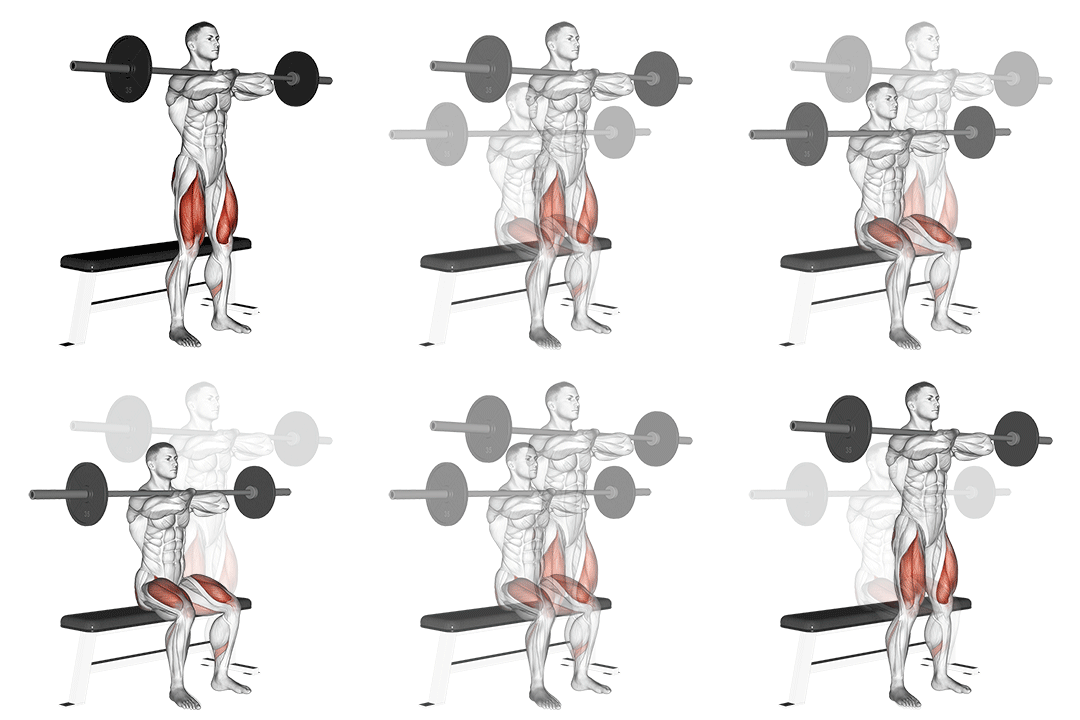
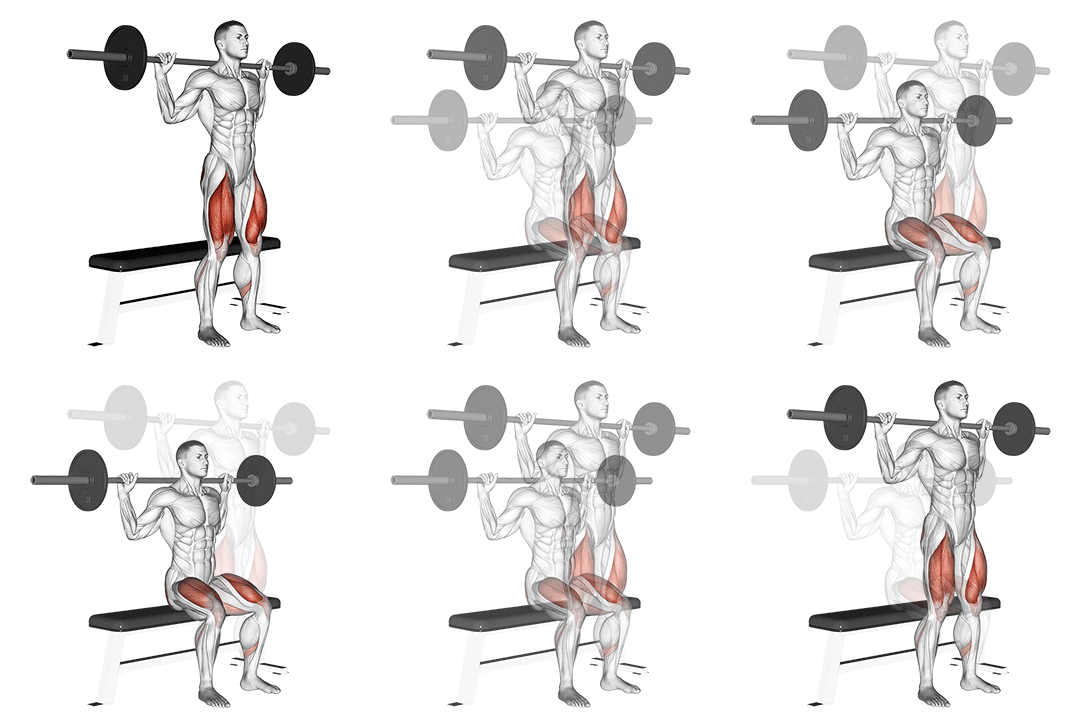
More comparisons with Barbell Side Split Squat
Compare More Exercises
Use our free comparison tool to analyze any two exercises head-to-head.
Compare Exercises