

Barbell Clean-grip Front Squat vs Barbell Front Squat: Complete Comparison Guide
Barbell Clean-grip Front Squat vs Barbell Front Squat — two front-racked variations that both target your glutes and upper-legs but demand different technique and mobility. I’ll walk you through how each loads the hip and knee extensors, the exact mobility and equipment needs, and clear technique cues so you can pick the right tool for hypertrophy, strength, or beginner progress. Expect specific rep ranges (1–5 for strength, 6–12 for hypertrophy), joint angles to aim for (elbows roughly parallel to the floor, knees to ~90–120°), and practical programming tips.
Exercise Comparison
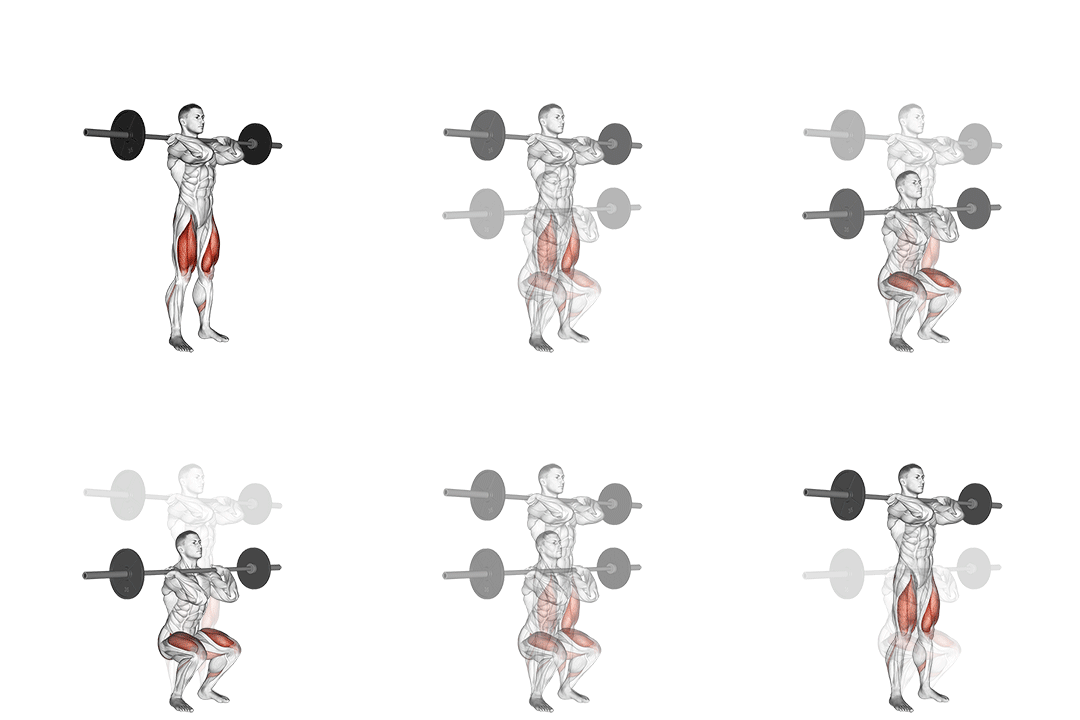
Barbell Clean-grip Front Squat
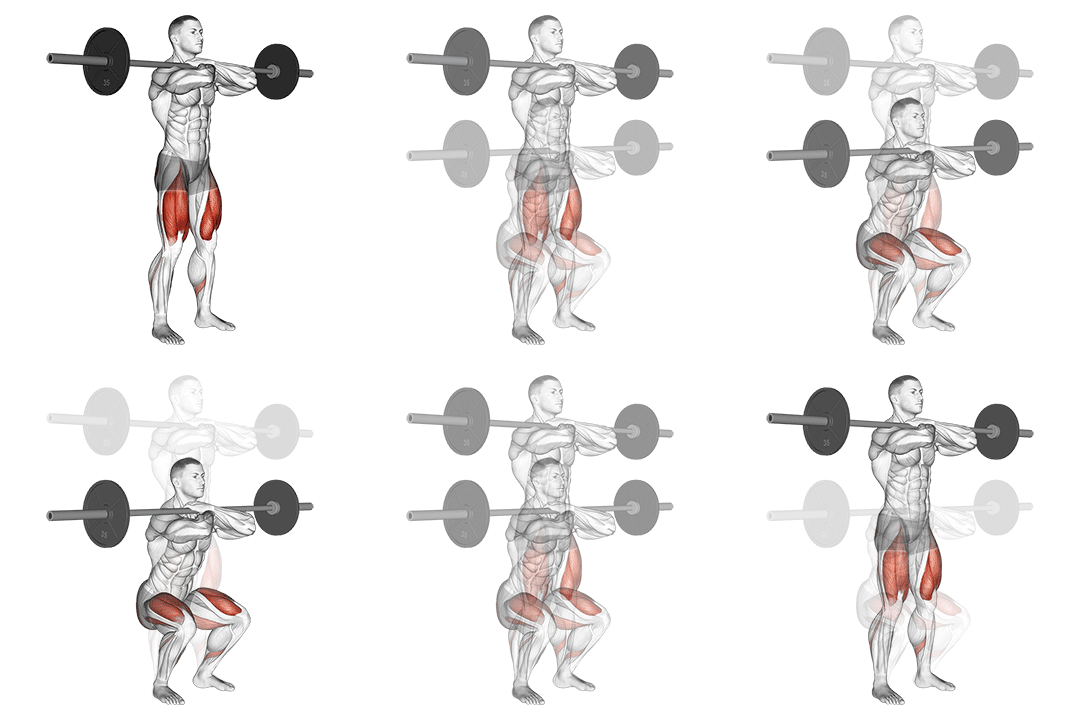
Barbell Front Squat
Head-to-Head Comparison
| Attribute | Barbell Clean-grip Front Squat | Barbell Front Squat |
|---|---|---|
| Target Muscle |
Glutes
|
Glutes
|
| Body Part |
Upper-legs
|
Upper-legs
|
| Equipment |
Barbell
|
Barbell
|
| Difficulty |
Advanced
|
Intermediate
|
| Movement Type |
Compound
|
Compound
|
| Secondary Muscles |
4
|
4
|
Secondary Muscles Activated
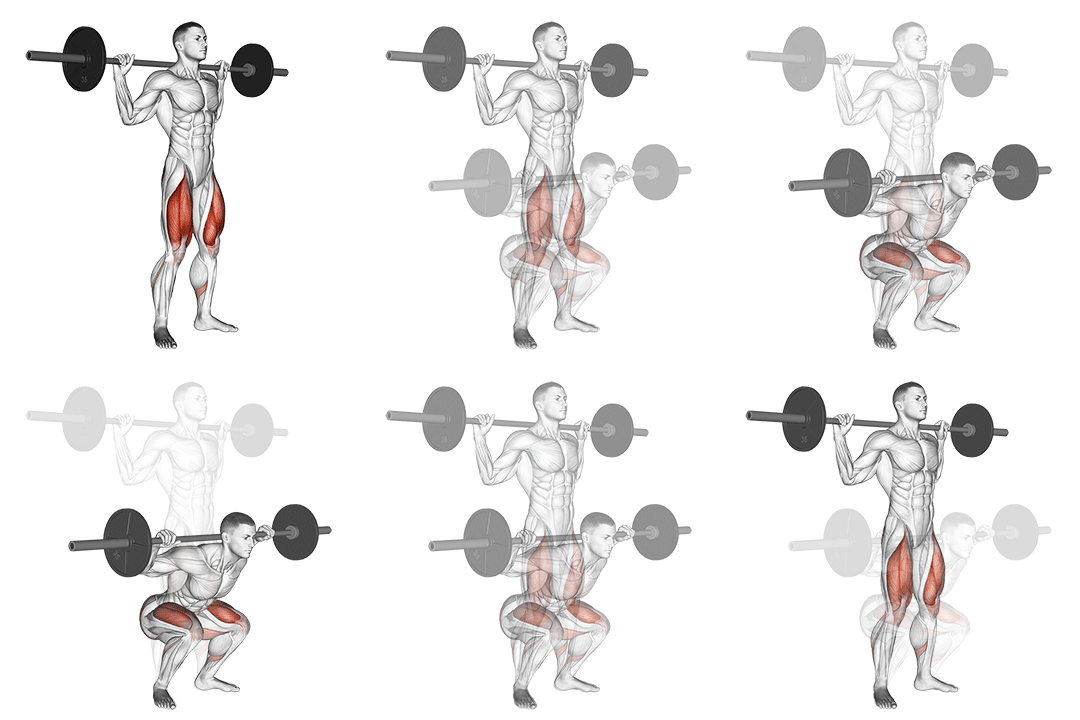
Barbell Clean-grip Front Squat
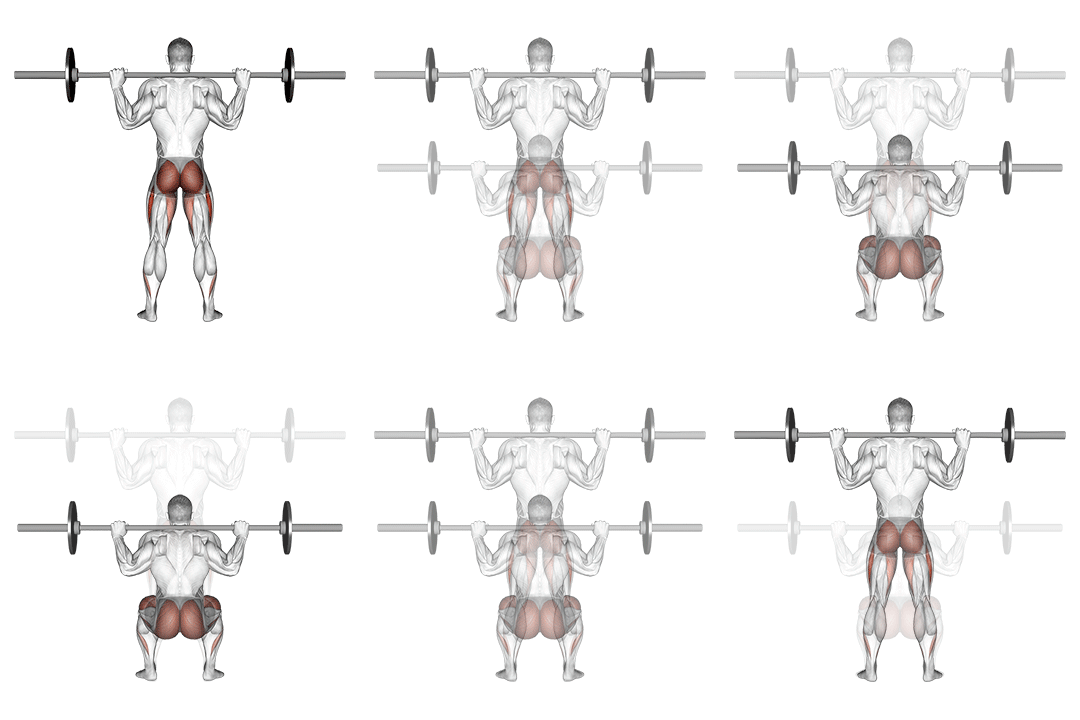
Barbell Front Squat
Visual Comparison
Overview
Barbell Clean-grip Front Squat vs Barbell Front Squat — two front-racked variations that both target your glutes and upper-legs but demand different technique and mobility. I’ll walk you through how each loads the hip and knee extensors, the exact mobility and equipment needs, and clear technique cues so you can pick the right tool for hypertrophy, strength, or beginner progress. Expect specific rep ranges (1–5 for strength, 6–12 for hypertrophy), joint angles to aim for (elbows roughly parallel to the floor, knees to ~90–120°), and practical programming tips.
Key Differences
- Difficulty levels differ: Barbell Clean-grip Front Squat is advanced, while Barbell Front Squat is intermediate.
- Both exercises target the Glutes using Barbell. The main differences are in their movement patterns and muscle activation angles.
Pros & Cons
Barbell Clean-grip Front Squat
+ Pros
- Greater upper-back and trap engagement helps keep a tight, upright torso
- Better bar stability when you can maintain a solid front rack, allowing heavier singles (1–5 reps)
- Improves clean and recovery position for Olympic lifts
- Efficient force transfer due to close bar-to-body contact
− Cons
- Requires high wrist and thoracic mobility (can be painful if limited)
- Harder to learn and set up without bumper plates
- May overload wrists and anterior shoulders for some lifters
Barbell Front Squat
+ Pros
- Easier to learn — minimal wrist mobility required
- Good for higher-volume hypertrophy work (6–12+ reps)
- Accessible setup from a rack without needing a clean
- Allows lifters to focus on depth and tempo without complex grip demands
− Cons
- Less load potential for maximal singles compared with a skilled clean-grip lifter
- Can encourage slight forward torso lean if form breaks down
- Cross-arm grip can feel insecure under very heavy loads
When Each Exercise Wins
The cross-arm front squat is easier to accumulate volume (8–15 reps) and control depth, which targets the glutes through extended time under tension. Its lower technical demand lets you focus on tempo, eccentric control, and progressive overload for muscle growth.
When you can clean and rack the bar reliably, the clean-grip permits tighter bar contact and higher elbow position, enabling heavier singles and doubles (1–5 reps) and better transfer to Olympic-style strength.
Cross-arm front squats have a gentler skill curve and lower wrist and thoracic mobility requirements, so you can learn proper squat mechanics, depth (~90–120° knee flexion), and breathing patterns with lower technical barriers.
Most home setups lack bumper plates or the ability to safely clean heavy loads, and the cross-arm front squat removes the need for advanced wrist mobility — making it easier to program at home with a standard barbell and rack.
Frequently Asked Questions
Can I do both Barbell Clean-grip Front Squat and Barbell Front Squat in the same workout?
Yes — pair them smartly. Use the clean-grip for heavy sets (1–5 reps) after a specific warm-up, then do cross-arm sets for higher-volume accessory work (6–12 reps) to target hypertrophy without excessive fatigue on the wrists.
Which exercise is better for beginners?
Barbell Front Squat (cross-arm) is better for most beginners because it requires less wrist and thoracic mobility and lets you learn depth, bracing, and tempo more easily. Start with 3–4 sets of 6–12 reps while nailing form.
How do the muscle activation patterns differ?
The clean-grip keeps the torso more upright (reduced forward lean), increasing knee-extensor (quad) moment and upper-back activation, while the cross-arm variant can allow a slightly longer hip moment arm and deeper hip flexion, nudging more hip-extensor (glute/hamstring) torque during deep ranges.
Can Barbell Front Squat replace Barbell Clean-grip Front Squat?
Yes for most lifters focused on hypertrophy or accessibility — the cross-arm front squat replicates the anterior load and trains the glutes effectively. However, if your goal is heavy strength or clean-specific carryover, keep the clean-grip in your programming.
Expert Verdict
Both front-racked squats drive strong glute and quad development, but pick based on your priorities. Choose the Barbell Front Squat (cross-arm) if you want accessibility, higher-volume hypertrophy (6–12+ reps), and an easier setup for home or beginner programming. Choose the Barbell Clean-grip Front Squat if you have the wrist and thoracic mobility to hold the rack and you want maximal strength carryover, heavier singles/doubles (1–5 reps), and better transfer to cleans. Program both: use cross-arm variants for volume blocks and clean-grip for heavy intensity phases, and track progress with weekly load increases of ~2.5–5%.
Also Compare
More comparisons with Barbell Clean-grip Front Squat
More comparisons with Barbell Front Squat
Compare More Exercises
Use our free comparison tool to analyze any two exercises head-to-head.
Compare Exercises