

Barbell Clean-grip Front Squat vs Barbell Full Squat: Complete Comparison Guide
Barbell Clean-grip Front Squat vs Barbell Full Squat — two barbell staples that target your glutes and upper-legs but load the body differently. You’ll get a side-by-side look at muscle activation, mobility and equipment needs, technique cues, programming suggestions (rep ranges and progressions), and injury considerations. I’ll point out when to pick the clean-grip front squat for quad/core carryover and when the full squat is better for heavier loads and deeper hip recruitment. Read on so you can choose the lift that matches your goals and structure your sets safely.
Exercise Comparison
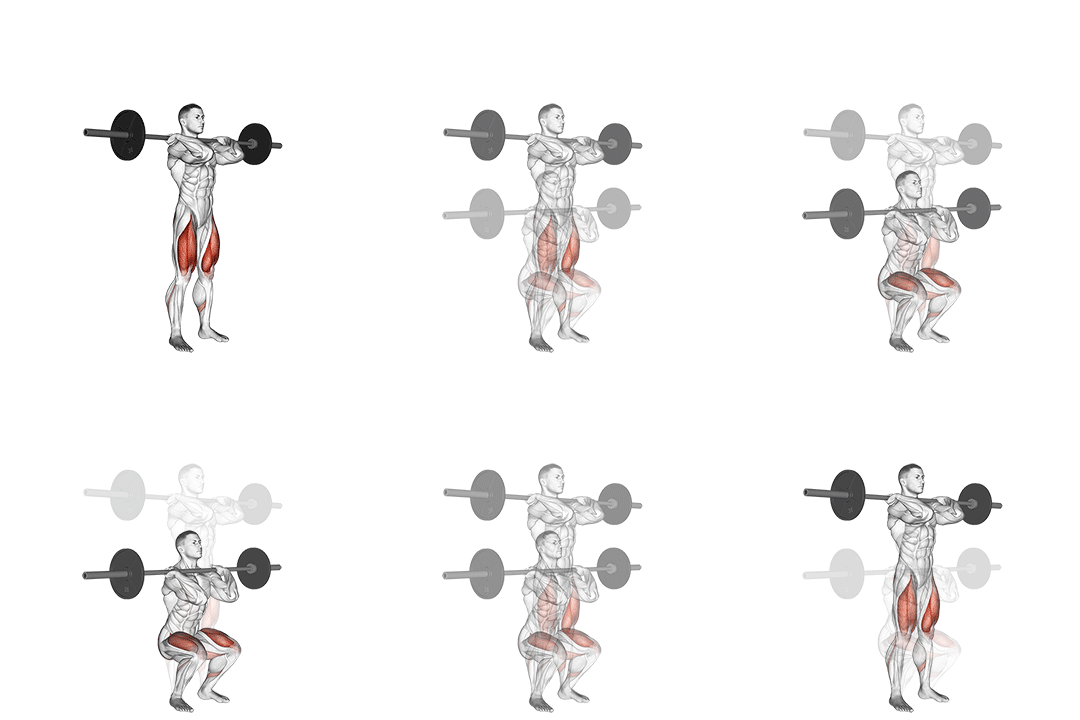
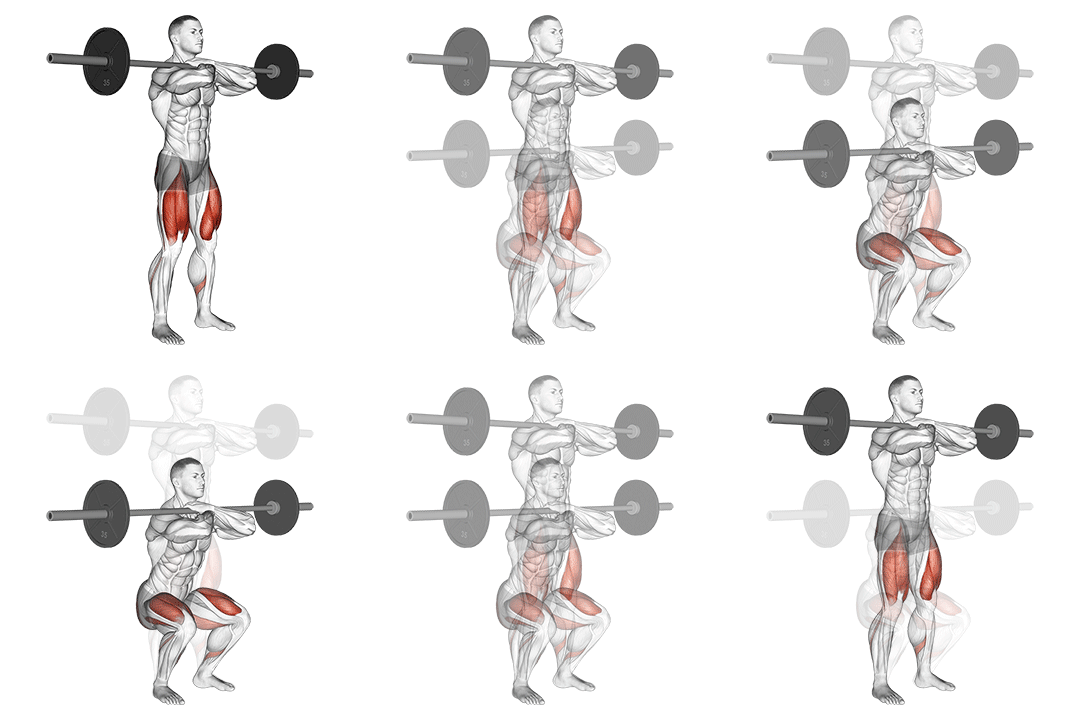
Barbell Clean-grip Front Squat
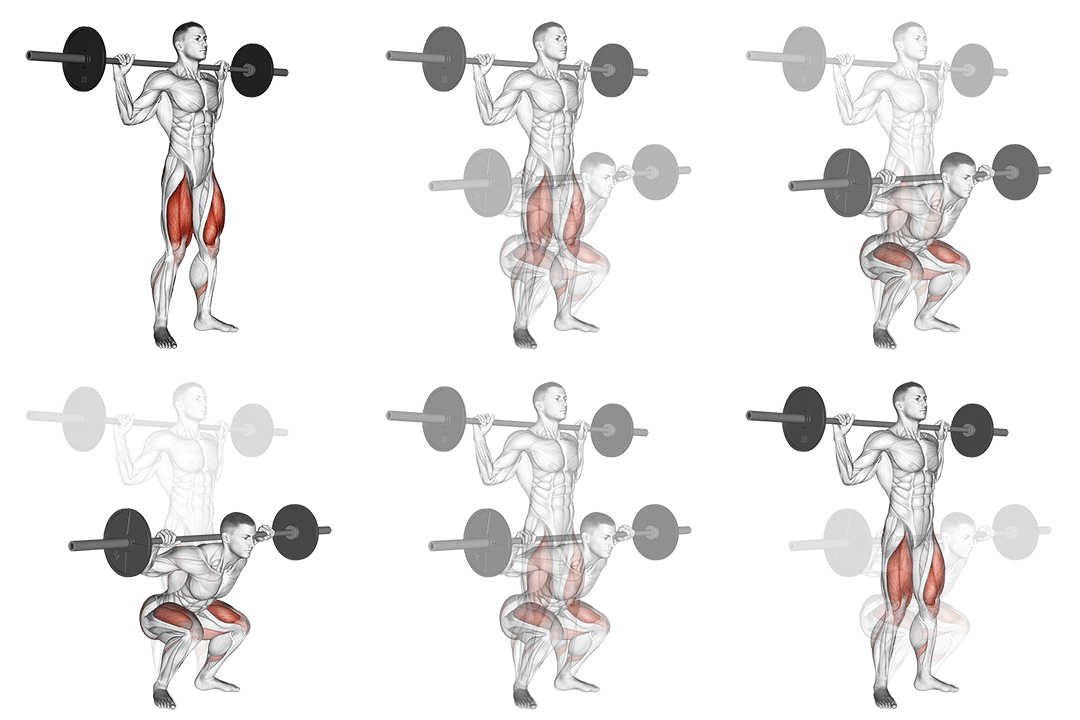
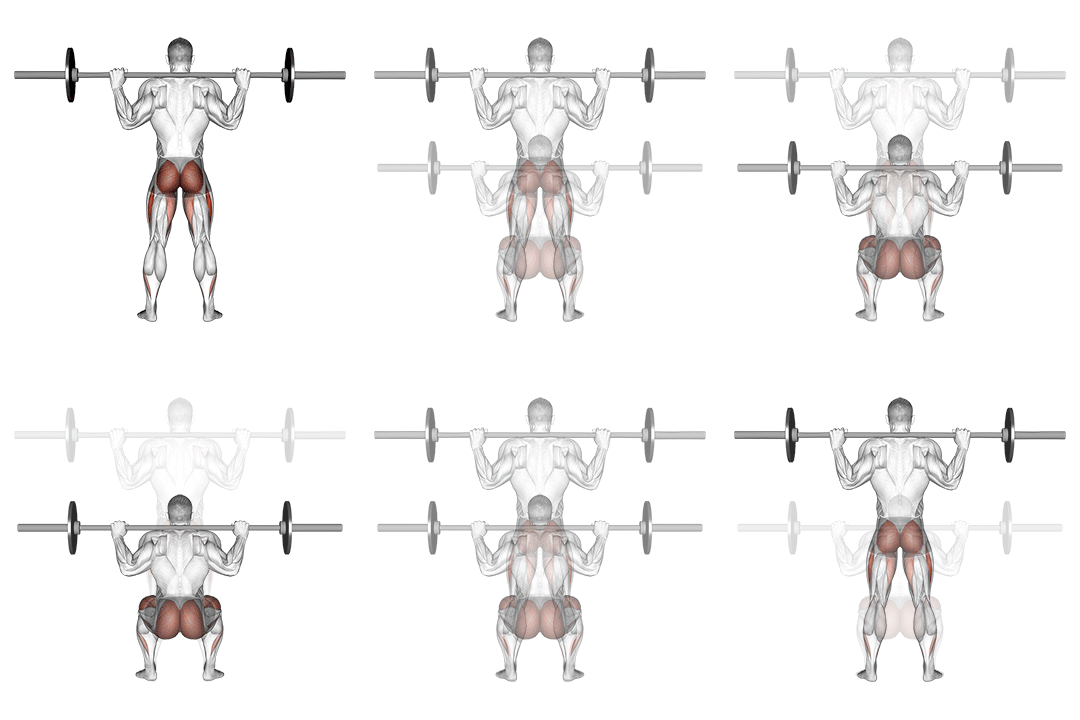
Barbell Full Squat
Head-to-Head Comparison
| Attribute | Barbell Clean-grip Front Squat | Barbell Full Squat |
|---|---|---|
| Target Muscle |
Glutes
|
Glutes
|
| Body Part |
Upper-legs
|
Upper-legs
|
| Equipment |
Barbell
|
Barbell
|
| Difficulty |
Advanced
|
Intermediate
|
| Movement Type |
Compound
|
Compound
|
| Secondary Muscles |
4
|
4
|
Secondary Muscles Activated
Barbell Clean-grip Front Squat
Barbell Full Squat
Visual Comparison
Overview
Barbell Clean-grip Front Squat vs Barbell Full Squat — two barbell staples that target your glutes and upper-legs but load the body differently. You’ll get a side-by-side look at muscle activation, mobility and equipment needs, technique cues, programming suggestions (rep ranges and progressions), and injury considerations. I’ll point out when to pick the clean-grip front squat for quad/core carryover and when the full squat is better for heavier loads and deeper hip recruitment. Read on so you can choose the lift that matches your goals and structure your sets safely.
Key Differences
- Difficulty levels differ: Barbell Clean-grip Front Squat is advanced, while Barbell Full Squat is intermediate.
- Both exercises target the Glutes using Barbell. The main differences are in their movement patterns and muscle activation angles.
Pros & Cons
Barbell Clean-grip Front Squat
+ Pros
- Greater quad emphasis and core/bracing carryover for upright torso work
- Reduced lumbar shear thanks to vertical trunk position
- Improves rack position and mobility useful for Olympic lifts
- Better for clean-heavy programming and quad-dominant hypertrophy (6–12 reps)
− Cons
- Requires good wrist and thoracic mobility for the clean grip
- Harder to load maximally — absolute strength ceiling is lower than back squat
- Can fatigue upper back quickly, limiting set volume
Barbell Full Squat
+ Pros
- Allows heavier loading — greater potential for absolute strength
- Deeper hip flexion increases glute and posterior chain recruitment
- Easier to learn and set up for most lifters
- Flexible variants (high-bar, low-bar, pause) for targeted progressions
− Cons
- Greater torso forward lean can increase lumbar shear under heavy loads
- Poor mobility or technique can shift stress to knees and hips
- Quad vs glute balance depends on stance and depth — requires coaching to target specific muscles
When Each Exercise Wins
Full squat lets you handle heavier loads and achieve deeper hip flexion (≈100–120°), which recruits the glutes more across the full range of motion. Use 6–12 reps, 3–5 sets, focusing on controlled eccentric tempo to maximize muscle tension.
You can generally load the full squat 10–30% heavier than a front squat, making it superior for maximal strength training (3–6 rep ranges). Low-bar variations increase hip drive and allow greater overload.
Full squat has a gentler learning curve and fewer mobility demands; you can build coordination and load tolerance quickly. Start with bodyweight or goblet squats, then progress to barbell sets of 8–12 reps.
Full squat variants adapt better to limited equipment (dumbbells/goblet) and require less specialized mobility or rack setup than a clean-grip front squat. You can progress with kettlebells or slow eccentrics if heavy barbells aren’t available.
Frequently Asked Questions
Can I do both Barbell Clean-grip Front Squat and Barbell Full Squat in the same workout?
Yes. Pair them strategically: use front squats as a lighter, quad-focused accessory (3–4 sets of 6–8) after heavy full squats, or alternate weekly. Avoid maximal loading on both within the same session to reduce CNS and joint fatigue.
Which exercise is better for beginners?
Barbell Full Squat is usually better for beginners because it’s simpler to set up and progress. Start with bodyweight and goblet variations to nail squat mechanics before loading a barbell.
How do the muscle activation patterns differ?
Front squats shift the force vector anteriorly, increasing knee moment and quad activation (≈10–15% higher EMG in some measures) with a more vertical trunk. Full squats increase hip moment and glute/hamstring recruitment via greater hip flexion and longer moment arms at the hip.
Can Barbell Full Squat replace Barbell Clean-grip Front Squat?
For general strength and glute development, yes — full squats often serve as a practical replacement. If you need quad-dominant carryover, upright posture work, or Olympic lift transfer, keep front squats in your program.
Expert Verdict
Choose the Barbell Clean-grip Front Squat when you want quad-dominant work, improved upright torso strength, and carryover to Olympic lifting — program it for 3–6 sets of 4–8 reps for strength or 6–12 reps for hypertrophy, keeping elbows high and core braced. Pick the Barbell Full Squat when you prioritize heavier loading and greater glute/posterior-chain recruitment; use 3–5 sets of 3–6 reps for strength or 6–12 reps for hypertrophy and emphasize depth (near parallel to below parallel). If mobility or wrist issues limit you, prioritize the full squat and use front-squat variants (cross-arm or safety-squat bar) to get similar benefits.
Also Compare
More comparisons with Barbell Clean-grip Front Squat
Compare More Exercises
Use our free comparison tool to analyze any two exercises head-to-head.
Compare Exercises