

Barbell Close-grip Bench Press vs Barbell Lying Close-grip Press: Complete Comparison Guide
Barbell Close-grip Bench Press vs Barbell Lying Close-grip Press — both are compound, barbell-based movements that target the triceps while recruiting chest and shoulders. This guide walks you through how each shifts force vectors, which one isolates the triceps better, equipment and progression differences, injury risk, and specific setup and technique cues. Read on to learn rep ranges, elbow and shoulder angles, and when to program each lift for hypertrophy, raw pressing strength, or beginner-friendly work.
Exercise Comparison
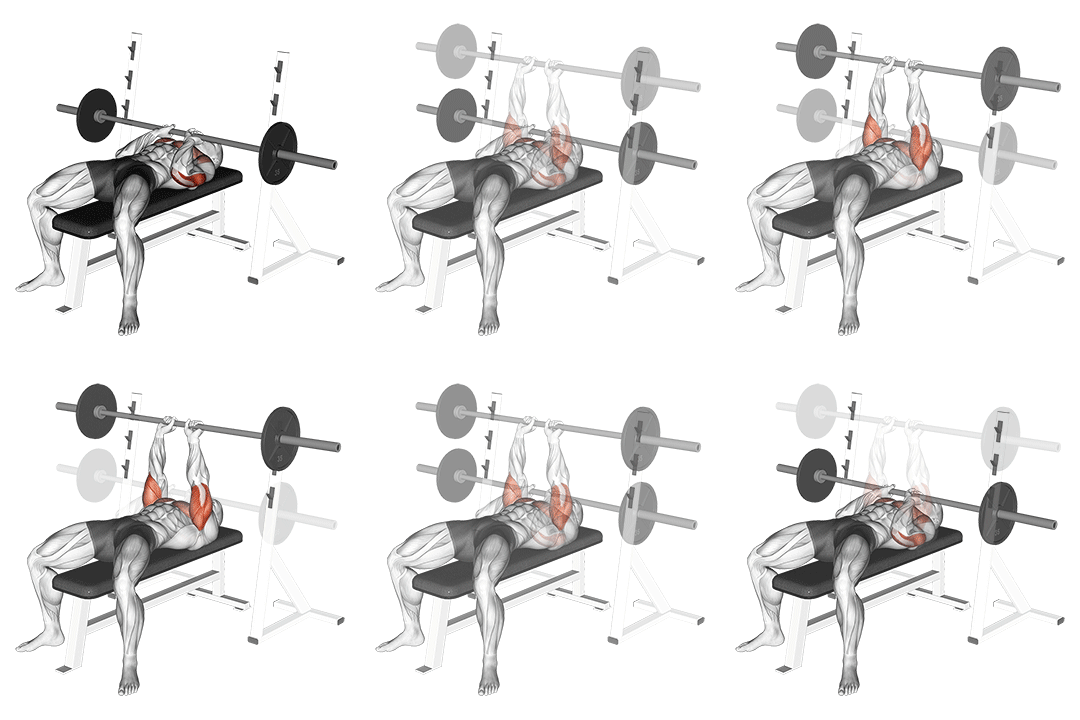
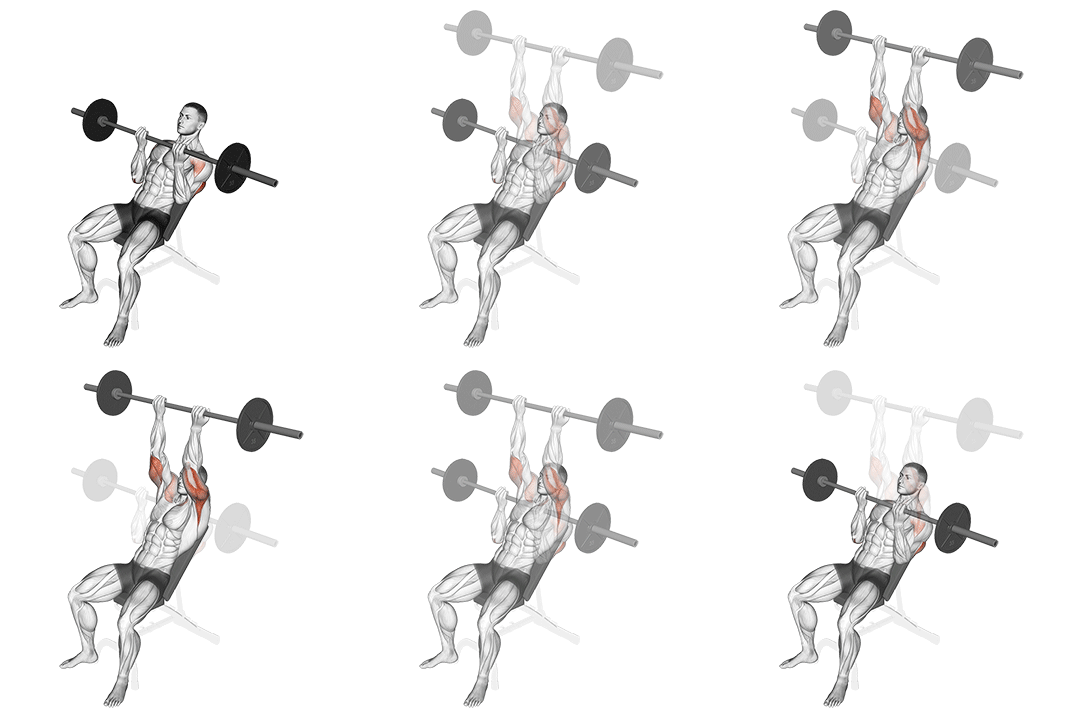
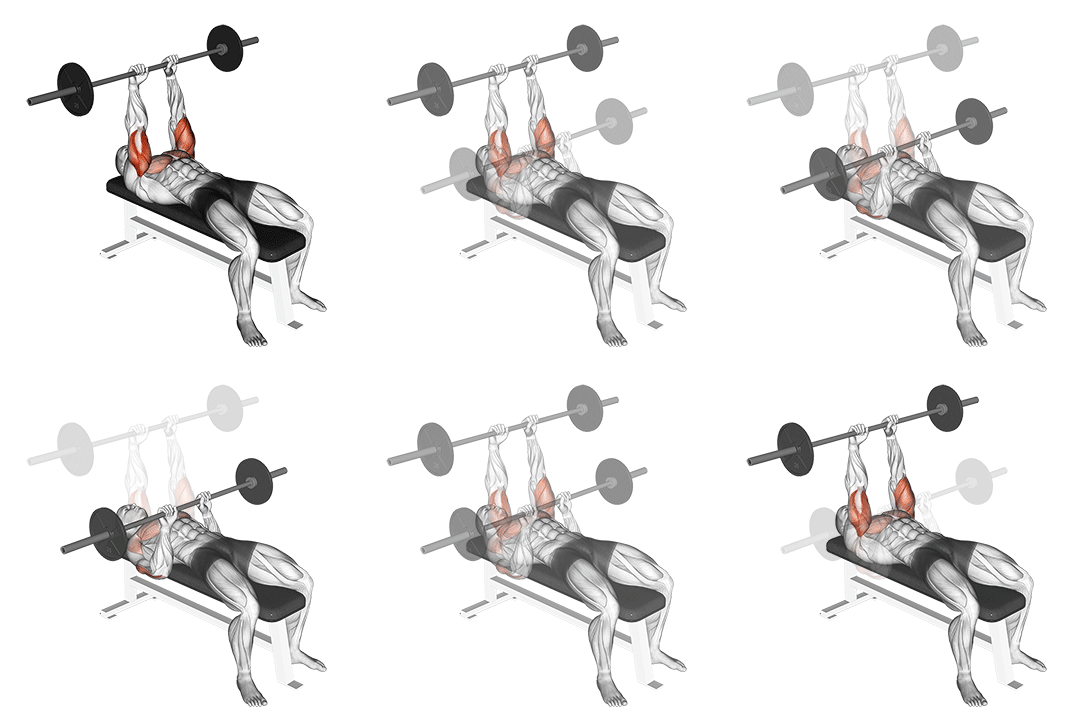
Barbell Close-grip Bench Press
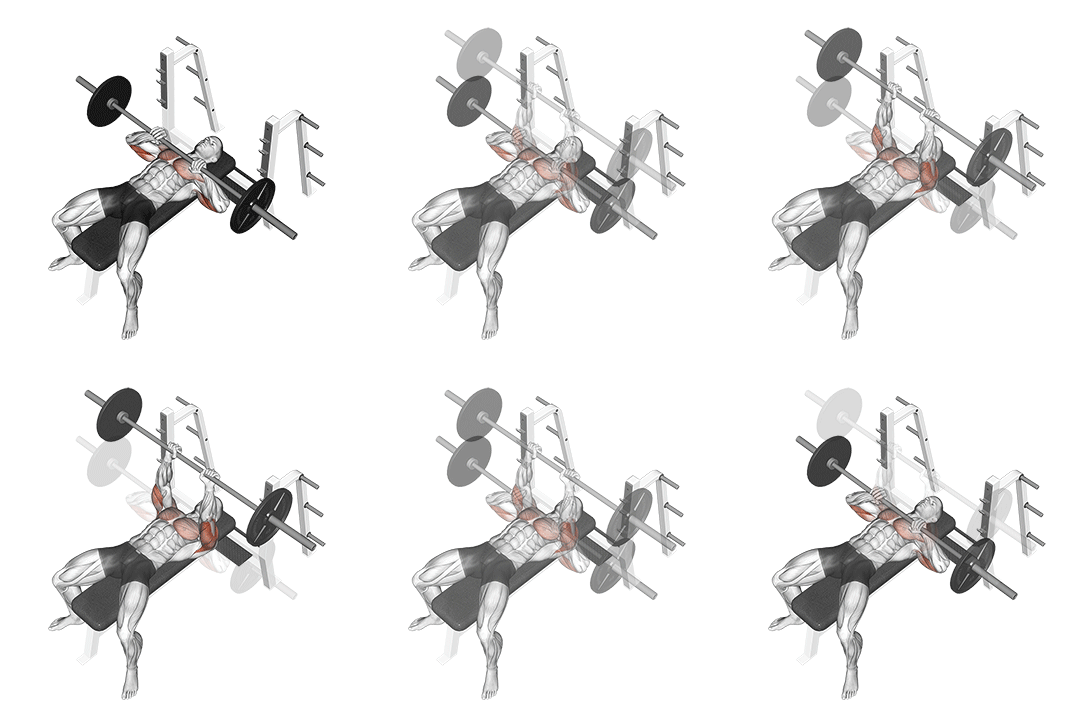
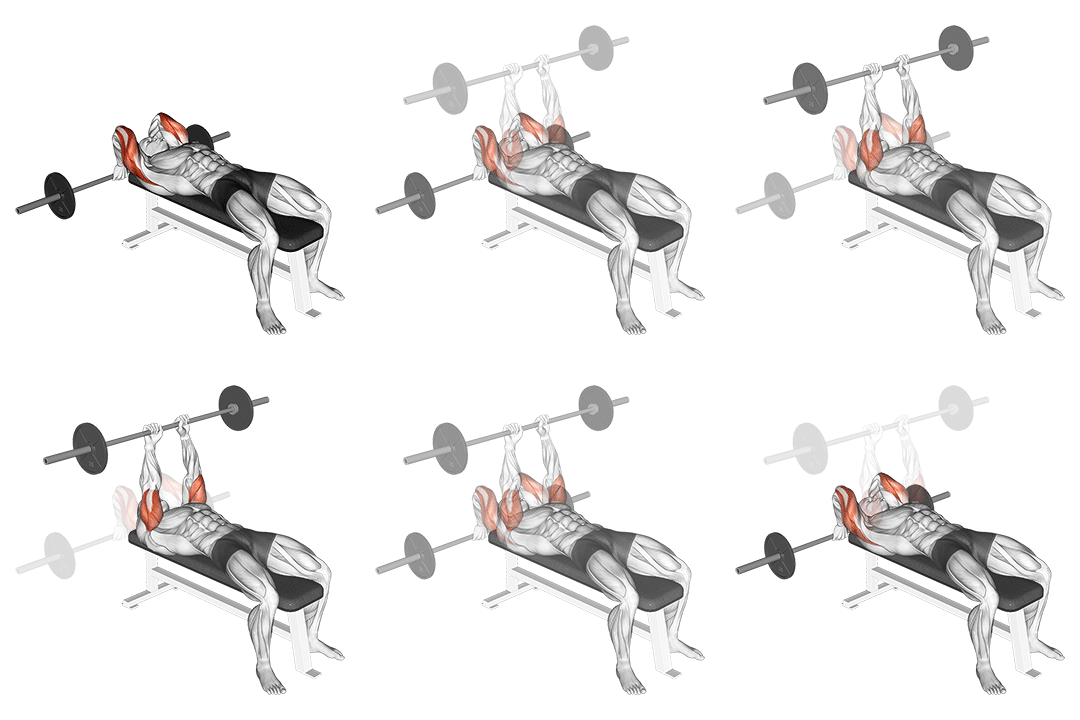
Barbell Lying Close-grip Press
Head-to-Head Comparison
| Attribute | Barbell Close-grip Bench Press | Barbell Lying Close-grip Press |
|---|---|---|
| Target Muscle |
Triceps
|
Triceps
|
| Body Part |
Upper-arms
|
Upper-arms
|
| Equipment |
Barbell
|
Barbell
|
| Difficulty |
Intermediate
|
Intermediate
|
| Movement Type |
Compound
|
Compound
|
| Secondary Muscles |
2
|
2
|
Secondary Muscles Activated
Barbell Close-grip Bench Press
Barbell Lying Close-grip Press
Visual Comparison
Overview
Barbell Close-grip Bench Press vs Barbell Lying Close-grip Press — both are compound, barbell-based movements that target the triceps while recruiting chest and shoulders. This guide walks you through how each shifts force vectors, which one isolates the triceps better, equipment and progression differences, injury risk, and specific setup and technique cues. Read on to learn rep ranges, elbow and shoulder angles, and when to program each lift for hypertrophy, raw pressing strength, or beginner-friendly work.
Key Differences
- Both exercises target the Triceps using Barbell. The main differences are in their movement patterns and muscle activation angles.
Pros & Cons
Barbell Close-grip Bench Press
+ Pros
- Allows heavier loading for maximal strength work
- Transfers directly to standard bench press strength
- Simple setup using standard bench cues (scapular retraction, leg drive)
- Good mix of triceps, chest, and anterior deltoid stimulus
− Cons
- Greater chest and shoulder involvement reduces pure triceps isolation
- Can stress wrists and elbows if grip is too narrow
- Requires precise bar path to avoid shoulder strain
Barbell Lying Close-grip Press
+ Pros
- More triceps-dominant — better isolation for elbow extensors
- Lower shoulder horizontal adduction, which can reduce anterior shoulder strain
- Easier to emphasize strict elbow tracking for hypertrophy sets
- Useful as an accessory to overload triceps long head
− Cons
- Typically you’ll lift less weight than the bench variant
- Requires strict technique (elbow tuck and neutral wrist) to be effective
- Less direct carryover to maximal bench press strength
When Each Exercise Wins
It isolates the triceps more by minimizing chest and shoulder assistance. Use 8–12 reps, 3–5 sets, and emphasize a controlled 2–3 second eccentric to maximize time under tension.
You can handle heavier loads and use bench-specific overloads. Program 3–6 reps with 3–6 sets and include pause reps or boards to build lockout strength.
Beginners already use the bench press pattern; it's easier to teach scapular setup, bar path, and safety. Start light and focus on 8–10 reps to build motor control.
Most home setups have a flat bench and rack suitable for standard benching. The ability to use heavier, compound loading gives more bang for limited equipment.
Frequently Asked Questions
Can I do both Barbell Close-grip Bench Press and Barbell Lying Close-grip Press in the same workout?
Yes. Pair them by doing the heavier Close-grip Bench Press early for 3–6 working sets, then use the Lying Close-grip Press as an accessory for 3–4 sets of 8–12 reps to finish the triceps with higher time under tension.
Which exercise is better for beginners?
Start with the Barbell Close-grip Bench Press because it follows the familiar bench press pattern and is easier to coach for setup, bar path, and safety. Keep weight moderate and focus on technique.
How do the muscle activation patterns differ?
The Close-grip Bench Press mixes elbow extension with shoulder horizontal adduction, increasing chest and anterior delt activation. The Lying Close-grip Press keeps the elbows tight and the force vector more vertical, increasing triceps torque and reducing chest contribution.
Can Barbell Lying Close-grip Press replace Barbell Close-grip Bench Press?
It can replace it for focused triceps work and hypertrophy phases, but it won’t fully replace the bench variant if your goal is maximal pressing strength or bench transfer. Use the lying press for isolation and the bench for heavy strength training.
Expert Verdict
Use the Barbell Close-grip Bench Press when your goal is to build pressing strength and transfer force to the standard bench press. Its slightly more horizontal force vector and ability to handle heavier loads make it ideal for 3–6 rep strength blocks or heavy 6–8 rep hypertrophy work. Choose the Barbell Lying Close-grip Press when you want strict triceps isolation and lower shoulder involvement — program it for 8–12 reps with controlled eccentrics to fatigue the elbow extensors. Alternate both across training blocks: emphasize the bench variant for strength phases and the lying close-grip press for targeted triceps hypertrophy.
Also Compare
More comparisons with Barbell Close-grip Bench Press
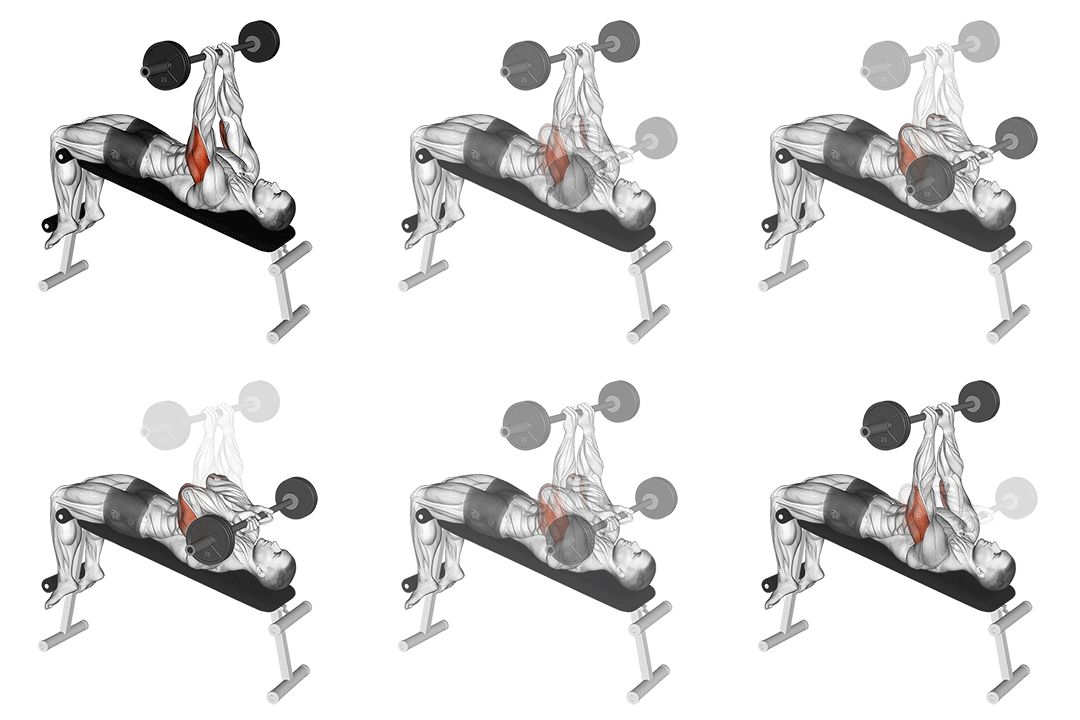
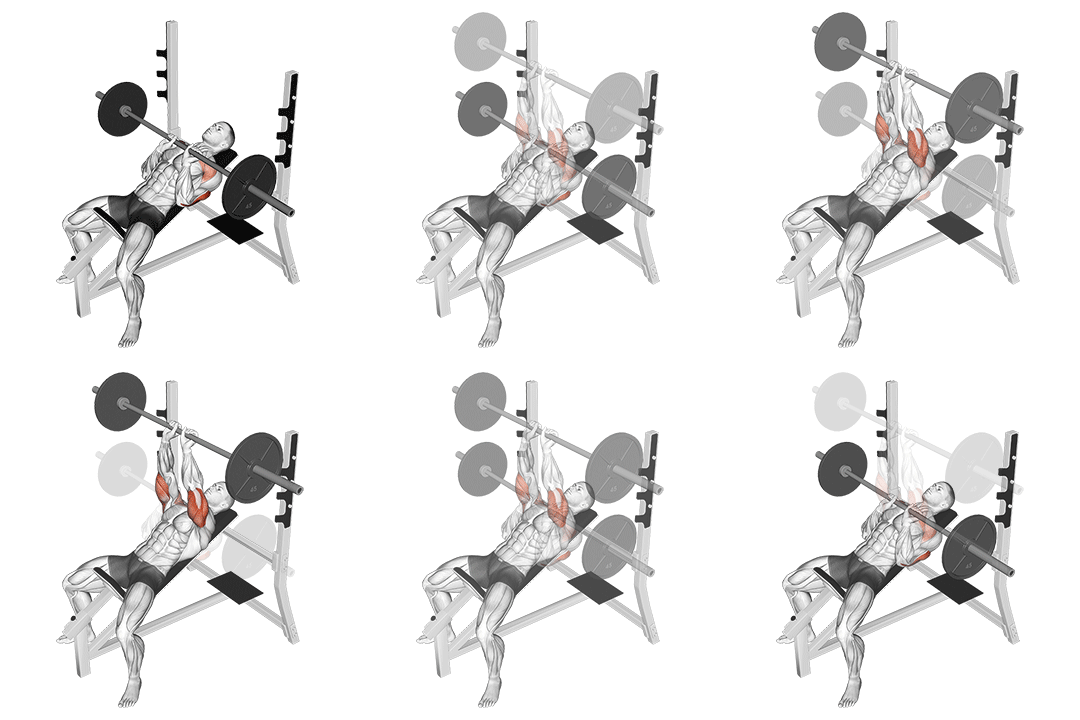
More comparisons with Barbell Lying Close-grip Press
Compare More Exercises
Use our free comparison tool to analyze any two exercises head-to-head.
Compare Exercises