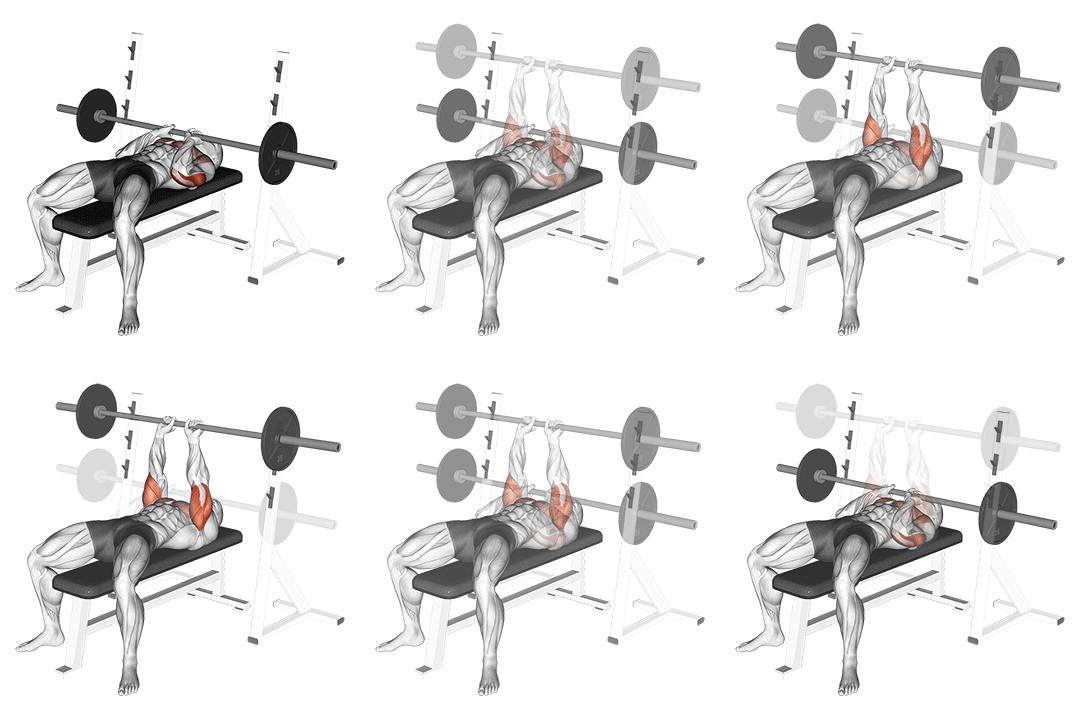
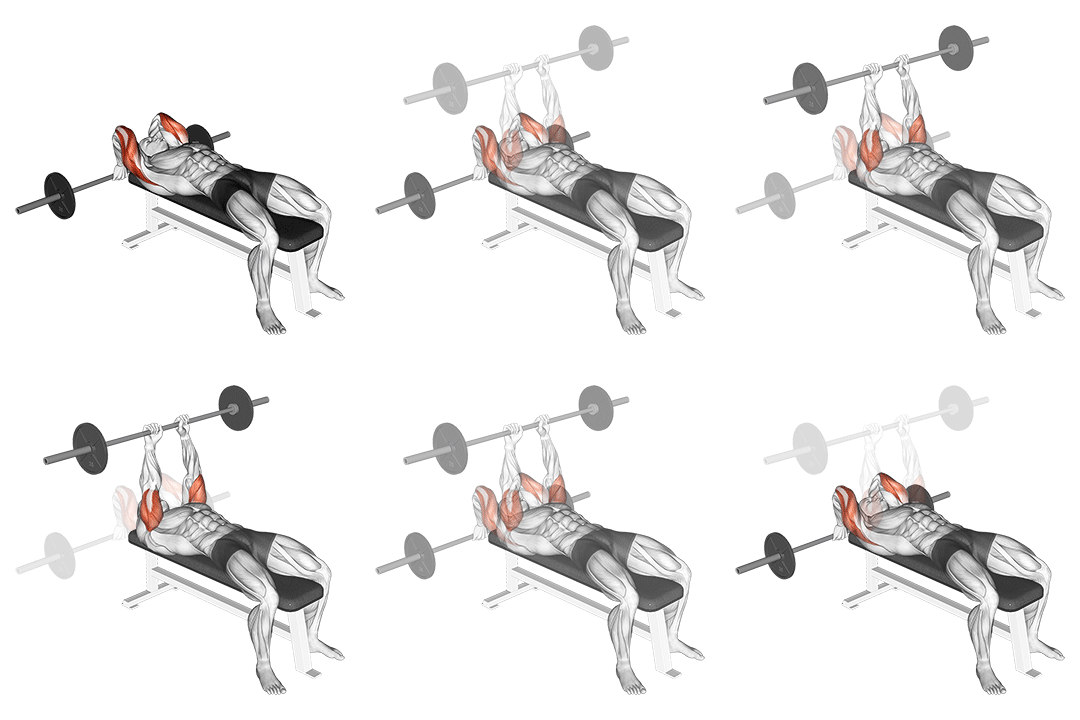
Barbell Close-grip Bench Press vs Barbell Lying Back Of The Head Tricep Extension
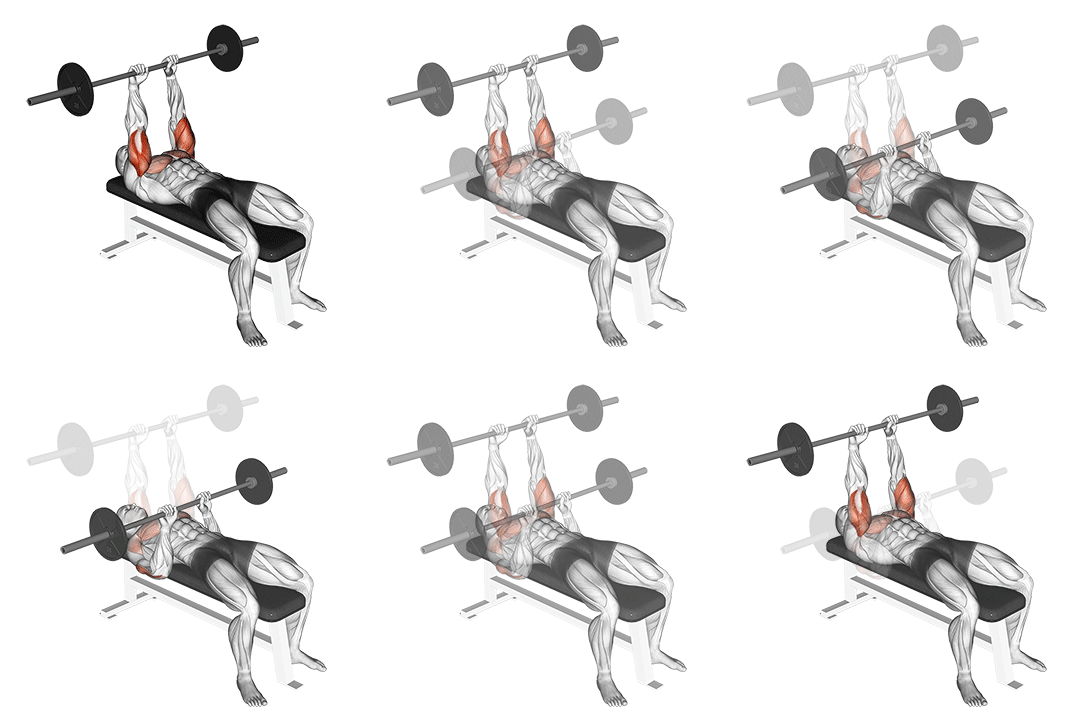
Compare target muscles, equipment, difficulty, movement type, and secondary muscles for Barbell Close-grip Bench Press and Barbell Lying Back Of The Head Tricep Extension.

Change comparison Share

Get comparison link

Select the link and use your device's Copy command.

Comparison overview

AI-generated
Barbell Close-grip Bench Press vs Barbell Lying Back Of The Head Tricep Extension — two staple triceps builders with very different mechanics. If you want clear guidance on which to use for hypertrophy, strength, or programming, you’re in the right place. I’ll compare primary and secondary muscle activation, show technique cues (hand spacing, elbow path, tempo), cover equipment and progression options, and give practical recommendations for rep ranges and safety. By the end you’ll know which exercise to prioritize based on your goal and how to perform each to maximize triceps stimulus.
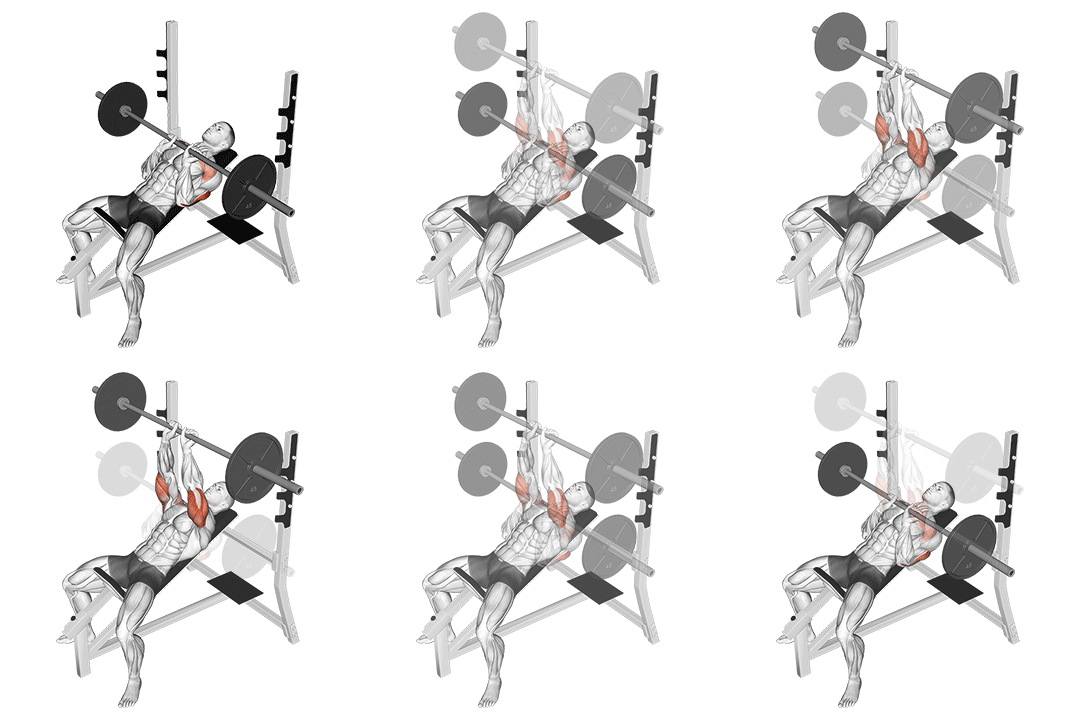
Exercise Comparison

Exercise A
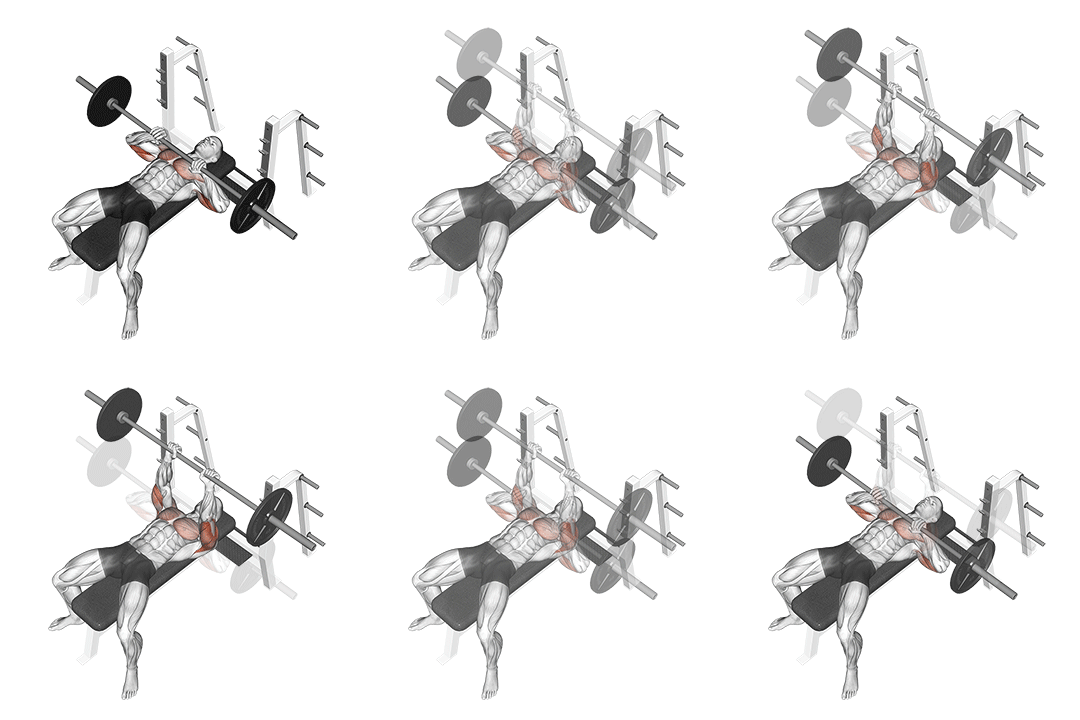
Barbell Close-grip Bench Press demonstration

Barbell Close-grip Bench Press

Target Triceps
Equipment Barbell
Body Part Upper-arms
Difficulty Intermediate
Movement Compound
Secondary Muscles
Chest Shoulders
VS
Exercise B
Barbell Lying Back Of The Head Tricep Extension demonstration
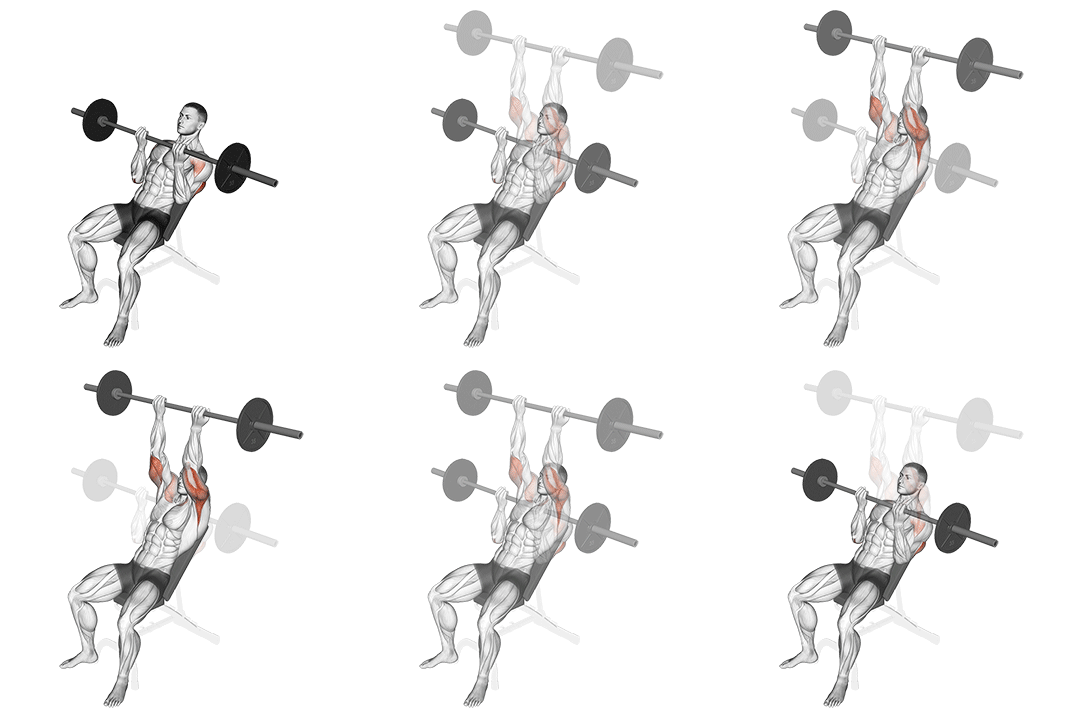
Barbell Lying Back Of The Head Tricep Extension
Target Triceps
Equipment Barbell
Body Part Upper-arms
Difficulty Intermediate
Movement Isolation
Secondary Muscles
Shoulders

Head-to-Head Comparison

Different values are marked. These are catalogue attributes, not performance scores.

Muscles used

Listed target and secondary muscles, shown on the body. Locations, not activation or strength scores.

  • Target
  • Secondary
  • Not highlighted

Barbell Close-grip Bench Press

Front
Barbell Close-grip Bench Press: front muscle locationsSolid: listed target. Striped: listed secondary. Grey: not highlighted. Locations, not activation or strength scores. See the muscle names below.
Back
Barbell Close-grip Bench Press: back muscle locationsSolid: listed target. Striped: listed secondary. Grey: not highlighted. Locations, not activation or strength scores. See the muscle names below.
Target
Triceps
Secondary
Chest, Shoulders

Not shown on diagram: Shoulders. These labels do not identify a precise region on this map.

Barbell Lying Back Of The Head Tricep Extension

Front
Barbell Lying Back Of The Head Tricep Extension: front muscle locationsSolid: listed target. Striped: listed secondary. Grey: not highlighted. Locations, not activation or strength scores. See the muscle names below.
Back
Barbell Lying Back Of The Head Tricep Extension: back muscle locationsSolid: listed target. Striped: listed secondary. Grey: not highlighted. Locations, not activation or strength scores. See the muscle names below.
Target
Triceps
Secondary
Shoulders

Not shown on diagram: Shoulders. These labels do not identify a precise region on this map.

Grey does not mean a muscle is unused. The diagrams show only the mapped catalogue labels.

Attribute Barbell Close-grip Bench Press Barbell Lying Back Of The Head Tricep Extension
Target Muscle
Triceps
Triceps
Body Part
Upper-arms
Upper-arms
Equipment
Barbell
Barbell
Difficulty
Intermediate
Intermediate
Movement Type Different
Compound
Isolation
Secondary Muscles Different
Chest, Shoulders
Shoulders

Visual Comparison

An illustrative 1–10 profile derived from catalog difficulty, equipment, and listed-muscle fields—not measured performance or muscle activation.

Key Differences

  • Barbell Close-grip Bench Press is a compound movement, while Barbell Lying Back Of The Head Tricep Extension is an isolation exercise.
  • Both exercises target the Triceps using Barbell. The catalogue does not establish which exercise is better for an individual goal.

Muscle comparison

Shared target muscles

Both exercises primarily target elbow extension via the triceps brachii. The close-grip bench press emphasizes the lateral and medial heads under heavier loads because the narrower grip increases elbow extension torque while still involving horizontal adduction. The lying back-of-head tricep extension places the long head under greater stretch due to shoulder position, increasing long-head tension throughout the eccentric phase.

Secondary muscle differences

Close-grip bench press recruits substantial pectoralis major and anterior deltoid activity because the movement combines elbow extension with horizontal pressing force vectors. The lying back-of-head extension minimizes pec involvement and isolates the triceps, but still loads the anterior shoulder to stabilize the upper arm. Thus the bench press gives systemic pressing carryover; skull crushers are more strictly single-joint triceps work.

Muscle involvement analysis

During close-grip bench press the load vector passes through the shoulder and elbow, so triceps peak activation occurs near lockout (last 15–25% of range). In lying back-of-head extensions peak triceps activation occurs through the stretch-to-mid range (about 30–70% of movement) as the long head resists eccentric lengthening, making the movement effective for time-under-tension hypertrophy.

Equipment and setup

Barbell Close-grip Bench Press: setup

Barbell Close-grip Bench Press requires a flat bench, barbell, and ideally a rack or spotter for heavy sets. Optional: safety pins or a power rack for solo lifters.

Barbell Lying Back Of The Head Tricep Extension: setup

Barbell Lying Back Of The Head Tricep Extension requires a bench and barbell as well; many lifters prefer an EZ-bar to reduce wrist strain, but a straight barbell works. You can also perform a floor variation if no bench is available.

Access and practicality

Barbell Lying Back Of The Head Tricep Extension — slightly more accessible because you can safely perform a floor variation and use lighter loads without a spotter, and it tolerates EZ- or straight bars. Close-grip bench often requires rack/safety or a spotter when loading heavy.

Learning and progression

Learning the movements

Lying back-of-head tricep extensions have a simpler single-joint path, so beginners can learn the elbow hinge more quickly. Close-grip bench press requires full-body bracing, bar path control, and breathing technique, making its technical curve steeper.

Progression considerations

Close-grip bench press offers greater raw progression potential because it’s a compound lift allowing heavy loading (3–6+ rep strength phases) and carries over to other presses. Skull crushers progress via volume, tempo, and incremental load but top out earlier due to elbow tendon stress.

Limitations and precautions

Skull crushers carry higher localized elbow and tendon stress if loading or ROM is excessive; hitting the bar behind the head increases risk if form breaks. Close-grip bench press carries higher systemic load and shoulder strain risk, and without a spotter it has safety concerns during near-max singles.

Pros & Cons

Barbell Close-grip Bench Press

+ Pros

  • Loads triceps with heavy external resistance — ideal for strength phases (3–6 reps).
  • Builds pressing carryover to bench and overhead movements.
  • Also trains chest and anterior deltoid, giving compound muscle stimulus.
  • Efficient: works multiple muscle groups in one movement.

− Cons

  • Requires bench and safe racking system or spotter for heavy loads.
  • Higher technical demand — needs solid bar path and bracing.
  • Less isolation on long head compared to overhead-style extensions.

Barbell Lying Back Of The Head Tricep Extension

+ Pros

  • Strong isolation of the triceps long head due to shoulder position and stretch.
  • Easier to perform without a spotter — can use floor variation.
  • Excellent for hypertrophy work with high TUT (8–15+ rep ranges).
  • Less pectoral involvement, letting you target triceps directly.

− Cons

  • Places significant stress on elbow tendons if volume or load is excessive.
  • Limited progression ceiling compared with compound pressing for strength.
  • Requires careful elbow positioning to avoid flaring and shoulder strain.

When Each Exercise Wins

1
For muscle hypertrophy: Barbell Lying Back Of The Head Tricep Extension

The lying back-of-head extension puts the long head under greater stretch and allows high time-under-tension (8–15 reps), which is ideal for hypertrophy. Use controlled 3–4 second eccentrics and full but safe ROM to maximize muscle fiber recruitment.

2
For strength gains: Barbell Close-grip Bench Press

Close-grip bench lets you move heavier loads (3–6 rep ranges) and improves elbow extension strength under compressive load, transferring to overall pressing strength and increases in one-rep max.

3
For beginners: Barbell Close-grip Bench Press

Learning a compound press builds foundational strength and motor patterns across chest, shoulders, and triceps. Start light, focus on grip roughly shoulder-width, tight scapular retraction, and a controlled bar path.

4
For home workouts: Barbell Lying Back Of The Head Tricep Extension

You can perform a floor variation with minimal equipment and lower risk without a rack. It lets you target triceps effectively even with lighter loads or an EZ-bar.

Frequently Asked Questions

Can I do both Barbell Close-grip Bench Press and Barbell Lying Back Of The Head Tricep Extension in the same workout?

Yes. Pair them by doing close-grip bench first as a compound heavy movement (3–6 sets of 3–6 reps) followed by skull crushers for 3–4 sets of 8–15 reps to add targeted volume. Reduce total volume if you experience elbow soreness.

Which exercise is better for beginners?

Start with the close-grip bench press to develop pressing mechanics and full-body bracing. Use light loads, focus on hand spacing (about shoulder-width), and master breathing and scapular control before increasing weight.

How do the muscle activation patterns differ?

Close-grip bench produces peak triceps activation near lockout while also engaging pecs and anterior delts due to horizontal force vectors. Lying back-of-head extensions bias the long head with greater eccentric stretch and mid-range tension, producing steadier activation throughout the rep.

Can Barbell Lying Back Of The Head Tricep Extension replace Barbell Close-grip Bench Press?

Not fully. Skull crushers are a superior isolation tool for hypertrophy but can’t match the heavy-loading strength adaptations and multi-joint carryover of the close-grip bench. Use skull crushers to supplement—not replace—compound pressing.

Comparison Summary

Use the close-grip bench press when your goal is raw pressing strength and multi-muscle development — it allows heavier loading and builds functional pressing power. Prioritize it during strength phases (3–6 reps) and as a main compound accessory. Choose the barbell lying back-of-head tricep extension when your goal is focused triceps hypertrophy, especially targeting the long head; program it for 8–15 reps with slow eccentrics and strict elbow control. For best results, cycle both: use close-grip bench to build load tolerance and skull crushers to add targeted volume and shape the long head.

Exercise instructions

Steps from the exercise catalogue. Read the full sequence before starting.

Barbell Close-grip Bench Press

  1. Lie flat on a bench with your feet flat on the ground and your back pressed against the bench.
  2. Grasp the barbell with a close grip, slightly narrower than shoulder-width apart.
  3. Unrack the barbell and lower it slowly towards your chest, keeping your elbows close to your body.
Read remaining steps for Barbell Close-grip Bench Press
  1. Pause for a moment when the barbell touches your chest.
  2. Push the barbell back up to the starting position, fully extending your arms.
  3. Repeat for the desired number of repetitions.

Barbell Lying Back Of The Head Tricep Extension

  1. Lie flat on a bench with your feet flat on the ground and your head at the end of the bench.
  2. Hold a barbell with an overhand grip, hands shoulder-width apart, and extend your arms straight up over your chest.
  3. Keeping your upper arms stationary, slowly lower the barbell behind your head by bending your elbows.
Read remaining steps for Barbell Lying Back Of The Head Tricep Extension
  1. Pause for a moment, then extend your arms back up to the starting position.
  2. Repeat for the desired number of repetitions.

Also Compare

Compare another pair

Choose two exercises to see their differences side by side.

Compare Exercises