

Barbell Deadlift vs Barbell Front Squat: Complete Comparison Guide
Barbell Deadlift vs Barbell Front Squat — two heavy compound lifts that both hit your glutes and upper legs but do it with different mechanics. You’ll get clear, actionable guidance on how each exercise loads the hips, knees, and spine, plus technique cues, rep ranges, and when to use one over the other. I’ll cover primary and secondary muscle recruitment, equipment and accessibility, learning curve and injury risk, plus concrete recommendations for hypertrophy, strength, beginners, and home training.
Exercise Comparison
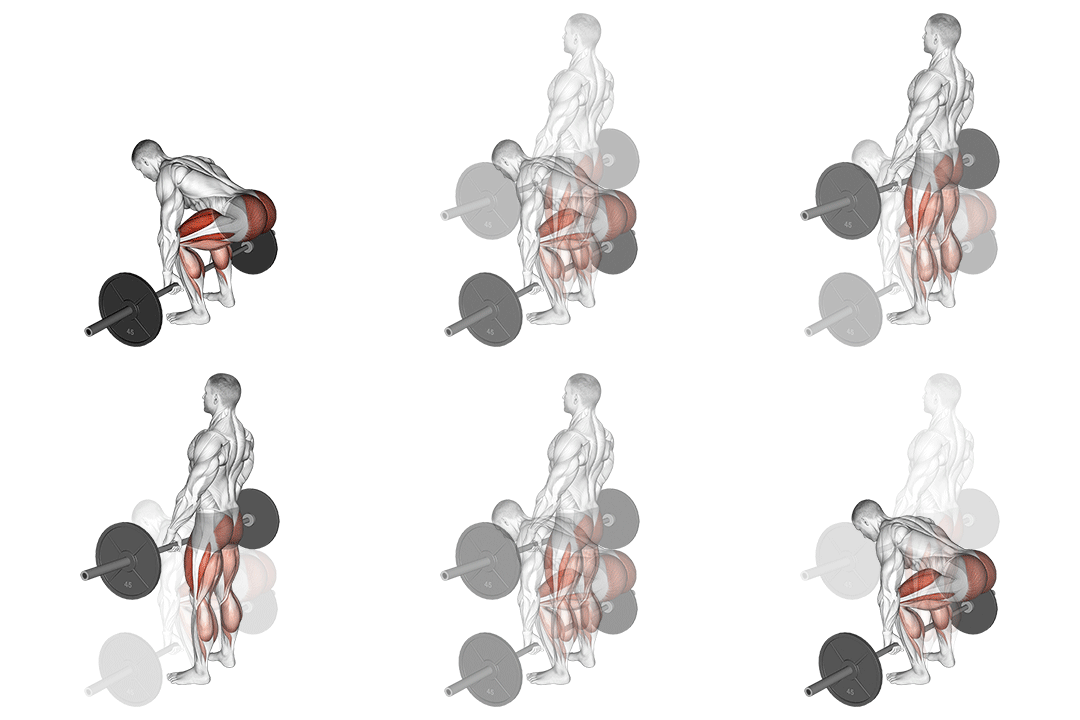
Barbell Deadlift
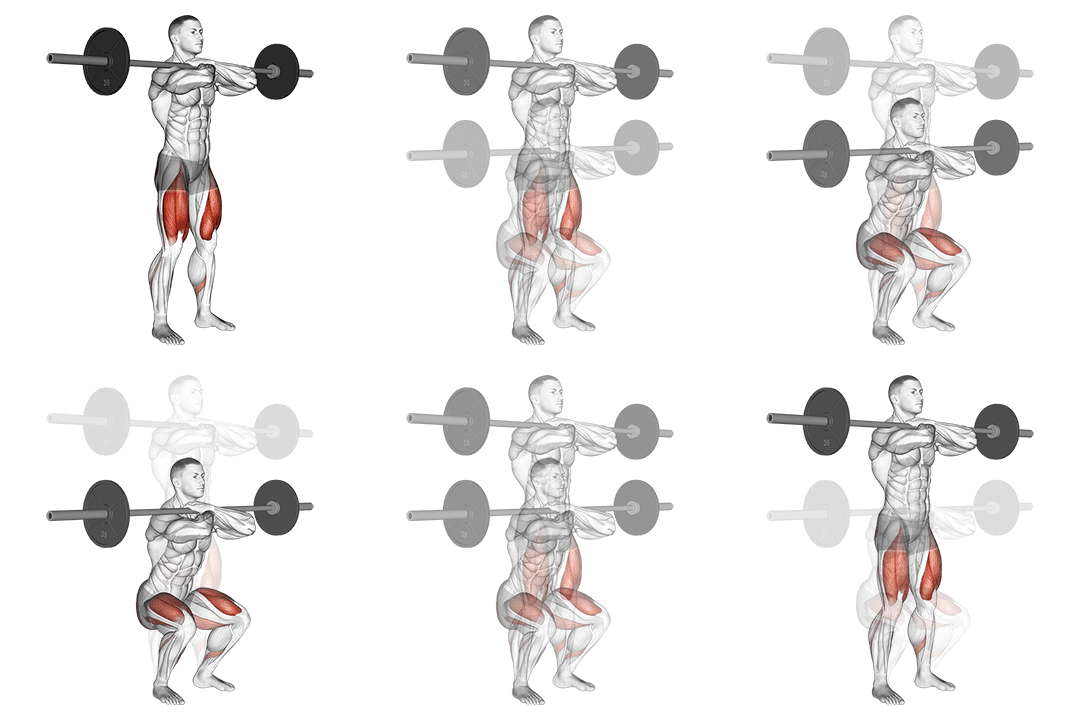
Barbell Front Squat
Head-to-Head Comparison
| Attribute | Barbell Deadlift | Barbell Front Squat |
|---|---|---|
| Target Muscle |
Glutes
|
Glutes
|
| Body Part |
Upper-legs
|
Upper-legs
|
| Equipment |
Barbell
|
Barbell
|
| Difficulty |
Advanced
|
Intermediate
|
| Movement Type |
Compound
|
Compound
|
| Secondary Muscles |
2
|
4
|
Secondary Muscles Activated
Barbell Deadlift
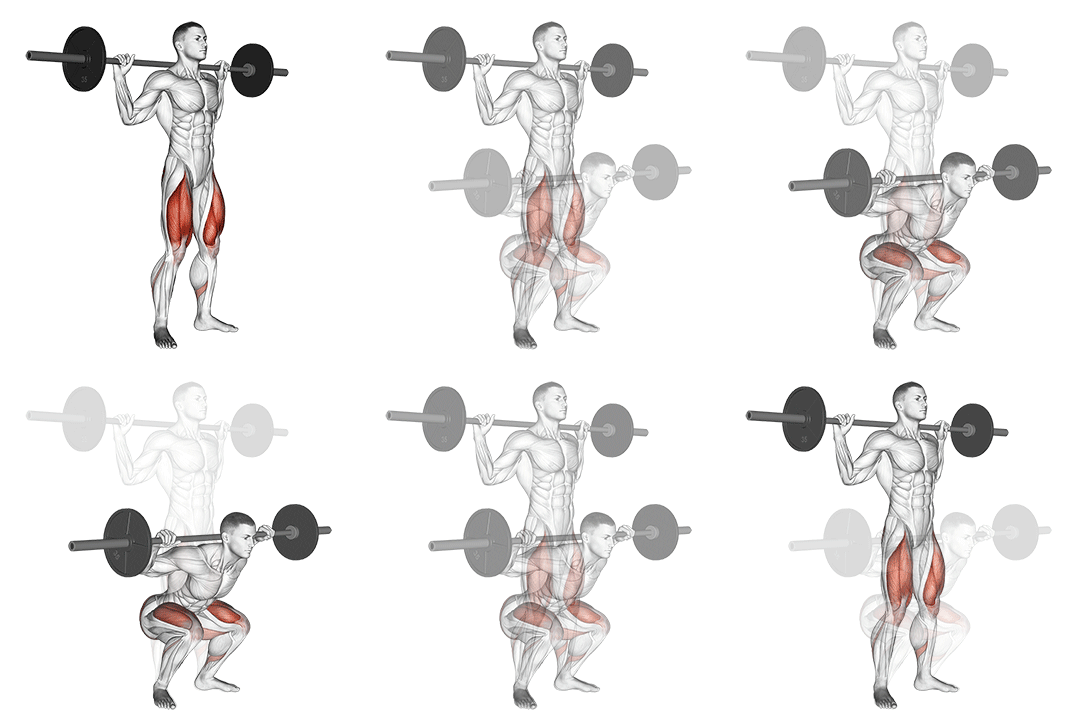
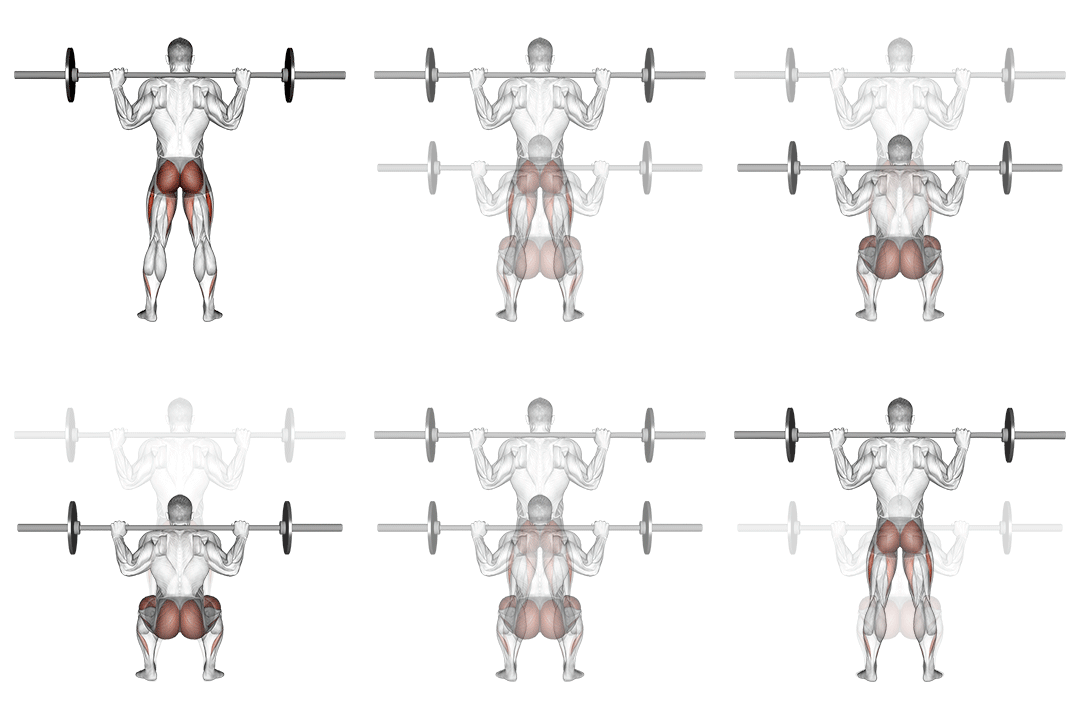
Barbell Front Squat
Visual Comparison
Overview
Barbell Deadlift vs Barbell Front Squat — two heavy compound lifts that both hit your glutes and upper legs but do it with different mechanics. You’ll get clear, actionable guidance on how each exercise loads the hips, knees, and spine, plus technique cues, rep ranges, and when to use one over the other. I’ll cover primary and secondary muscle recruitment, equipment and accessibility, learning curve and injury risk, plus concrete recommendations for hypertrophy, strength, beginners, and home training.
Key Differences
- Difficulty levels differ: Barbell Deadlift is advanced, while Barbell Front Squat is intermediate.
- Both exercises target the Glutes using Barbell. The main differences are in their movement patterns and muscle activation angles.
Pros & Cons
Barbell Deadlift
+ Pros
- Maximal posterior-chain loading for powerful hip extension
- High absolute load capacity—great for strength progression (1–5 reps)
- Simple equipment needs—no rack required
- Direct carryover to everyday lifts and athletic movements
− Cons
- Higher shear and lower-back stress if form breaks
- Grip can become limiting unless straps are used
- Technical dead points (floor sticking points) require accessory work
Barbell Front Squat
+ Pros
- Strong quad and core recruitment with an upright torso
- Easier depth and position feedback—helpful for learning
- Lower shear on the lumbar spine compared with heavy deadlifts
- Improves front-rack mobility and vertical force production
− Cons
- Requires a rack and decent wrist/shoulder mobility
- Lower absolute loads compared with deadlifts
- Anterior knee compressive forces can be uncomfortable for some lifters
When Each Exercise Wins
Deadlifts allow heavier loads and long-range hip extension, which increases mechanical tension on glute fibers—pair sets of 4–8 reps and accessory hamstring work for optimal muscle growth.
Deadlifts permit the greatest absolute load and train maximal hip-extension torque; focus on low-rep sets (1–5) and progressive overload to build raw strength.
Front squats provide clearer visual and positional feedback with an upright torso and are easier to coach for safe movement patterns and depth; work in 6–12 rep ranges to build technique and strength.
Deadlifts need minimal gear—barbell and plates—and can be performed safely without a rack, making them a better choice when equipment is limited.
Frequently Asked Questions
Can I do both Barbell Deadlift and Barbell Front Squat in the same workout?
Yes—sequence matters. Do the heavier, lower-rep deadlifts first if strength is the priority, then front squats for hypertrophy or accessory work; keep total volume manageable (e.g., 3–5 deadlift sets and 3–4 front squat sets).
Which exercise is better for beginners?
Barbell Front Squat is generally better for beginners because the upright posture and rack setup give immediate feedback for depth and position, making coaching and motor learning simpler.
How do the muscle activation patterns differ?
Deadlifts load the posterior chain with high hip-extension torque and longer hamstring length under tension, while front squats create higher knee-extensor torque and peak quad activation at the bottom; glute activation is strong in both but occurs at different phases of the lift.
Can Barbell Front Squat replace Barbell Deadlift?
Not entirely—front squats won’t match deadlifts for maximal posterior-chain loading or absolute strength. Use front squats when you need quad emphasis or lower back relief, but keep deadlifts or hip-dominant variants for posterior-chain development.
Expert Verdict
Use the Barbell Deadlift when your primary goal is posterior-chain strength and heavy mechanical tension on the glutes and hamstrings. Deadlifts let you apply high loads and develop raw hip-extension power—train with low reps (1–5) and accessory Romanian deadlifts and glute bridges for balanced development. Choose the Barbell Front Squat when you want quad-dominant development, improved upright posture, and safer spinal shear—front squats excel for technical learning, core demand, and hypertrophy in 4–12 rep ranges. If your goal is maximal glute size and strength, prioritize deadlifts; if you need balanced leg development, mobility, or a more coachable movement, prioritize front squats. Incorporating both in a periodized program often yields the best overall development.
Also Compare
More comparisons with Barbell Deadlift
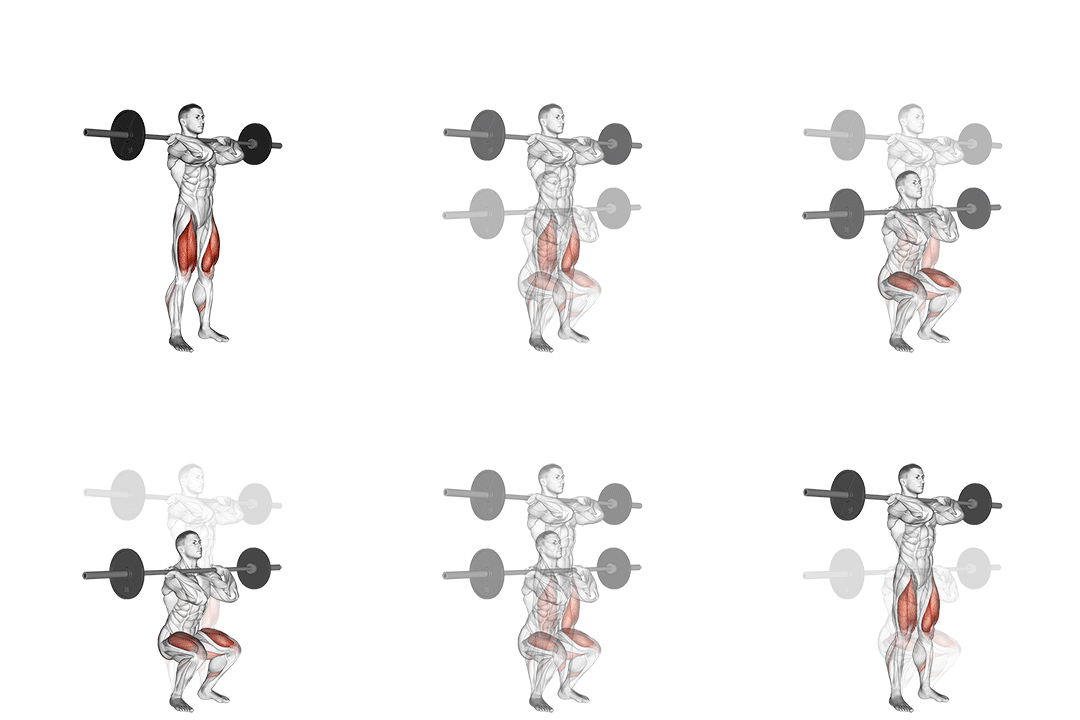
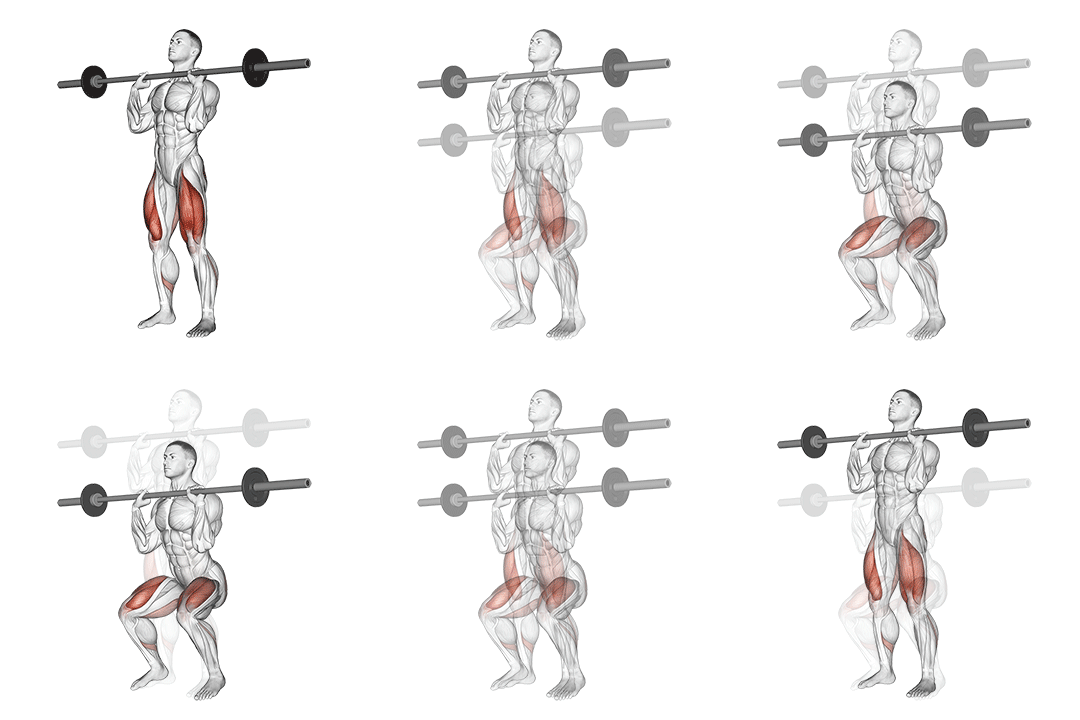
More comparisons with Barbell Front Squat
Compare More Exercises
Use our free comparison tool to analyze any two exercises head-to-head.
Compare Exercises