

Barbell Deadlift vs Barbell Full Squat: Complete Comparison Guide
Barbell Deadlift vs Barbell Full Squat — two foundational barbell moves that both target the glutes and upper legs but load your body in very different ways. You’ll get a side-by-side look at primary and secondary muscle activation, equipment needs, learning curve, injury considerations, and programming cues. I’ll give clear winners for common goals (muscle growth, strength, beginners, home workouts) and practical technique tips you can use in your next session, including rep ranges, joint angles, and simple cues to reduce risk and increase muscle recruitment.
Exercise Comparison
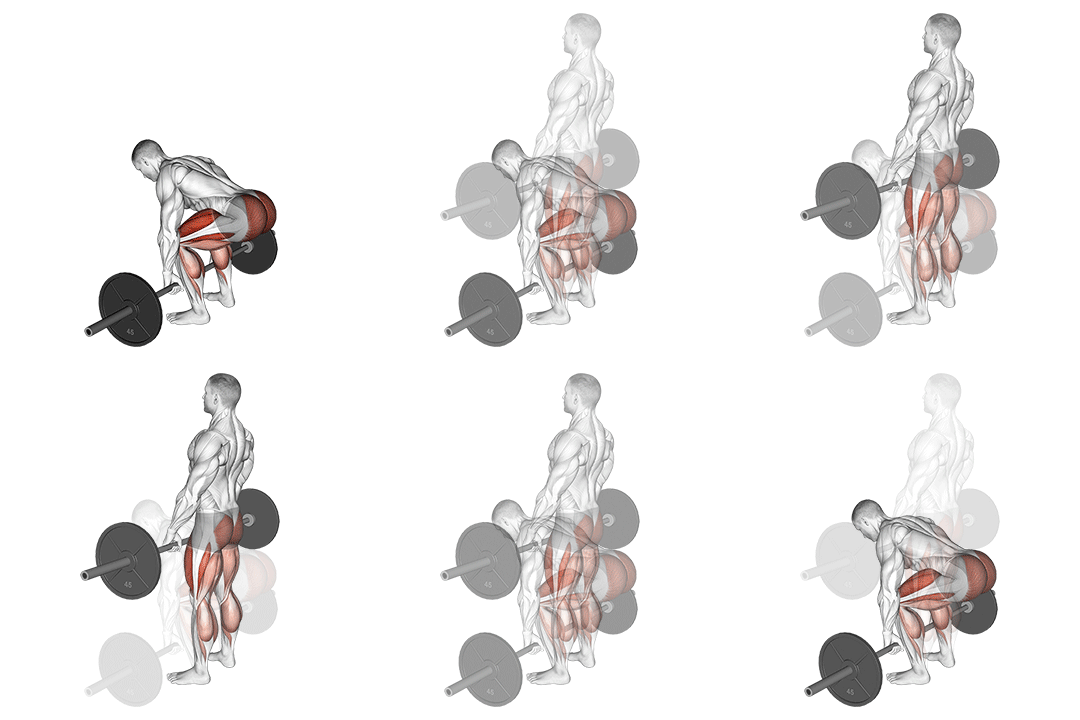
Barbell Deadlift
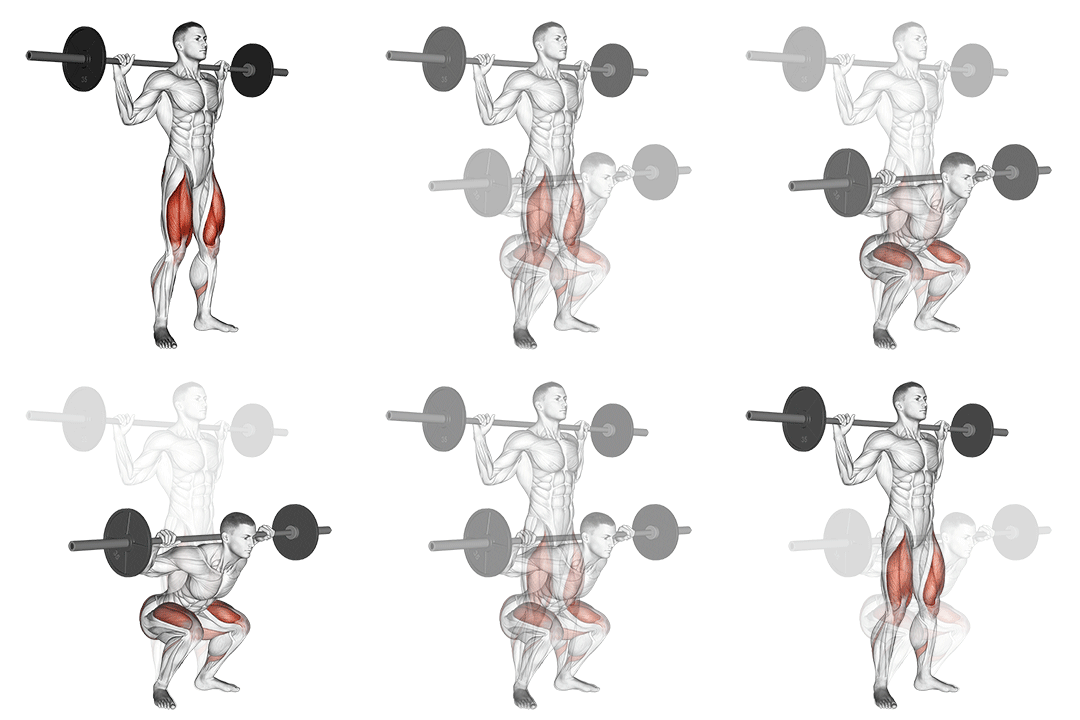
Barbell Full Squat
Head-to-Head Comparison
| Attribute | Barbell Deadlift | Barbell Full Squat |
|---|---|---|
| Target Muscle |
Glutes
|
Glutes
|
| Body Part |
Upper-legs
|
Upper-legs
|
| Equipment |
Barbell
|
Barbell
|
| Difficulty |
Advanced
|
Intermediate
|
| Movement Type |
Compound
|
Compound
|
| Secondary Muscles |
2
|
4
|
Secondary Muscles Activated
Barbell Deadlift
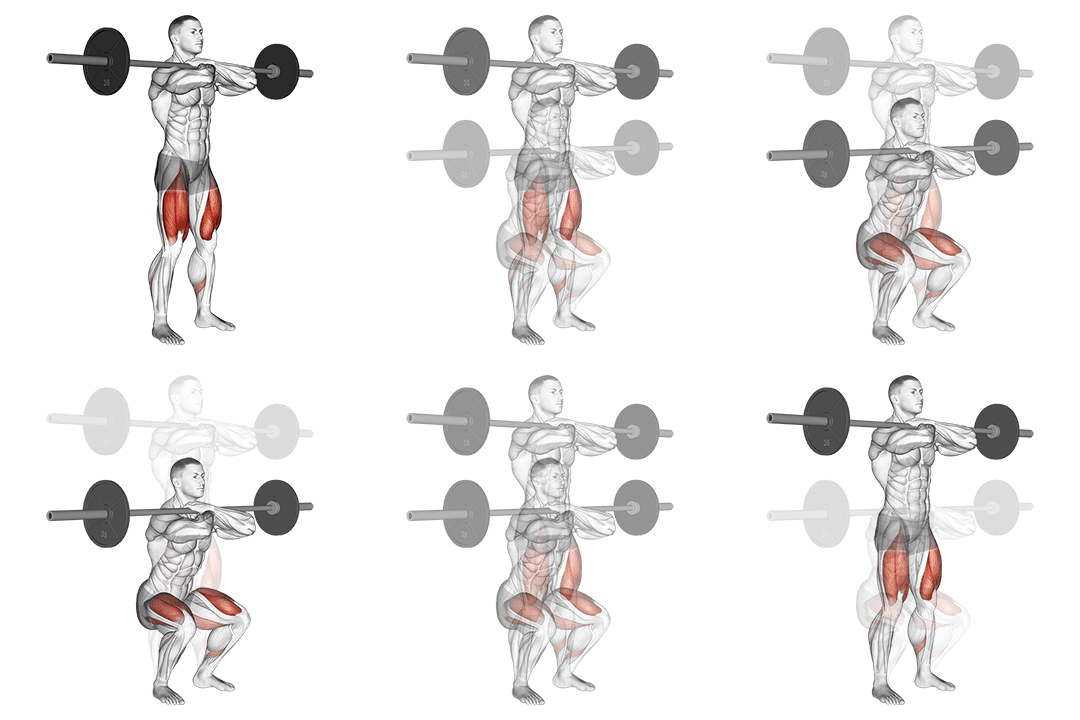
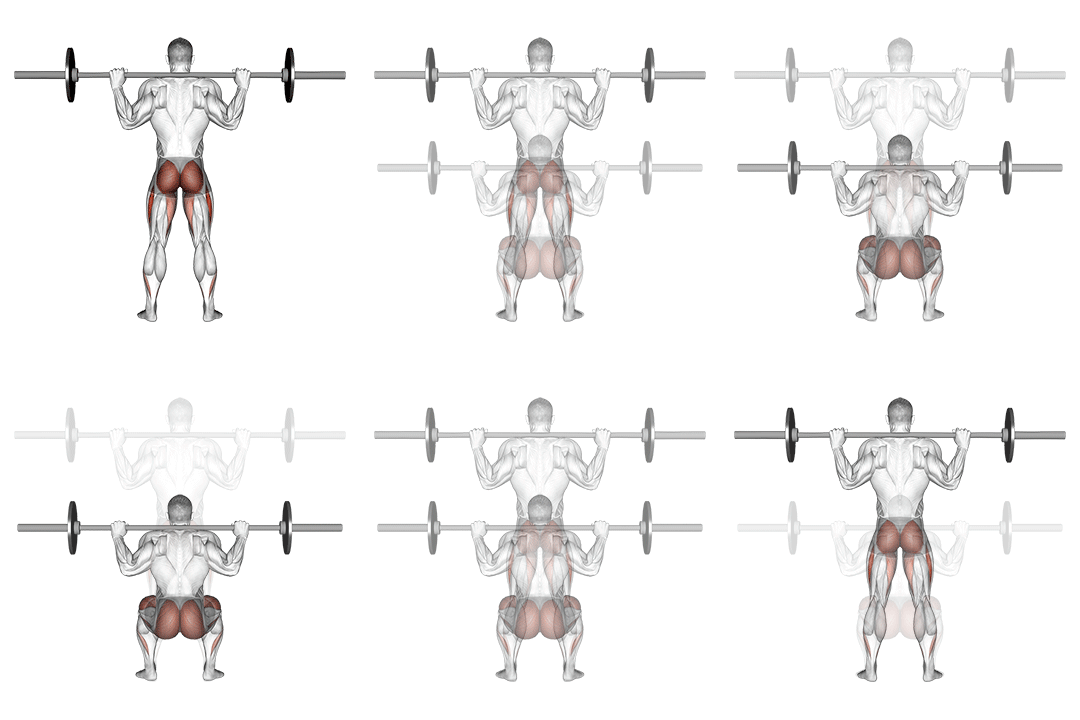
Barbell Full Squat
Visual Comparison
Overview
Barbell Deadlift vs Barbell Full Squat — two foundational barbell moves that both target the glutes and upper legs but load your body in very different ways. You’ll get a side-by-side look at primary and secondary muscle activation, equipment needs, learning curve, injury considerations, and programming cues. I’ll give clear winners for common goals (muscle growth, strength, beginners, home workouts) and practical technique tips you can use in your next session, including rep ranges, joint angles, and simple cues to reduce risk and increase muscle recruitment.
Key Differences
- Difficulty levels differ: Barbell Deadlift is advanced, while Barbell Full Squat is intermediate.
- Both exercises target the Glutes using Barbell. The main differences are in their movement patterns and muscle activation angles.
Pros & Cons
Barbell Deadlift
+ Pros
- Massive posterior chain stimulus — heavy hip extension load for glutes and hamstrings
- High absolute loading capacity for strength work (1–5 rep ranges)
- Minimal equipment required — no rack needed
- Strong transfer to real-world lifting and posterior chain resilience
− Cons
- Higher lumbar shear risk if technique breaks down
- Less direct quadriceps stimulus compared with squats
- Grip can limit load unless you use straps or mixed grip
Barbell Full Squat
+ Pros
- Excellent quad-plus-glute hypertrophy across a full ROM (6–12 rep ranges)
- Greater variety of progression options (front, pause, box, tempo)
- Built-in rack safety for heavy training and easier loading/unloading
- Higher core and ankle demand improves functional stability
− Cons
- Requires a rack and more setup space
- Knee stress and mobility limits can restrict depth and mechanics
- Spinal compression at heavy loads can be uncomfortable without bracing
When Each Exercise Wins
The full squat gives larger time under tension for quads and glutes across a deep ROM, and you can program 6–12 rep ranges, pauses, and tempo work to increase hypertrophy. It creates consistent knee and hip torque that targets both major thigh muscle groups for balanced muscle growth.
Deadlifts allow higher absolute loads and train maximal hip extension and posterior chain strength effectively with 1–5 rep heavy sets. Higher neural demand and the capacity to progressively overload make it ideal for building raw pulling strength and overall maximal lower-body force.
The squat’s upright posture and visible depth cues are easier to coach and correct for novices, and a rack provides safety while learning. You can build mobility and core strength progressively before moving to more technically demanding hinge patterns.
Deadlifts require only a barbell and plates and don’t need a rack, making them simpler for limited spaces. You can still effectively train strength and posterior-chain muscle growth with minimal setup.
Frequently Asked Questions
Can I do both Barbell Deadlift and Barbell Full Squat in the same workout?
Yes — but program them smartly. Do the heavier, lower-rep lift first (usually deadlifts for 1–5 reps) and follow with squats for moderate volume (6–10 reps) or separate them by session to avoid CNS and low-back fatigue reducing squat quality.
Which exercise is better for beginners?
Full squats are generally better for beginners because the rack, upright torso, and visible depth make coaching easier. Start with light loads, work on ankle and hip mobility, and use box squats or goblet squats to build patterning before heavy barbell back squats.
How do the muscle activation patterns differ?
Deadlifts emphasize hip extension and produce larger posterior chain activation — hamstrings and spinal erectors fire strongly during the pull. Squats distribute force between knee and hip extensors, so quads show higher activation while glutes still contribute strongly, especially from below parallel.
Can Barbell Full Squat replace Barbell Deadlift?
Not entirely — squats can replace some loading and hypertrophy stimulus but won’t match the deadlift’s posterior chain emphasis and maximal hip hinge strength. If your goal is heavy pulling strength or hamstring/erector development, keep deadlifts or hinge variants in your plan.
Expert Verdict
Both lifts deserve a place in a comprehensive program, but pick the priority based on your goals. Choose the Barbell Full Squat when your aim is balanced leg hypertrophy, quad development, and progressive, rack-friendly programming — focus on 6–12 reps, controlled 2–3 second eccentrics, knees tracking toes, and depth below parallel (~100–120° hip flexion). Choose the Barbell Deadlift when your goal is maximum posterior-chain strength and heavy loading — emphasize neutral spine, hips back, drive through the heels, and program 1–5 heavy reps or 5–8 for RDL-style hypertrophy. If you can, cycle both: use squats for volume-based leg development and deadlifts for heavy posterior-chain strength blocks.
Also Compare
More comparisons with Barbell Deadlift
Compare More Exercises
Use our free comparison tool to analyze any two exercises head-to-head.
Compare Exercises