

Barbell Deadlift vs Barbell Full Squat (side Pov): Complete Comparison Guide
Barbell Deadlift vs Barbell Full Squat (side Pov) puts two compound movers head-to-head for glute and upper-leg development. You’ll get clear, evidence-based distinctions on muscle targeting, joint mechanics, technique cues from the side view, and practical recommendations for strength, hypertrophy, and training frequency. Read on to learn exactly how each lift loads the hips and knees, which secondary muscles carry the work, and how to program rep ranges (3–6, 6–12, 12–20) and progressions to fit your goals.
Exercise Comparison
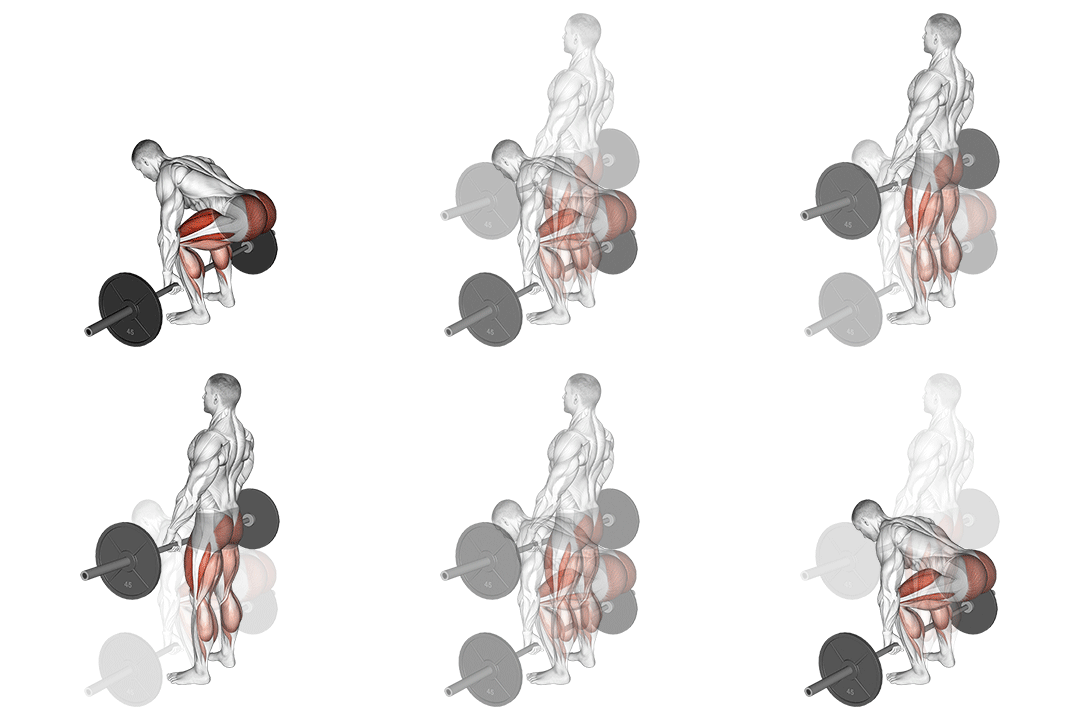
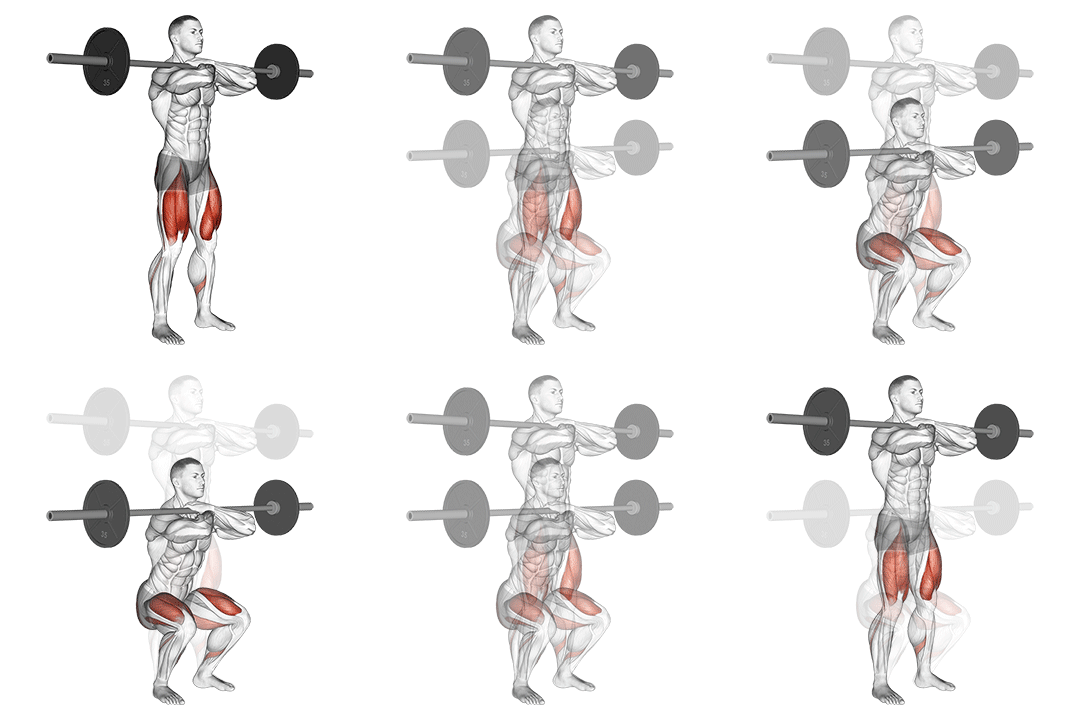
Barbell Deadlift
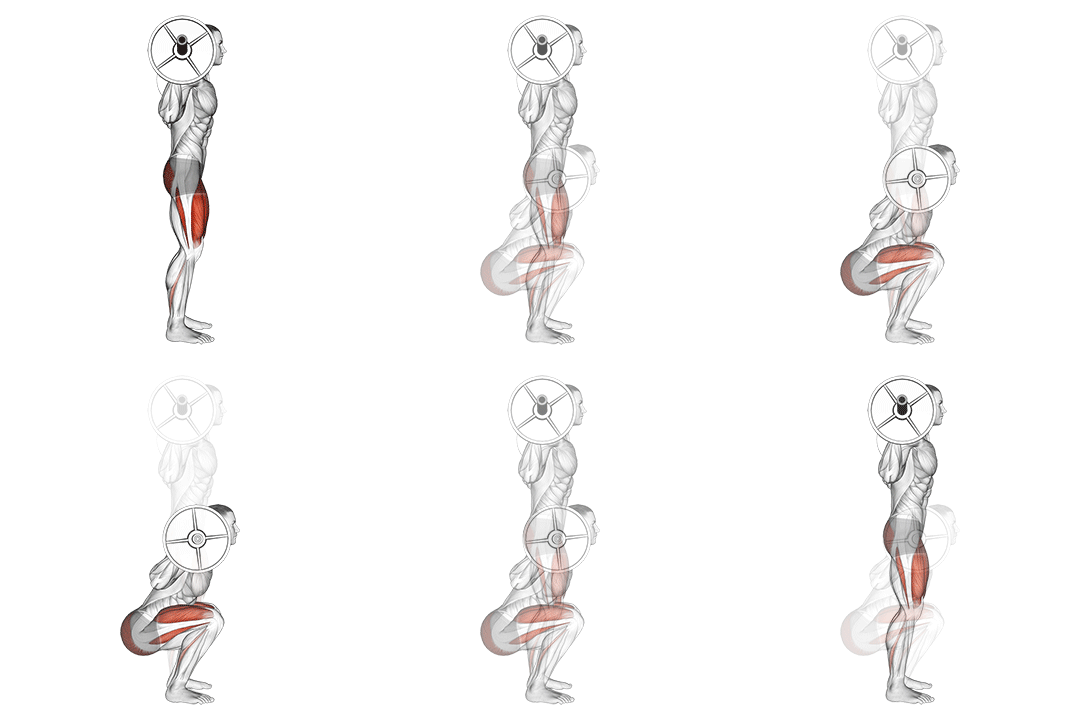
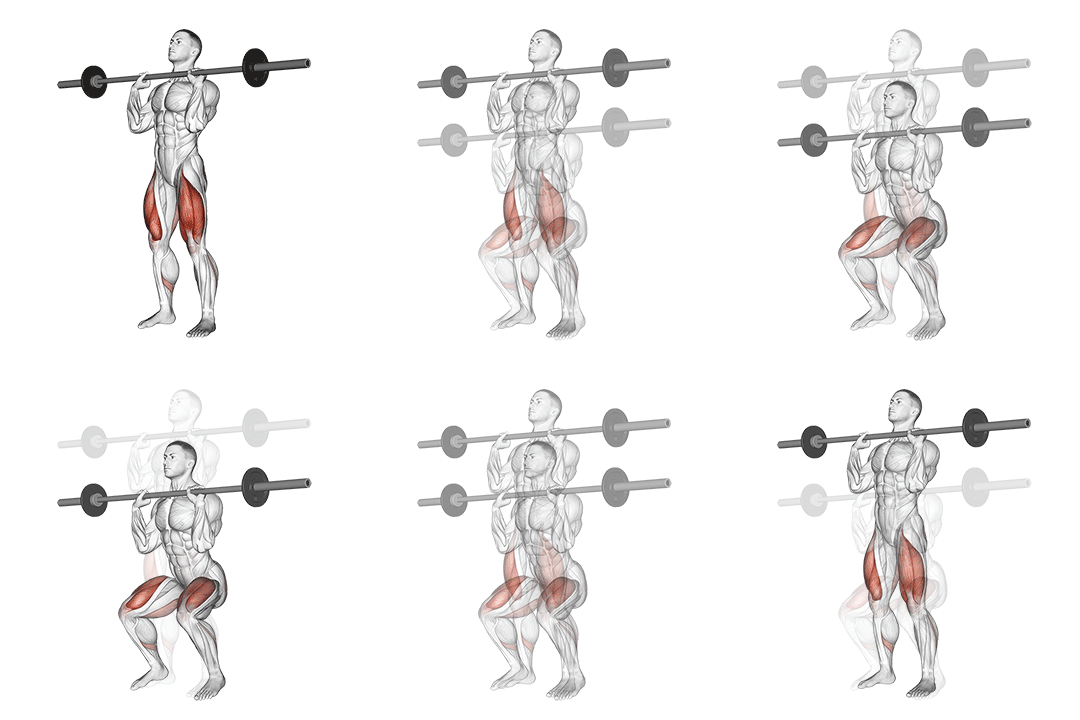
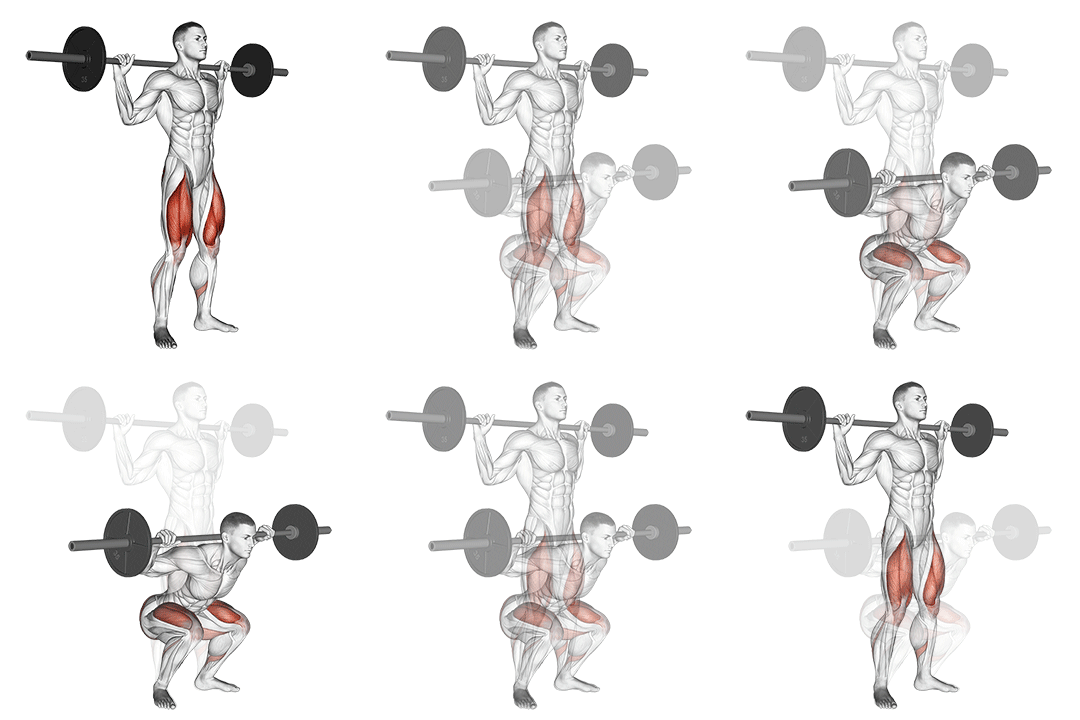
Barbell Full Squat (side Pov)
Head-to-Head Comparison
| Attribute | Barbell Deadlift | Barbell Full Squat (side Pov) |
|---|---|---|
| Target Muscle |
Glutes
|
Glutes
|
| Body Part |
Upper-legs
|
Upper-legs
|
| Equipment |
Barbell
|
Barbell
|
| Difficulty |
Advanced
|
Intermediate
|
| Movement Type |
Compound
|
Compound
|
| Secondary Muscles |
2
|
4
|
Secondary Muscles Activated
Barbell Deadlift
Barbell Full Squat (side Pov)
Visual Comparison
Overview
Barbell Deadlift vs Barbell Full Squat (side Pov) puts two compound movers head-to-head for glute and upper-leg development. You’ll get clear, evidence-based distinctions on muscle targeting, joint mechanics, technique cues from the side view, and practical recommendations for strength, hypertrophy, and training frequency. Read on to learn exactly how each lift loads the hips and knees, which secondary muscles carry the work, and how to program rep ranges (3–6, 6–12, 12–20) and progressions to fit your goals.
Key Differences
- Difficulty levels differ: Barbell Deadlift is advanced, while Barbell Full Squat (side Pov) is intermediate.
- Both exercises target the Glutes using Barbell. The main differences are in their movement patterns and muscle activation angles.
Pros & Cons
Barbell Deadlift
+ Pros
- Highly effective for posterior chain strength and heavy loading (optimal for 1–5 rep strength work)
- Minimal equipment needed—no rack required for conventional deadlift
- Shorter range of motion allows large external loads and rapid strength adaptations
- Transfers well to improved hip hinge mechanics for athletic movements
− Cons
- Higher technical demand on hip hinge and spinal stability—poor form increases lumbar shear
- Less direct quadriceps stimulation compared to squats
- Grip or lower-back can become limiting factors before hips reach fatigue
Barbell Full Squat (side Pov)
+ Pros
- Excellent glute stimulation through deep hip flexion and extended ROM
- Greater quad and calf recruitment—balanced upper-leg development
- Easier to scale with bodyweight and goblet progressions for beginners
- Side-view depth cues (hip crease below parallel) let you monitor mechanical loading visually
− Cons
- Requires a rack or spotter at heavier loads for safety
- Demands ankle mobility and thoracic control to hit full depth without lumbar compensation
- Knee joint and patellar tendon compressive load is higher at deep ranges
When Each Exercise Wins
The full squat loads the glutes through a larger length-tension range and increases knee-extension torque that hypertrophies quads and glutes across 6–12 rep ranges. Depth (hip crease below parallel) increases time under tension and mechanical work per rep, aiding muscle growth.
Deadlifts allow heavier absolute loads and target maximal hip-extension force, making them superior for improving 1–RM and posterior chain strength with low-rep schemes (1–5 reps) and progressive overload.
Squat progressions (bodyweight, goblet) teach joint coordination and core bracing more safely. The rack provides a controlled environment to add load while maintaining technique before advancing to heavy deadlifts.
You can perform variations ( Romanian deadlift, single-leg RDL) with minimal gear and still load the posterior chain effectively. Squats often require a rack and safe re-racking at heavier weights, reducing practicality at home.
Frequently Asked Questions
Can I do both Barbell Deadlift and Barbell Full Squat (side Pov) in the same workout?
Yes—plan one as the primary heavy lift and the other as a secondary volume movement. For example, do heavy deadlifts (3–5 sets of 1–5) first, then moderate squats (3–4 sets of 6–10) or vice versa depending on your priority, but avoid taking both to failure to reduce injury risk.
Which exercise is better for beginners?
The full squat is generally better to start: you can regress it to bodyweight and goblet variations to teach bracing, knee tracking, and depth control. Introduce deadlifts after mastering hip-hinge mechanics to protect the lumbar spine under load.
How do the muscle activation patterns differ?
Mechanically, deadlifts create a larger hip moment and greater posterior chain activation with peak activity near lockout; squats split torque between knee and hip joints with large quad activation during ascent. The squat produces two torque peaks (bottom initiation and mid-ascent) while the deadlift produces one dominant hip-extension peak.
Can Barbell Full Squat (side Pov) replace Barbell Deadlift?
Not fully—squats can substitute to maintain glute and quad development, but they don’t replicate the unique posterior chain loading or lumbar stabilization demands of heavy deadlifts. If your goal is maximal hip-hinge strength, keep deadlift variations in your program.
Expert Verdict
Use the barbell deadlift when your primary goal is raw posterior chain strength and you want to move maximal loads with a hip-dominant pattern. Prioritize deadlifts for low-rep strength cycles and when equipment is minimal. Choose the barbell full squat (side pov) when your goal is balanced upper-leg hypertrophy—deep squats create high mechanical tension on glutes and quads across the full ROM and are ideal for 6–12 rep hypertrophy blocks. If you want both outcomes, pair squats and deadlifts across a training week (one heavy, one moderate) while managing fatigue and technique to prevent overlap in failure sets.
Also Compare
More comparisons with Barbell Deadlift
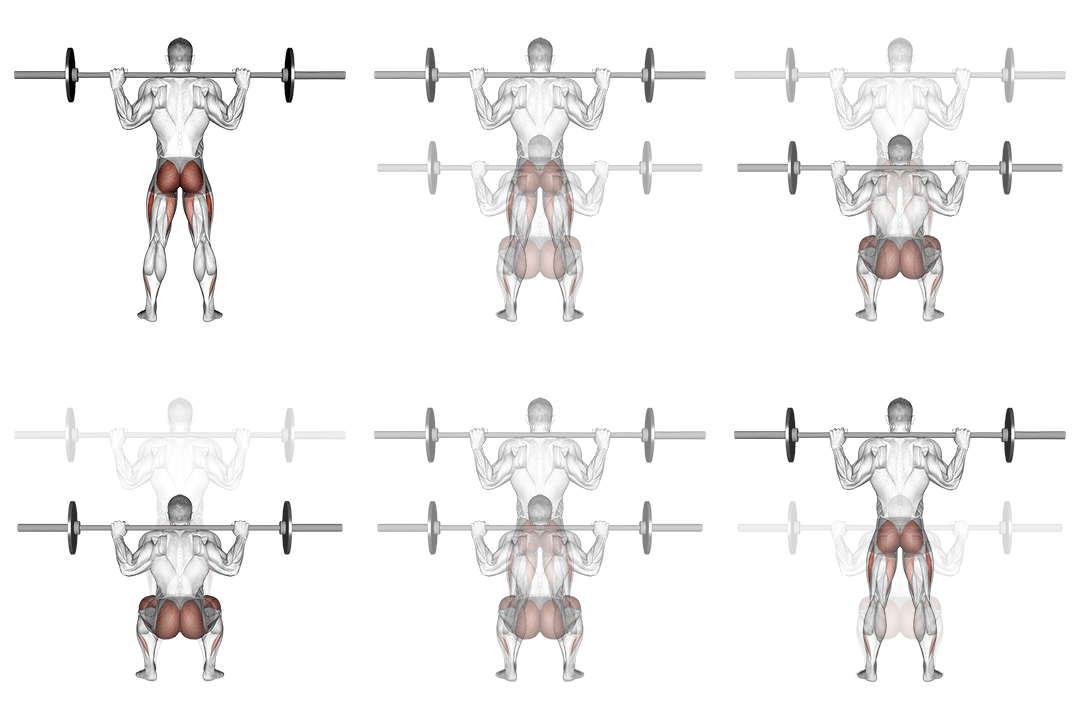
More comparisons with Barbell Full Squat (side Pov)
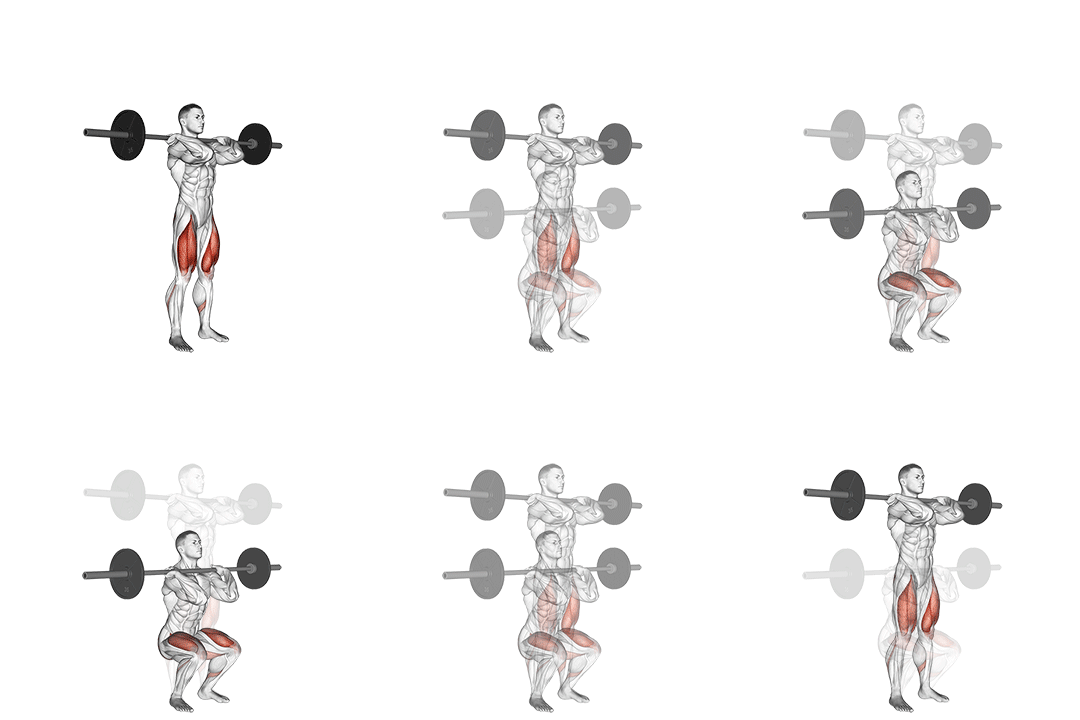
Compare More Exercises
Use our free comparison tool to analyze any two exercises head-to-head.
Compare Exercises