

Barbell Deadlift vs Barbell Squat: Complete Comparison Guide
Barbell Deadlift vs Barbell Squat — two cornerstone lifts that shape your lower body and posterior chain. You’ll get a clear breakdown of which exercise emphasizes glute-driven hip extension versus quad-driven knee extension, step-by-step technique cues, biomechanics (moment arms, length-tension and force vectors), programming ranges (3–6 for max strength, 6–12 for hypertrophy), and practical recommendations for different goals. Read on to see which lift you should prioritize in your training, how to perform each with safe mechanics, and how to combine them for balanced development.
Exercise Comparison
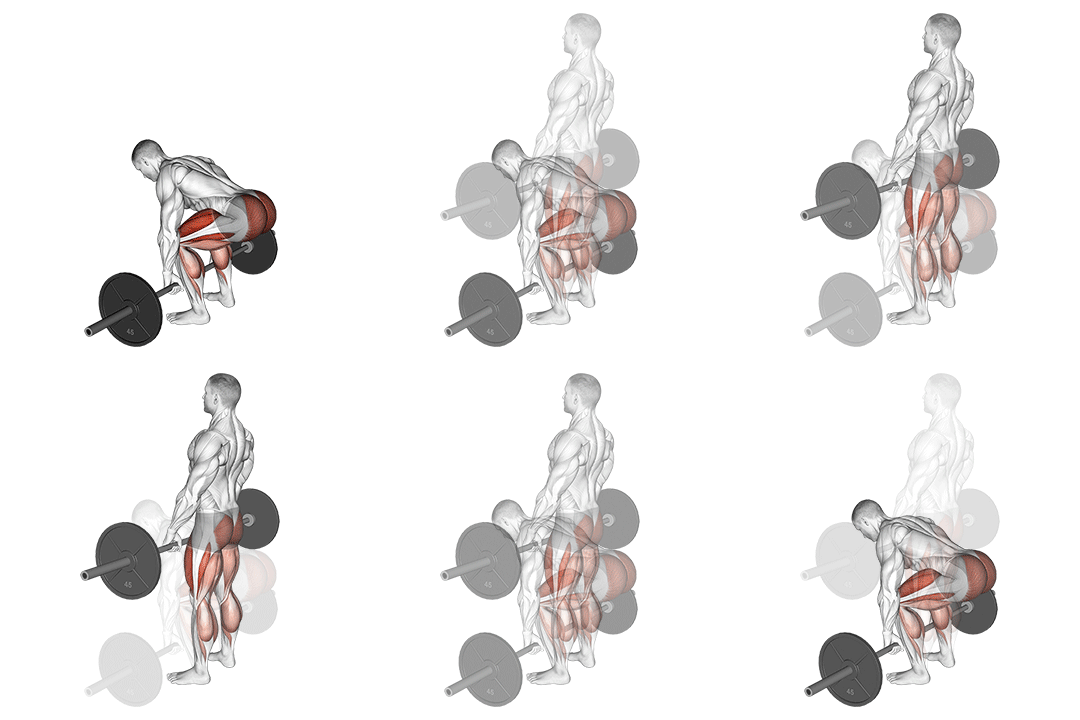
Barbell Deadlift
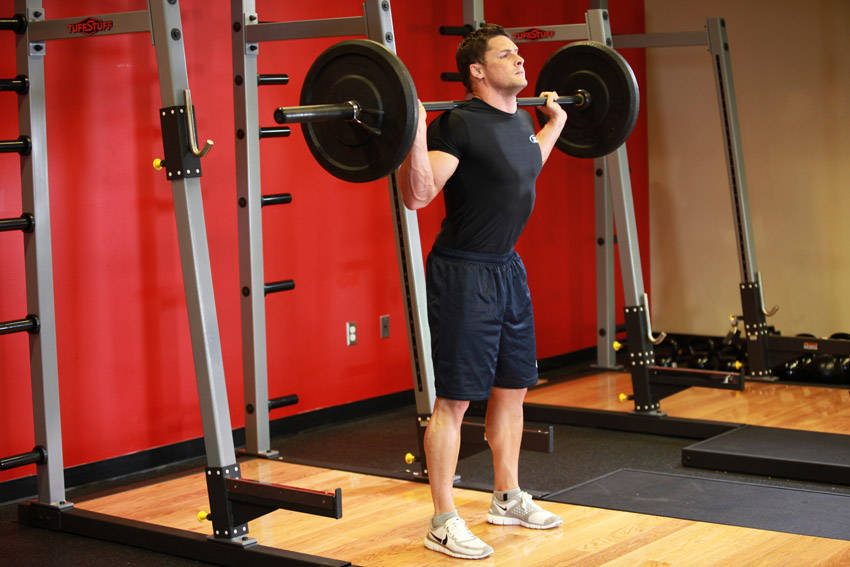
Barbell Squat
Head-to-Head Comparison
| Attribute | Barbell Deadlift | Barbell Squat |
|---|---|---|
| Target Muscle |
Glutes
|
Quads
|
| Body Part |
Upper-legs
|
Upper-legs
|
| Equipment |
Barbell
|
Barbell
|
| Difficulty |
Advanced
|
Intermediate
|
| Movement Type |
Compound
|
Compound
|
| Secondary Muscles |
2
|
4
|
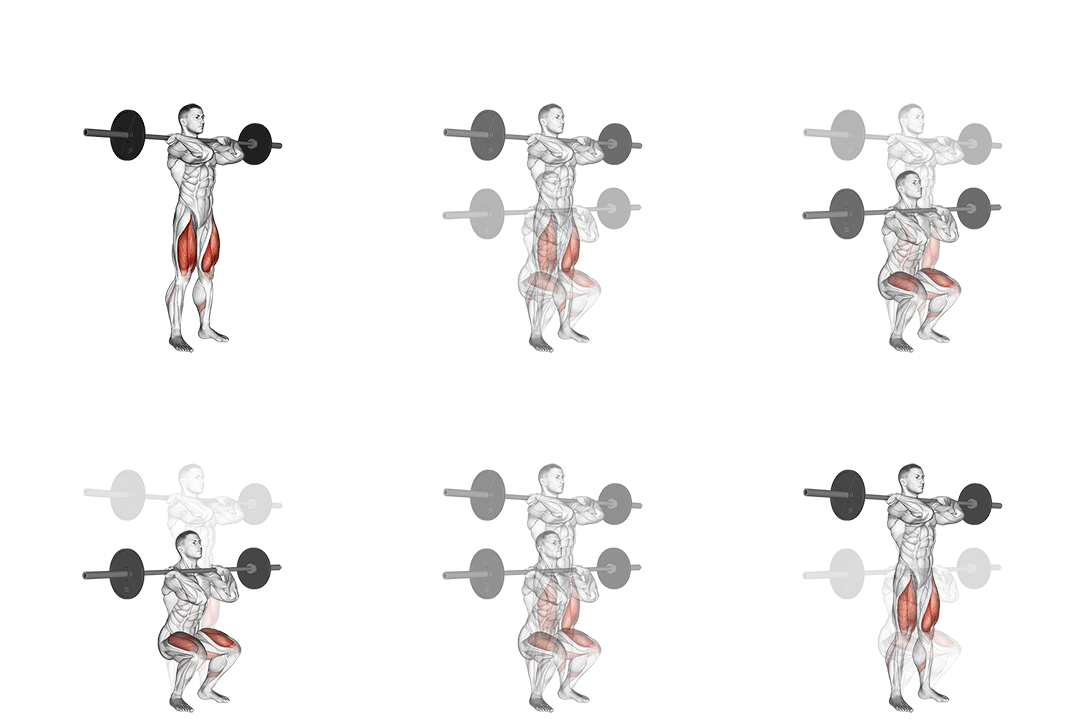
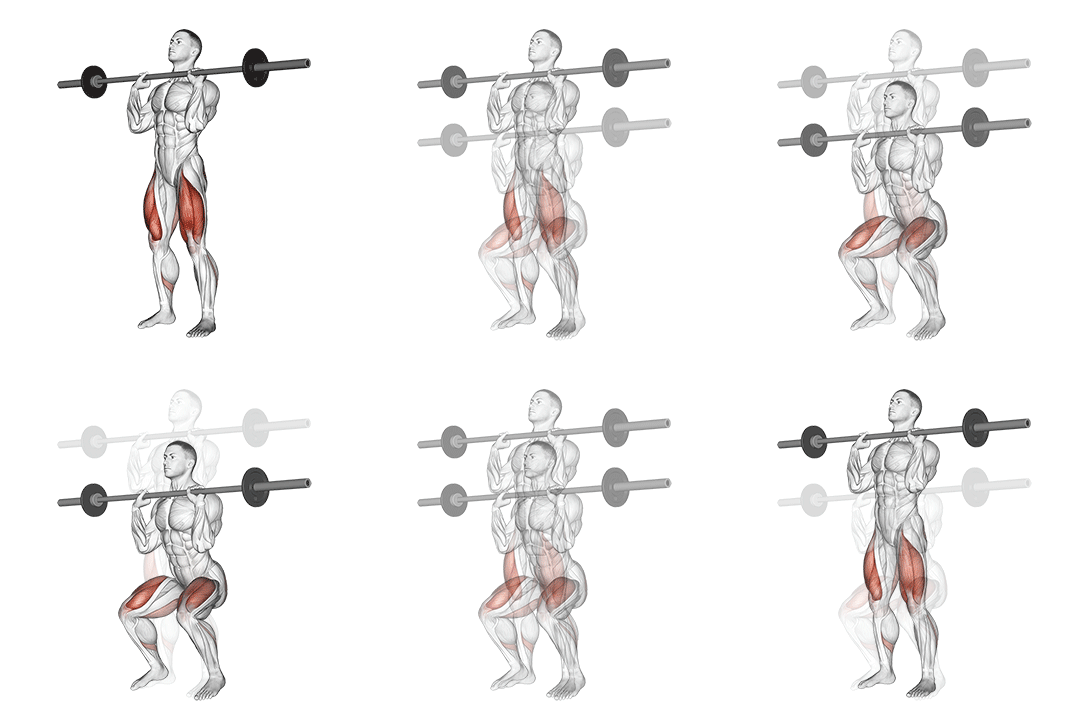
Secondary Muscles Activated
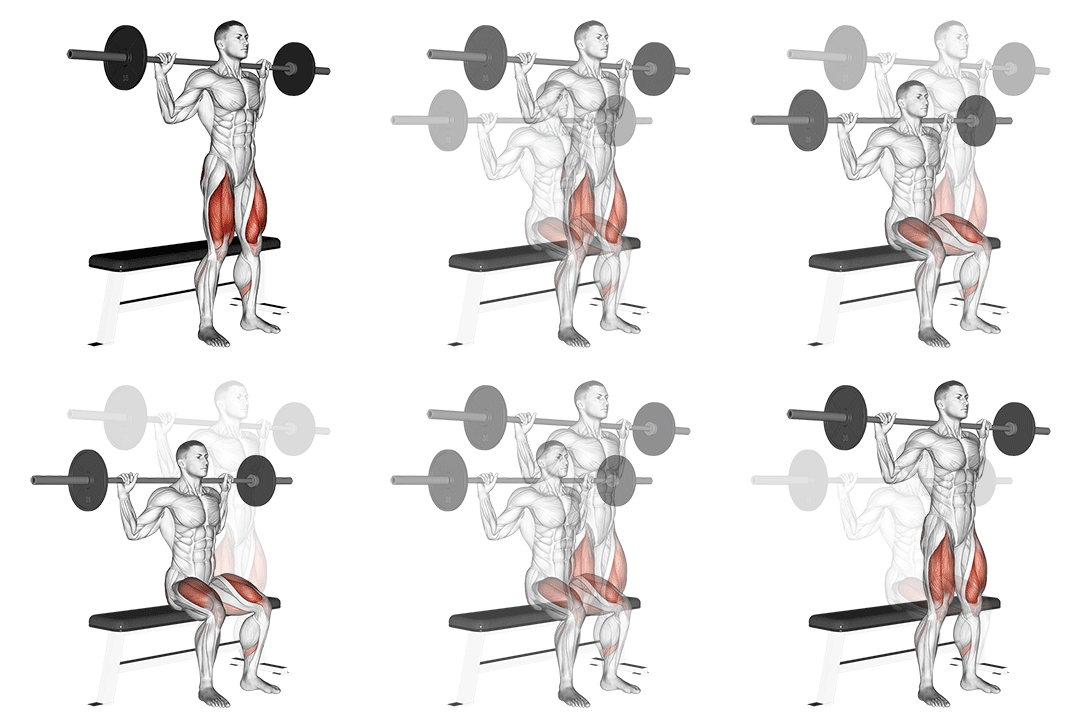
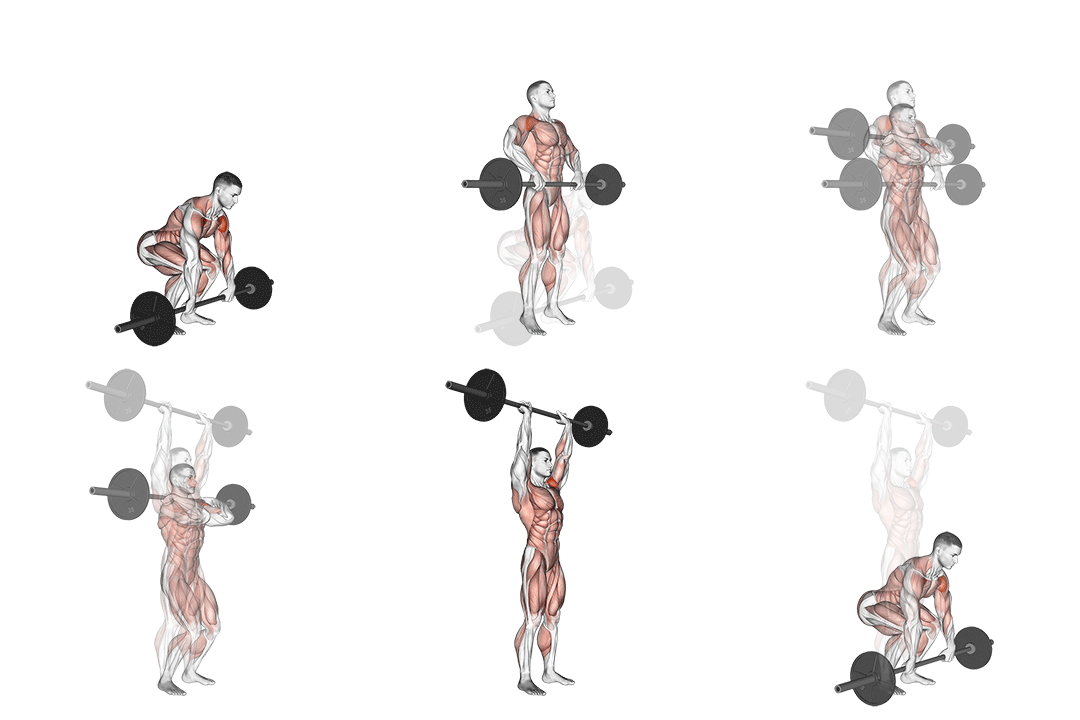
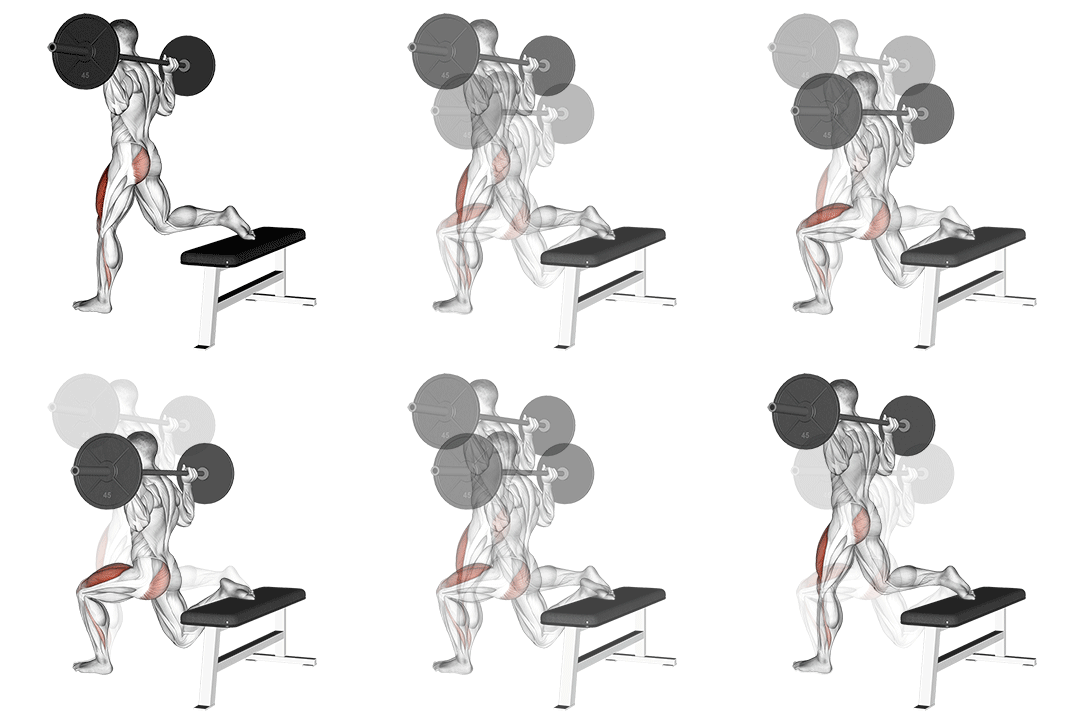
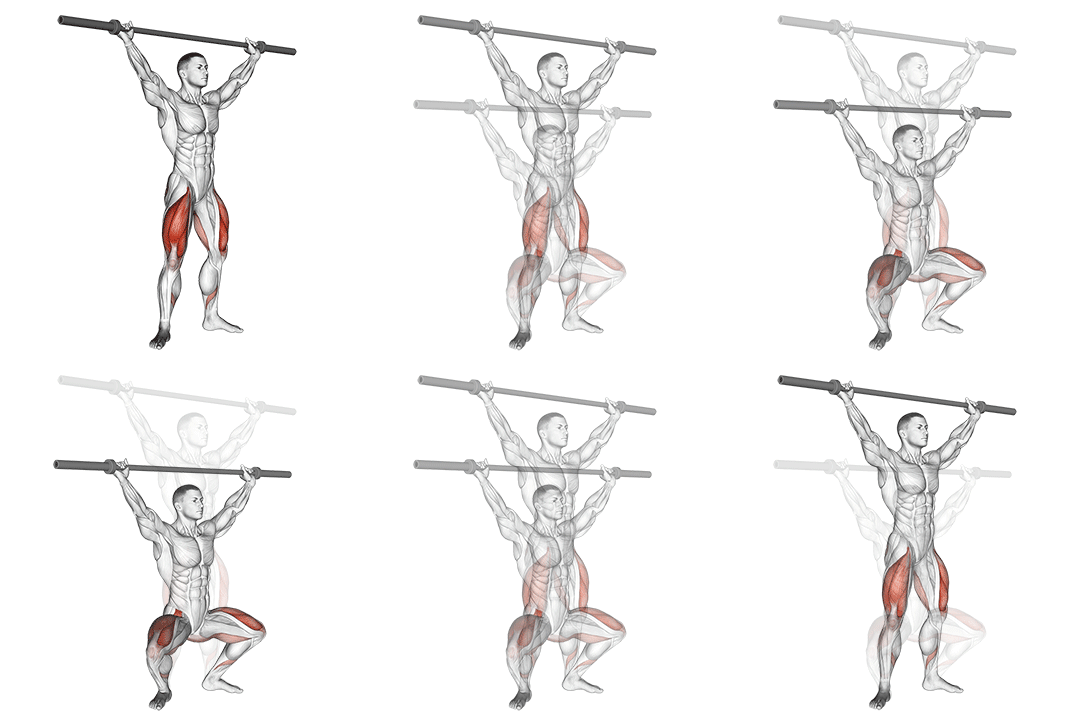
Barbell Deadlift
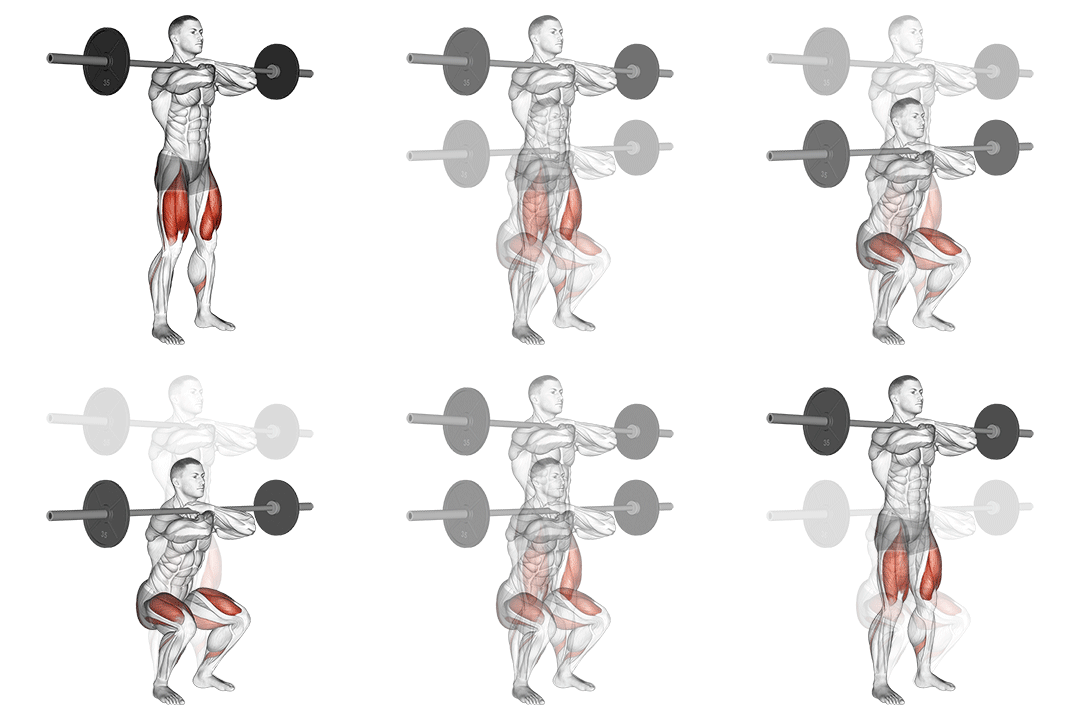
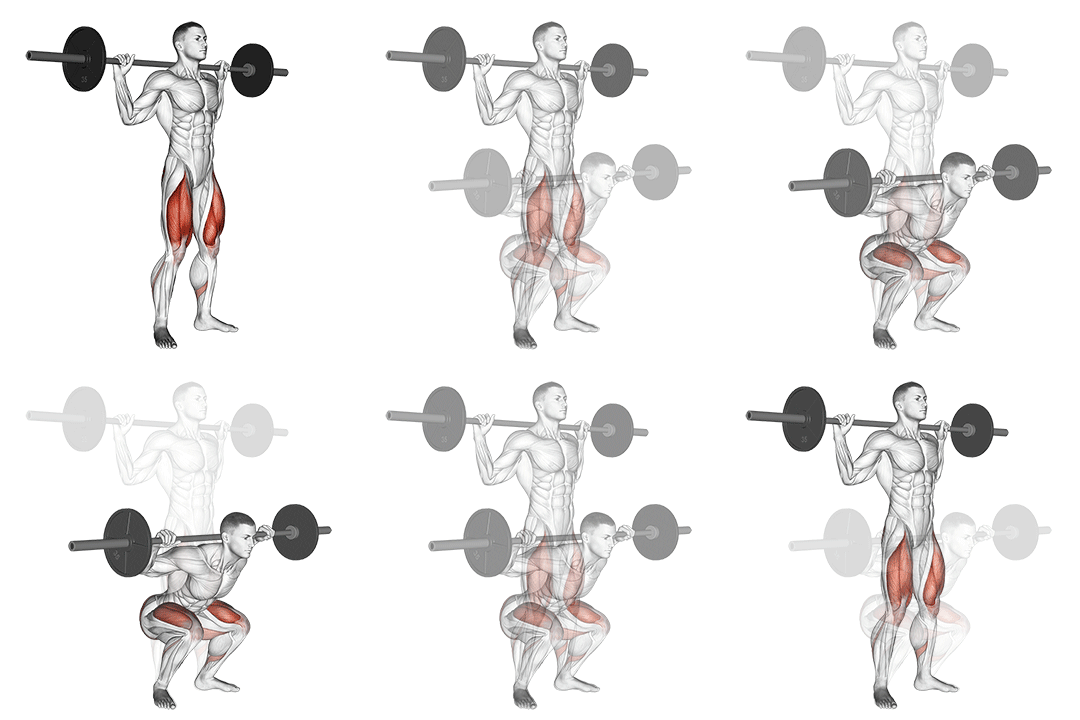
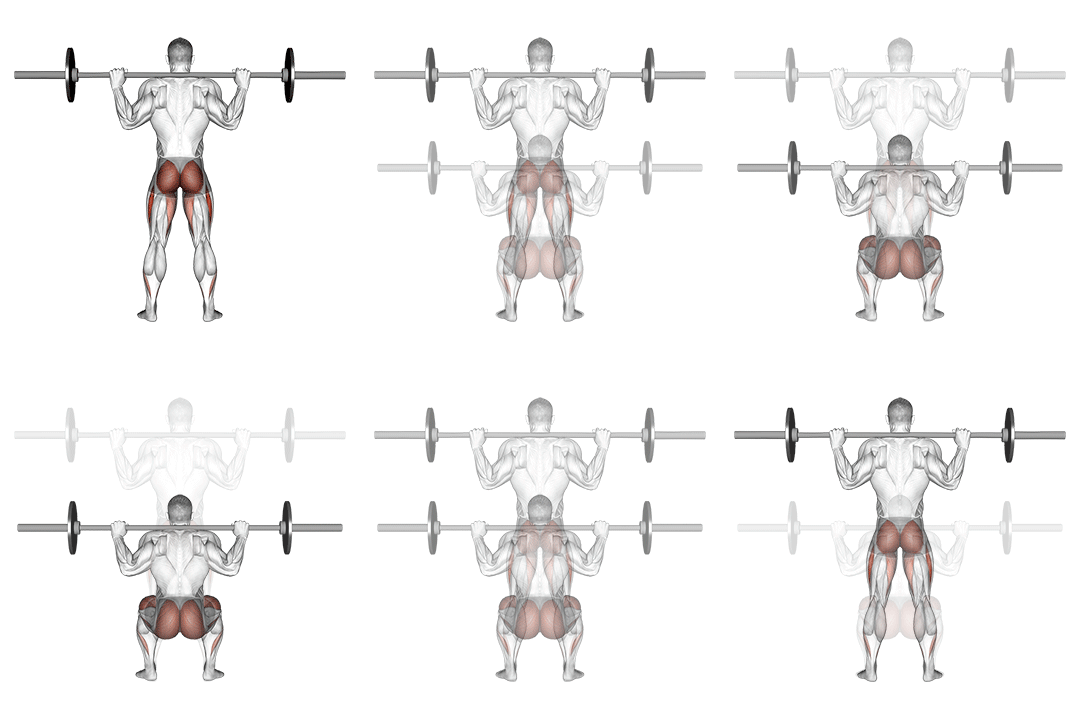
Barbell Squat
Visual Comparison
Overview
Barbell Deadlift vs Barbell Squat — two cornerstone lifts that shape your lower body and posterior chain. You’ll get a clear breakdown of which exercise emphasizes glute-driven hip extension versus quad-driven knee extension, step-by-step technique cues, biomechanics (moment arms, length-tension and force vectors), programming ranges (3–6 for max strength, 6–12 for hypertrophy), and practical recommendations for different goals. Read on to see which lift you should prioritize in your training, how to perform each with safe mechanics, and how to combine them for balanced development.
Key Differences
- Barbell Deadlift primarily targets the Glutes, while Barbell Squat focuses on the Quads.
- Difficulty levels differ: Barbell Deadlift is advanced, while Barbell Squat is intermediate.
Pros & Cons
Barbell Deadlift
+ Pros
- Massive posterior chain stimulus—targets glutes, hamstrings and erectors
- High absolute loads for neural adaptation and strength
- Minimal equipment: no rack required
- Efficient total-body pull that builds core stiffness and grip strength
− Cons
- Higher technical demand on hip hinge and spinal position
- Greater acute risk to lower back if form breaks
- Less targeted quad development compared to squats
Barbell Squat
+ Pros
- Superior quad hypertrophy through repeated knee extension torque
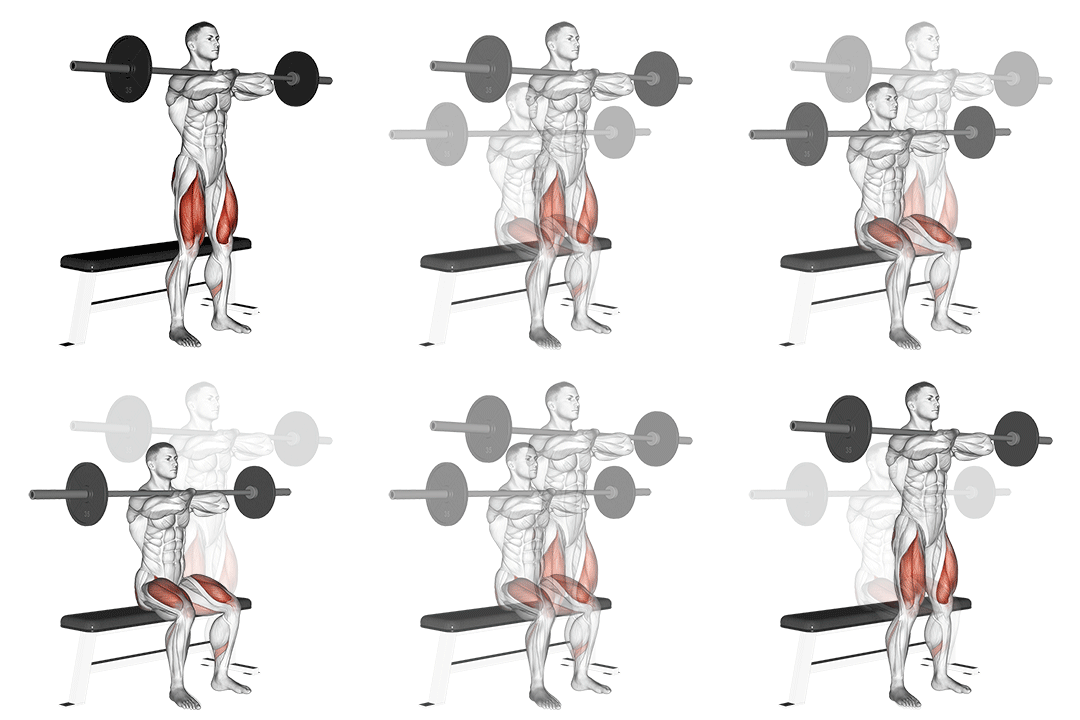
- Easier to scale and teach with regressions (goblet/box/front squats)
- Versatile variations to manipulate depth, tempo and loading
- Builds ankle, knee and hip joint strength with more balanced lower-body development
− Cons
- Requires a squat rack or spotter for heavy work
- Can aggravate knees if technique or mobility is poor
- Less absolute posterior chain overload than deadlifts
When Each Exercise Wins
Squats place continuous tension on the quads across ~0–90° of knee flexion, which supports greater quad cross-sectional growth with higher training volumes (6–12 reps, multiple sets). Use paused or tempo squats to increase time under tension and target muscle growth.
Deadlifts allow higher absolute loads and demand maximal hip extension strength, which translates well to 1–5 RM strength work. The long moment arm at the hip builds neural efficiency for heavy pulls and increases posterior chain force output.
Squats are easier to regress and coach—goblet and box squats teach depth and erect torso position, letting you build knee and hip strength progressively. This makes squat patterns safer for early trainees.
Deadlifts need only a barbell and plates and don’t require a rack, making them more practical for limited spaces. Variations like Romanian deadlifts or hex-bar deadlifts further simplify setup while still training the posterior chain.
Frequently Asked Questions
Can I do both Barbell Deadlift and Barbell Squat in the same workout?
Yes. Pair them strategically: put the heavier compound you prioritize first (e.g., deadlifts for a strength-focused day) and follow with the other as an accessory with lower volume. Keep total weekly volume for each lift appropriate—avoid going to failure on both in the same session to manage CNS and recovery.
Which exercise is better for beginners?
Barbell Squat is generally better for beginners because you can regress to goblet or box squats to learn movement patterns and build mobility. Start with light loads focused on tempo and depth before increasing load or switching to back squats.
How do the muscle activation patterns differ?
Deadlifts emphasize hip extension so glutes and hamstrings work through longer lengths and higher posterior chain torque, while squats emphasize knee extension so quads take more of the load with the torso more upright. The moment arm at the hip is larger in deadlifts; the knee moment arm dominates in squats.
Can Barbell Squat replace Barbell Deadlift?
Not fully. Squats build quad strength and general lower-body mass but don’t replicate the same hip-hinge mechanics or posterior chain overload of deadlifts. If your program needs posterior-chain strength, include deadlift variants rather than relying solely on squats.
Expert Verdict
Choose the Barbell Deadlift when your priority is posterior chain strength, heavy loading capacity, and efficient home training—use 1–5 RM blocks and Romanian or deficit variations to target weak ranges. Choose the Barbell Squat when you want targeted quad hypertrophy, safer beginner progressions, and more programming variety—use 6–12 rep ranges, paused squats, and front squat variations to manipulate force vectors. For balanced development, program both: put heavier deadlifts on low-volume strength days and higher-volume squats on hypertrophy days. Prioritize technique cues (neutral spine for deadlifts; chest up and knee tracking for squats) and progress load gradually to minimize injury risk.
Also Compare
More comparisons with Barbell Deadlift
Compare More Exercises
Use our free comparison tool to analyze any two exercises head-to-head.
Compare Exercises