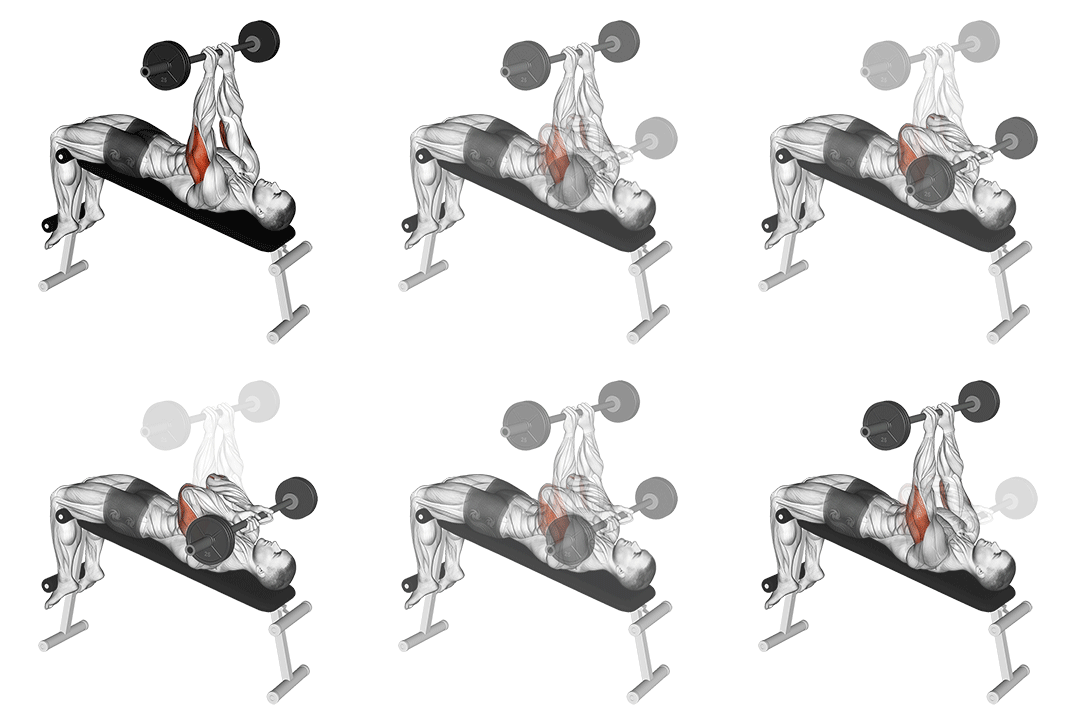
Barbell Decline Close Grip To Skull Press vs Barbell Incline Close Grip Bench Press
Compare target muscles, equipment, difficulty, movement type, and secondary muscles for Barbell Decline Close Grip To Skull Press and Barbell Incline Close Grip Bench Press.
Change comparison Share

Get comparison link

Select the link and use your device's Copy command.

Comparison overview

AI-generated
Barbell Decline Close Grip To Skull Press vs Barbell Incline Close Grip Bench Press — two intermediate compound movements that both prioritize the triceps while recruiting chest and shoulders. You’ll get clear, practical guidance on how each exercise loads the triceps, how bench angle changes force vectors and muscle length-tension, what equipment you need, and which fits specific goals (hypertrophy, strength, beginners, or home setups). Read technique cues, rep-range recommendations (6–12 for hypertrophy, 3–6 for strength), and programming tips so you can pick the right press for your upper-arm development.
Exercise Comparison

Exercise A
Barbell Decline Close Grip To Skull Press demonstration
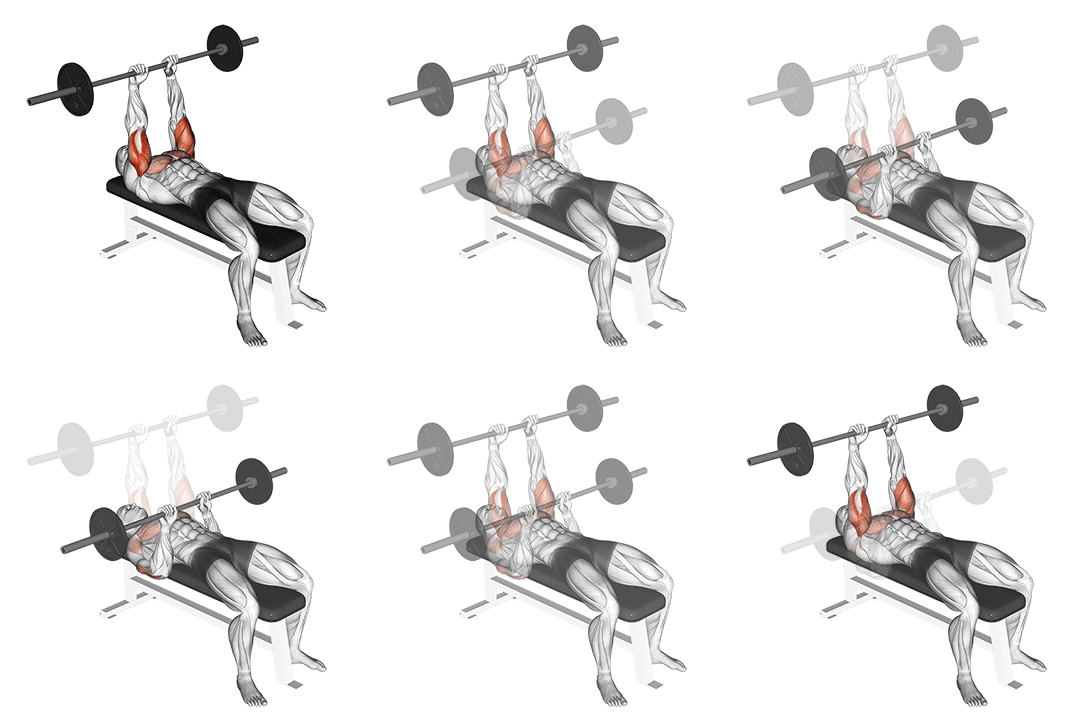
Barbell Decline Close Grip To Skull Press
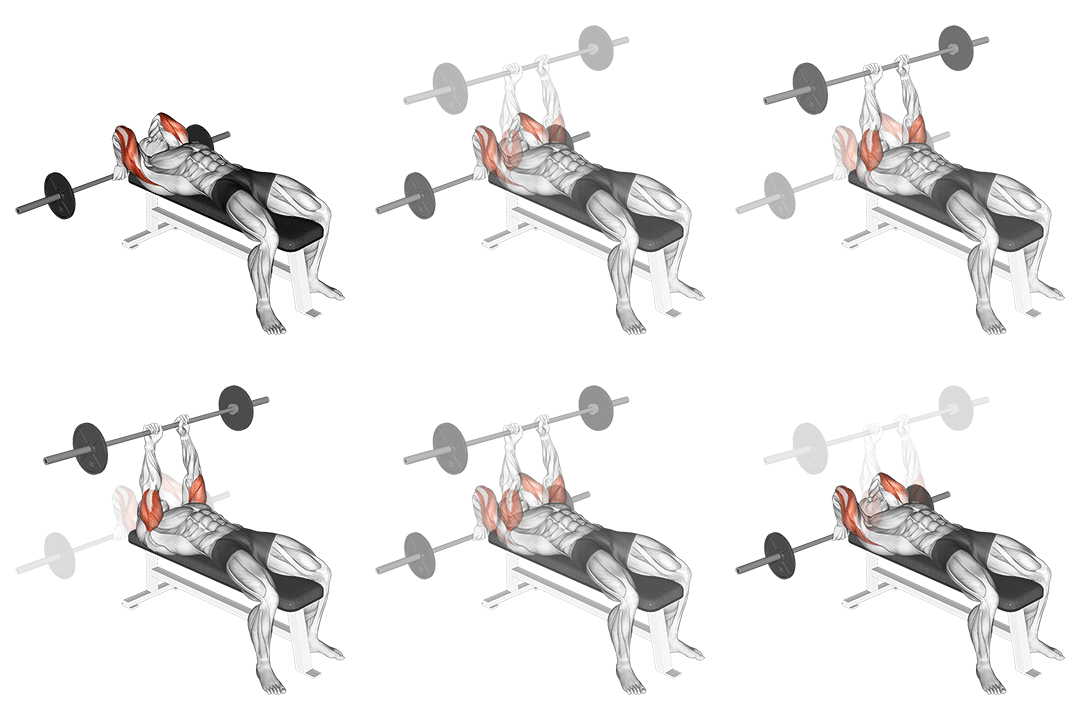
Target Triceps
Equipment Barbell
Body Part Upper-arms
Difficulty Intermediate
Movement Compound
Secondary Muscles
Chest Shoulders
VS
Exercise B
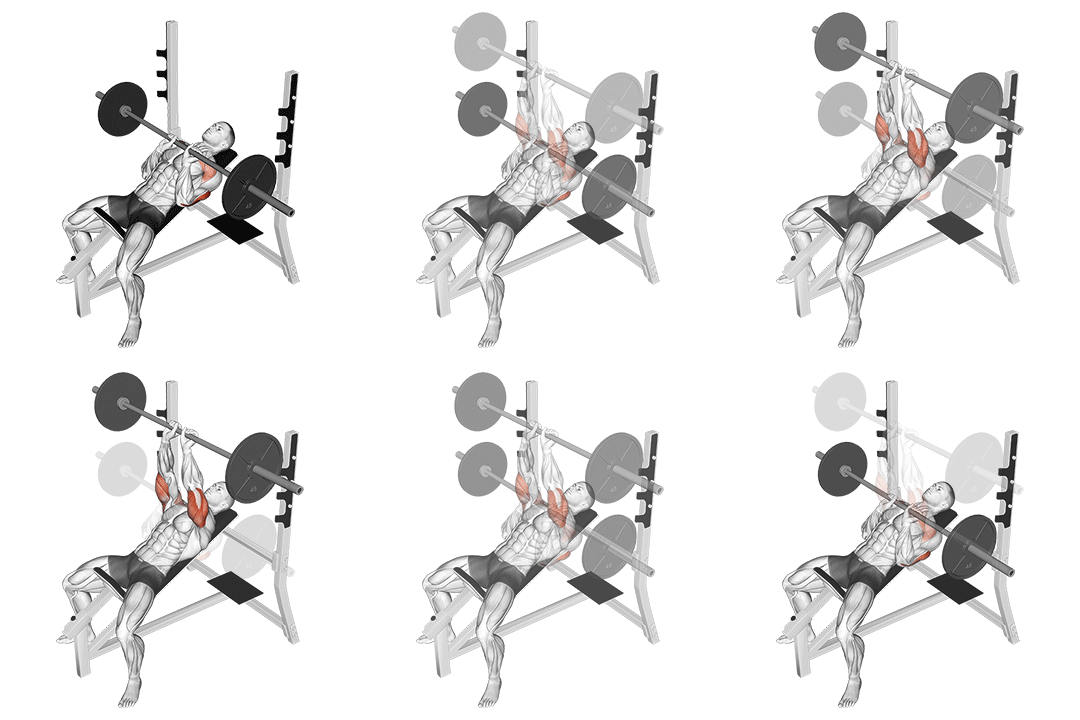
Barbell Incline Close Grip Bench Press demonstration
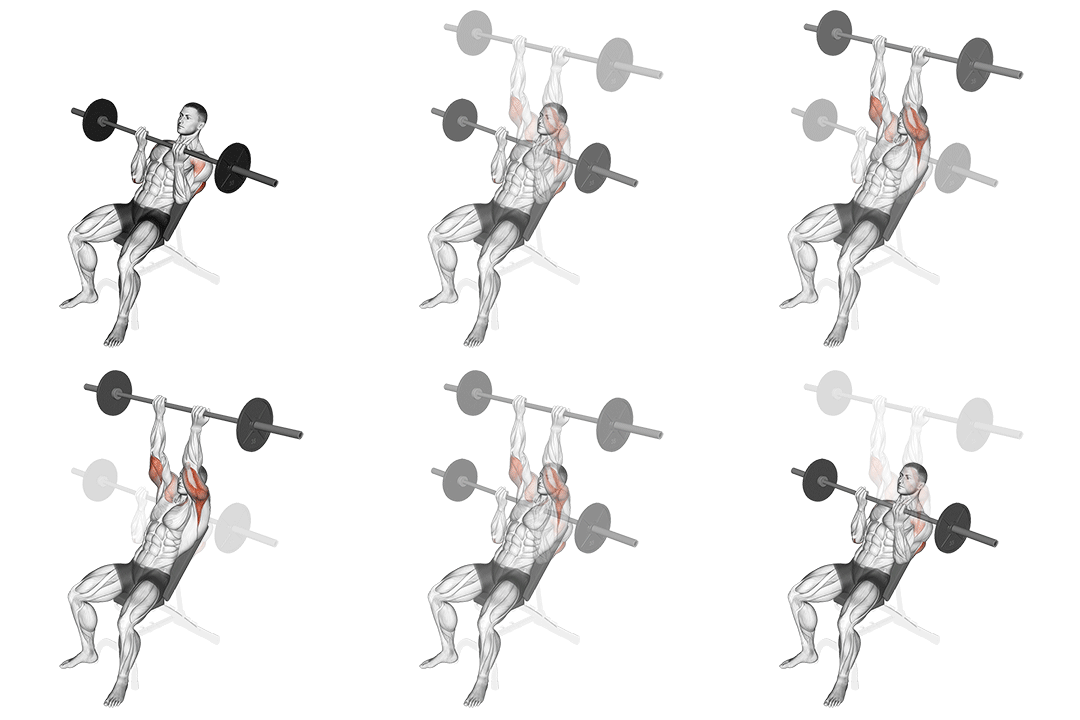
Barbell Incline Close Grip Bench Press

Target Triceps
Equipment Barbell
Body Part Upper-arms
Difficulty Intermediate
Movement Compound
Secondary Muscles
Chest Shoulders

Head-to-Head Comparison

Different values are marked. These are catalogue attributes, not performance scores.

Muscles used

Listed target and secondary muscles, shown on the body. Locations, not activation or strength scores.

  • Target
  • Secondary
  • Not highlighted

Barbell Decline Close Grip To Skull Press

Front
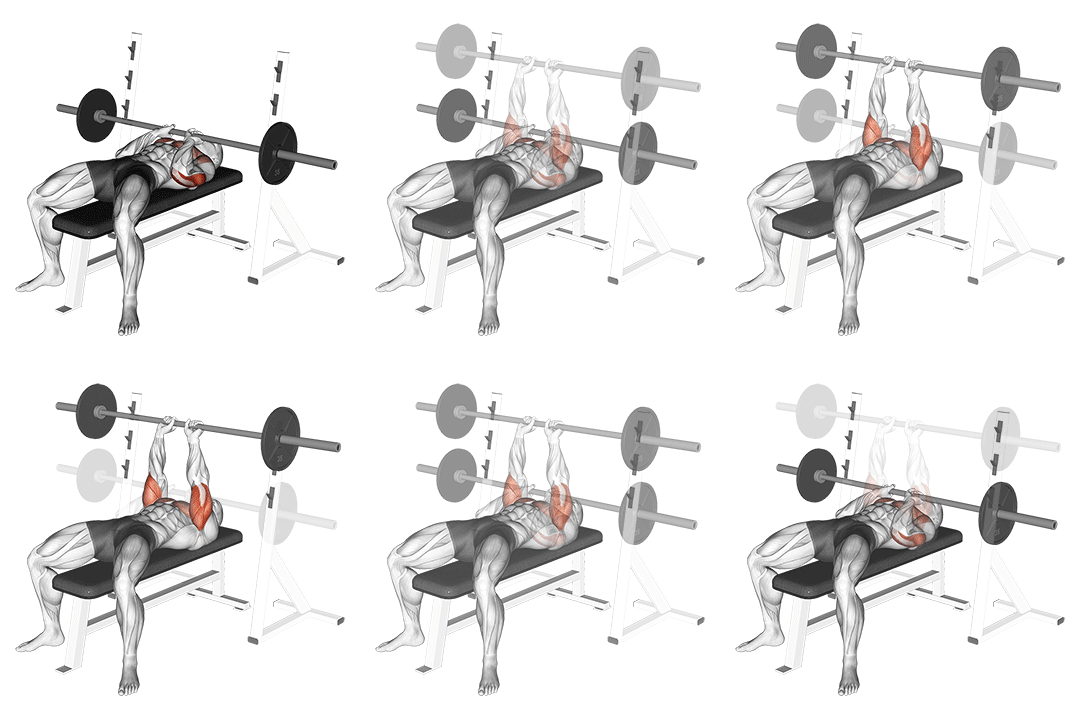
Barbell Decline Close Grip To Skull Press: front muscle locationsSolid: listed target. Striped: listed secondary. Grey: not highlighted. Locations, not activation or strength scores. See the muscle names below.
Back
Barbell Decline Close Grip To Skull Press: back muscle locationsSolid: listed target. Striped: listed secondary. Grey: not highlighted. Locations, not activation or strength scores. See the muscle names below.
Target
Triceps
Secondary
Chest, Shoulders

Not shown on diagram: Shoulders. These labels do not identify a precise region on this map.

Barbell Incline Close Grip Bench Press

Front
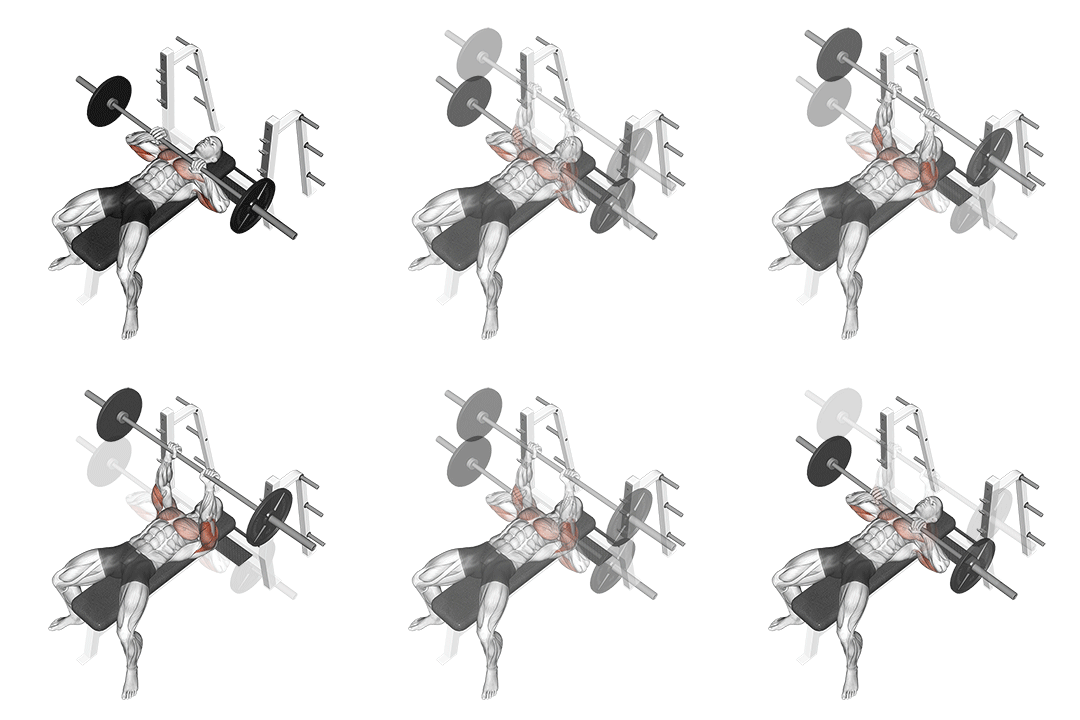
Barbell Incline Close Grip Bench Press: front muscle locationsSolid: listed target. Striped: listed secondary. Grey: not highlighted. Locations, not activation or strength scores. See the muscle names below.
Back
Barbell Incline Close Grip Bench Press: back muscle locationsSolid: listed target. Striped: listed secondary. Grey: not highlighted. Locations, not activation or strength scores. See the muscle names below.
Target
Triceps
Secondary
Chest, Shoulders

Not shown on diagram: Shoulders. These labels do not identify a precise region on this map.

Grey does not mean a muscle is unused. The diagrams show only the mapped catalogue labels.

Attribute Barbell Decline Close Grip To Skull Press Barbell Incline Close Grip Bench Press
Target Muscle
Triceps
Triceps
Body Part
Upper-arms
Upper-arms
Equipment
Barbell
Barbell
Difficulty
Intermediate
Intermediate
Movement Type
Compound
Compound
Secondary Muscles
Chest, Shoulders
Chest, Shoulders

Visual Comparison

An illustrative 1–10 profile derived from catalog difficulty, equipment, and listed-muscle fields—not measured performance or muscle activation.

Key Differences

  • Both exercises target the Triceps using Barbell. The catalogue does not establish which exercise is better for an individual goal.

Muscle comparison

Shared target muscles

Both exercises strongly target the triceps, especially the lateral and long heads during elbow extension. Close grip narrows the hand placement, shifting more of the load from the pecs to elbow extensors; you’ll typically see a 10–25% greater triceps contribution versus a wide grip. Both movements produce peak triceps torque near lockout, but the decline skull press often places the long head under greater stretch through a slightly greater posterior arm travel.

Secondary muscle differences

The incline close-grip bench increases shoulder flexion and recruits the clavicular head of the pectoralis major and anterior deltoid more (especially at 30–45°). The decline close-grip to skull press reduces shoulder flexion, shortening the pecs at the bottom and therefore lowering chest contribution; this shifts relative load toward the triceps and can reduce anterior deltoid strain.

Muscle involvement analysis

With the incline close-grip press the force vector is more upward and forward, so the chest and front delt assist through mid-range and peak as shoulder flexion increases. In the decline skull press the vector is more horizontal to slightly downward; the triceps work through a longer elbow-extension arc and the long head experiences greater length-tension at the start of the concentric, which favors metabolic tension for hypertrophy.

Equipment and setup

Barbell Decline Close Grip To Skull Press: setup

Barbell Decline Close Grip To Skull Press requires a decline bench (typically set 15–30° decline), a barbell, collars, and ideally a squat rack or spotter for safety. Back support and head clearance are essential for the skull component.

Barbell Incline Close Grip Bench Press: setup

Barbell Incline Close Grip Bench Press needs an adjustable incline bench that locks at 30–45°, a rack or bench press station with safety pins, and a barbell. An adjustable bench and rack make loading and unracking safer for heavier sets.

Access and practicality

Barbell Incline Close Grip Bench Press — most gyms and home setups have adjustable incline benches or a flat bench with an incline attachment, while decline benches are less common. The incline setup also allows easier use of rack safeties, increasing accessibility and safety.

Learning and progression

Learning the movements

Incline close-grip bench press is easier to learn because it follows a standard pushing pattern (bar path, braced torso), and setup in a power rack is straightforward. The decline close-grip to skull press has a steeper learning curve due to head clearance, altered bar path, and coordinating the skull-press finish.

Progression considerations

Incline close-grip bench press offers more linear progression — you can add 2.5–10 lb plates each session and work heavy triples or doubles. Decline skull press is better for targeted hypertrophy progressions (higher reps, time under tension) but is harder to progressively overload with heavy singles safely.

Limitations and precautions

Decline close-grip to skull press carries higher shoulder/elbow risk if form fails (bar toward forehead increases moment on the elbow and requires strict control). Incline close-grip bench press has lower acute risk when using rack safeties, but higher shoulder impingement risk if the angle exceeds 45° or the elbows flare.

Pros & Cons

Barbell Decline Close Grip To Skull Press

+ Pros

  • Greater long-head triceps stretch and time under tension for hypertrophy
  • Lower pectoral contribution compared to incline, increasing triceps emphasis
  • Unique eccentric loading opportunity to overload triceps through longer ROM
  • Useful accessory for building triceps lockout strength and arm thickness

− Cons

  • Requires a decline bench and careful setup for head clearance
  • Higher technical demand; coordination and spotter often needed
  • Greater elbow/shoulder stress if bar path or tempo is uncontrolled

Barbell Incline Close Grip Bench Press

+ Pros

  • Easier to load heavy — better for absolute pressing strength
  • Wider availability and safer in a rack with adjustable safeties
  • Strong transfer to other pressing movements due to similar bar path
  • Adjustable bench angle (30–45°) tailors chest vs triceps emphasis

− Cons

  • Incline angle increases anterior deltoid involvement, reducing pure triceps isolation
  • Greater shoulder stress if angle is too steep (>45°) or elbows flare
  • May activate more chest, limiting peak triceps stimulus for some lifters

When Each Exercise Wins

1
For muscle hypertrophy: Barbell Decline Close Grip To Skull Press

The decline skull press puts the triceps, especially the long head, through a longer tensioned range of motion and a favorable length-tension relationship. Use 8–15 reps with controlled eccentrics and 1–3 second pauses at the stretch to maximize metabolic stress and muscle growth.

2
For strength gains: Barbell Incline Close Grip Bench Press

The incline close-grip bench allows heavier loading and safer progressive overload with rack support, making it superior for building pressing strength. Work in lower rep ranges (3–6) and prioritize heavy triples and paused reps to improve lockout force.

3
For beginners: Barbell Incline Close Grip Bench Press

Beginners benefit from the simpler bar path, easier setup, and safer unloading options of an incline bench in a rack. Start with light loads and 6–12 reps to build technique before advancing to varied decline skull variations.

4
For home workouts: Barbell Incline Close Grip Bench Press

Most home gyms have an adjustable bench and rack; decline benches are rare. Incline close-grip presses can be performed with an adjustable bench and spotter arms for safety, making them more practical at home.

Comparison Summary

Use the Barbell Decline Close Grip To Skull Press when your primary goal is triceps hypertrophy and you can control the movement with a spotter or safety setup — the decline angle lengthens the long head and increases time under tension, so program it for 8–15 rep sets. Choose the Barbell Incline Close Grip Bench Press when you want heavier loading, better transfer to pressing strength, or an easier-to-learn option; train it for 3–6 reps for strength or 6–12 for balanced size and strength. Rotate them across phases: prioritize incline close-grip for strength blocks and decline skull press for focused triceps specialization.

Exercise instructions

Steps from the exercise catalogue. Read the full sequence before starting.

Barbell Decline Close Grip To Skull Press

  1. Lie on a decline bench with your head lower than your feet and hold a barbell with a close grip.
  2. Lower the barbell towards your forehead by bending your elbows, keeping your upper arms stationary.
  3. Pause for a moment, then extend your arms to press the barbell back up to the starting position.
Read remaining steps for Barbell Decline Close Grip To Skull Press
  1. Repeat for the desired number of repetitions.

Barbell Incline Close Grip Bench Press

  1. Set up an incline bench at a 45-degree angle.
  2. Lie down on the bench with your feet flat on the ground.
  3. Grasp the barbell with a close grip, slightly narrower than shoulder-width apart.
Read remaining steps for Barbell Incline Close Grip Bench Press
  1. Unrack the barbell and lower it slowly towards your chest, keeping your elbows close to your body.
  2. Pause for a moment when the barbell touches your chest.
  3. Push the barbell back up to the starting position, fully extending your arms.
  4. Repeat for the desired number of repetitions.

Also Compare

Compare another pair

Choose two exercises to see their differences side by side.

Compare Exercises