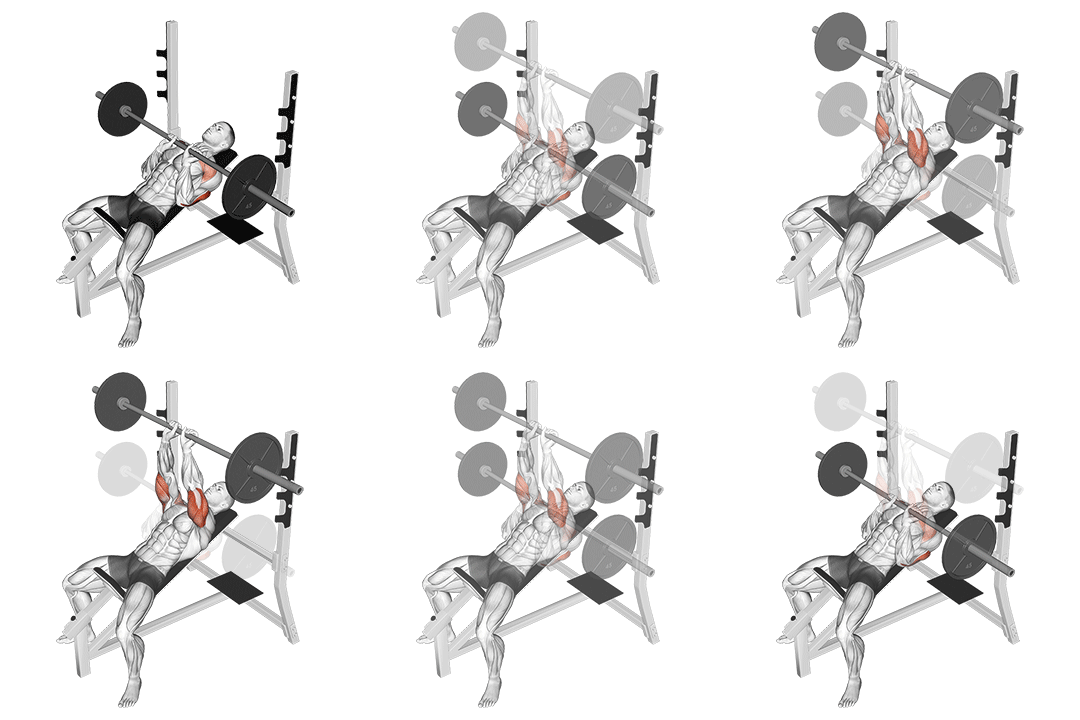
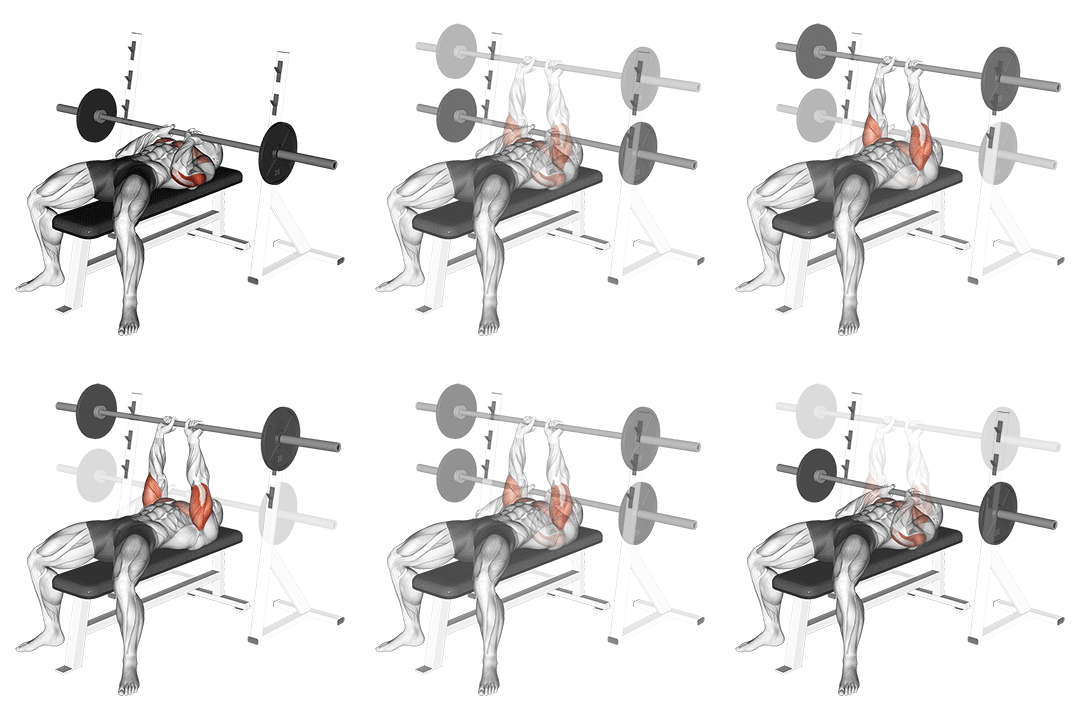
Barbell Incline Close Grip Bench Press vs Barbell Lying Back Of The Head Tricep Extension

Compare target muscles, equipment, difficulty, movement type, and secondary muscles for Barbell Incline Close Grip Bench Press and Barbell Lying Back Of The Head Tricep Extension.
Change comparison Share

Get comparison link

Select the link and use your device's Copy command.

Comparison overview

AI-generated
Barbell Incline Close Grip Bench Press vs Barbell Lying Back Of The Head Tricep Extension — two barbell moves that zero in on the triceps but use very different mechanics. You’ll get clear comparisons of muscle activation, equipment needs, difficulty, injury risk, and programming cues. Read on for specific technique tips (bench angle, elbow path, rep ranges), biomechanical explanations (length-tension and force vectors), and decisive recommendations so you can pick the best triceps movement for your goals.
Exercise Comparison

Exercise A
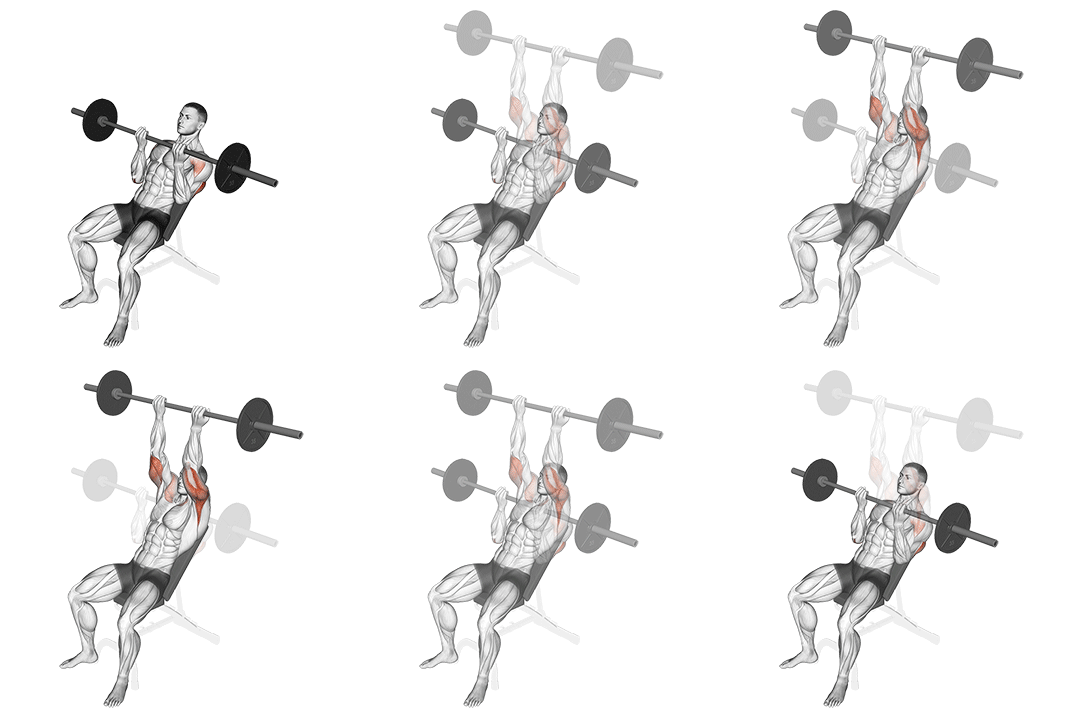
Barbell Incline Close Grip Bench Press demonstration

Barbell Incline Close Grip Bench Press

Target Triceps
Equipment Barbell
Body Part Upper-arms
Difficulty Intermediate
Movement Compound
Secondary Muscles
Chest Shoulders
VS
Exercise B
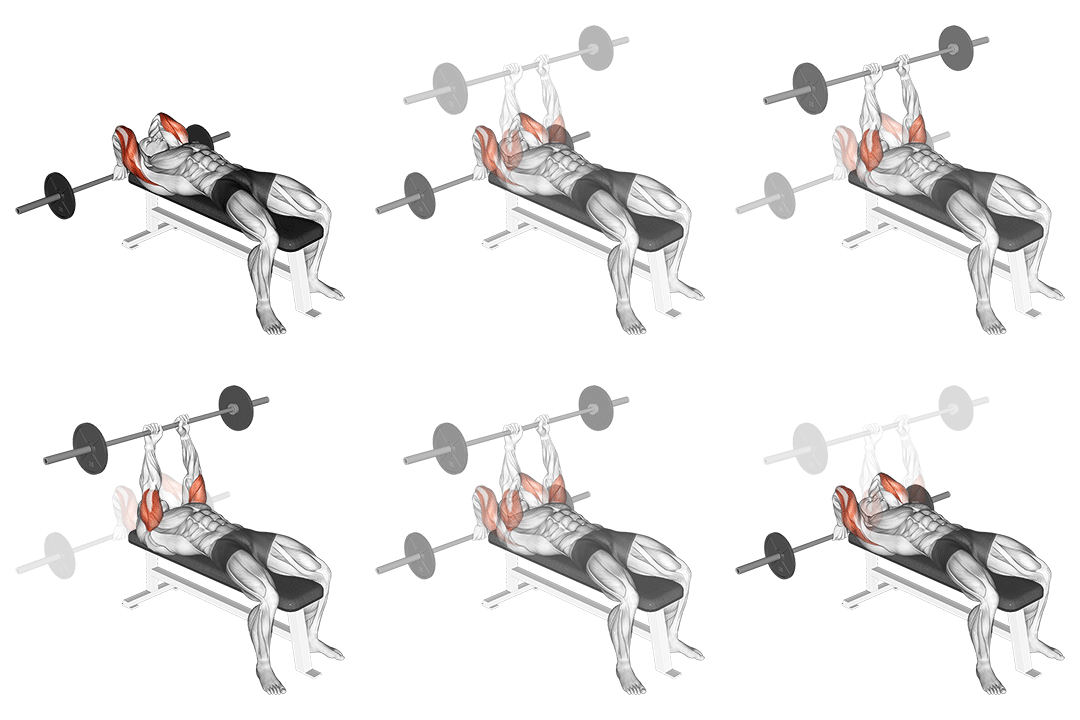
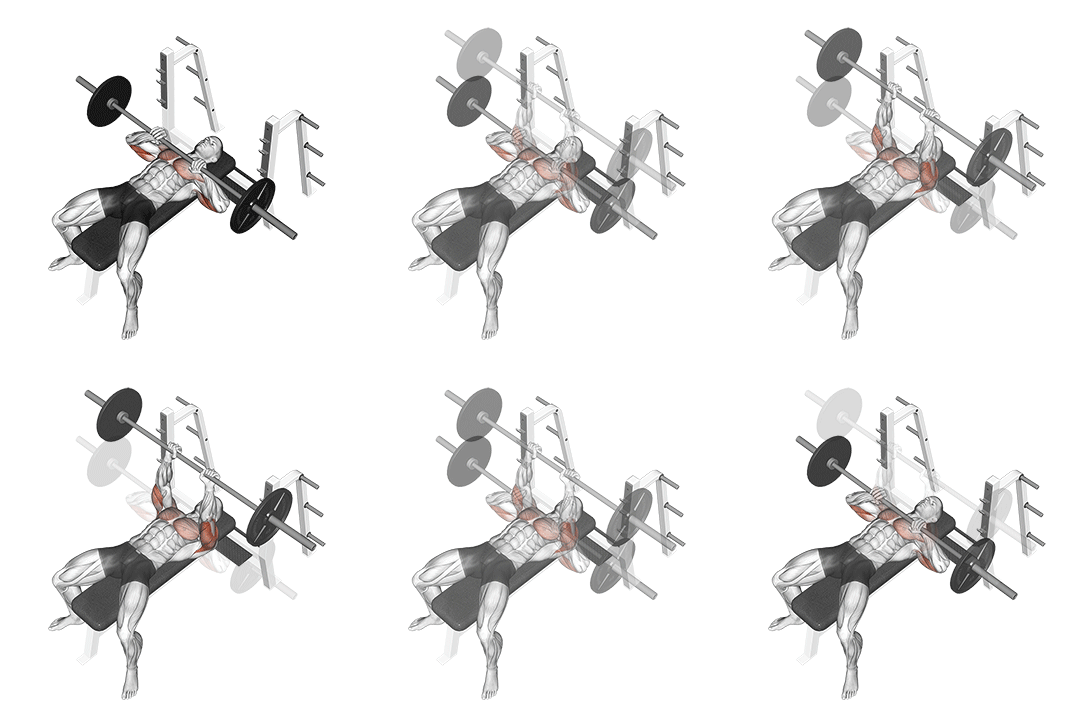
Barbell Lying Back Of The Head Tricep Extension demonstration
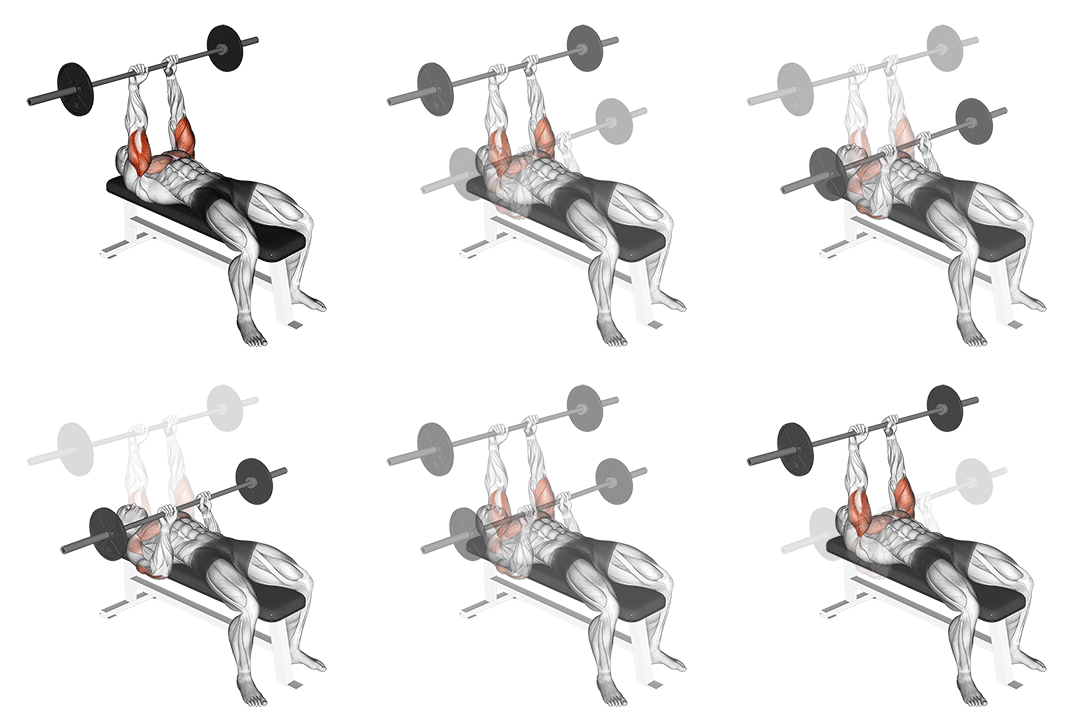
Barbell Lying Back Of The Head Tricep Extension
Target Triceps
Equipment Barbell
Body Part Upper-arms
Difficulty Intermediate
Movement Isolation
Secondary Muscles
Shoulders

Head-to-Head Comparison

Different values are marked. These are catalogue attributes, not performance scores.

Muscles used

Listed target and secondary muscles, shown on the body. Locations, not activation or strength scores.

  • Target
  • Secondary
  • Not highlighted

Barbell Incline Close Grip Bench Press

Front
Barbell Incline Close Grip Bench Press: front muscle locationsSolid: listed target. Striped: listed secondary. Grey: not highlighted. Locations, not activation or strength scores. See the muscle names below.
Back
Barbell Incline Close Grip Bench Press: back muscle locationsSolid: listed target. Striped: listed secondary. Grey: not highlighted. Locations, not activation or strength scores. See the muscle names below.
Target
Triceps
Secondary
Chest, Shoulders

Not shown on diagram: Shoulders. These labels do not identify a precise region on this map.

Barbell Lying Back Of The Head Tricep Extension
Front
Barbell Lying Back Of The Head Tricep Extension: front muscle locationsSolid: listed target. Striped: listed secondary. Grey: not highlighted. Locations, not activation or strength scores. See the muscle names below.
Back
Barbell Lying Back Of The Head Tricep Extension: back muscle locationsSolid: listed target. Striped: listed secondary. Grey: not highlighted. Locations, not activation or strength scores. See the muscle names below.
Target
Triceps
Secondary
Shoulders

Not shown on diagram: Shoulders. These labels do not identify a precise region on this map.

Grey does not mean a muscle is unused. The diagrams show only the mapped catalogue labels.

Attribute Barbell Incline Close Grip Bench Press Barbell Lying Back Of The Head Tricep Extension
Target Muscle
Triceps
Triceps
Body Part
Upper-arms
Upper-arms
Equipment
Barbell
Barbell
Difficulty
Intermediate
Intermediate
Movement Type Different
Compound
Isolation
Secondary Muscles Different
Chest, Shoulders
Shoulders

Visual Comparison

An illustrative 1–10 profile derived from catalog difficulty, equipment, and listed-muscle fields—not measured performance or muscle activation.

Key Differences

  • Barbell Incline Close Grip Bench Press is a compound movement, while Barbell Lying Back Of The Head Tricep Extension is an isolation exercise.
  • Both exercises target the Triceps using Barbell. The catalogue does not establish which exercise is better for an individual goal.

Muscle comparison

Shared target muscles

Both exercises primarily target the triceps brachii, especially the long and lateral heads. The incline close-grip bench press shares load between elbow extension and horizontal pressing, so triceps contribute ~40–60% of the work depending on grip width and bench angle. The lying back-of-head tricep extension isolates elbow extension, producing higher localized activation of the triceps long head through a larger stretch at the shoulder.

Secondary muscle differences

The incline close-grip bench press recruits the upper chest (clavicular fibers) and anterior deltoids as significant secondary movers due to the 15–30° bench angle and pressing force vector. The lying back-of-head extension has minimal chest involvement and slightly greater shoulder stabilization demand from the anterior deltoid, but much less multi-joint power output.

Muscle involvement analysis

Close-grip incline uses a mixed activation pattern: synchronous elbow extension and shoulder horizontal flexion, shortening the triceps while producing force across two joints. Back-of-head extensions place the triceps at a greater initial stretch (long-head) because the shoulder is flexed; activation peaks during the concentric elbow extension with pronounced eccentric loading as you lower behind the head.

Equipment and setup

Barbell Incline Close Grip Bench Press: setup

Barbell, adjustable incline bench (set 15–30°), and a rack or spotter to safely unrack the bar at incline.

Barbell Lying Back Of The Head Tricep Extension: setup

Flat bench and barbell (EZ bar optional for wrist comfort). No rack required to start the set if you use a power rack to place the bar in your hands, but many lifters bring the bar down from a rack or have a partner hand it.

Access and practicality

Barbell Lying Back Of The Head Tricep Extension — it needs only a bench and barbell and can be performed in small home setups. The incline close-grip bench requires an adjustable bench and a rack to safely load heavier weights, making it slightly less accessible at home.

Learning and progression

Learning the movements

The Barbell Incline Close Grip Bench Press is easier for lifters already familiar with pressing patterns; the motor pattern is close to a standard bench press with a narrower grip. The Lying Back Of The Head Tricep Extension requires finer elbow control and timing to keep the upper arm steady and protect the elbow joint.

Progression considerations

Incline close-grip press offers greater progression potential because it is a compound movement that handles heavier loads (use 3–6+ sets at 3–6 reps for strength, or 4–6 sets of 6–12 for hypertrophy). The skull crusher is better for loading the triceps directly (use 3–4 sets of 8–12), but absolute loads will be lower.

Limitations and precautions

Barbell Lying Back Of The Head Tricep Extension has higher elbow and anterior shoulder stress due to long-head stretch and long lever arm; poor form can irritate the elbow tendon. The incline close-grip bench has a lower isolated elbow strain but carries typical bench press shoulder risks if elbows flare or scapular control is poor.

Pros & Cons

Barbell Incline Close Grip Bench Press

+ Pros

  • Loads heavier weight for greater overall strength transfer
  • Works triceps while training upper chest and anterior deltoid (efficient compound pattern)
  • Easier to progress with linear loading and percentage-based programming (70–85% 1RM for strength sets)
  • More stable pressing pattern; good for building pressing power and lockout strength

− Cons

  • Requires rack and adjustable bench for safe loading
  • Less pure isolation of the triceps — chest and shoulders share the load
  • Incline angle increases anterior deltoid involvement which can limit triceps focus

Barbell Lying Back Of The Head Tricep Extension

+ Pros

  • Superior isolation and long-head stretch, useful for targeted hypertrophy
  • Requires minimal equipment (flat bench and barbell)
  • Allows precise control of eccentric tempo for tendon remodeling (2–4s eccentrics)
  • Easier to vary ROM and elbow flare to bias specific tricep heads

− Cons

  • Higher shear and tendon stress at the elbow if form breaks down
  • Lower absolute loads limit maximal strength carryover
  • Greater technical demand to keep upper arm steady and avoid shoulder impingement

When Each Exercise Wins

1
For muscle hypertrophy: Barbell Lying Back Of The Head Tricep Extension

The back-of-head position places the triceps long head at a greater stretch, increasing mechanical tension through a larger range of motion. Use 3–5 sets of 8–12 reps with a controlled 2–3s eccentric to maximize hypertrophy.

2
For strength gains: Barbell Incline Close Grip Bench Press

As a compound press, it allows heavier absolute loads and trains force production across joints, improving lockout strength and pressing transfer. Program heavier sets (3–6 reps at 75–85% 1RM) for raw strength.

3
For beginners: Barbell Incline Close Grip Bench Press

Beginners typically find compound pressing patterns easier to learn and progress with, and the movement builds integrated strength across chest, shoulders, and triceps. Keep the bench at 15–25° and grip shoulder-width to simplify mechanics.

4
For home workouts: Barbell Lying Back Of The Head Tricep Extension

It needs only a flat bench and barbell (or EZ bar) and no adjustable rack for progressive sets. You can safely train triceps volume at home with sets of 8–15 and strict technique.

Frequently Asked Questions

Can I do both Barbell Incline Close Grip Bench Press and Barbell Lying Back Of The Head Tricep Extension in the same workout?

Yes. Start with the compound incline close-grip bench press to load heavy and recruit multiple muscles, then finish with lying back-of-head extensions as an isolation set to target the triceps and add volume. Keep total triceps volume reasonable (8–16 hard sets per week per head) to avoid overuse.

Which exercise is better for beginners?

The incline close-grip bench press is generally better for beginners because it uses a familiar pressing pattern and allows safer progression with heavier loads. Teach proper scapular control and elbow path (tuck ~30–45°) before adding heavy weight.

How do the muscle activation patterns differ?

The incline close-grip press combines elbow extension and horizontal shoulder flexion, so triceps activation occurs alongside chest and anterior deltoid loading. The lying back-of-head extension isolates elbow extension, producing higher localized triceps activation and a larger long-head stretch due to shoulder flexion.

Can Barbell Lying Back Of The Head Tricep Extension replace Barbell Incline Close Grip Bench Press?

No, not entirely. Skull crushers are excellent for targeted hypertrophy but lack the multi-joint loading and strength transfer of a compound press. Use skull crushers to complement presses, not as a full replacement when your goal is maximum pressing strength.

Comparison Summary

Choose the Barbell Incline Close Grip Bench Press when you want multi-joint strength, heavier loading capacity, and pressing transfer to bench and overhead work. Set the bench to 15–30°, use a shoulder-width to narrow grip, tuck elbows ~30–45° to the torso, and train with 3–6 sets in the 3–12 rep range based on strength or hypertrophy goals. Pick the Barbell Lying Back Of The Head Tricep Extension when your priority is direct triceps overload and long-head stretch for muscle growth. Keep the upper arm perpendicular to the floor, control the eccentric (2–3s), and hit 3–4 sets of 8–12 reps. Use both across a program: prioritize the compound press for strength blocks and add skull crushers for targeted hypertrophy and finishers.

Exercise instructions

Steps from the exercise catalogue. Read the full sequence before starting.

Barbell Incline Close Grip Bench Press

  1. Set up an incline bench at a 45-degree angle.
  2. Lie down on the bench with your feet flat on the ground.
  3. Grasp the barbell with a close grip, slightly narrower than shoulder-width apart.
Read remaining steps for Barbell Incline Close Grip Bench Press
  1. Unrack the barbell and lower it slowly towards your chest, keeping your elbows close to your body.
  2. Pause for a moment when the barbell touches your chest.
  3. Push the barbell back up to the starting position, fully extending your arms.
  4. Repeat for the desired number of repetitions.

Barbell Lying Back Of The Head Tricep Extension

  1. Lie flat on a bench with your feet flat on the ground and your head at the end of the bench.
  2. Hold a barbell with an overhand grip, hands shoulder-width apart, and extend your arms straight up over your chest.
  3. Keeping your upper arms stationary, slowly lower the barbell behind your head by bending your elbows.
Read remaining steps for Barbell Lying Back Of The Head Tricep Extension
  1. Pause for a moment, then extend your arms back up to the starting position.
  2. Repeat for the desired number of repetitions.

Also Compare

Compare another pair

Choose two exercises to see their differences side by side.

Compare Exercises