

Barbell Decline Close Grip To Skull Press vs Barbell Jm Bench Press: Complete Comparison Guide
Barbell Decline Close Grip To Skull Press vs Barbell Jm Bench Press — both are compound, barbell-based triceps builders that also recruit chest and shoulders. You’ll get a clear, practical breakdown of how each exercise loads the triceps, where secondary muscles get involved, and which movement fits specific goals. I’ll cover joint angles (decline 15–30°), grip width cues, muscle activation patterns, injury risk, progression options, and direct programming advice (rep ranges, sets, and tempo) so you can pick the right move for hypertrophy, strength, or equipment-limited training.
Exercise Comparison
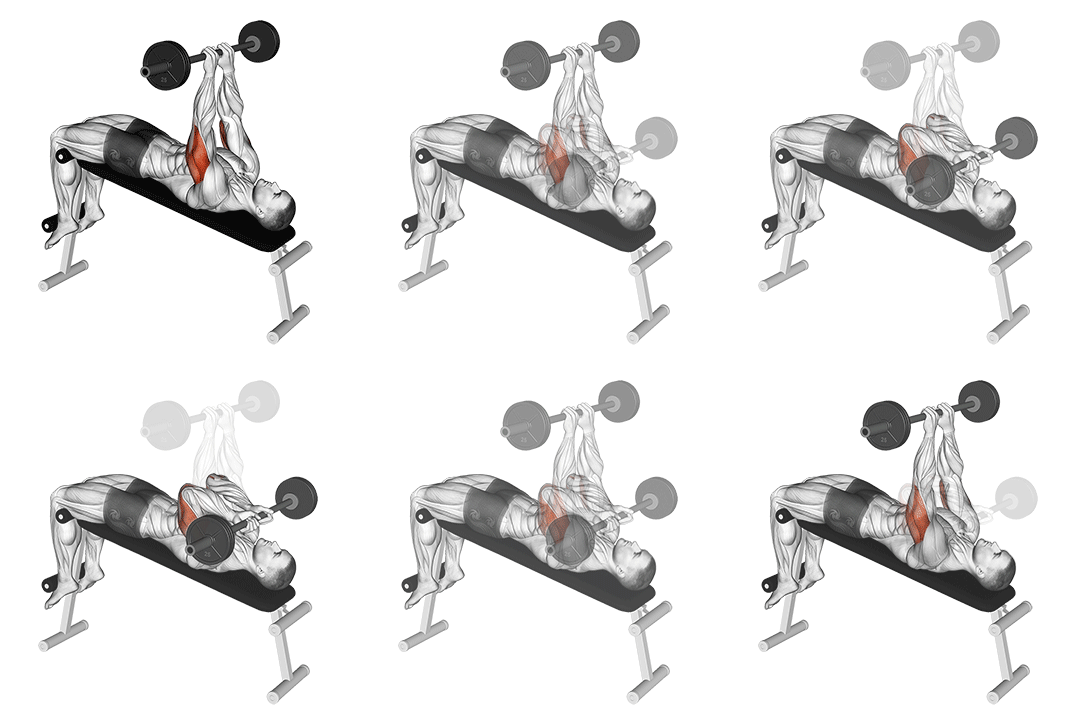
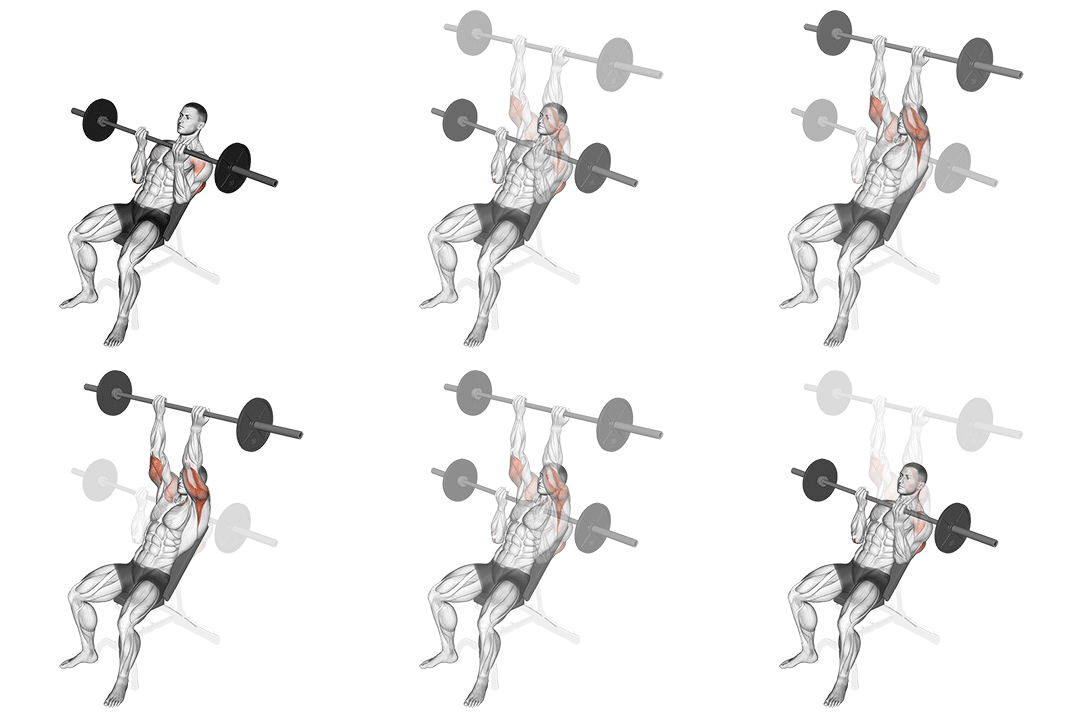
Barbell Decline Close Grip To Skull Press
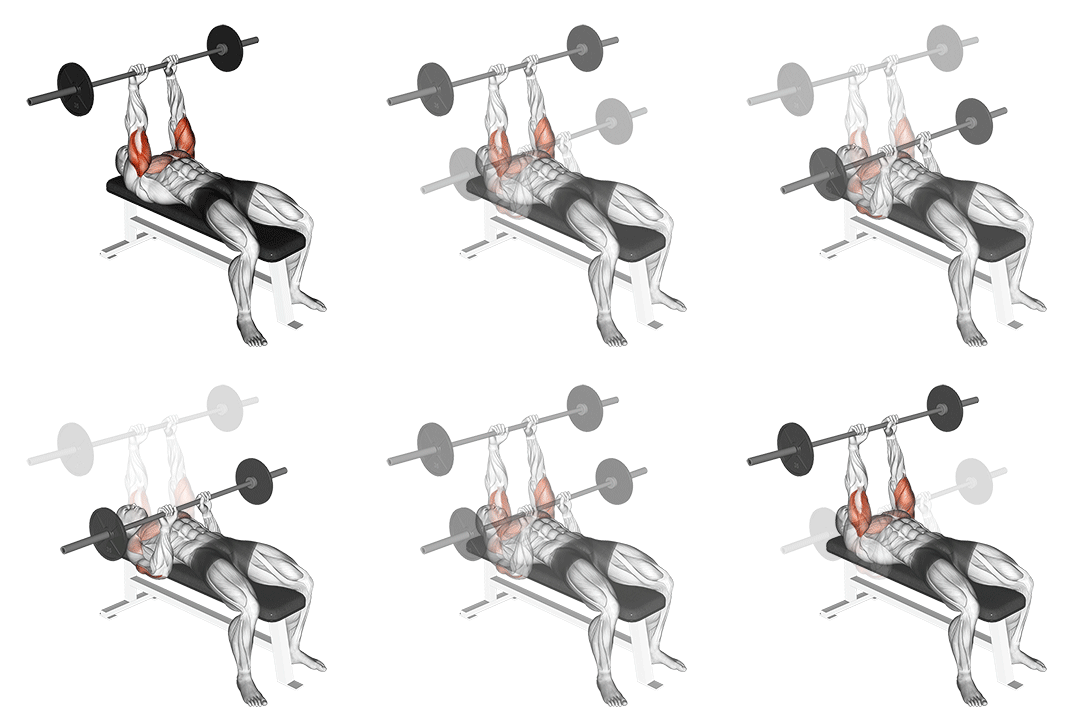
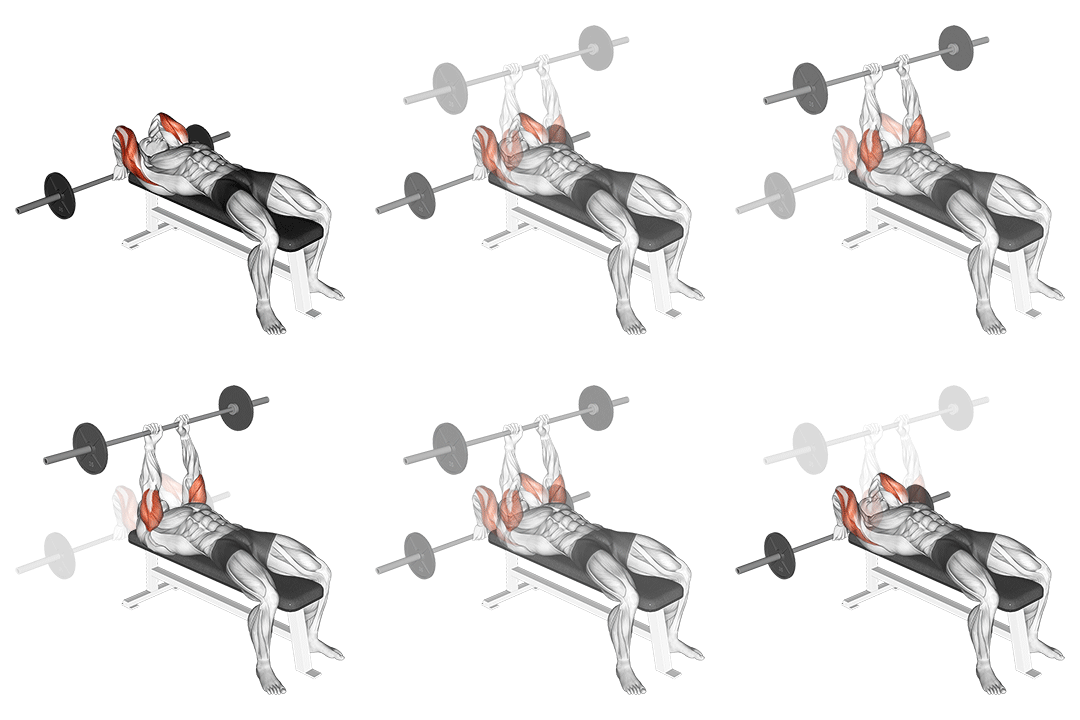
Barbell JM Bench Press
Head-to-Head Comparison
| Attribute | Barbell Decline Close Grip To Skull Press | Barbell JM Bench Press |
|---|---|---|
| Target Muscle |
Triceps
|
Triceps
|
| Body Part |
Upper-arms
|
Upper-arms
|
| Equipment |
Barbell
|
Barbell
|
| Difficulty |
Intermediate
|
Intermediate
|
| Movement Type |
Compound
|
Compound
|
| Secondary Muscles |
2
|
2
|
Secondary Muscles Activated
Barbell Decline Close Grip To Skull Press
Barbell JM Bench Press
Visual Comparison
Overview
Barbell Decline Close Grip To Skull Press vs Barbell Jm Bench Press — both are compound, barbell-based triceps builders that also recruit chest and shoulders. You’ll get a clear, practical breakdown of how each exercise loads the triceps, where secondary muscles get involved, and which movement fits specific goals. I’ll cover joint angles (decline 15–30°), grip width cues, muscle activation patterns, injury risk, progression options, and direct programming advice (rep ranges, sets, and tempo) so you can pick the right move for hypertrophy, strength, or equipment-limited training.
Key Differences
- Both exercises target the Triceps using Barbell. The main differences are in their movement patterns and muscle activation angles.
Pros & Cons
Barbell Decline Close Grip To Skull Press
+ Pros
- Strong horizontal force vector increases chest involvement for fuller upper-body stimulus
- Decline angle (15–30°) reduces shoulder flexion torque, letting triceps generate more extension force
- Long eccentric control on a skull-press path creates high time-under-tension for hypertrophy
- Great as a heavy accessory for experienced lifters who can control the bar path
− Cons
- Requires decline bench and competent spotter or safety setup
- Higher risk to face/head if bar path or grip slips
- Technique demands (angle, bar path) increase learning curve and setup time
Barbell JM Bench Press
+ Pros
- Simple setup on a flat bench—high accessibility for gyms and homes
- Elbow tuck (≈30–45°) increases elbow-extension torque and isolates triceps effectively
- Easier to load progressively and pair with bench press variants
- Less risk to head/face compared with skull-press path
− Cons
- Can place shear stress on the elbow joint if elbow flare is excessive
- Less chest overlap than decline skull press, so less total pec stimulus
- Requires attention to bar path to avoid shoulder or wrist discomfort
When Each Exercise Wins
The decline skull press increases horizontal force and allows a longer eccentric path to the forehead, boosting time-under-tension and mechanical tension on the triceps and sternal pecs. Use 6–12 reps, 3–5 sets, slow 2–3 s eccentrics at 15–30° decline.
JM bench produces a cleaner elbow-extension torque and is easier to load progressively for low-rep strength work (3–6 reps). Its flatter setup and safer bar path let you push heavier loads with consistent technique and lower catastrophic risk.
Beginners benefit from the simpler flat bench setup and lower technical demand of the JM press; it teaches elbow control and triceps extension without the decline bench complexity or skull-contact risk.
Most home gyms lack a decline bench and spotters. The JM bench needs only a flat bench and barbell, making it the practical, safer choice when equipment and supervision are limited.
Frequently Asked Questions
Can I do both Barbell Decline Close Grip To Skull Press and Barbell Jm Bench Press in the same workout?
Yes. Use the JM bench as your primary heavy movement (3–6 reps) and add the decline close-grip skull press later as a higher-rep accessory (8–12 reps) to increase time-under-tension. Keep total weekly volume in check to avoid excessive elbow or shoulder fatigue.
Which exercise is better for beginners?
Barbell JM Bench Press is better for beginners because it uses a flat bench, has a simpler bar path, and carries less risk to the face and neck. Start with light loads to master elbow tuck (~30–45°) and scapular stability.
How do the muscle activation patterns differ?
The decline skull press shifts force horizontally, adding chest overlap and emphasizing medial/lateral triceps at lockout due to shoulder position. The JM bench increases pure elbow-extension torque with a steeper forearm force vector, producing more balanced activation across triceps heads through the ROM.
Can Barbell Jm Bench Press replace Barbell Decline Close Grip To Skull Press?
Yes, for most lifters the JM press can replace the decline skull press as a primary triceps movement—especially when equipment or spotters are limited. If your goal is maximal hypertrophy with added chest stimulus, keep the decline variant as an accessory when safe to do so.
Expert Verdict
Use the Barbell Decline Close Grip To Skull Press when your priority is high mechanical tension and overlapping chest stimulus alongside triceps hypertrophy—ideal for intermediate lifters with a decline bench and a trained spotter. Program it in 6–12 rep ranges with controlled eccentrics and a 15–30° decline. Choose the Barbell JM Bench Press when you want a straightforward, progressive triceps-builder that’s easier to load for strength (3–6 reps) and safer without specialized equipment. The JM is the better all-around option for beginners, home gyms, and strength phases; the decline skull press is a targeted accessory for hypertrophy-focused cycles.
Also Compare
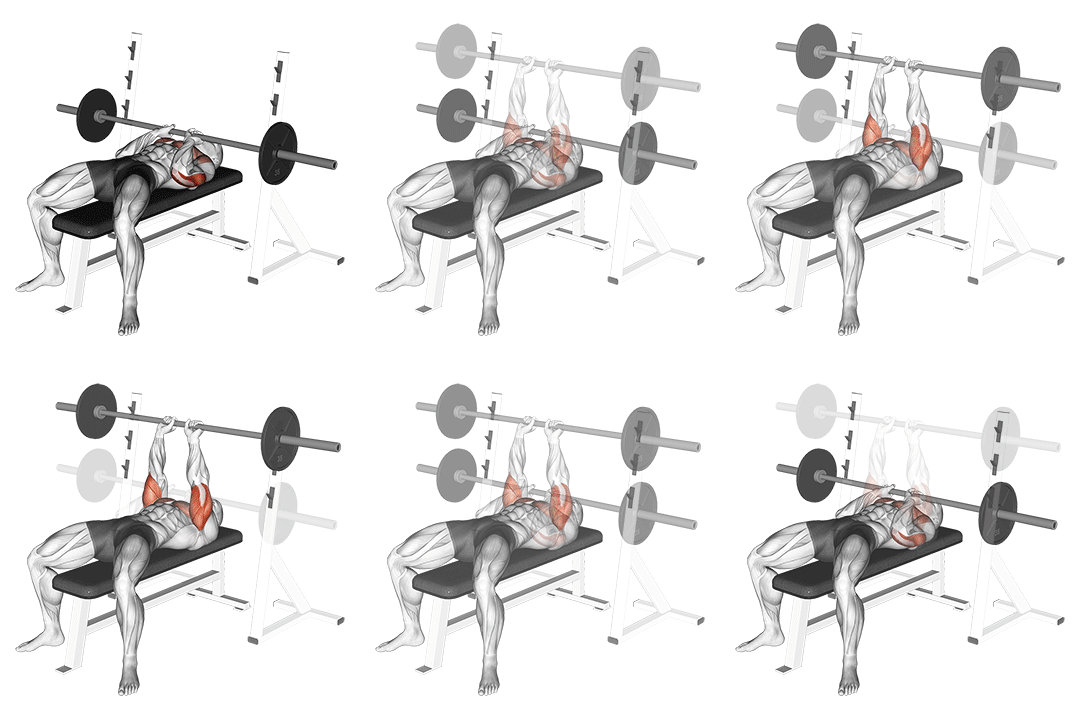
More comparisons with Barbell Decline Close Grip To Skull Press
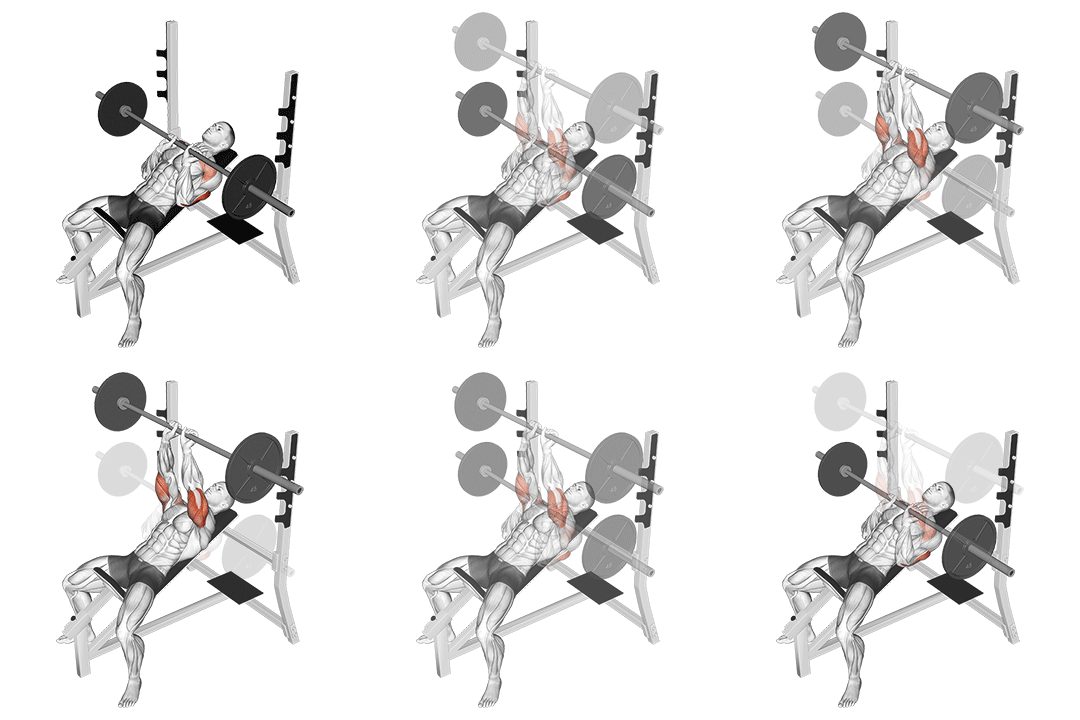
More comparisons with Barbell JM Bench Press
Compare More Exercises
Use our free comparison tool to analyze any two exercises head-to-head.
Compare Exercises