

Barbell Decline Close Grip To Skull Press vs Barbell Lying Close-grip Press: Complete Comparison Gui
Barbell Decline Close Grip To Skull Press vs Barbell Lying Close-grip Press — two barbell triceps staples that look similar but load your elbow extensors differently. You’ll get a side-by-side of muscle activation, joint mechanics, equipment needs, technique cues, and programming recommendations so you can pick which to use in sets of 6–12 for hypertrophy or 3–6 for strength. I’ll cover decline angle effects (typically 15–30°), elbow path differences, safety tips, and exact rep/load ranges so you leave the gym with a clear plan.
Exercise Comparison
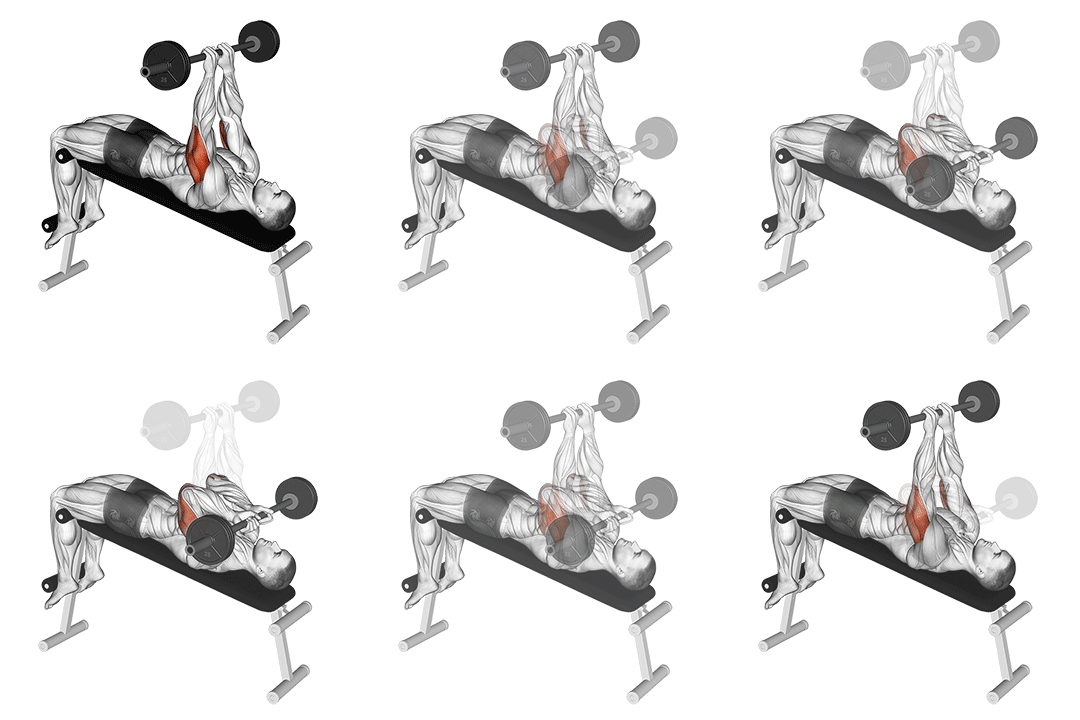
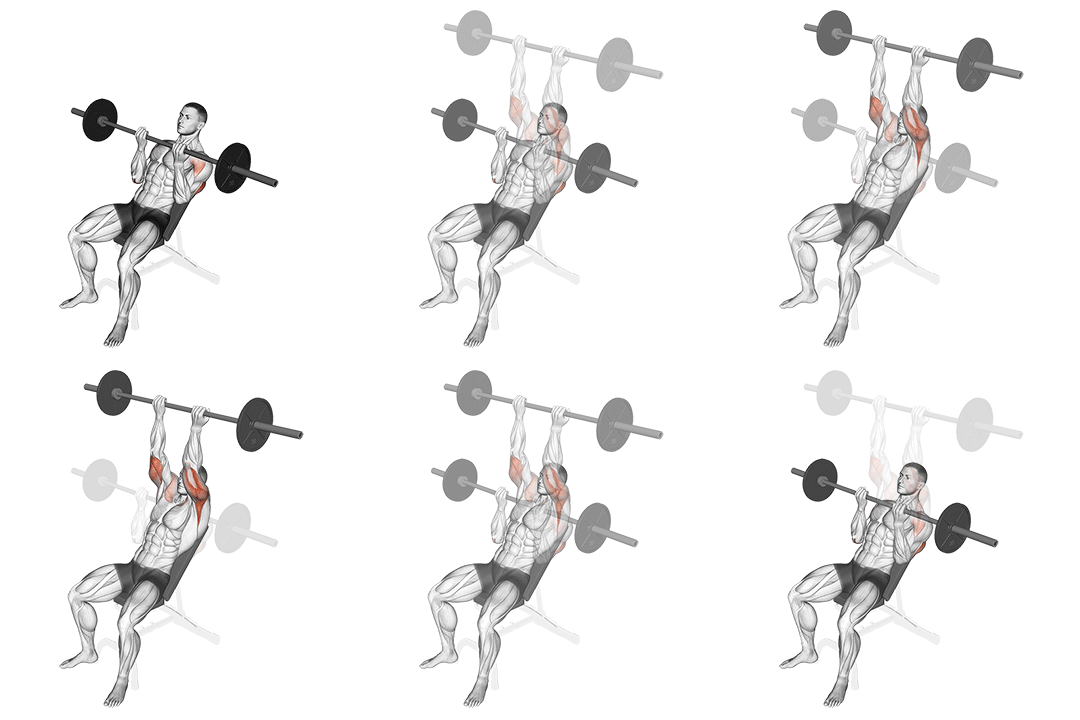
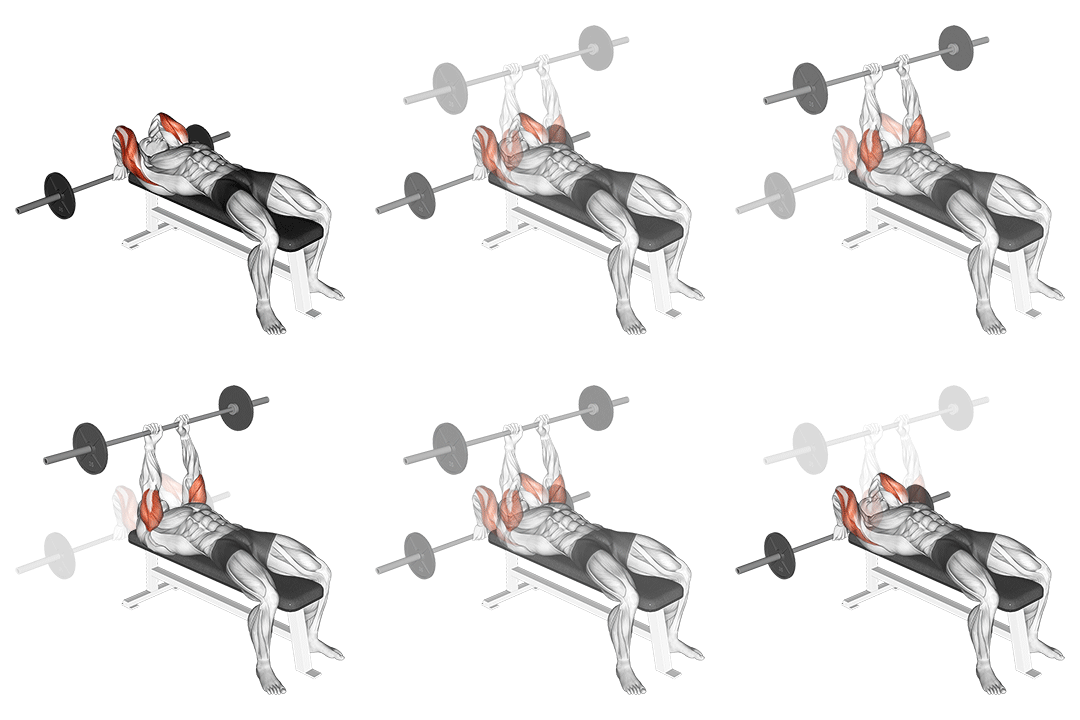
Barbell Decline Close Grip To Skull Press
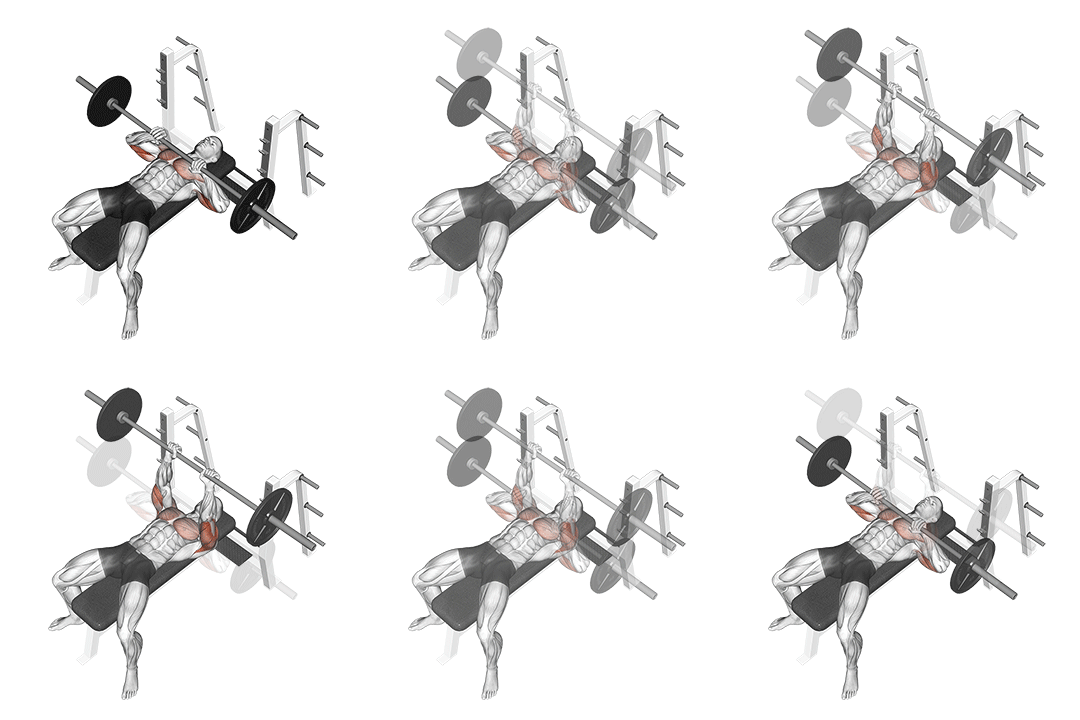
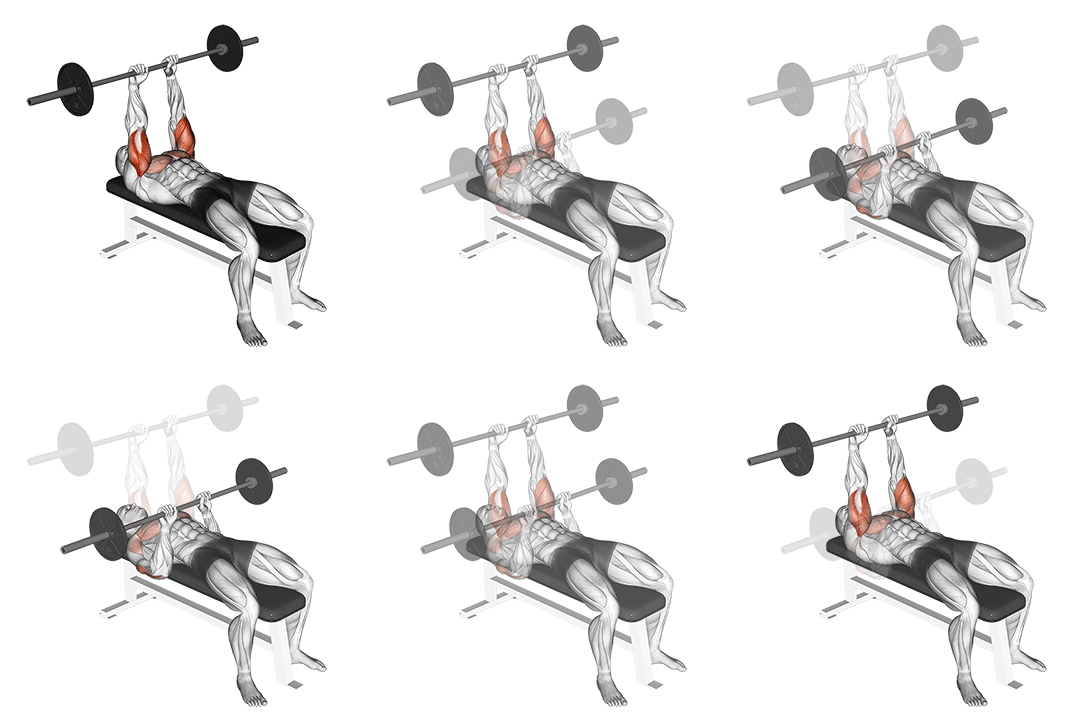
Barbell Lying Close-grip Press
Head-to-Head Comparison
| Attribute | Barbell Decline Close Grip To Skull Press | Barbell Lying Close-grip Press |
|---|---|---|
| Target Muscle |
Triceps
|
Triceps
|
| Body Part |
Upper-arms
|
Upper-arms
|
| Equipment |
Barbell
|
Barbell
|
| Difficulty |
Intermediate
|
Intermediate
|
| Movement Type |
Compound
|
Compound
|
| Secondary Muscles |
2
|
2
|
Secondary Muscles Activated
Barbell Decline Close Grip To Skull Press
Barbell Lying Close-grip Press
Visual Comparison
Overview
Barbell Decline Close Grip To Skull Press vs Barbell Lying Close-grip Press — two barbell triceps staples that look similar but load your elbow extensors differently. You’ll get a side-by-side of muscle activation, joint mechanics, equipment needs, technique cues, and programming recommendations so you can pick which to use in sets of 6–12 for hypertrophy or 3–6 for strength. I’ll cover decline angle effects (typically 15–30°), elbow path differences, safety tips, and exact rep/load ranges so you leave the gym with a clear plan.
Key Differences
- Both exercises target the Triceps using Barbell. The main differences are in their movement patterns and muscle activation angles.
Pros & Cons
Barbell Decline Close Grip To Skull Press
+ Pros
- Stronger long-head stretch on the eccentric due to elbow path and decline angle
- Unique force vector that targets lower pec and triceps synergy
- Excellent for time-under-tension hypertrophy work with slow eccentrics
- Can isolate triceps while keeping chest contribution lower with strict form
− Cons
- Requires a decline bench and spotter or safety setup
- Higher technical demand and proximity risk to face/skull
- Harder to progressively overload with maximal loads safely
Barbell Lying Close-grip Press
+ Pros
- Widely accessible with flat bench and barbell
- Easier to progressively overload for strength with heavier loads
- Cleaner bar path that’s simpler to coach and learn
- Better for building raw pressing strength with 3–6 rep work
− Cons
- More chest and anterior deltoid involvement can reduce pure triceps isolation
- Narrow grip can increase wrist and elbow compressive forces
- Less eccentric long-head stretch compared to skull-style movements
When Each Exercise Wins
The lying close-grip press allows heavier loading and consistent progressive overload (6–12 reps), which drives mechanical tension — the primary hypertrophy driver. It’s easier to accumulate volume and use sets of 8–12 with controlled eccentrics for consistent muscle growth.
The flat close-grip press has a safer, more repeatable bar path and lets you handle near-maximal loads (3–6 reps) with smaller percentage jumps, making it superior for building elbow-extension strength applicable to bench variations.
Beginners benefit from the simpler motor pattern and safer setup of the lying close-grip press. It’s easier to teach elbow tuck, wrist alignment, and progressive loading without the added complexity of a decline angle or skull-touch trajectory.
Most home gyms have a flat bench and barbell but not a decline bench or reliable spotter. The lying close-grip press provides strong triceps stimulus with minimal equipment and safer self-spotting options using rack pins.
Frequently Asked Questions
Can I do both Barbell Decline Close Grip To Skull Press and Barbell Lying Close-grip Press in the same workout?
Yes. Use the lying close-grip press earlier when you’re fresh to handle heavier loads (3–6 or 6–8 reps), then add decline skull press as a secondary movement for 8–15 reps at lighter weight to increase time under tension and long-head stress.
Which exercise is better for beginners?
Barbell Lying Close-grip Press is better for beginners because of its simpler bar path, easier coaching cues (tuck elbows, straight wrists), and safer progressive loading. Start with this to build pressing strength before introducing decline skull variations.
How do the muscle activation patterns differ?
The decline skull press increases eccentric long-head stretch and emphasizes time under tension, shifting some load to lower pec and altering the triceps moment arm. The lying close-grip press produces a more direct horizontal force vector, allowing higher concentric loads and greater overall mechanical tension on the triceps via heavier resistance.
Can Barbell Lying Close-grip Press replace Barbell Decline Close Grip To Skull Press?
Yes for most goals: the lying close-grip press can replace the decline skull press when you want strength and hypertrophy with simpler programming. Keep the decline skull press as an accessory when you need extra long-head emphasis or variety in your triceps work.
Expert Verdict
Use the Barbell Lying Close-grip Press as your default triceps heavy compound: it’s easier to load, simpler to coach, and better for strength and consistent hypertrophy because you can hit 6–12 reps with progressive overload. Choose the Barbell Decline Close Grip To Skull Press as a supplemental specialist move when you want extra long-head stretch, unique force vectors, and higher time under tension—program it for controlled eccentrics (3–4 second negatives) and sets of 8–15 to target sarcomere stretch and hypertrophy. For most lifters, prioritize the lying close-grip press for weekly heavy work and add decline skull-style sets for variety and targeted long-head stimulus.
Also Compare
More comparisons with Barbell Decline Close Grip To Skull Press
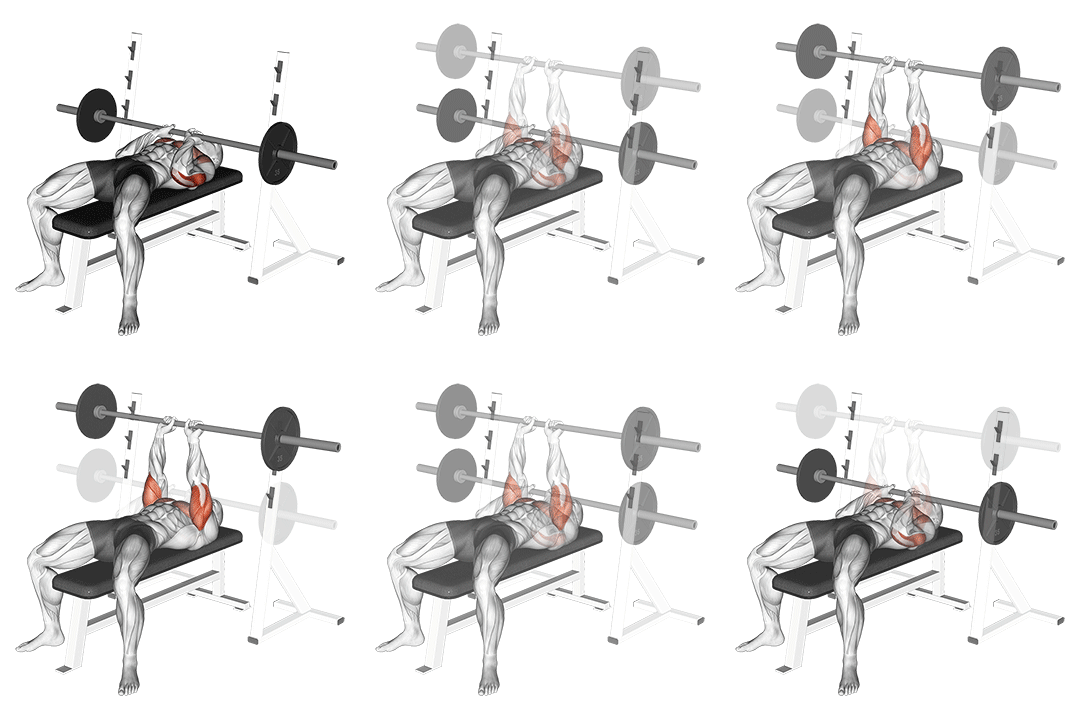
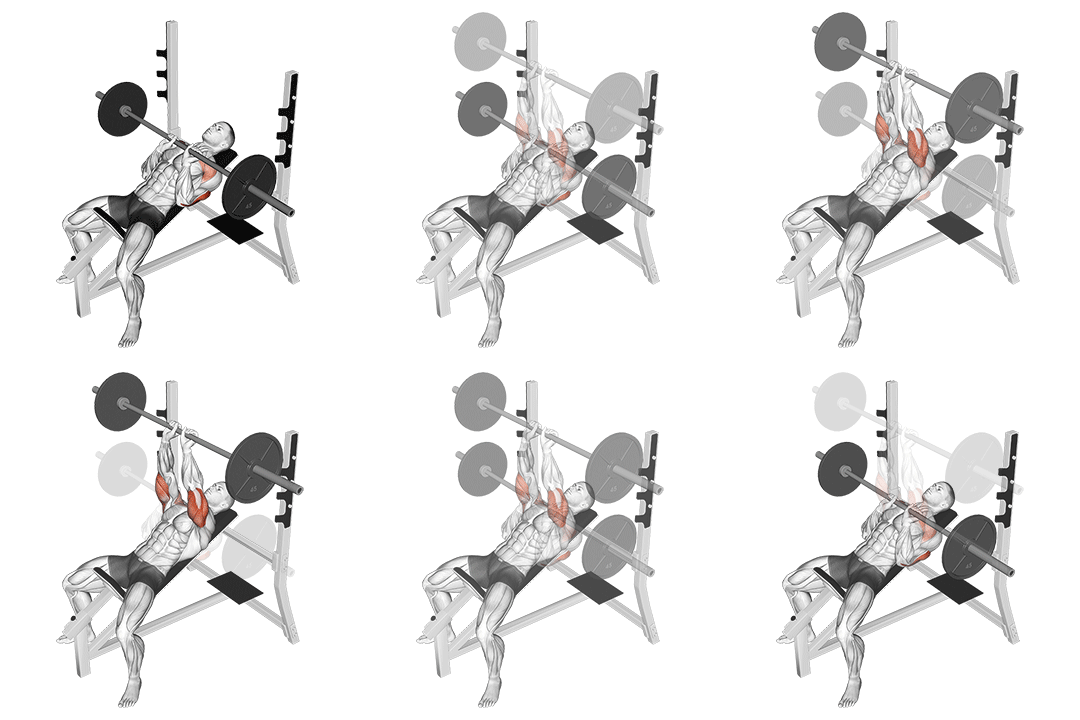
More comparisons with Barbell Lying Close-grip Press
Compare More Exercises
Use our free comparison tool to analyze any two exercises head-to-head.
Compare Exercises